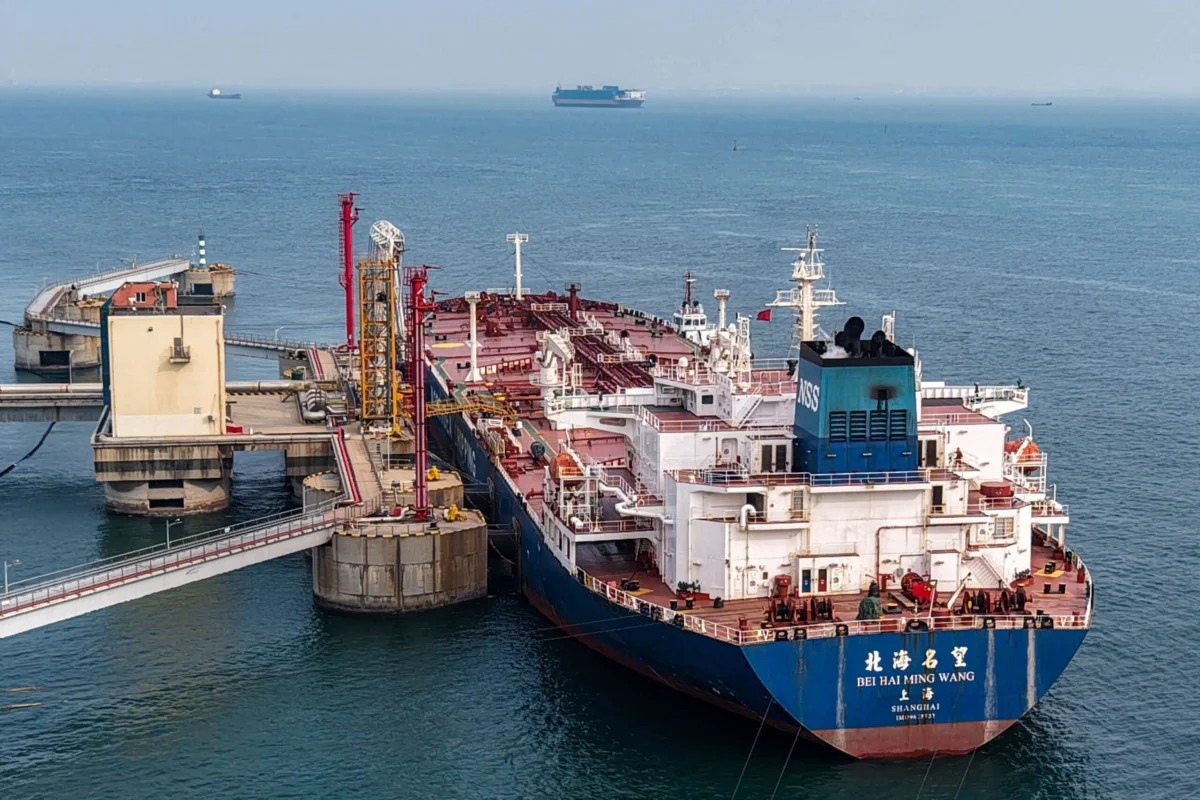
BEIJING – China on Monday vehemently underscored the resilience and sufficiency of its domestic energy resources, a declaration made amidst escalating global concerns over oil flows through the Strait of Hormuz, severely constrained by the ongoing Iran war. The statement comes as U.S. President Donald Trump intensifies pressure on Beijing to actively participate in securing the critical maritime chokepoint, even hinting at a potential postponement of his highly anticipated trip to the Chinese capital later this month.
The pronouncement from Beijing seeks to project an image of stability and self-reliance at a time of significant geopolitical turbulence impacting global energy markets. Fu Linghui, spokesperson for China’s National Bureau of Statistics, addressed reporters in Mandarin, emphasizing that China’s energy supply is "relatively strong" and forms a "relatively good" foundation for responding effectively to external market volatility. This official reassurance aims to mitigate anxieties both domestically and internationally regarding China’s capacity to weather the current energy crisis without significant disruption.
The Geopolitical Crucible: Iran War and the Strait of Hormuz
The current crisis stems from a protracted and increasingly volatile conflict involving Iran, which has significantly disrupted maritime commerce in the Persian Gulf region. While the specific genesis and belligerents of the "Iran war" remain a subject of intense international debate and varying interpretations, its practical effect on global shipping, particularly through the Strait of Hormuz, has been undeniable and severe. For over two weeks, since the conflict’s intensification, the vital waterway has seen a drastic reduction in oil transit for most nations, leading to a palpable sense of apprehension across global energy markets.
The Strait of Hormuz, a narrow passage between the Persian Gulf and the Gulf of Oman, is unequivocally one of the world’s most critical maritime chokepoints. Approximately one-fifth of the world’s total petroleum liquids consumption, and about one-third of the world’s liquefied natural gas (LNG), transits through this strait. Any significant disruption here reverberates instantly across global economies, affecting everything from manufacturing costs to consumer prices. The ongoing conflict has demonstrated the fragility of global supply chains and the profound geopolitical leverage inherent in controlling such strategic passages. Naval operations, heightened security alerts, and threats of retaliation have transformed the strait into a high-stakes arena, prompting calls for international cooperation to ensure freedom of navigation.
Global Oil Markets React: Price Surges and Volatility
The immediate and most visible consequence of the Strait of Hormuz restrictions has been a dramatic surge in crude oil prices. Futures contracts for both Brent and West Texas Intermediate (WTI) benchmarks have soared past the $100 per barrel mark, reaching near four-year highs. This sharp increase reflects not only the immediate supply crunch but also the heightened risk premium embedded in oil prices due to geopolitical uncertainty. Energy analysts warn that sustained high prices could trigger inflationary pressures globally, dampen economic growth, and exacerbate existing financial vulnerabilities in import-dependent nations.

While most countries have faced severe restrictions, the situation has been complicated by Iran’s selective engagement. Notably, Iran has reportedly continued to ship oil, sending more than 11 million barrels through the strait to China during the two-week period of widespread disruption. This selective flow underscores the complex and often opaque nature of international energy politics, where bilateral relationships can circumvent broader sanctions or conflict-induced blockades, adding another layer of intricacy to the crisis.
Beijing’s Reassurance: Domestic Strength and Strategic Reserves
China’s official response on Monday was not merely a diplomatic statement but was bolstered by tangible data reflecting its internal energy capabilities. The National Bureau of Statistics reported a 1.9% year-on-year increase in China’s domestic crude oil production for the January to February period of 2026, reaching an impressive 35.73 million metric tons. This growth, while modest in the context of China’s vast energy needs, signifies a continued commitment to enhancing indigenous production capacity as a hedge against external shocks.
Beyond current production, China’s strategic petroleum reserves (SPR) represent a formidable buffer. As of January 2026, Beijing held an estimated 1.2 billion barrels of onshore crude stockpiles, positioning it among the largest strategic reserves globally. This colossal reserve is estimated to be sufficient to meet China’s demand for three to four months, providing a critical safety net against short-term supply disruptions. The development of these reserves has been a cornerstone of China’s energy security strategy for decades, a policy born out of the lessons learned from the oil crises of the late 20th century and the country’s accelerating reliance on imported oil since the 1990s. This foresight is now proving invaluable in navigating the current volatile landscape.
China’s energy strategy is multi-faceted, encompassing not only domestic production and strategic stockpiling but also aggressive diversification of import sources. While the Middle East remains a crucial supplier, Beijing has heavily invested in pipeline infrastructure from Russia and Central Asian states, deepened energy partnerships with African nations, and explored new maritime routes to reduce its over-reliance on any single chokepoint or region. This long-term strategic planning underpins Fu Linghui’s confidence in the nation’s ability to withstand external pressures.
The Diplomatic Chessboard: Trump’s Ultimatum and Beijing’s Position
Adding a layer of diplomatic complexity to the energy crisis, U.S. President Donald Trump explicitly called upon China to assist in restoring oil flows through the Strait of Hormuz. In remarks on Sunday, Trump asserted that Beijing should play a pivotal role in securing the waterway, citing his belief that China receives 90% of its oil through this critical passage. He further linked this demand to his upcoming trip to Beijing, suggesting that a lack of cooperation from China could lead to a delay in his travel plans, a move that would carry significant geopolitical weight for U.S.-China relations.
However, analysts and energy experts have swiftly challenged President Trump’s assertion regarding China’s reliance on the Strait of Hormuz. Contrary to the 90% figure, independent estimates suggest that China relies on the strait for approximately 40% to 50% of its seaborne oil imports. Furthermore, when considering China’s total energy consumption, oil shipments passing through Hormuz account for a significantly smaller proportion, roughly 6.6%. This discrepancy highlights the potential for misinterpretation or politically motivated exaggerations in high-stakes international diplomacy.

China’s continued receipt of Iranian oil shipments during the crisis also complicates the U.S. narrative. While the U.S. has pursued a policy of "maximum pressure" on Iran, including stringent oil sanctions, Beijing has maintained its economic ties, often leveraging waivers or alternative payment mechanisms. This ongoing trade underscores China’s independent foreign policy stance and its determination to secure its energy interests, even in the face of U.S. pressure. The implicit message from Beijing is that its energy security is paramount and will be pursued through a pragmatic approach that may not always align with U.S. strategic objectives.
Broader Implications for Geopolitics and Trade
The confluence of the Iran war, the Strait of Hormuz blockade, and U.S. pressure on China creates a highly volatile geopolitical landscape with far-reaching implications. For global trade, sustained disruptions to oil flows and elevated prices threaten to derail nascent economic recoveries in various regions. Shipping costs will inevitably rise, impacting supply chains for a vast array of goods beyond just energy.
The crisis also tests the efficacy of international maritime law and the principle of freedom of navigation. The inability of the international community to quickly restore normal transit through such a vital artery raises questions about collective security mechanisms and the role of major naval powers. The U.S., with its significant naval presence in the region, finds itself in a challenging position, balancing the need to secure international waters with the complexities of direct intervention in a regional conflict.
For China, the crisis serves as a stark reminder of its vulnerabilities as the world’s largest oil importer, despite its robust mitigation strategies. It reinforces the strategic imperative behind initiatives like the Belt and Road Initiative (BRI), which aims to diversify trade routes and energy infrastructure away from traditional maritime chokepoints. Investments in overland pipelines through Central Asia and the development of alternative port facilities are increasingly seen as critical components of China’s long-term energy resilience.
Moreover, the U.S. demand for China’s assistance in the Strait of Hormuz underscores the intricate and often contradictory nature of U.S.-China relations. While Washington seeks Beijing’s cooperation on global security issues, it simultaneously applies pressure on trade, technology, and human rights. China’s response will likely be carefully calibrated, balancing its own energy security and strategic interests with the desire to manage relations with the U.S. and avoid further escalation of tensions.
In conclusion, China’s firm assertion of its energy security capabilities comes at a critical juncture, as the Iran war casts a long shadow over global oil markets and the Strait of Hormuz remains a flashpoint. While Beijing projects confidence through its robust domestic production and strategic reserves, the unfolding geopolitical drama highlights the profound interdependence of nations in securing vital resources. The diplomatic dance between Washington and Beijing, set against a backdrop of escalating regional conflict, will undoubtedly shape not only the future of global energy flows but also the broader contours of international relations in the years to come.
About the Author