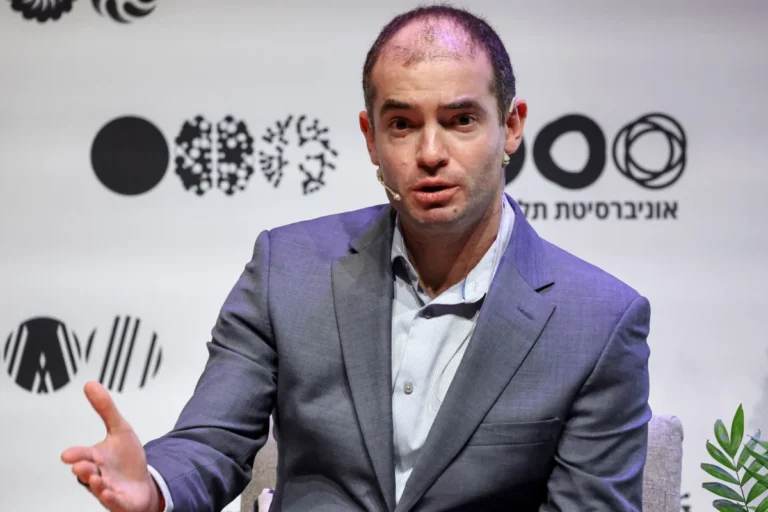
Drew Perkins, a luminary whose career has spanned the foundational era of the internet to the bleeding edge of artificial intelligence, has officially brought his latest venture, Eridu, out of stealth mode. The AI networking startup has announced an oversubscribed Series A funding round totaling $200 million, signaling immense investor confidence in its mission to revolutionize the communication backbone for next-generation AI infrastructure. This latest infusion of capital, led by Socratic Partners, renowned venture capitalist John Doerr, and Matter Venture Partners, among others, brings Eridu’s total funding to an impressive $230 million. The company aims to address what Perkins identifies as the critical bottleneck preventing AI from reaching its full potential: the outdated methods by which computer chips communicate within massive data centers.
A Legacy of Innovation: Perkins’ Enduring Impact on Digital Infrastructure
Drew Perkins’ journey through the technological landscape is a testament to his prescient ability to identify and solve fundamental challenges. Beginning his career in the 1980s, a nascent period for digital communications, Perkins played a pivotal role in the development of the Point-to-Point Protocol (PPP). This protocol became an indispensable component of TCP/IP, the foundational suite of communication protocols upon which the entire internet operates. His early contributions laid critical groundwork for the global digital economy that would eventually emerge.
His entrepreneurial spirit then led him to co-found Lightera Networks in 1999, an optical switch company that quickly gained prominence. Lightera’s innovative approach to high-speed data transmission caught the attention of industry giants, leading to its acquisition by Ciena for over $500 million. This success cemented Perkins’ reputation as a visionary in networking hardware.
Not one to rest on his laurels, Perkins co-founded Infinera, another company focused on optical networking solutions. Infinera went on to achieve an initial public offering (IPO) and established itself as a significant player in the high-capacity optical transport market, demonstrating Perkins’ sustained ability to build and scale impactful technology ventures. While the original article contained a confusing reference to a future sale to Nokia in 2025, Infinera’s historical success under Perkins’ guidance in the optical networking space remains undeniable. Following Infinera, he also co-founded Gainspeed, which was successfully acquired by Nokia, further solidifying his track record of creating valuable enterprises. Most recently, Perkins lent his expertise to Mojo Vision, an augmented reality (AR) startup that pivoted its focus to micro-LED displays, showcasing his versatility across different technological domains.
The AI Epiphany: Identifying the Next Bottleneck
Perkins’ return to the networking forefront with Eridu was catalyzed by a profound realization following the public release of OpenAI’s ChatGPT. In February 2023, a serendipitous conversation with OpenAI CEO Sam Altman at a small conference provided the crucial insight. Perkins recounted to TechCrunch, “Sam told me that what enabled AI and ChatGPT was just enormous amounts of compute. At which time, I think he meant 4,000 GPUs, but now we’re talking about millions of GPUs.”
This exchange illuminated a critical impending challenge: as the demand for AI compute scales exponentially, the conventional methods of connecting these vast arrays of processing units will become the primary bottleneck. It wasn’t merely about having more chips; it was about how those chips communicated with each other at unprecedented speeds and scales. Perkins recognized that the existing networking infrastructure, designed for traditional data centers and human-centric internet traffic, was fundamentally ill-equipped to handle the unique, high-bandwidth, low-latency demands of AI workloads.
“What we needed to do in the networking sector, in the networking industry, was come up with a brand-new way of thinking about how you build networks and build network equipment, network chips, and the entire thing,” Perkins articulated. This conviction laid the groundwork for Eridu, a company conceived to address this architectural gap from the ground up.
The Genesis of Eridu: A Meeting of Minds and a New Architectural Vision
By late 2023, Perkins had found his ideal co-founder in Omar Hassen, whose extensive background in networking chip design for industry giants like Broadcom and Marvell provided the perfect complement to Perkins’ system-level vision. Their combined expertise, spanning decades of innovation in both network architecture and silicon engineering, formed the bedrock of Eridu, which was officially founded in 2024.
Eridu’s approach is radical and comprehensive: they are rethinking computer networking from scratch, beginning at the silicon level. This involves designing entirely new chips specifically optimized for AI workloads, integrating far more networking functionality directly onto the chip itself. The company’s ultimate goal is to offer complete systems that will occupy the same critical position within an AI data center that traditional network gear providers like Arista Networks hold in conventional data centers. However, Eridu’s systems will fundamentally differ by replacing many tiered optical connections—a common source of latency, power consumption, and unreliability—with highly efficient, integrated on-chip communications.
Addressing the Latency and Power Conundrum
The current paradigm of data center networking relies heavily on adding more physical "boxes" – switches, routers, and optical transceivers – as demand grows. While seemingly straightforward, this approach inherently increases the number of "hops" each data bit must traverse, leading to increased latency. For AI applications, especially large language models (LLMs) and real-time inference, this delay directly translates into slower response times, hindering performance and user experience. As Perkins explains, this contributes significantly to the lag between a user typing a prompt and receiving a reply from an AI model.
Eridu’s core innovation lies in developing a switch that integrates a much greater array of networking functions directly onto the chip. This strategic shift yields multiple benefits. Perkins elaborated, “So now I’m saving a ton of power, I’m saving a ton of cost, and then my network is much more reliable because the optics are the least reliable part of the network.” By minimizing external components and optimizing data pathways at the silicon level, Eridu aims to dramatically reduce energy consumption, operational costs, and system failures.
This architectural reimagining is critically important given the disparate rates of progress between compute and networking. “GPU compute and memory bandwidth are improving by roughly 10x per year, while data center switches from Broadcom, Marvell, Cisco, etc., are still only improving 2–3x every 2–3 years,” Perkins highlighted. This widening performance gap underscores the urgent need for a fundamental breakthrough in networking technology to keep pace with the relentless advancements in AI processing power. Without such innovation, the most powerful GPUs will remain underutilized, bottlenecked by their inability to communicate efficiently.
A VC Frenzy: Investor Confidence and Strategic Backing
The news of Eridu’s emergence from stealth, coupled with its substantial oversubscribed Series A round, has sent ripples through the venture capital community. Perkins, leveraging his extensive network and decades of relationships in Silicon Valley, initiated conversations with key investors who understood the profound implications of his vision.
A pivotal moment came when Wen Hsieh, the founding managing partner of Matter Venture Partners and a former leader of Kleiner Perkins’ China investing group, was introduced to Eridu. Hsieh, recognizing the immense potential, then brought the opportunity to the attention of legendary venture capitalist John Doerr. Doerr, a titan of the VC world and a former backer of one of Perkins’ previous successful startups, quickly expressed keen interest. This endorsement from a figure of Doerr’s stature triggered what Perkins described as a "VC frenzy."
“My phone has been ringing off the hook,” Perkins shared, reflecting on the intense investor interest. “It’s been a fun time raising money for this venture… we’re very oversubscribed.” The oversubscription of the round underscores not only the compelling nature of Eridu’s technology but also the enduring trust and respect Perkins commands within the investment community.
While Perkins remained circumspect about the exact valuation, he indicated it was comparable to other Series A rounds of similar magnitude, emphasizing that it felt neither "too low, nor too high." His concern for his approximately 100 current employees and their stock options highlights a founder-centric approach, ensuring that the team shares in the company’s potential success. He also declined to comment on whether Eridu had already achieved unicorn status, a private valuation exceeding $1 billion, though the size of the Series A round suggests it could be well on its way.
The investor syndicate is remarkably strong and strategic, encompassing a diverse group of firms beyond the lead investors. Hudson River Trading and Capricorn Investment Group were also significant leads. Participation from SBVA, MediaTek, Bosch Ventures, TDK Ventures, Eclipse, and VentureTech Alliance—an investing vehicle of the chip fabrication giant TSMC—is particularly noteworthy. The involvement of TSMC’s venture arm suggests a potential strategic alignment with the world’s leading semiconductor manufacturer, which could be critical for Eridu’s future chip production and scaling plans. This broad and deep investor base not only provides capital but also brings invaluable strategic guidance, industry connections, and potential partnerships.
Market Landscape and Broader Implications
Eridu enters a market poised for unprecedented growth and transformation. The global AI market is projected to expand dramatically, driving an insatiable demand for high-performance computing infrastructure. Analysts predict that the construction of AI data centers will represent the largest build-out in data center history, dwarfing previous expansions. If Eridu can deliver on its promise to create a fundamentally new kind of AI-friendly networking chip and system, it will position itself at the very heart of this monumental shift.
The company’s success could have far-reaching implications for the entire tech ecosystem. For established networking giants like Arista Networks, Broadcom, Marvell, and Cisco, Eridu presents both a potential threat and a catalyst for innovation. While these incumbents have long dominated the data center networking space, their current architectures may struggle to adapt to the unique requirements of AI at scale. Eridu’s clean-sheet approach, starting with silicon, could enable a level of integration and performance that traditional tiered networking systems cannot easily match.
Moreover, Eridu’s emergence reflects a broader trend in Silicon Valley: a renewed focus on "deep tech" and foundational infrastructure, often spearheaded by seasoned veterans. In an era sometimes characterized by "vibe-coded products built by 20-something college dropouts," as the original article wryly notes, Eridu’s founders bring something increasingly rare and valuable: profound, hands-on experience and a track record of building successful, complex technology companies. This deep experience, combined with a clear vision for solving a critical, well-understood problem, bodes exceptionally well for the company’s future.
Optimized networking is not just an incremental improvement; it is a prerequisite for the next wave of AI innovation. Faster, more efficient communication between GPUs will enable the training of even larger, more complex AI models, unlock real-time inference capabilities across diverse applications, and reduce the operational costs that currently limit AI deployment. Eridu’s technology could therefore accelerate the development and adoption of AI across industries, from scientific research and drug discovery to autonomous systems and personalized services.
In conclusion, Drew Perkins’ return to the helm of a new networking startup, Eridu, marks a significant moment in the evolution of AI infrastructure. With substantial funding, a seasoned leadership team, and a bold vision to reinvent networking from the silicon up, Eridu is poised to become a foundational layer for the next era of artificial intelligence, potentially transforming how AI compute is harnessed and deployed globally. The company’s journey will be closely watched as it endeavors to dismantle the current networking bottlenecks and pave the way for a more connected, efficient, and powerful AI future.
About the Author