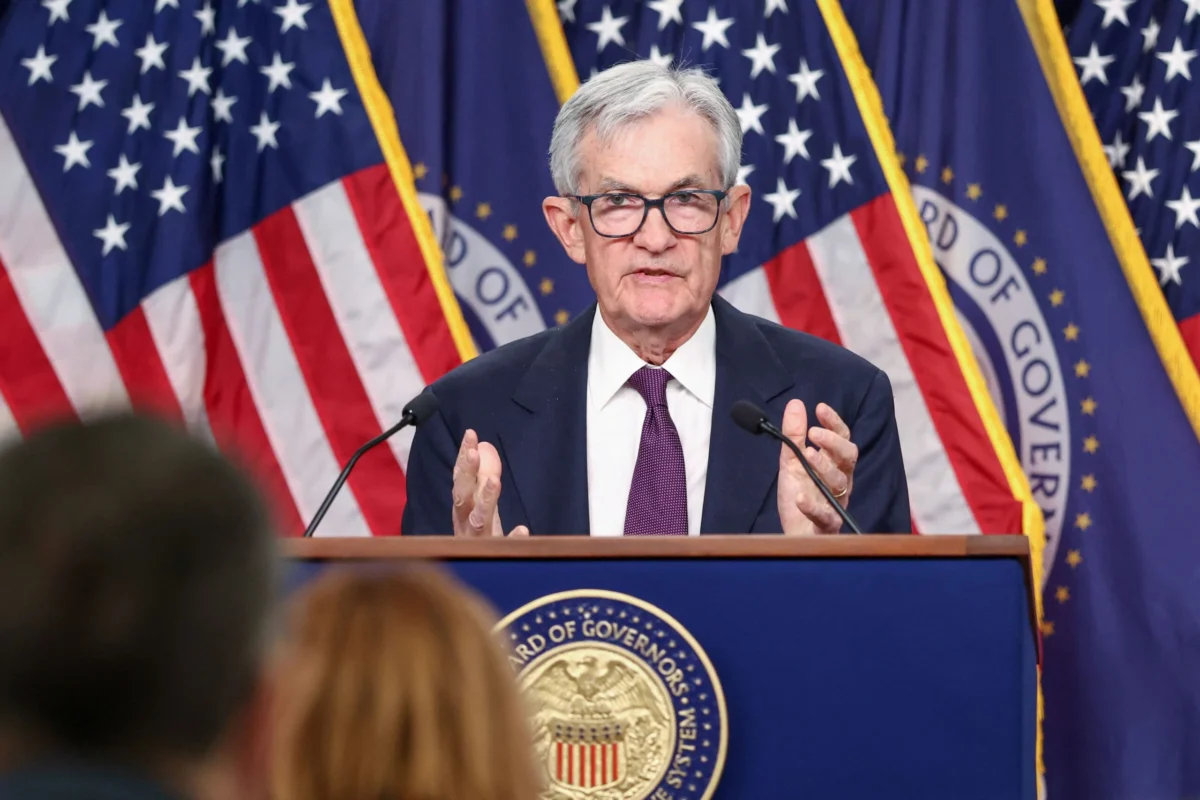
The Federal Reserve concluded its latest Federal Open Market Committee (FOMC) meeting without altering the benchmark federal funds rate, maintaining it in the 5.25%-5.50% range. However, the seemingly uneventful decision belied a profound and palpable sense of uncertainty that permeated Chairman Jerome Powell’s post-meeting press conference and the updated economic projections. With a critical geopolitical conflict involving the U.S. and Iran now casting a long shadow over global energy markets and supply chains, the central bank finds itself at a complex crossroads, balancing its dual mandate of maximum employment and price stability against a backdrop of unprecedented external shocks. The outcome of the meeting offered few concrete signals for the future trajectory of monetary policy, leaving markets and analysts grappling with a labyrinth of possibilities rather than a clear path.
The Enigma of Uncertainty in Monetary Policy
The FOMC’s post-meeting statement saw only minor adjustments, and while the "dot plot" — the summary of economic projections from individual FOMC members — indicated a modest dovish tilt, the overall message from Chairman Powell was one of profound caution. During his news conference, Powell notably invoked variations of the term "uncertain" more than half a dozen times, underscoring the formidable challenges in forecasting economic conditions and calibrating policy in the current environment. This pervasive uncertainty stems from a confluence of factors, including persistent inflation above the Fed’s 2% target, a nuanced labor market picture, and most significantly, the escalating geopolitical tensions. The Fed’s deliberate ambiguity reflects a strategy of maintaining maximum flexibility, a necessity when faced with rapidly evolving global dynamics that defy conventional economic modeling. Investors, who traditionally seek clear forward guidance from the central bank, were instead met with a reaffirmation of the Fed’s data-dependent approach, albeit one now heavily influenced by external, non-economic variables.
Geopolitical Conflict: The Economic Wildcard
A central theme of Powell’s remarks was the immense difficulty in forecasting the future and modeling policy at a time when the United States is embroiled in a conflict with Iran. This stark declaration highlights the immediate and direct impact of geopolitical events on economic policy, particularly through the volatile channel of global oil markets. The conflict, characterized by escalating military engagements and heightened tensions in the Middle East, has sent shockwaves through energy markets, pushing crude oil prices higher. For instance, Brent crude, the international benchmark, has seen significant upward pressure, at times approaching or exceeding $95-$100 per barrel, a level not consistently observed since the initial phases of the global inflationary surge.
Powell openly conceded that the economic effects of this oil shock are inherently unpredictable. "The thing I really want to emphasize is that nobody knows," he stated, acknowledging the wide range of potential outcomes. "The economic effects could be bigger, they could be smaller, they could be much smaller or much bigger. We just don’t know." This candid admission underscores the limitations of economic models when confronted with supply-side shocks driven by geopolitical forces, which are often abrupt, non-linear, and difficult to quantify. Historically, major oil price spikes, such as those witnessed in the 1970s, have been potent catalysts for economic downturns and inflationary spirals, forcing central banks into difficult trade-offs between containing inflation and supporting growth. The current situation presents a similar, if not more complex, dilemma for the Fed, as it must now factor in the potential for sustained energy price increases to derail progress on inflation without stifling an economy that has shown remarkable resilience.
The Elusive Rate Cut: A Divided Committee’s Dilemma
Despite the heightened uncertainty, the Fed’s "dot plot" still indicated a consensus for one more rate cut this year and another in the following year. However, a closer examination of the projections for 2027 reveals a deeply divided Federal Open Market Committee, painting a picture more akin to a maze than a clear consensus. The divergence among officials on the appropriate policy path is striking: one official anticipates a rate hike, three foresee no change from the current level, four expect another cut, six project two more cuts, three forecast three cuts, one official sees four cuts, and a final participant — widely presumed to be Governor Stephen Miran — projects five cuts.
This extraordinary dispersion of views within the FOMC underscores the absence of a strong underlying agreement on the economic outlook and the necessary policy response. Such division is not uncommon in periods of high uncertainty, but its magnitude highlights the challenges facing Chairman Powell in forging a unified path forward. Each member’s projection is influenced by their individual assessment of various economic indicators, including inflation trends, labor market health, global economic conditions, and now, critically, the geopolitical landscape. The lack of a strong consensus makes it exceedingly difficult for the market to price in future rate movements with confidence, leading to increased volatility and a more cautious stance from investors. The "one cut" projection, therefore, serves less as a firm commitment and more as a tentative signal, subject to significant revision as economic data and geopolitical events unfold.
Leadership in Flux: Powell’s Undecided Future
Beyond monetary policy, Chairman Powell also addressed questions regarding his tenure, which is set to conclude in early 2028. While he reiterated that he has not yet made up his mind about staying on as a governor after his term as chair ends, his remarks offered significant insights into his immediate intentions. Powell stated unequivocally that he is "not going anywhere" as long as an ongoing investigation involving him continues. Furthermore, he indicated his willingness to stay on as a "chair pro tem" until a successor is confirmed, presumably former Governor Kevin Warsh.
This commitment to continuity, particularly during a period of intense economic and geopolitical volatility, aims to reassure markets and maintain institutional stability. The investigation, though its specifics were not detailed in the original context, adds another layer of complexity to the leadership transition. A "chair pro tem" arrangement would ensure that the institution’s leadership remains stable during the confirmation process, which can often be lengthy and subject to political wrangling. Kevin Warsh, a former Federal Reserve Governor, is generally perceived as a more hawkish voice, and his potential appointment could signal a shift towards a more aggressive stance on inflation control, potentially leading to higher-for-longer interest rates. The uncertainty surrounding the Fed’s leadership, combined with the economic and geopolitical challenges, contributes to a broader environment of unpredictability for market participants.

Debunking the ‘Stagflation’ Narrative
Despite growing concerns in some circles about the potential for "stagflation" – a toxic combination of high inflation, high unemployment, and stagnant economic growth – Chairman Powell firmly rejected this characterization of the U.S. economy. While acknowledging an "anemic hiring rate" and persistent inflation above the Fed’s 2% target for nearly five years, Powell emphasized the current economy’s solid growth and historically low unemployment rate (e.g., currently hovering around 3.8%, significantly below historical averages).
Powell drew a sharp distinction between the current economic environment and the "1970s nightmare" of true stagflation. The 1970s were marked by double-digit inflation, severe oil shocks, and persistently high unemployment that often exceeded 7-8%, coupled with multiple recessions. The current U.S. economy, by contrast, has demonstrated remarkable resilience, with GDP growth rates (e.g., Q1 annualized at 2.5%) that, while moderating, are far from stagnant. The labor market, despite some cooling, remains robust, with strong job creation numbers (e.g., average monthly job gains still positive) and relatively healthy wage growth. Powell’s insistence on reserving the term "stagflation" for more severe circumstances reflects the central bank’s view that while challenges exist, the fundamental underpinnings of the economy remain sound, making the 1970s comparison inaccurate. However, the risk of an external shock like an escalating conflict further pushing up energy and commodity prices, coupled with a potential slowdown in global trade, could erode these strengths, making the Fed’s vigilance paramount.
Market Reactions and Expert Perspectives
The immediate market reaction to the Fed’s latest pronouncements was characterized by a cautious recalibration, as investors digested the dual messages of continued inflation vigilance and profound geopolitical uncertainty. Bond yields saw some movement as traders adjusted their expectations for future rate cuts, while equity markets exhibited sensitivity to news concerning the Middle East conflict and its potential impact on corporate earnings.
Financial analysts largely echoed the Fed’s cautious tone. Gina Bolvin, president of Bolvin Wealth Management Group, succinctly captured the sentiment: "The Fed didn’t move today – but it didn’t need to. This is a central bank that’s comfortable waiting, watching, and staying flexible. One projected cut tells you everything: the Fed is not in a rush, and neither should investors be." This perspective emphasizes the Fed’s current strategy of patience, allowing economic data and geopolitical developments to unfold before committing to a definitive policy shift.
Felix Aidala, an economist at Indeed, highlighted the inherent challenges facing the central bank: "Although the move was widely expected, it underscores the difficult path ahead for the Fed, which now faces pressure on both sides of its dual mandate to keep employment high and inflation muted. Complicating matters further is the fact that Fed leaders are often basing hugely important decisions on weeks- or months-old data that may not fully capture the magnitude of rapid economic shifts, raising the risk that decisions may come too late or be based on outdated assumptions." Aidala’s comments underscore the "lag effect" of monetary policy and data reporting, making real-time calibration exceedingly difficult in a fast-moving economic and geopolitical landscape.
Stephen Coltman, head of macro at 21shares, offered insight into the committee’s internal dynamics: "I expect given the volatile situation that the committee would like to try and do as little as possible so as to not rock the boat ahead of the new Fed chair taking over." This suggests a preference for maintaining the status quo, minimizing additional market uncertainty, especially with a leadership transition on the horizon. The collective cautiousness from analysts reflects a recognition that the current environment demands a delicate balance, where aggressive moves could inadvertently destabilize an already fragile global economy.
Broader Implications and the Path Forward
The implications of the Fed’s current stance and the prevailing uncertainty extend across various facets of the economy. For consumers, the persistent inflationary pressures, exacerbated by potential oil price spikes, mean continued erosion of purchasing power. Borrowing costs, remaining elevated, will continue to impact mortgage rates, auto loans, and credit card interest, potentially dampening consumer spending and investment. Businesses face increased operational costs due to energy price volatility and potential supply chain disruptions, influencing investment decisions and hiring plans. The higher cost of capital can also restrain expansion and innovation, particularly for smaller and medium-sized enterprises.
Globally, an escalating conflict involving a major oil producer could trigger a broader economic slowdown, impacting international trade flows and global financial markets. The U.S. dollar, often seen as a safe-haven asset, could strengthen further, creating challenges for emerging market economies with dollar-denominated debt. The Fed’s cautious approach, while necessary, also means that the much-anticipated relief from lower interest rates remains distant, potentially prolonging the period of tighter financial conditions.
In conclusion, the Federal Reserve finds itself navigating an unprecedented confluence of economic and geopolitical challenges. The latest FOMC meeting underscored a central bank grappling with profound uncertainty, compelled to maintain flexibility amidst an escalating conflict that threatens to reshape the global economic landscape. While the path to rate cuts remains on the table, its timing and magnitude are now more contingent than ever on external events and the evolving economic data. The Fed’s commitment to a data-dependent approach, coupled with a leadership transition on the horizon, signals a period of sustained vigilance and adaptive policymaking as it endeavors to steer the U.S. economy through these turbulent waters.
About the Author