Oil prices witnessed a significant surge on Wednesday, driven by escalating tensions in the U.S.-Iran conflict and the anticipation of a historic emergency oil reserve release orchestrated by the International Energy Agency (IEA). The volatile situation, marked by disruptions in the critical Strait of Hormuz, prompted global energy ministers to convene and agree on proactive measures to stabilize the market. Brent crude futures, the international benchmark, climbed 2% to $89.49 a barrel, having briefly touched nearly $93 earlier in the session. Similarly, U.S. crude oil gained 2.4% to trade at $85.44, after reaching an intraday high close to $89. This upward trajectory follows a series of attacks on commercial vessels off Iran’s coast and heightened threats to shipping traffic through the narrow chokepoint, intensifying fears of a prolonged supply crisis.
The Strait of Hormuz: A Global Chokepoint Under Siege
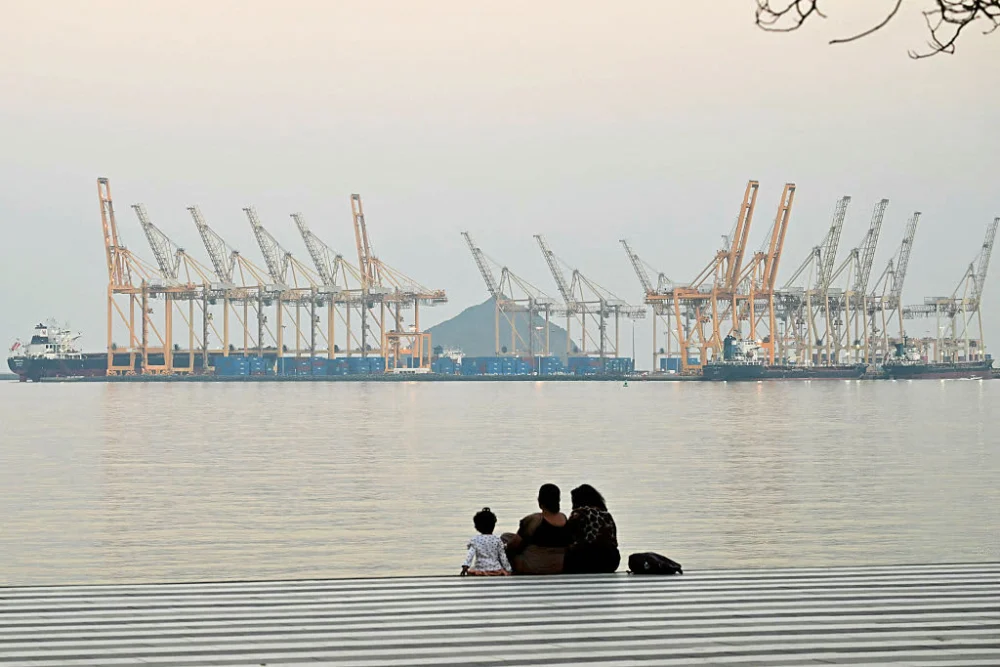
The strategic importance of the Strait of Hormuz cannot be overstated. Situated between Oman and Iran, it is the world’s most important oil transit chokepoint, through which approximately one-fifth of global oil consumption, or about 21 million barrels per day (bpd), passes. This critical waterway, connecting the Persian Gulf with the Arabian Sea and beyond, is indispensable for the export of crude oil and liquefied natural gas (LNG) from major producers like Saudi Arabia, Iran, UAE, Kuwait, and Iraq. The image of a family against the backdrop of a dockyard off Fujairah, a coastal city strategically located outside the Strait but heavily reliant on its passage for shipping and bunkering operations, underscores the immediate human and economic impact of the unfolding crisis. Disruptions in this area send ripples across the global economy, affecting not only energy prices but also international trade, shipping insurance premiums, and the overall stability of supply chains.
Recent developments have seen multiple commercial vessels attacked, severely disrupting tanker and cargo traffic. This disruption is not merely a logistical challenge but a direct threat to global energy security, prompting urgent international responses. The heightened maritime insecurity has forced shipping companies to reassess routes, consider costly rerouting, or pay substantially higher insurance premiums, all of which ultimately translate to increased costs for consumers worldwide.
International Response: IEA and G7 Mobilize Emergency Reserves
In response to the deteriorating conditions, G7 energy ministers convened in Paris on Tuesday to discuss the profound impact of the U.S.-Iran conflict on global oil and gas markets. The conflict has not only disrupted energy production in the Middle East but has also led to an effective blockade in the Strait of Hormuz, exacerbating supply concerns. The urgency of the situation was palpable, culminating in a strong commitment to coordinated action.
On Wednesday morning, Reuters reported that the International Energy Agency (IEA) was poised to recommend the release of strategic oil stocks, a measure anticipated to exceed 100 million barrels per day in the first month. This unprecedented scale signals the gravity of the market situation, far surpassing previous emergency releases. In a statement to Bloomberg, G7 energy ministers explicitly backed the "implementation of proactive measures to address the situation, including the use of strategic reserves." This collective endorsement highlights the unified international front against market instability caused by geopolitical strife.
IEA Executive Director Fatih Birol, in a statement on Tuesday, emphasized the critical nature of the current market environment. He noted that IEA member countries collectively hold over 1.2 billion barrels of public emergency oil stocks, supplemented by an additional 600 million barrels of industry stocks held under government obligation. "In oil markets, conditions have deteriorated in recent days," Birol stated, attributing this to significant transit challenges and a substantial curtailing of oil production. He warned that "this is creating significant and growing risks for the market," affirming that all available options, including the deployment of emergency oil stocks, were under consideration. The IEA did not immediately respond to CNBC’s request for further comment, underscoring the rapid and dynamic nature of the unfolding crisis.
A Historic Precedent and Japan’s Independent Action
The proposed IEA release is set to be the largest ever, exceeding the 182 million barrels put on the market by its member states following Russia’s full-scale invasion of Ukraine in 2022. That previous release, while significant, was spread over several months, whereas the current proposal indicates a more concentrated initial deployment, reflecting the immediate and acute nature of the supply shock. Countries are expected to finalize their decision on the emergency oil stocks release by Wednesday, marking a pivotal moment in global energy policy.
Adding another layer to the international response, Japan’s Prime Minister Takaichi Sanae announced on Wednesday that Tokyo plans to independently release stockpiled oil as early as Monday, according to Japanese broadcaster NHK. Japan, a major energy importer with significant strategic reserves, often acts in concert with the IEA but its independent announcement underscores the severe concerns within Asian markets about supply security and price stability. Japan’s move is likely intended to pre-empt further price hikes and ensure its domestic energy needs are met amidst the global uncertainty.
Escalation Timeline: From False Reports to Drone Attacks
The volatile atmosphere was further complicated by a series of events and reports throughout the week. On Tuesday, oil prices experienced a drastic, albeit temporary, fall after a post on U.S. Secretary of Energy Chris Wright’s social media account wrongly stated that the U.S. Navy had escorted a tanker through the Strait of Hormuz. The misinformation, quickly debunked, caused brief market confusion. White House Press Secretary Karoline Leavitt later clarified to reporters that the U.S. Navy had "not escorted a tanker or a vessel at this time," highlighting the sensitivity and potential for market manipulation in such a high-stakes environment.

However, the reality on the ground quickly turned grim. Overnight reports indicated that American forces had sunk several Iranian ships, including 16 minelayers, near the Strait of Hormuz, signaling a direct military confrontation. This act of retaliation or pre-emption further escalated the conflict, raising the specter of a wider regional war.
Wednesday morning brought further signs of the conflict’s escalation. The U.K.’s Maritime Trade Operations (UKMTO), a maritime security authority, reported that three cargo ships off Iran’s coast had been struck by projectiles. Significantly, one of these vessels was hit directly within the Strait of Hormuz, confirming the immediate and tangible threat to international shipping.
Compounding the regional instability, authorities in Dubai reported that two drones fell in the vicinity of Dubai International Airport on Wednesday, injuring four people and causing a brief closure of the city’s airspace. While the perpetrators were not immediately identified, the incident pointed to a broader pattern of regional aggression, threatening civilian infrastructure and further unnerving markets. The proximity of the drone attacks to a major international hub underscored the widespread implications of the conflict, extending beyond maritime routes to urban centers.
Expert Analysis and Market Outlook: The Duration is Key
Energy market analysts are closely watching the duration and intensity of the conflict. Sasha Foss, an energy market analyst at Marex, emphasized the critical role of the conflict’s length. Speaking on CNBC’s "Europe Early Europe" on Wednesday, Foss stated, "We really think that the critical factor remains the war’s duration, so these releases of the IEA’s stocks really buys us a few days, but in reality, really it all depends on the opening of the Strait of Hormuz." She issued a stark warning: "This conflict needs to end by the end of the week. Otherwise, we’ll see oil prices spike back up over $100."
Other market watchers echoed these concerns, cautioning that a drawn-out conflict between the U.S. and Iran could indeed push oil prices well above the $100 threshold, potentially reaching unprecedented levels. Paul Gooden, head of global natural resources at Ninety One, offered a nuanced perspective in a Tuesday note. He suggested that "if tensions de-escalate in the coming weeks, oil prices could retreat… but even in that scenario, it is unlikely prices will return to the $60-$70 range seen earlier this year." This implies a new, higher baseline for oil prices even if the immediate crisis subsides. However, Gooden also warned of dire consequences if the disruption persists: "If the disruption lasts longer, the consequences become more significant. Oil prices could spike further – potentially above $120 or even higher – until higher prices begin to curb demand." This analysis highlights the demand destruction mechanism that historically kicks in at very high price points, but also the severe economic pain preceding it.
Broader Economic Implications and Global Energy Security
The ripple effects of sustained high oil prices extend far beyond the energy sector. Higher crude costs translate directly into increased fuel prices for transportation, impacting everything from consumer commutes to global shipping and airline operations. This invariably feeds into inflation, driving up the cost of goods and services as businesses pass on increased operational expenses to consumers. Supply chains, already strained by previous global disruptions, face renewed pressure, potentially leading to shortages and further price volatility for a wide range of products.
For energy-importing nations, particularly those in Asia and Europe, a prolonged crisis in the Strait of Hormuz poses a significant economic threat, potentially derailing economic recovery efforts and tightening fiscal budgets. Governments may be forced to implement subsidies or tax cuts to cushion the blow for consumers, further straining public finances.
The current crisis also reignites discussions about long-term global energy security and diversification. While strategic reserves offer a temporary buffer, they are not a sustainable solution to fundamental supply disruptions. The incident underscores the urgency for nations to invest in alternative energy sources, enhance energy efficiency, and diversify their crude oil procurement channels to reduce reliance on volatile geopolitical chokepoints. Discussions about energy independence and regional energy alliances are likely to gain renewed momentum as countries seek to fortify their resilience against future shocks.
The U.S.-Iran conflict and its immediate impact on the Strait of Hormuz represent a critical juncture for global energy markets and international relations. The coordinated response by the IEA and G7, coupled with independent actions like Japan’s, reflects the international community’s understanding of the severity of the situation. However, the efficacy of these measures hinges entirely on the duration of the conflict and the ability to restore stability to the Strait of Hormuz. As military actions escalate and civilian targets face threats, the world watches nervously, hoping for a swift de-escalation before the economic and human costs become irreparable.
About the Author