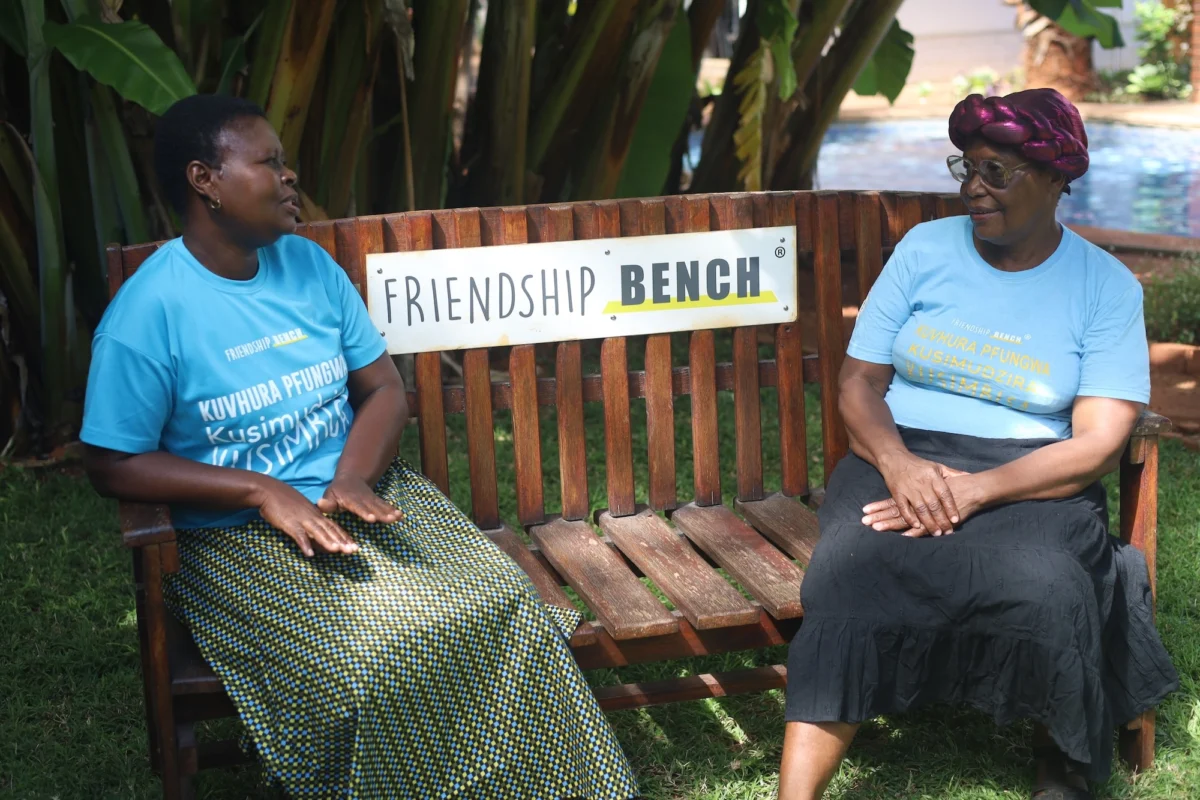
In the bustling suburb of Kuwadzana, located on the western periphery of Harare, Zimbabwe, a simple wooden bench painted in a welcoming shade of yellow serves as a sanctuary for those navigating the darkest corridors of the human experience. Elizabeth Mudzenge, a 66-year-old grandmother with a steady gaze and a calm demeanor, sits on one such bench outside a local polyclinic. For over a decade, Mudzenge has occupied this space, not merely as a community elder, but as a trained mental health counselor. Her primary tool is not a prescription pad or a clinical couch, but a structured conversational technique known in the local Shona language as "Kuvhura Pfungwa," or "opening the mind." This grassroots initiative, known as Friendship Bench Zimbabwe, has transformed from a localized response to a public health crisis into a globally recognized model for community-based mental healthcare.
The Friendship Bench program represents a critical intervention in a nation where the formal mental health infrastructure is severely overburdened. Zimbabwe, a country of approximately 15 million people, is currently served by fewer than 20 registered psychiatrists. This staggering ratio—one psychiatrist for every 750,000 residents—renders traditional clinical psychiatric care inaccessible to the vast majority of the population. When factoring in the geographic concentration of these professionals in major urban centers and the prohibitive costs of private therapy, the "treatment gap" for mental health disorders in Zimbabwe becomes an expansive chasm. The Friendship Bench fills this void by leveraging the existing social capital of community grandmothers, turning them into the primary providers of evidence-based psychological support.
The Genesis of a Movement: A Chronology of Task-Shifting
The Friendship Bench was founded in 2006 by Dr. Dixon Chibanda, one of the few psychiatrists practicing in Zimbabwe at the time. The impetus for the project was born out of tragedy. Dr. Chibanda frequently tells the story of a young patient who died by suicide because her family could not afford the $15 bus fare to visit him at the hospital for a follow-up appointment. This realization—that a centralized, hospital-based model of psychiatric care was failing those who needed it most—led Dr. Chibanda to seek a decentralized, community-driven alternative.
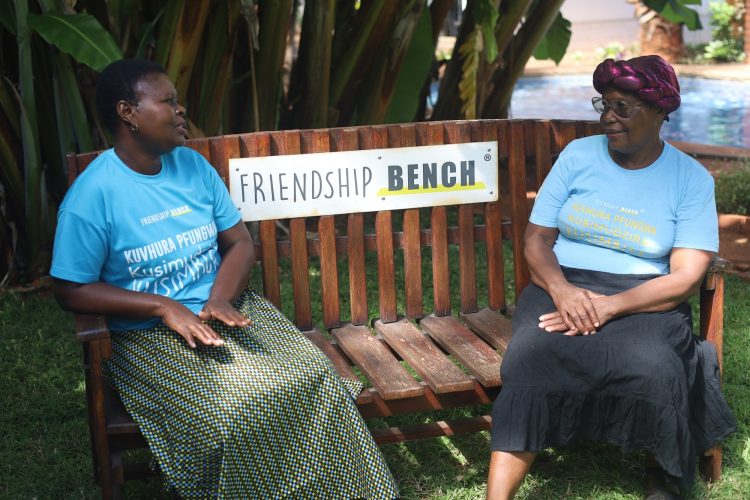
In 2006, with no budget and limited resources, Dr. Chibanda began training 14 grandmothers in the Mbare suburb of Harare. These women were chosen because they were already respected as the "custodians of culture" and the natural go-to sources for advice within their neighborhoods. Over the next two decades, the program followed a steady trajectory of expansion:
- 2006–2010: Pilot phase in Mbare, focusing on basic problem-solving therapy (PST) and establishing the "bench" as a safe, non-stigmatized space.
- 2010–2015: Formalization of the training curriculum and the beginning of rigorous clinical trials to validate the efficacy of the grandmother-led interventions.
- 2016: Publication of a landmark study in The Journal of the American Medical Association (JAMA), which proved that patients seen by Friendship Bench grandmothers showed significantly lower symptoms of depression compared to those receiving standard care.
- 2017–2022: Nationwide scaling across Zimbabwe’s provinces and the first international replications in neighboring African nations.
- 2023–2024: Global expansion reaching the United States, with a high-profile launch in Washington, D.C., demonstrating the universal applicability of the model.
Cultural Custodians: Why Grandmothers?
The decision to utilize grandmothers as counselors was a strategic choice rooted in Zimbabwean sociology. In Shona and Ndebele cultures, elderly women are traditionally viewed as mediators, advisors, and keepers of family wisdom. Unlike younger health workers, grandmothers are seen as non-judgmental and deeply invested in the long-term well-being of their communities.
Thandiwe Mashunye, head of programs at Friendship Bench Zimbabwe, emphasizes that these women are "embedded in local communities." They are recruited through primary health facilities and community leadership structures, ensuring they possess an innate understanding of the local socio-economic pressures. "Grandmothers are rich in wisdom and lived experience," Mashunye noted. "Their cultural knowledge reduces stigma and improves acceptability." By utilizing women over the age of 50, the program taps into a demographic that often has more time to volunteer and possesses the patience required for slow, methodical talk therapy.
Annamore Mupfungidza, a 57-year-old grandmother of five who joined the program in 2016, views her clients as her own grandchildren. This familial framing is essential for breaking down the barriers of "Kufungisisa"—a Shona term that literally translates to "thinking too much," used to describe the ruminative symptoms of depression and anxiety. By framing mental health struggles through local terminology rather than clinical Western jargon, the grandmothers make the concept of "therapy" feel like a traditional community consultation.
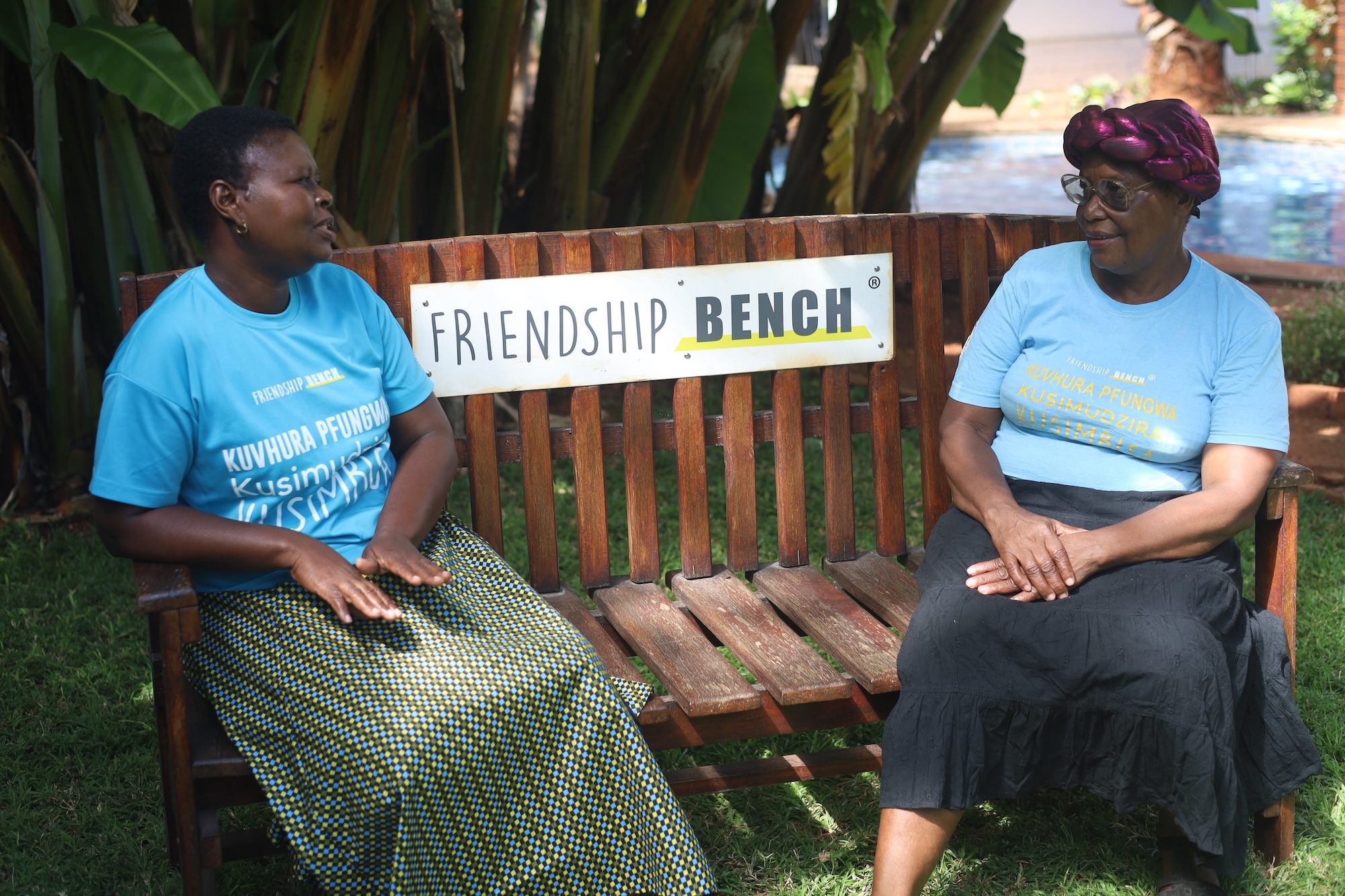
The Methodology: "Opening the Mind" through PST
The core of the Friendship Bench intervention is Problem-Solving Therapy (PST). This is a brief, structured psychological intervention that helps individuals identify their most pressing problems and develop practical, step-by-step solutions. The grandmothers undergo a rigorous training process, typically lasting several days followed by a month-long internship, where they learn to guide clients through three distinct phases:
- Opening the Mind (Kuvhura Pfungwa): The client is encouraged to share their story. The grandmother listens actively, providing a "tissue for the tears" and validating the client’s emotions.
- Uplifting (Kusimudzira): The counselor helps the client prioritize their problems, focusing on what is manageable in the immediate future.
- Strengthening (Kusimbisa): The client and grandmother work together to create an action plan. This might involve reaching out to a relative for support, finding a way to generate income, or reporting domestic abuse to the appropriate authorities.
The efficacy of this method is evident in the story of a young mother who visited Elizabeth Mudzenge. The woman was a victim of domestic abuse and had contemplated suicide. Through the PST process, Mudzenge guided her to consider the welfare of her children and helped her identify a specific relative she could contact for safety. By the end of the sessions, the woman’s suicidal ideation had receded, replaced by a concrete plan for her and her children’s survival.
Supporting Data: The Mental Health Crisis in Zimbabwe
The need for such interventions is underscored by the dire socio-economic conditions in Zimbabwe. The country has faced decades of economic instability, hyperinflation, and high unemployment rates, which frequently exceed 80% in the informal sector. These systemic stressors are primary drivers of mental health disorders.
According to World Health Organization (WHO) data, Zimbabwe has one of the highest suicide rates in Africa. A 2022 regional fact sheet highlighted that the stressors of poverty, substance abuse among youth, and the prevalence of HIV/AIDS create a "perfect storm" for psychological distress. Furthermore, UNICEF reports indicate that substance abuse—particularly of "mutoriro" (crystal meth)—is on the rise among Zimbabwean adolescents, further complicating the mental health landscape.

Friendship Bench Zimbabwe has demonstrated that its model can move the needle on these statistics. Over the past 20 years, the organization has reached more than 1 million people. Internal data reveals that 69 percent of those seeking help are women, many of whom are dealing with the dual burden of economic hardship and gender-based violence. The program’s ability to screen for severe conditions—such as psychosis or acute suicide risk—and refer them to the few available professional mental health nurses or psychiatrists ensures that the grandmothers act as a vital triage system for the national health department.
Institutional Support and Systemic Challenges
The Friendship Bench does not operate in isolation. It works in close partnership with the Zimbabwean Ministry of Health and Child Care, the University of Zimbabwe, and the World Health Organization. This integration into the public health system allows the grandmothers to be stationed directly at polyclinics, ensuring that mental health is treated with the same urgency as physical ailments like malaria or tuberculosis.
However, the program faces significant hurdles. Despite receiving funding from international philanthropic organizations and donors, the "resource gap" remains a constant threat. Elizabeth Mudzenge noted that follow-up appointments are often missed because there are no funds for transport or communication. "We used to have resources to support some clients in establishing businesses, but these days resources are a challenge," she lamented.
Thandiwe Mashunye echoed these concerns, pointing out that as the model scales, the costs of continued training, supervision, and digital data systems increase. The broader socioeconomic environment also means that while the grandmothers can help "open the mind," they cannot single-handedly solve the structural poverty and lack of employment that trigger their clients’ distress.

Analysis of Implications: A Global Blueprint for Task-Shifting
The success of the Friendship Bench has profound implications for global health policy. The "task-shifting" model—the delegation of clinical tasks to less specialized workers—is increasingly viewed as the only viable way to achieve Universal Health Coverage (UHC) for mental health in low- and middle-income countries.
The replication of the program in Kenya, Malawi, Tanzania, Botswana, and most recently the United States, suggests that the "grandmother" archetype and the simplicity of a bench are universal. In 2024, the launch of the program in Washington, D.C., by HelpAge USA highlighted that even in wealthy nations, the formal mental health system can be alienating, expensive, and insufficient. In the D.C. pilot, over 20 grandmothers have already conducted more than 500 sessions across libraries, churches, and senior centers. This suggests that the "loneliness epidemic" and the mental health crisis in the West can benefit from the same community-centric wisdom that saved lives in the suburbs of Harare.
Conclusion
The Friendship Bench Zimbabwe is more than a mental health program; it is a testament to the power of human connection and the untapped potential of elderly community members. By validating the wisdom of grandmothers and providing them with clinical tools, Dr. Dixon Chibanda and his team have created a resilient, scalable, and culturally resonant solution to one of the world’s most neglected health crises. As the world continues to grapple with rising rates of depression and anxiety, the simple wooden benches of Zimbabwe offer a profound lesson: sometimes, the most effective medicine is a listening ear and a place to sit. Still, for the model to reach its full potential, sustained global investment is required to ensure that these "custodians of culture" have the logistical support necessary to continue their life-saving work.
About the Author