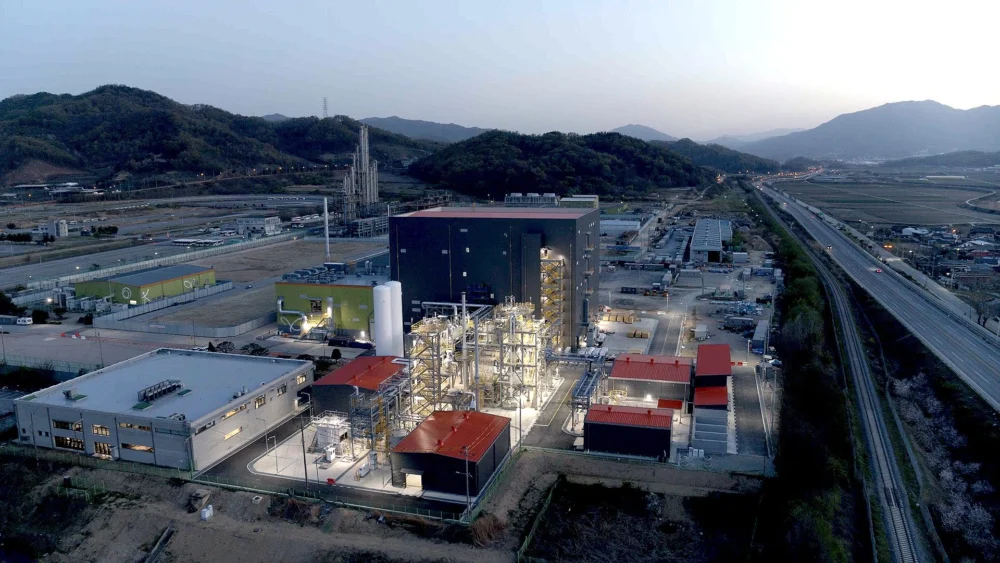
The long-anticipated leap forward in battery technology, specifically the adoption of silicon anodes, has taken a significant stride towards mass market realization with Group14 Technologies announcing the commencement of production at its new BAM-3 facility in South Korea. This state-of-the-art factory is poised to significantly increase the global supply of silicon anode materials, a critical component for unlocking the next generation of electric vehicles (EVs) and high-performance consumer electronics. The development marks a pivotal moment for the industry, promising to address key limitations of current lithium-ion battery technology, including faster charging times and increased energy density, which have been a significant focus for both EV manufacturers and power users of smartphones and wearable devices.
The Promise of Silicon Anodes
For years, researchers and industry pioneers have recognized the immense potential of silicon as an anode material. Unlike graphite, the incumbent material in most lithium-ion batteries, silicon possesses a theoretical capacity to store up to ten times more lithium ions. This translates directly into the potential for batteries that can hold significantly more energy in the same physical space, or conversely, achieve the same energy capacity with a smaller, lighter, and less expensive battery pack.
However, the widespread adoption of pure silicon anodes has been hampered by significant engineering challenges. When lithium ions are inserted and extracted during charging and discharging cycles, pure silicon anodes tend to swell and shrink dramatically. This volumetric change, often exceeding 300%, leads to mechanical stress, cracking, and rapid degradation of the anode structure, severely limiting its lifespan and overall battery performance. This durability issue has been the primary bottleneck preventing silicon from supplanting graphite on a large scale.
Group14’s Innovative Solution
Group14 Technologies has developed a proprietary approach to overcome these limitations. Their breakthrough lies in the creation of a unique composite material that utilizes a porous, hard carbon scaffold. This scaffold acts as a robust framework, encasing minuscule silicon particles and preventing them from undergoing excessive swelling and crumbling. The nanoscale pores within this structure facilitate the efficient movement of lithium ions and electrons, ensuring rapid charging and discharging capabilities without compromising the structural integrity of the anode. This innovative design has been instrumental in enabling customers to achieve up to a 50% increase in energy density and, in some cases, charge batteries from empty to full in as little as 90 seconds.
Scaling Up for the EV Revolution
While silicon anode technology has already begun to trickle into consumer electronics – with companies like Whoop leveraging materials from Sila and Group14’s batteries found in various smartphones – the true transformative potential lies within the electric vehicle sector. The EV market represents an order of magnitude larger demand for battery materials compared to consumer electronics, according to industry analysis firms like Benchmark Minerals. To meet this demand, startups like Group14 needed to achieve unprecedented production scale.
The inauguration of Group14’s BAM-3 factory in South Korea is a direct response to this need. This facility boasts an annual production capacity of 2,000 metric tons of silicon battery materials. This output is substantial enough to support approximately 10 gigawatt-hours (GWh) of energy storage, which translates to powering roughly 100,000 long-range electric vehicles. This significant increase in manufacturing capacity is a critical step towards making silicon anode batteries a mainstream reality for the automotive industry.
A Strategic Partnership and Evolution
The BAM-3 factory represents a significant investment and a testament to the strategic vision of Group14. The facility was initially established as a joint venture between Group14 and SK, a prominent Korean battery manufacturer. SK initially held a 75% stake in the project. However, in a strategic pivot, SK sold its stake to Group14 last summer.
Rick Luebbe, co-founder and CEO of Group14, commented on this development, explaining that SK had been navigating its own internal challenges, including financial considerations and a reprioritization of its battery and battery materials strategies. "It did open up a great opportunity for us to acquire it from SK," Luebbe stated. This acquisition has allowed Group14 to gain full control of this vital production asset, streamlining its operational strategy and accelerating its path to market dominance.
Broad Industry Impact and Customer Adoption
The implications of Group14’s increased production capacity extend far beyond the company itself. The availability of high-quality, scalable silicon anode material is a game-changer for the entire EV ecosystem. Group14 has already established strong relationships with a diverse range of key players in the industry. These include Porsche’s battery division, Cellforce Group, as well as advanced battery developers like StoreDot, Molicel, and Sionic. Porsche’s commitment to silicon anode technology is further underscored by its venture arm’s investment in Group14.
The benefits of silicon anodes are being realized in various applications. For instance, Sionic is utilizing the technology to achieve energy density boosts of up to 50% in its battery designs. Meanwhile, Molicel is focusing on the rapid charging capabilities, working on battery designs capable of a full charge in an astonishing 90 seconds.
Reshaping the EV Landscape: Flash Charging and Beyond
The prospect of such rapid charging times has the potential to fundamentally alter the consumer experience of owning an EV. The persistent concern of "range anxiety" – the fear of running out of battery power before reaching a charging station – has led automakers to focus on increasing battery size, which in turn adds weight, bulk, and cost to vehicles. However, if EVs can be recharged in a matter of minutes, the need for excessively large battery packs diminishes significantly.
This potential is already being demonstrated by leading EV manufacturers. Chinese EV giant BYD recently unveiled a new battery pack capable of "flash" charging from 10% to 70% in just five minutes. While BYD has not explicitly detailed the anode technology, Luebbe expressed strong conviction that silicon-carbon, the type of material Group14 produces, must be the underlying technology enabling such rapid charging.
The widespread adoption of flash charging capabilities could render range anxiety largely obsolete. This would allow automakers to design lighter, more agile, and more affordable EVs. As Luebbe illustrated with his own experience owning a Rivian with a large, expensive battery, the cost savings and design flexibility offered by flash charging are immense.
Future Implications: A World Beyond Charging Concerns
The implications of this technological shift extend even further. Imagine a future where charging an EV is as convenient as filling up a gasoline-powered car. With the advent of ultra-fast charging, concepts that might seem far-fetched today, such as inductive charging at traffic lights, begin to move from the realm of science fiction to practical feasibility.
"You’d never think about charging ever again," Luebbe remarked, painting a picture of a future where the daily act of charging an EV is no longer a consideration. This level of convenience, coupled with increased energy density and reduced cost, could accelerate the global transition to electric mobility, making EVs accessible and appealing to a broader segment of the population.
Looking Ahead: Continued Innovation and Market Penetration
Group14 Technologies’ BAM-3 facility is a critical milestone, but it represents a step in an ongoing journey. The company continues to work with its partners to refine and optimize silicon anode technology for various applications. The success of this large-scale production facility will be closely watched by competitors and automotive manufacturers alike. As the cost of silicon anode materials decreases and production volumes continue to climb, the transition away from traditional graphite anodes in high-performance applications is likely to accelerate.
The automotive industry, in particular, is keenly focused on these advancements. The race to deliver more efficient, longer-range, and faster-charging EVs is intensifying, and silicon anode technology is emerging as a key enabler. The consistent supply of high-capacity silicon anode material from facilities like Group14’s BAM-3 is essential for meeting the ambitious electrification goals set by governments and automakers worldwide. The promise of a future where EVs offer comparable or superior convenience to internal combustion engine vehicles is drawing nearer, fueled by innovations in battery chemistry and manufacturing scale.
About the Author