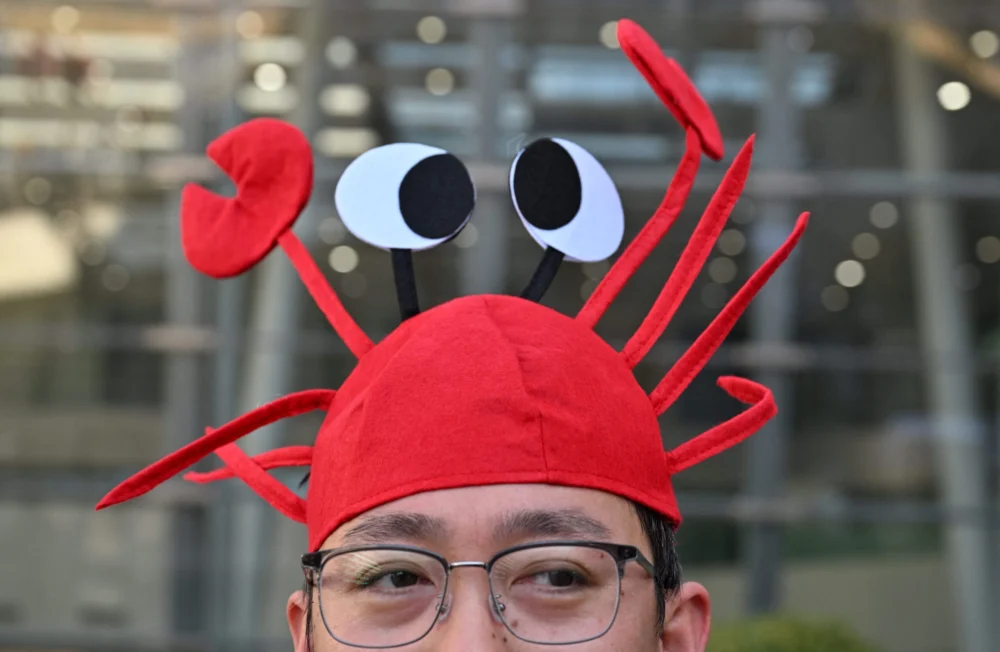
A man wearing a distinctive lobster hat, symbolizing the OpenClaw logo, an increasingly ubiquitous open-source AI assistant, was a common sight at the Baidu headquarters in Beijing on March 11, 2026, encapsulating a nationwide phenomenon. This scene underscores China’s swift and enthusiastic adoption of OpenClaw, a sophisticated artificial intelligence tool that has captivated the nation’s tech landscape and even garnered strategic support from local governments. In recent weeks, major technology companies across China have embarked on an aggressive campaign to expand access to this lobster-themed, open-source AI agent, fundamentally reshaping how individuals and businesses interact with artificial intelligence.
The Rise of Autonomous AI Agents: Beyond the Chatbot Paradigm
At its core, OpenClaw represents a new frontier in AI: the autonomous AI agent. Unlike conventional chatbots, which primarily serve as reactive conversational interfaces, AI agents are designed to execute complex tasks with minimal human intervention. They can proactively manage a diverse array of functions, from drafting and sending emails, scheduling intricate meetings, and booking restaurant reservations to even handling more complex data analysis and operational tasks. This proactive capability necessitates broader access to user data and system functionalities, naturally raising pertinent privacy and security concerns that have become a focal point of public discourse and regulatory scrutiny. The transition from reactive chatbots to proactive agents marks a significant leap in AI utility, promising enhanced efficiency but also demanding careful consideration of ethical and security frameworks.
OpenClaw’s journey began with its initial launch in November, quickly gaining traction within developer communities for its innovative architecture and open-source ethos. Its Austrian creator, Peter Steinberger, joined OpenAI in mid-February, a testament to the project’s groundbreaking nature and the talent it attracted, further cementing its credibility within the global AI landscape. The ability of OpenClaw to process requests through popular messaging applications like Telegram and WhatsApp has significantly lowered the barrier to entry, enabling widespread experimentation and adoption across various user segments.
China’s Rapid Mobilization: A "Lobster Special Forces" Approach
The response from China’s tech sector has been nothing short of a strategic mobilization. On Tuesday, Chinese tech behemoth Tencent announced the launch of a comprehensive suite of user-friendly AI products, all meticulously built upon the OpenClaw framework. Dubbing these offerings "lobster special forces," Tencent strategically integrated them to be fully compatible with its colossal superapp, WeChat, ensuring seamless access for hundreds of millions of users. This move by Tencent is particularly significant given WeChat’s pervasive presence in daily Chinese life, positioning OpenClaw to reach an unprecedented scale of adoption.
Concurrently, startup Zhipu AI, a rising star in China’s AI scene, unveiled its localized version of OpenClaw on the same day. This iteration offered an AI agent pre-installed with over 50 popular skills, accessible through a "one-click installation" process designed to simplify adoption for non-technical users. Such initiatives by leading Chinese companies have not only amplified consumer interest but have also resulted in China’s OpenClaw usage demonstrably surpassing that of the U.S., according to data compiled by American cybersecurity firm SecurityScorecard. This data point underscores China’s unique capacity for rapid technological absorption and its population’s eagerness to embrace cutting-edge innovations.
Jaylen He, CEO of Violoop, a Shenzhen-based startup developing a device with features akin to OpenClaw but with enhanced security protocols, observed this phenomenon firsthand. "In terms of adopting the new technologies, I think China definitely has a really large community that always wants to try what’s there, what’s new, and don’t want to be left behind," He stated, highlighting the cultural impetus driving this rapid embrace. He further noted the widespread interest, even among individuals outside the traditional tech industry, underscoring the broad appeal and perceived utility of OpenClaw.

Economic Imperatives and the Rise of Domestic LLMs
The fervent adoption of OpenClaw in China is not merely a reflection of technological curiosity; it is deeply intertwined with the nation’s broader economic strategy. As China’s economy navigates various headwinds, including a slowdown in traditional growth sectors, the AI industry presents a crucial opportunity for domestic tech companies to attract paying users and stimulate new economic activity. OpenClaw, with its potential to streamline tasks and create new efficiencies, offers a compelling value proposition in this environment.
Moreover, the nationwide OpenClaw craze has provided a significant boost to the popularity and development of Chinese-developed large language models (LLMs). Winston Ma, an adjunct professor at NYU School of Law, emphasized this symbiotic relationship. Autonomous AI agents like OpenClaw are inherently model-agnostic, meaning they can seamlessly integrate with a variety of LLMs, from OpenAI’s ChatGPT and Anthropic’s Claude to a growing roster of domestic Chinese models. This flexibility has allowed Chinese LLM developers to capitalize on OpenClaw’s popularity, offering robust alternatives to foreign models.
Evidence of this domestic ascendancy is compelling. According to OpenRouter, a platform that provides developers with unified access to various AI models, the top three tools leveraged by OpenClaw users on its marketplace over the past month were exclusively Chinese companies. Their combined usage reportedly doubled that of the three most-used Google Gemini and Anthropic Claude models, signaling a significant shift in the competitive landscape. This trend is further bolstered by the fact that Chinese-made AI models released this year have considerably narrowed the performance gap with their U.S. counterparts, often offering comparable AI capabilities at a fraction of the cost. This cost-effectiveness significantly reduces the operational expenses for users running OpenClaw, making it an even more attractive proposition within the Chinese market.
Easing Installation Hurdles: A Collaborative Effort
While OpenClaw’s popularity has surged, early experts often cited its complex installation process as a potential barrier to mass adoption, particularly for non-technical users. Recognizing this critical impediment, Chinese technology companies have launched concerted efforts to simplify the setup procedure, transforming a technical challenge into a community-driven initiative.
Following an initial burst of interest last month, Chinese social media platforms have been inundated with posts detailing company-organized OpenClaw installation events. These gatherings, often designed with a festive atmosphere, have seen organizers distribute red lobster plush toys, playfully reinforcing the project’s crustacean-themed branding and fostering a sense of community around the technology.
ByteDance’s cloud unit, Volcano Engine, the parent company of TikTok, recently unveiled its own streamlined version of OpenClaw, dubbed "ArkClaw." This web browser-based iteration eliminates the need for complex local software installations, making it instantly accessible to a broader user base. Other companies have gone further, providing direct, in-person support. Tencent, for instance, hosted a free OpenClaw setup session last week in Shenzhen, its corporate hub, assisting "hundreds" of individuals in installing the tool on TencentCloud.
The commercial sector is also contributing to this accessibility drive. JD.com, a leading e-commerce giant, launched a dedicated service page on Tuesday, allowing users to pay 399 yuan (approximately $58 USD) for remote assistance from Lenovo’s Baiying IT maintenance team to deploy the software. Similarly, Meituan, a prominent on-demand service platform, reportedly announced a comparable partnership with Lenovo on Monday, indicating a burgeoning market for AI agent installation and support services.

This growing accessibility and interest in OpenClaw are fundamentally altering how Chinese consumers perceive and are willing to pay for AI services. Violoop, for instance, which plans to launch its first device on Kickstarter in April at around $300 per unit with a $30 monthly subscription for AI services, initially targeted the U.S. and other overseas markets. However, in light of the OpenClaw phenomenon, CEO He confirmed a strategic pivot towards a China launch. "After 2026, after OpenClaw, I think we are seeing a significant rise, both in terms of [interest in] paying for good models and also that MiniMax and Kimi have released very capable models," He explained. While acknowledging that these domestic models may not yet surpass ChatGPT or Anthropic, he emphasized their growing capability and value creation for users, marking a pivotal shift in the market. Violoop has already secured at least two rounds of initial funding this year, primarily to scale up production to meet anticipated demand.
Governmental Catalysts and Cautions: A Dual Approach
The Chinese government’s stance on OpenClaw presents a fascinating duality. Despite official warnings published by state media outlets, including Xinhua News Agency, highlighting potential security risks associated with OpenClaw, several local governments have actively introduced incentives to encourage companies and individuals to develop applications utilizing the AI tool. This reflects a strategic balancing act: fostering innovation and domestic technological leadership while attempting to mitigate inherent security vulnerabilities in an open-source, data-intensive technology.
In the past week alone, Shenzhen’s Longgang district and Hefei’s high-tech development zone announced substantial equity financing support of up to 10 million yuan (approximately $1.46 million USD). These initiatives are complemented by direct subsidies specifically targeting "one-person companies" leveraging OpenClaw. A district within Suzhou city followed suit, offering similar subsidies alongside practical benefits like 30 days of free office space, accommodation, and meals.
The emergence and popularization of the "one-person company" concept, referring to individuals or small teams harnessing AI to rapidly build businesses, is particularly pertinent. This trend aligns seamlessly with Beijing’s broader strategic vision, as formalized in its latest five-year plan, which emphasizes spurring domestic tech development and fostering innovation at the grassroots level. The government’s willingness to support these nascent ventures, even amidst security advisories, underscores the perceived long-term economic and strategic benefits of widespread AI adoption.
Broader Implications: Reshaping the AI Landscape
Increased Chinese participation in the OpenClaw phenomenon is contributing significantly to a global movement. Its popularity is starkly illustrated by its performance on GitHub, the premier coding platform, where the OpenClaw project has amassed more "stars" than Linux, a foundational open-source operating system that underpins much of modern computing infrastructure. This achievement is not merely symbolic; it signifies a monumental shift in the open-source community’s engagement with AI agents.
Violoop’s CEO Jaylen He drew historical parallels, stating, "This is like the 2022 ChatGPT moment. This is like the 2025 DeepSeek moment." He articulated a widespread sentiment: "I think the craving, the desire, for a personal assistant that can really help the user, the desire has been there, and has been suppressed for a very long time." This suggests that OpenClaw is not just a passing trend but rather a fulfillment of a deep-seated demand for highly capable, personalized AI assistance.
The implications of this rapid embrace are far-reaching. For China, it represents a potent accelerator for its domestic AI ecosystem, fostering competition and innovation among LLM developers and application providers. It also signals a maturing consumer market increasingly willing to invest in advanced AI services. Globally, China’s aggressive adoption of OpenClaw solidifies its position as a major player in the open-source AI landscape, potentially influencing future development trajectories and setting new benchmarks for AI agent deployment. As the world watches, China’s "lobster craze" is poised to leave an indelible mark on the future of artificial intelligence, presenting both unprecedented opportunities and complex challenges for governance, security, and societal integration.
About the Author