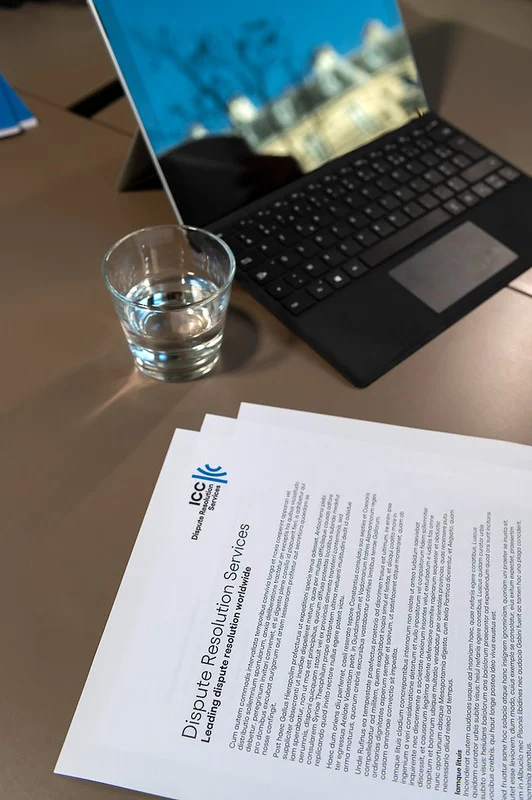
The International Chamber of Commerce (ICC) has formally announced a strategic initiative to reduce administrative expenses by 20% for eligible arbitration cases related to the recovery and reconstruction of Syria. This decision, aimed at facilitating the country’s reintegration into the global economic fold, marks a significant expansion of the ICC’s specialized dispute resolution frameworks designed for nations undergoing exceptional economic and social transitions. By lowering the financial barriers to high-level legal recourse, the ICC International Court of Arbitration seeks to provide a stable, predictable, and neutral environment for international investors and local enterprises alike as they navigate the complexities of rebuilding a nation devastated by more than a decade of conflict.
This measure is not an isolated policy but part of a broader institutional strategy by the ICC to support economies facing severe disruptions. The framework follows similar initiatives recently deployed for Ukraine and Lebanon, where the ICC recognized that the high cost of dispute resolution could serve as a deterrent to necessary private capital inflows. In Syria’s case, the initiative is positioned as a tool for risk mitigation, offering a degree of legal certainty in a landscape characterized by institutional fragility and infrastructure deficits.
Strategic Vision and Official Endorsement
ICC Secretary General John W.H. Denton AO emphasized the geopolitical and economic necessity of this move, noting that Syria’s prolonged isolation from global markets has hindered its ability to attract the investment required for large-scale recovery. Denton stated that for too long, the country has remained on the periphery of the global trade system. He highlighted that the new initiative is designed to increase access to the ICC’s world-class dispute resolution services, which in turn helps to de-risk private capital. According to Denton, providing a robust legal framework is essential for accelerating the country’s reintegration into the global economy and ensuring that reconstruction efforts are sustainable and legally sound.
The ICC’s leadership views the reduction in administrative fees as a catalyst for "institutional confidence." In post-conflict zones, the primary concern for foreign direct investment (FDI) is often the lack of an independent judiciary or the fear of political interference in local courts. By offering a 20% discount on the administrative costs of the ICC Court—the entity that oversees the progress of cases—the ICC is signaling that it is prepared to shoulder some of the financial burden to ensure that the "Rule of Law" remains a cornerstone of the Syrian recovery process.
Contextual Background: The Syrian Economic Landscape
To understand the impact of this initiative, one must look at the scale of the destruction and the subsequent need for legal infrastructure. Since the conflict began in 2011, the Syrian economy has contracted by more than 60%. The World Bank and various United Nations agencies have estimated that the cost of physical reconstruction alone ranges between $250 billion and $400 billion. Critical sectors such as energy, transport, and telecommunications have seen nearly total degradation in certain regions.
As reconstruction projects begin to materialize—often involving complex multi-party contracts, public-private partnerships, and international consortiums—the likelihood of commercial disputes increases. These disputes frequently involve issues of non-performance due to force majeure, currency fluctuations, supply chain interruptions, and regulatory shifts. Without access to a neutral forum like the ICC, these legal bottlenecks could stall vital infrastructure projects for years.
Chronology of ICC Crisis Response Frameworks
The Syria initiative represents the third major pillar in the ICC’s modern crisis response evolution. The timeline of these interventions illustrates a growing trend of "legal diplomacy" within the organization:
- The Lebanon Recovery Initiative (2020–2021): Following the catastrophic Beirut port explosion and the subsequent Lebanese liquidity crisis, the ICC introduced measures to support Lebanese businesses. This included fee reductions and expedited procedures to ensure that the economic collapse did not result in a total cessation of international trade participation.
- The Ukraine Reconstruction Initiative (2024): In response to the ongoing conflict in Ukraine, the ICC announced a comprehensive dispute resolution package. This was designed to reassure international donors and private contractors involved in the "Build Back Better" scheme that their investments would be protected under the ICC Rules of Arbitration, regardless of the volatility on the ground.
- The Syria Recovery Framework (Present): Building on the lessons learned from Lebanon and Ukraine, the ICC has now extended this support to Syria. This marks a shift toward recognizing that "recovery" is a long-term process that requires institutional support even after the height of active hostilities has subsided in various regions.
The Financial Mechanics of Administrative Reductions
In ICC arbitration, the costs are generally divided into two categories: the fees and expenses of the arbitrators, and the administrative expenses of the ICC Court. The 20% reduction applies specifically to the administrative expenses. These expenses cover the ICC’s role in overseeing the constitution of the arbitral tribunal, monitoring the progress of the case, and scrutinizing the final award to ensure it is enforceable in jurisdictions worldwide.
For large-scale infrastructure projects, where the amount in dispute can reach hundreds of millions of dollars, administrative fees can be substantial. A 20% reduction provides a tangible financial incentive for parties to opt for ICC arbitration over other, perhaps less reputable, local alternatives. This reduction is particularly vital for small and medium-sized enterprises (SMEs) in Syria that may otherwise find the cost of international arbitration prohibitive.
Targeted Sectors and Potential Legal Friction Points
The ICC has identified three primary sectors where this initiative is expected to have the most immediate impact:
Infrastructure and Urban Development
The reconstruction of housing, schools, and hospitals involves massive procurement contracts. Disputes in this sector often revolve around delays, quality of materials, and payment schedules. By providing a reduced-cost arbitration path, the ICC ensures that these projects do not remain in legal limbo.
Energy and Utilities
Syria’s energy grid requires a total overhaul. Investment in oil, gas, and increasingly, renewable energy sources like solar and wind, involves long-term "concession agreements" between the state and private entities. These contracts are notorious for disputes regarding sovereign immunity and changing environmental regulations.
Transport and Logistics
The restoration of ports, railways, and highways is essential for trade. These projects often involve cross-border logistics and international shipping laws. The ICC’s expertise in the "Incoterms" rules and international commercial law makes it the natural choice for resolving transport-related conflicts.
Navigating the Sanctions Environment
A significant challenge to the ICC’s initiative remains the complex web of international sanctions imposed on Syria by the United States (via the Caesar Act), the European Union, and other nations. These sanctions often restrict financial transactions and dealings with certain Syrian entities.
The ICC has indicated that it will maintain rigorous compliance with all international sanctions regimes. The 20% reduction and the provision of services will be conducted within the strict boundaries of legal permissibility. This means that while the ICC is opening its doors to Syrian recovery cases, it will also act as a vetting mechanism, ensuring that the parties involved are not on restricted lists. This dual role—as a facilitator of trade and a guardian of legal compliance—is crucial for reassuring Western investors who are wary of the legal risks associated with Syrian projects.
Capacity Building and Local Engagement
Beyond fee reductions, the ICC has committed to a long-term strategy of "capacity building." This involves actively engaging with Syrian legal professionals, bar associations, and public institutions. The goal is to train a new generation of Syrian lawyers in the nuances of international arbitration and the ICC Rules.
By cooperating with national and institutional stakeholders, the ICC aims to create a "legal ecosystem" within Syria that is compatible with international standards. This includes exploring avenues of cooperation with local chambers of commerce to promote mediation as a faster, cheaper alternative to arbitration for smaller disputes.
Broader Implications for Global Trade and Post-Conflict Stability
The ICC’s move is being watched closely by international legal experts and economists. It suggests a paradigm shift where international organizations are taking a proactive, rather than reactive, role in post-conflict reconstruction.
From a factual analysis standpoint, the implications are three-fold:
- Legal Certainty as an Asset: By lowering the cost of arbitration, the ICC is effectively turning "legal certainty" into a more affordable commodity for a nation that desperately needs it to attract FDI.
- Standardization of Recovery: By funneling Syrian disputes through the ICC, the international community ensures that the outcomes are based on established legal principles rather than ad-hoc local rulings.
- Economic Reintegration: This initiative serves as a bridge, allowing Syrian businesses to reconnect with international partners under the umbrella of a trusted global institution.
In conclusion, the ICC’s decision to apply a 20% reduction on administrative expenses for Syrian recovery cases is a calculated effort to use the mechanisms of international law to foster economic stability. As the country moves toward a difficult and protracted reconstruction phase, the presence of a high-quality, accessible, and neutral dispute resolution framework may prove to be as essential as the physical materials used to rebuild its cities. Through this initiative, the ICC reaffirms its role not just as a court, but as a vital partner in the global effort to restore economic vitality to regions affected by conflict.
About the Author