India’s burgeoning quick commerce market is undergoing a dramatic transformation, marked by unprecedented demand growth and an escalating battle for market dominance. While some players report demand more than doubling, the recent aggressive entry and rapid expansion of e-commerce behemoths Flipkart and Amazon are fundamentally reshaping the competitive landscape. This influx of well-capitalized players into an already crowded space is raising the stakes significantly, placing immense pressure on incumbents and intensifying an existing struggle for sustainable profitability. The sector, once dominated by agile startups, is swiftly evolving into a high-stakes arena where deep pockets and strategic scale are becoming paramount.
The Landscape Before the Giants: A Brief History of Quick Commerce in India
The genesis of quick commerce in India can be traced back to the broader evolution of e-commerce, which gained significant traction in the mid-2010s. Initially, online grocery delivery services, often operating on next-day or scheduled delivery models, paved the way. However, the COVID-19 pandemic acted as a major catalyst, accelerating consumer adoption of online services and creating an urgent demand for immediate gratification. This environment fostered the rise of quick commerce, promising deliveries in as little as 10-20 minutes.
Pioneering this shift were companies like Blinkit (formerly Grofers), Swiggy Instamart (an extension of the food delivery giant Swiggy), and Zepto. These players swiftly built networks of "dark stores" – small, localized warehouses optimized for rapid picking and packing – to fulfill orders efficiently. Their innovative use of technology, coupled with a growing network of gig economy delivery partners, allowed them to tap into the burgeoning urban consumer base craving convenience. Early successes attracted significant venture capital, with investors pouring hundreds of millions into these startups, fueling their rapid expansion and market penetration. By mid-2024, the quick commerce sector had established itself as a vibrant, if intensely competitive, segment of India’s digital economy, with over 6,000 dark stores already in operation across the nation.
Flipkart’s Aggressive Entry: A Latecomer’s Blitz
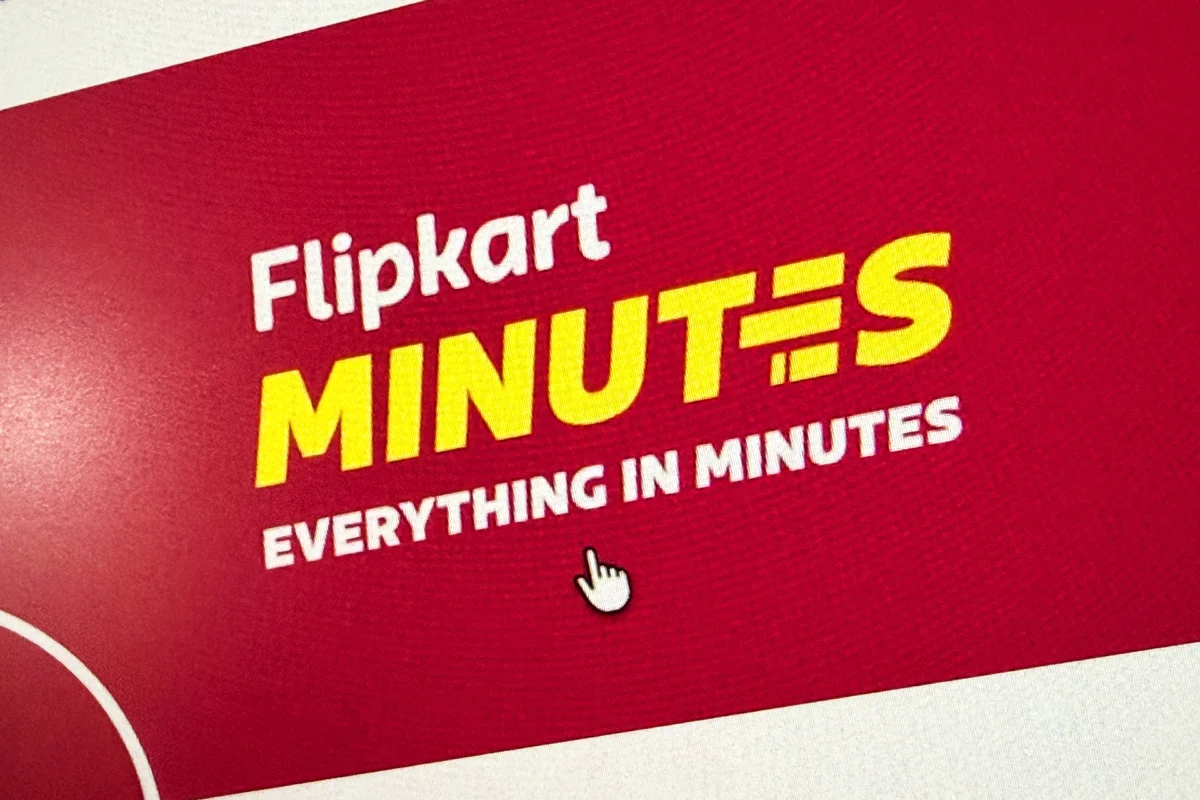
Walmart-owned Flipkart, one of India’s largest e-commerce players, was a relatively late entrant into the quick commerce segment compared to its local rivals. However, its arrival with "Flipkart Minutes" in August 2024 signaled a clear intent to capture a significant share of this rapidly expanding market. The company has since embarked on an aggressive expansion strategy, demonstrating the formidable resources it can deploy. TechCrunch has learned that Flipkart has already surpassed 800 dark stores this week, a significant milestone achieved in a short span. Furthermore, according to projections by UBS, Flipkart aims to double this network to over 1,600 dark stores by the end of 2026, signaling a sustained, long-term commitment to the sector.
Flipkart’s strategy is notably distinct from some of its competitors, particularly in its geographical focus. While market leader Blinkit, with over 2,200 dark stores (according to Bernstein), plans to scale to 3,000 by March 2027 while maintaining a primary focus on India’s top 10 cities, Flipkart is betting on expansion beyond major metropolitan areas to drive its growth. This approach, as articulated by Satish Meena, founder of Gurugram-based consumer insights firm Datum Intelligence, is rooted in Flipkart’s "Walmart DNA." Meena explains, "Walmart’s DNA is always about expanding the total addressable opportunity to dominate by expanding the market."
This strategy appears to be yielding early results. A source familiar with Flipkart’s operations told TechCrunch that 25-30% of its quick commerce orders are now originating from smaller towns. Moreover, orders per dark store have reportedly grown by approximately 25% month-on-month, indicating strong initial traction and efficient utilization of its expanding network. Beyond infrastructure, Flipkart is also employing aggressive pricing tactics. A Jefferies analysis last month revealed that the company is offering some of the highest discounts in the segment, averaging around 23-24% across various categories. This deep discounting strategy is a powerful lever to attract and retain users in a market where price sensitivity and convenience remain paramount drivers of demand.
Amazon’s Strategic Push: Echoing the Global Playbook
Following closely on Flipkart’s heels, global e-commerce giant Amazon also made its foray into India’s quick commerce market in late 2024. This move underscores the immense potential Amazon perceives in the segment, aligning with its global strategy of offering diverse and rapid delivery options. Amazon is rapidly scaling its presence, having rolled out approximately 450-500 dark stores, with about 330-370 currently operational, according to UBS. This swift build-out reflects Amazon’s ability to leverage its extensive logistics infrastructure and technological prowess, honed over decades in e-commerce, to quickly establish a foothold in new markets.
Amazon’s entry further intensifies the competition, bringing its formidable financial resources, technological expertise, and vast customer base to bear. Like Flipkart, Amazon’s motivation is to tap into the burgeoning demand for faster deliveries across a wide range of categories, from groceries to electronics and household essentials. The presence of two global retail giants, both known for their aggressive market strategies and long-term vision, signals a significant inflection point for India’s quick commerce sector.
The Incumbents Under Siege: Blinkit, Swiggy, and Zepto
The entry and aggressive expansion of Flipkart and Amazon are exerting immense pressure on the incumbent quick commerce players, fundamentally reshaping their strategic outlooks and financial viability. The strain is becoming increasingly visible through various market indicators and corporate developments.
Swiggy, a significant player in the quick commerce space through its Instamart service, has faced considerable challenges. Recent developments include the departure of a co-founder this week, reflecting internal reassessments amid rising competition and operational costs. Brokerage firm JM Financial recently issued a stark warning regarding Swiggy’s quick commerce business, stating it is "caught in a growth-versus-profitability deadlock" and risks "destroying shareholder value." The report went further, suggesting that a takeover by a larger, better-capitalized player might be the optimal outcome for investors, highlighting the severe capital requirements and competitive intensity of the sector.
The market has also reacted to these pressures. Shares of Eternal, the parent company of Blinkit, have seen a decline of approximately 15% so far this year. Swiggy, which is privately held but frequently valued by analysts, has reportedly seen its valuation fall by over 29% in the same period. Meanwhile, Zepto, another key player, is navigating these turbulent waters as it prepares for its initial public offering (IPO) on Indian stock exchanges later this year, a move that will put its business model and profitability prospects under intense public scrutiny. These developments collectively paint a picture of a sector undergoing significant stress, forcing incumbents to reassess their strategies, operational efficiencies, and long-term sustainability.
The Dark Store Dilemma: Geography, Density, and Profitability
At the heart of the quick commerce model are dark stores, which are essentially micro-warehouses strategically located to facilitate rapid deliveries. India now boasts over 6,000 dark stores, leading to significant operational overlap among players in major cities and intensifying competition for prime locations and customer density. The strategic placement and efficient operation of these dark stores are crucial for profitability, a metric that remains elusive for many players.
A key strategic divergence among quick commerce players lies in their geographical expansion. While market leader Blinkit has explicitly stated its plan to focus on its top 10 cities as it scales to 3,000 dark stores by 2027, Flipkart is pursuing a broader, more expansive approach beyond major cities. This difference in strategy highlights the ongoing debate about where true profitability and sustainable growth lie.
Bernstein’s analysis earlier this week highlighted that growth in quick commerce remains largely concentrated in larger cities. These metropolitan areas offer higher population density, which naturally supports faster deliveries and better utilization of dark stores, leading to higher order throughput. Karan Taurani, executive vice president at Elara Capital, a London-headquartered investment bank, succinctly puts it: "Metro markets obviously are better in return ratios, better in profitability because of higher throughput. This business is all about higher throughput, and for now, that is coming largely from metro markets." Indeed, Bernstein estimates that the top eight cities in India account for over 3,800 dark stores operated by the five largest players, with approximately 3,600 of these having the potential to be profitable.
However, some analysts foresee a longer-term opportunity beyond these dense urban centers. Satish Meena of Datum Intelligence suggests, "Non-metros (small towns) can give a surge if companies expand beyond groceries and offer a wider range of items at faster speeds. Flipkart is betting on that." This strategy, while potentially expanding the total addressable market, comes with its own set of challenges. Scaling beyond big cities will inevitably take time. Aditya Soman, a senior research analyst at CLSA, a Hong Kong-based brokerage, notes that quick commerce is currently viable in about 125 cities. Dark stores typically require six to 12 months to reach maturity and achieve profitability. Many of the newer stores in smaller towns are still in their ramp-up phase, meaning they are yet to generate the high throughput necessary to offset operational costs. The delicate balance between aggressive expansion and achieving operational efficiency across diverse geographies remains a critical challenge for all players.
The Economics of Speed: Understanding Profitability Challenges
The promise of ultra-fast delivery, while immensely appealing to consumers, comes with a significant economic cost, making profitability a persistent challenge in the quick commerce sector. The model inherently involves high operational expenditures across several fronts. Last-mile delivery costs, encompassing fuel, vehicle maintenance, and fair wages for delivery partners, are substantial. The cost of establishing and maintaining a dense network of dark stores – including rent, utilities, and inventory management – adds another layer of expense. Unlike traditional e-commerce, which can rely on larger, more centralized warehouses, quick commerce demands numerous smaller, strategically located facilities, each requiring dedicated staff and inventory.
Customer acquisition costs are also extraordinarily high. In a fiercely competitive market, players resort to aggressive discounts, promotional offers, and loyalty programs to attract and retain users. Flipkart’s reported 23-24% discounts are a prime example of this "race to the bottom" in pricing, which erodes profit margins. Furthermore, the average order values (AOVs) in quick commerce transactions are often lower than those in traditional e-commerce, as consumers frequently use these services for immediate, smaller purchases rather than bulk shopping. This combination of high fixed and variable costs, coupled with intense price competition and often lower AOVs, creates a challenging environment for achieving sustainable profitability. Only through exceptionally high order throughput per dark store and stringent operational efficiencies can companies hope to turn a profit, making the scale and density of operations paramount.
Future Outlook: Consolidation and Market Maturation
The intense competitive pressures, coupled with the inherent profitability challenges, strongly suggest that India’s quick commerce market is heading towards a phase of significant consolidation. Ankur Bisen, a senior partner at retail consultancy Technopak Advisors, aptly states, "Quick commerce is no longer in a startup phase – it has become a big players’ game." This sentiment underscores the capital-intensive nature of the business, where only companies with deep pockets and a long-term strategic vision can withstand the ongoing price wars and investment requirements.
The lack of significant differentiation in the core offering – speed and convenience – means that companies primarily compete on price and reliability. This commodity-like nature of the service, combined with the substantial capital expenditure required to build and maintain dark store networks, creates an unsustainable environment for a multitude of players. As the market matures, smaller, less capitalized players may find it increasingly difficult to compete against the aggressive pricing and vast resources of giants like Flipkart and Amazon.
Potential scenarios include mergers and acquisitions, where struggling incumbents might be absorbed by larger players seeking to expand their network or customer base. Some players might also choose to exit the market altogether, deeming the path to profitability too arduous. The long-term vision for the sector, as suggested by analysts like Satish Meena, involves expanding beyond mere groceries to offer a wider range of items at faster speeds, thereby increasing average order values and improving throughput. This diversification could be a key strategy for survival and profitability.
For consumers, this consolidation could mean continued benefits of speed and competitive pricing in the short term, but potentially fewer choices in the long run. For the gig economy workforce, who form the backbone of quick commerce deliveries, consolidation could lead to changes in employment terms, demand fluctuations, and potentially revised wage structures as companies streamline operations. The quick commerce sector is clearly undergoing a pivotal transformation, moving from a fragmented, nascent market to a more concentrated, mature industry dominated by a few major players.
Company Responses and Market Silence
In the intensely competitive and strategically sensitive quick commerce sector, direct comments from major players are often scarce. When approached for statements, Amazon, Flipkart, and Swiggy did not respond to requests for comment, a common practice for companies engaged in fierce market battles, preferring to let their actions speak. Eternal, the parent company of Blinkit, declined to comment. Zepto, currently in a "silent period" leading up to its anticipated IPO filing, was also unable to provide commentary. This collective silence, while standard corporate practice, further underscores the high stakes and strategic maneuvering underway as companies navigate a rapidly evolving and increasingly challenging market environment.
Conclusion: A High-Stakes Battle for India’s Digital Consumer
India’s quick commerce market stands at a critical juncture. The undeniable boom in demand for instant deliveries has attracted unprecedented investment and propelled rapid expansion. However, the aggressive entry of e-commerce titans Flipkart and Amazon has irrevocably altered the competitive landscape, ushering in an era of intensified price wars, strategic geographical battles, and mounting pressure on incumbents. Profitability, a long-standing challenge for the sector, is now under even greater scrutiny as companies grapple with high operational costs, customer acquisition expenses, and the need for ever-increasing throughput.
The divergence in dark store expansion strategies, with Flipkart betting on smaller towns and Blinkit focusing on metros, highlights the ongoing debate about the most sustainable path to growth. Yet, the consensus among analysts points towards an inevitable period of consolidation. As the market transitions from a "startup phase" to a "big players’ game," only those with robust capital, efficient operations, and a clear long-term vision are likely to thrive. The outcome of this high-stakes battle will not only determine the future of quick commerce in India but also significantly shape the broader landscape of digital consumption and logistics in one of the world’s largest and fastest-growing economies.
About the Author