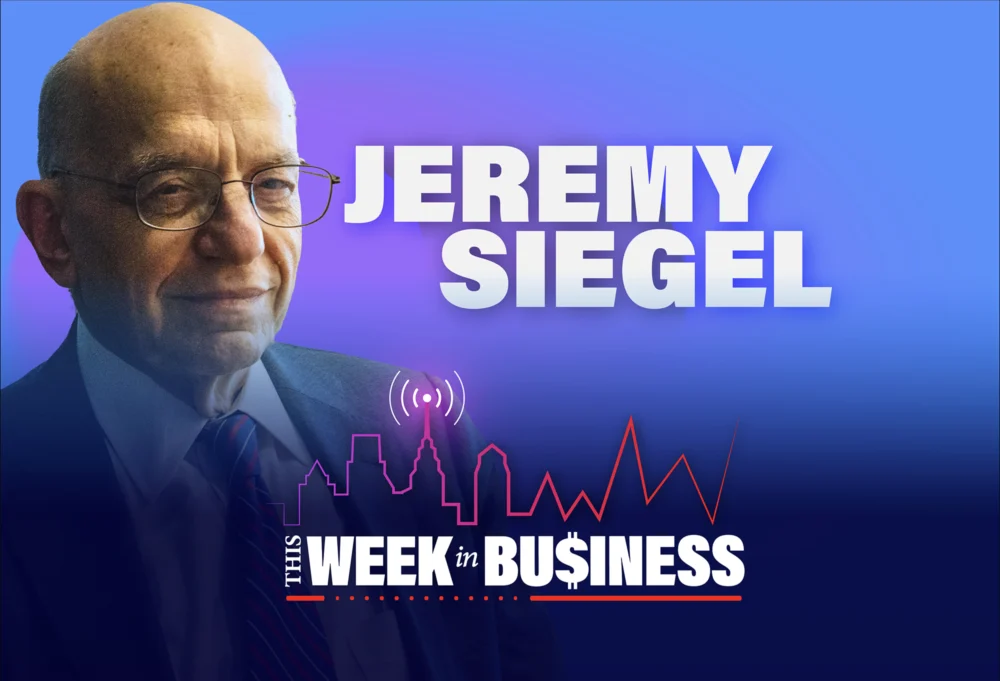
Jeremy Siegel, the distinguished Professor Emeritus of Finance at the Wharton School and Senior Economist at Wisdom Tree, recently offered a comprehensive analysis of the intricate forces shaping the global economic landscape. His insights, drawn from decades of observing market dynamics and policy shifts, delved into four critical areas: the ramifications of a potential Supreme Court ruling on tariffs, the surprising resilience of financial markets amidst persistent policy uncertainty, the profound implications of a hypothetical Kevin Warsh chairmanship at the Federal Reserve, and the pervasive influence of escalating geopolitical tensions with Iran on global interest rates and economic growth. Siegel’s multifaceted perspective underscores the interconnectedness of legal, monetary, domestic, and international factors in determining the trajectory of economic prosperity.
The Supreme Court and the Future of Trade Policy
A Supreme Court ruling pertaining to tariffs carries immense weight, potentially redefining the balance of power between the executive and legislative branches concerning trade policy, with far-reaching implications for global commerce. While the specific ruling Siegel referenced would depend on the particular case before the court, the general scope of such decisions often revolves around the President’s authority to impose tariffs under various statutes, such as Section 232 of the Trade Expansion Act of 1962 (national security tariffs) or Section 301 of the Trade Act of 1974 (unfair trade practices). A ruling that either expands or constrains presidential discretion in this domain would invariably ripple through international trade agreements, corporate supply chains, and consumer prices.
Background and Legal Context: Historically, the U.S. Constitution grants Congress the power "to regulate Commerce with foreign Nations." However, over time, Congress has delegated significant authority to the President, particularly in matters of national security and trade negotiations. Landmark cases like J.W. Hampton, Jr., & Co. v. United States (1928) established the "intelligible principle" doctrine, allowing Congress to delegate powers if it provides clear guidelines. More recently, challenges to presidential tariff actions, particularly those initiated during the Trump administration, have tested the limits of these delegated powers. For instance, the imposition of steel and aluminum tariffs under Section 232 faced legal scrutiny regarding the definition of "national security" and the process by which such determinations were made. A Supreme Court decision could either uphold broad executive authority, potentially enabling swifter, more unilateral trade actions, or impose stricter checks, necessitating greater congressional involvement and potentially slowing down future tariff implementations.
Economic Implications and Data: The economic impact of tariffs is multifaceted. On one hand, tariffs are intended to protect domestic industries, promote local production, and potentially encourage retaliatory measures that could lead to broader trade disputes. For example, the steel and aluminum tariffs imposed in 2018 led to a temporary increase in domestic steel prices but also raised input costs for downstream manufacturers, such as auto producers and construction companies. A study by the National Bureau of Economic Research found that U.S. tariffs implemented during 2018 resulted in higher prices for domestic consumers and businesses, costing approximately $51 billion annually by the end of 2019, primarily borne by U.S. importers and consumers. Conversely, retaliatory tariffs from countries like China and the European Union significantly impacted U.S. agricultural exports.
A Supreme Court ruling strengthening presidential tariff powers might inject greater uncertainty into international trade, encouraging other nations to re-evaluate their trade relationships with the U.S. and potentially leading to a more fragmented global trading system. Conversely, a ruling that curbs presidential power could stabilize trade relations, providing more predictability for businesses engaged in international commerce. Siegel’s analysis would likely highlight how such a decision influences corporate investment strategies, particularly regarding supply chain diversification and reshoring efforts, and its ultimate effect on inflation through import costs.
Inferred Reactions: A ruling expanding presidential power would likely be lauded by protectionist factions and certain domestic industries seeking shelter from foreign competition, while drawing criticism from multinational corporations, free-trade advocates, and international trading partners. Conversely, a decision limiting executive authority would be welcomed by businesses reliant on global supply chains, consumer groups concerned about rising prices, and international organizations advocating for open trade, but might face opposition from those prioritizing national industrial policy.
Market Resilience Amidst Policy Uncertainty
Despite a landscape frequently punctuated by significant policy shifts and political gridlock, financial markets have often demonstrated a remarkable degree of resilience. Siegel’s observation points to an underlying strength that allows markets to absorb shocks from policy uncertainty, whether it stems from fiscal debates (like debt ceiling standoffs or government shutdowns), monetary policy shifts, or regulatory changes.
Background and Context: The past decade has presented numerous instances of profound policy uncertainty. We’ve seen prolonged debates over federal spending, healthcare reform, and environmental regulations. Monetary policy, particularly the Federal Reserve’s post-2008 quantitative easing and subsequent tightening cycles, has also introduced periods of market apprehension. Geopolitical events, though distinct from domestic policy, also contribute to this environment. Yet, major indices like the S&P 500 have, over time, consistently recovered from downturns, often reaching new highs.
Supporting Data and Analysis: This resilience can be attributed to several factors. Firstly, robust corporate earnings and strong balance sheets provide a buffer against external shocks. Even amidst economic slowdowns, many corporations have managed to maintain profitability, supported by innovation and global diversification. Secondly, a relatively healthy labor market and resilient consumer spending have provided a stable demand base for goods and services in many periods. For example, even during the intense debates surrounding the U.S. debt ceiling in 2011 and 2013, which briefly triggered market volatility and a downgrade of U.S. sovereign debt, the S&P 500 ultimately recovered and continued its upward trajectory. The VIX "fear index," while spiking during moments of heightened uncertainty, often recedes as markets digest new information or perceive potential resolutions.
Siegel would likely emphasize that market participants often price in potential risks, and unless a policy uncertainty translates into a tangible, severe economic disruption, the market tends to find its footing. Investor confidence, buoyed by factors such as technological advancements, strong corporate innovation, and adaptable business models, often enables markets to look beyond immediate policy headwinds towards long-term growth prospects. The sheer depth and liquidity of U.S. financial markets also play a role, allowing for efficient price discovery and the absorption of large trading volumes even during periods of stress. However, Siegel would also likely caution that there is a limit to this resilience, and prolonged or extreme policy uncertainty could eventually erode confidence and trigger a more sustained downturn.
The Potential Impact of Kevin Warsh as Fed Chair
The prospect of Kevin Warsh, a former Federal Reserve Governor, assuming the chairmanship of the Federal Reserve would represent a significant shift in monetary policy leadership and philosophical orientation. Siegel’s analysis would explore the potential ramifications of such an appointment on interest rates, inflation management, and the overall financial landscape.
Background on Kevin Warsh: Kevin Warsh served on the Federal Reserve Board of Governors from 2006 to 2011, a period encompassing the global financial crisis. During his tenure, he was a key participant in the Fed’s response to the crisis, including the implementation of quantitative easing (QE). Post-Fed, Warsh became a distinguished visiting fellow at Stanford University’s Hoover Institution, a prominent conservative think tank. His economic philosophy is often characterized by a more hawkish stance on monetary policy, emphasizing the risks of inflation and advocating for a more restrained role for the central bank. He has, at times, expressed skepticism about overly accommodative monetary policy and expansive regulatory frameworks. His name prominently surfaced as a potential candidate for Fed Chair during the Trump administration, indicating a preference for a more traditional, rules-based approach to monetary policy compared to the more discretionary, accommodative stance often associated with recent Fed leadership.
Potential Policy Leanings and Implications: Were Warsh to be appointed Fed Chair, several shifts could be anticipated.
- Monetary Policy Stance: He would likely advocate for a more disciplined and perhaps swifter approach to interest rate hikes in response to inflationary pressures. This could imply a higher "terminal rate" (the peak federal funds rate in an economic cycle) and a less patient approach to monetary tightening compared to recent Fed chairs. Markets might anticipate a faster unwinding of the Fed’s balance sheet (quantitative tightening) under his leadership.
- Inflation Targeting: While the Fed currently operates under a flexible average inflation targeting framework, Warsh might favor a more strict interpretation of the 2% inflation target, potentially leading to pre-emptive tightening to prevent inflation from overshooting.
- Financial Regulation: Given his background and affiliations, Warsh might also signal a preference for revisiting some post-crisis financial regulations, potentially advocating for deregulation in certain areas, particularly for regional banks, arguing that some rules stifle economic growth without significantly enhancing stability.
- Market Reaction: The initial market reaction to a Warsh appointment would likely be characterized by increased volatility as investors adjust to the prospect of a potentially more hawkish Fed. Bond yields could rise on expectations of higher interest rates, and growth stocks, which are often more sensitive to discount rates, might experience headwinds. Financial sector stocks, on the other hand, could see a boost from potentially higher net interest margins and a more favorable regulatory environment.
Inferred Statements and Analysis: Financial analysts and economists would likely dissect Warsh’s past speeches and writings for clues on his policy direction, with hawkish commentators applauding a return to more conservative monetary principles and dovish voices expressing concerns about potential over-tightening leading to economic slowdowns. Politicians aligned with a less interventionist government would likely support his appointment, while those favoring a more active role for the Fed in managing economic cycles might express reservations. Siegel’s analysis would likely focus on how a Warsh-led Fed would balance the dual mandate of maximum employment and price stability, particularly in an environment of persistent inflation and evolving labor market dynamics.
Geopolitical Flashpoints: Iran, Oil, and Global Economic Stability
Geopolitical tensions, particularly those involving major oil-producing regions like the Middle East, have an immediate and profound impact on global energy markets, subsequently influencing inflation, interest rates, and overall economic growth. Jeremy Siegel’s focus on Iran underscores the critical role the nation plays in global energy security and regional stability.
Background and Chronology: Tensions between Iran and Western powers, particularly the United States, have been a recurring feature of international relations for decades. Key flashpoints include:
- Nuclear Program: Iran’s pursuit of nuclear technology has led to extensive sanctions and international negotiations, notably the 2015 Joint Comprehensive Plan of Action (JCPOA), which aimed to curb Iran’s nuclear activities in exchange for sanctions relief. The U.S. withdrawal from the JCPOA in 2018 and subsequent re-imposition of sanctions escalated tensions significantly.
- Strait of Hormuz: This narrow waterway, through which approximately one-fifth of the world’s seaborne crude oil passes, is strategically vital. Any perceived threat to shipping in the Strait due to Iranian actions or regional conflict can trigger immediate spikes in oil prices. Incidents involving tanker seizures, attacks on oil infrastructure in the region (e.g., Saudi Aramco facilities), and naval maneuvers have repeatedly heightened concerns.
- Regional Proxies: Iran’s support for various non-state actors in the Middle East, including Hezbollah in Lebanon, Houthi rebels in Yemen, and militias in Iraq and Syria, fuels regional proxy conflicts and adds to the instability, often drawing in other major powers.
Data and Economic Impact: The most direct economic impact of escalating tensions with Iran is on the price of crude oil.
- Oil Prices: Historically, every significant escalation in the Middle East has led to a surge in Brent and WTI crude oil benchmarks. For instance, the 2019 attacks on Saudi oil facilities temporarily cut global oil supply by 5% and caused prices to jump by nearly 20% overnight. Even the threat of disruption can trigger a "geopolitical risk premium" on oil prices.
- Inflation: Higher oil prices translate directly into increased transportation costs for goods and services, higher utility bills for consumers, and elevated input costs for industries, feeding into broader inflation. Central banks, tasked with maintaining price stability, often respond to persistent inflationary pressures by raising interest rates.
- Interest Rates: If geopolitical events drive energy-led inflation, central banks like the Federal Reserve might be compelled to tighten monetary policy more aggressively to cool the economy, leading to higher interest rates across the board – for mortgages, business loans, and government borrowing. This, in turn, can slow down economic growth by making borrowing more expensive and reducing consumer and business spending.
- Global Growth: Beyond inflation and interest rates, heightened geopolitical tensions create uncertainty, deterring foreign direct investment in affected regions, disrupting supply chains, and potentially dampening global trade. Shipping costs can rise due to increased insurance premiums and rerouting efforts to avoid perceived danger zones.
Inferred Reactions: Oil markets react instantaneously, with futures contracts reflecting heightened risk. Governments globally would issue travel advisories and potentially deploy naval assets to protect shipping lanes. International organizations like the UN would likely call for de-escalation and diplomatic solutions. Energy-importing nations would express concern over economic stability, while oil-exporting nations might see temporary revenue boosts, albeit amidst regional instability. Siegel’s analysis would likely underscore the delicate balance between energy supply, demand, and geopolitical stability, and how disruptions in this balance can quickly derail economic forecasts and force central banks into difficult policy choices.
Broader Implications and Siegel’s Concluding Outlook
Jeremy Siegel’s synthesis of these disparate yet interconnected factors paints a picture of a global economy operating under immense pressure from multiple angles. A Supreme Court ruling on tariffs could redefine trade relations, adding new layers of complexity for businesses. The market’s resilience, while commendable, operates within a finite capacity and could be tested by prolonged policy indecision or unforeseen shocks. A change in Federal Reserve leadership, particularly one leaning towards a more hawkish stance like Kevin Warsh, could dramatically alter the trajectory of interest rates and inflation, impacting everything from housing markets to corporate profitability. Finally, the ever-present shadow of geopolitical tensions, particularly from the Middle East, serves as a constant reminder of the fragility of global supply chains and the immediate inflationary risks inherent in energy market disruptions.
Siegel’s perspective, therefore, is not merely a collection of isolated forecasts but a holistic assessment of systemic risk and opportunity. He would likely advocate for investors and policymakers to remain vigilant, adaptable, and forward-looking. The current environment demands an understanding of how legal precedents, domestic political maneuvering, monetary policy philosophies, and international conflicts can converge to shape economic outcomes. His analysis serves as a crucial guide for navigating an increasingly complex global economic landscape, emphasizing that stability and growth are not guaranteed but rather products of careful management and an appreciation for the intricate web of influences at play.
About the Author