The automotive and technology sectors are abuzz with a series of significant developments, from the unexpected resurgence of a controversial figure in the tech world to crucial updates from electric vehicle pioneers and ambitious plans for future mobility. The week has seen Travis Kalanick, co-founder of Uber, re-emerge with a new venture in robotics, sparking comparisons to the fervent autonomous vehicle (AV) landscape of 2016. Meanwhile, Rivian continues its aggressive push with the R2 SUV, Lucid Motors explores the robotaxi concept, and a flurry of funding rounds and strategic partnerships underscore the rapid evolution of the mobility industry.
Kalanick’s Robotics Play and the Echoes of 2016
Travis Kalanick, who stepped down as Uber’s CEO in 2017 amidst a series of controversies, has announced his foray into the robotics sector with a new company named Atoms. This development takes on added significance with the news that Atoms is reportedly on the verge of acquiring Pronto, an autonomous vehicle startup founded by Anthony Levandowski, a former Uber colleague. Kalanick himself revealed his substantial investment in Pronto, positioning himself as its "largest investor."
This announcement immediately conjures memories of 2016, a year characterized by intense hype and investment in autonomous vehicle technology. During that period, Uber acquired Levandowski’s startup, Otto, a move that subsequently led to a high-profile legal battle with Waymo over alleged trade secret theft. The re-emergence of Kalanick and Levandowski in related ventures, particularly in the realm of robotics and autonomous systems, suggests a potential cyclical trend or a renewed focus on foundational technologies that drive future mobility. The implications of this reunion are far-reaching, potentially impacting the competitive landscape for robotics and autonomous solutions, especially in industrial and mining applications where Pronto has focused its efforts. The strategic alignment between Kalanick’s new robotics venture and Pronto’s established expertise in specialized autonomous systems could accelerate innovation and deployment in these critical sectors.
Rivian’s R2: A Strategic Offensive at SXSW

Rivian, the electric vehicle manufacturer, has made significant strides in its mission to rapidly bring its upcoming R2 SUV to market. The company, serving as the headline sponsor for the SXSW festival in Austin, used the platform to unveil crucial details about the R2’s pricing and specifications. This strategic deployment at a major cultural and technology event highlights Rivian’s targeted approach to experiential marketing, aiming to connect directly with a demographic that aligns closely with its core customer profile – affluent tech and creative professionals.
The R2 will be available in a performance launch edition starting at $57,990. TechCrunch’s initial reporting delves into the specifics of what this price point entails, offering consumers a detailed understanding of the vehicle’s features and capabilities. However, a more accessible $45,000 base model is slated for a later release, with an estimated arrival in late 2027. This staggered rollout strategy allows Rivian to capture early adopters with premium configurations while building anticipation for a more budget-friendly option.
Analysis of Rivian’s R2 strategy reveals a keen understanding of its target market. The R2 is positioned as a more approachable offering compared to the larger and more expensive R1 series vehicles. Beyond its aesthetic and size considerations, the R2 boasts significant technological advancements. A key differentiator is its new operating system, which features a single System on Chip (SoC) capable of 200 tera operations per second (TOPS) of edge computing for infotainment. This contrasts with the next-generation R1 vehicles, which utilize four SoCs and rely more heavily on cloud computing.
Wassym Bensaid, Rivian’s head of software, emphasized the critical importance of this edge computing architecture. He explained that it enables the local execution of large language models, thereby reducing latency and enhancing overall performance. This local processing capability is crucial for delivering a seamless and responsive user experience, especially as vehicles become more integrated with advanced AI functionalities.
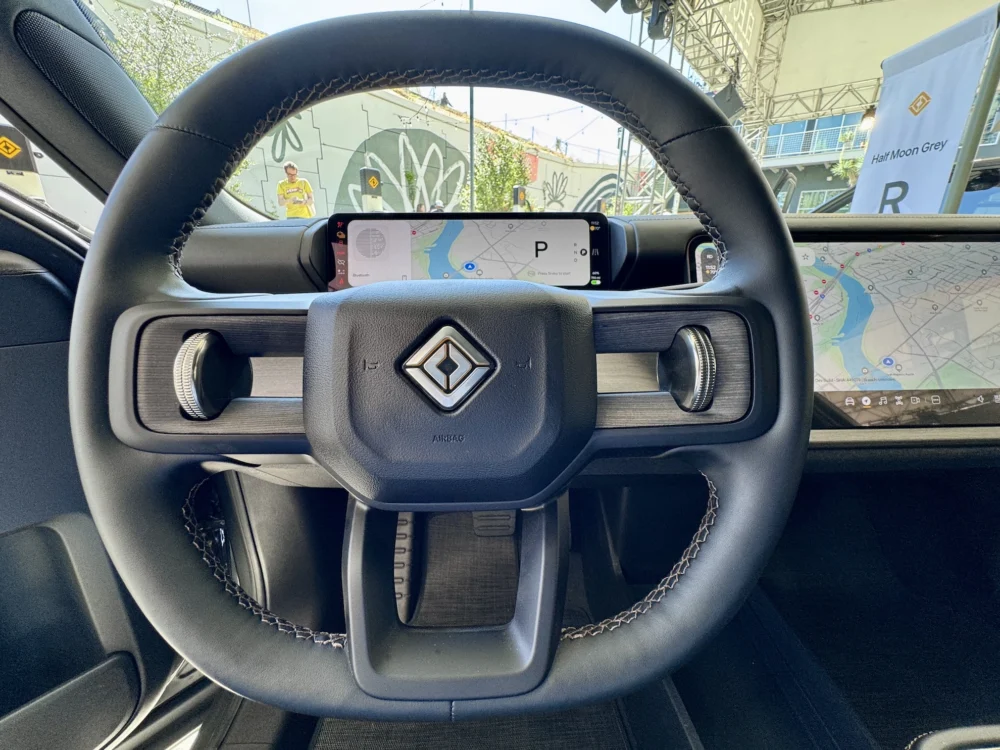
Another notable innovation introduced with the R2 are the "halo wheels" on the steering wheel. These provide haptic feedback and allow drivers to adjust critical functions like temperature, fan speed, and audio volume without diverting their gaze from the road or their hands from the steering wheel. Chief designer Jeff Hammoud stated that this feature addresses significant customer requests for intuitive controls while minimizing dashboard clutter. The software-driven nature of these halo wheels also promises future extensibility, allowing for enhanced functionality over time.
Lucid Motors Explores the Robotaxi Frontier

Lucid Motors, the luxury electric vehicle manufacturer, has presented a robotaxi concept at its recent investor day, indicating a potential expansion into the autonomous ride-hailing market. The concept vehicle is designed to be built upon the company’s "midsize" EV platform. Interim CEO Marc Winterhoff expressed confidence in the company’s direction, stating that Lucid is "working on a dedicated Lucid Robotaxi" to follow the debut of its midsize EVs.
However, Lucid later clarified that the robotaxi presented is a concept and that no active development is currently underway. Sources suggest that this project is in its nascent stages, having been initiated only within the last two to three months. This timeline raises questions about the feasibility and speed of bringing such a vehicle to market, especially in a competitive and rapidly evolving autonomous mobility landscape. The distinction between a conceptual exploration and a fully committed development program is crucial for investors and industry observers seeking to gauge Lucid’s strategic priorities.
Rivian’s Mind Robotics Secures Substantial Funding
In a significant development within the industrial robotics sector, Rivian has spun out another startup, Mind Robotics, which has successfully secured a $500 million Series A funding round. The round was co-led by prominent venture capital firms Accel and Andreessen Horowitz, signaling strong investor confidence in the company’s vision. This substantial financing follows a $115 million seed round in late 2025, led by Eclipse, bringing Mind Robotics’ valuation to approximately $2 billion.
The focus on industrial robotics was also evident at Rivian’s SXSW presence, including a panel discussion featuring engineer and YouTuber Mark Rober alongside Rivian CEO RJ Scaringe. In a sideline interview, Scaringe elaborated on the rationale behind Mind Robotics and hinted at the company’s future trajectory. When questioned about spinning out additional companies, he responded with a notable pause before stating, "Probably not," suggesting a consolidation of focus on existing ventures.
Scaringe articulated a unique perspective on the future of industrial robotics, criticizing the prevailing emphasis on mimicking human biomechanics. He argued that in industrial settings, the hands are the primary tools, and the focus should be on efficiently positioning them for tasks. "Everything else, from a robotic system point of view, is to get the hands to the right place," Scaringe explained. He believes that excessive complexity in robotic systems, such as those capable of advanced acrobatics, is often unnecessary for the vast majority of industrial applications. This philosophy suggests a drive towards more specialized, efficient, and task-oriented robotic solutions.

Other Notable Deals and Partnerships
The mobility sector has been active on the deal-making front:
- inDrive Acquires Krave Mart: Global ride-hailing company inDrive has acquired Pakistan-based quick-commerce startup Krave Mart in an all-stock transaction. The deal has received approval from the Competition Commission of Pakistan, signaling an expansion of inDrive’s services into grocery delivery.
- Mirai Robotics Secures Pre-Seed Funding: Mirai Robotics, an Italian company developing autonomous maritime systems, has raised $4.2 million in pre-seed funding from Primo Capital, Techshop, and 40Jemz Ventures. This investment will support the development of intelligent maritime solutions.
- Surf Air Orders Beta Technologies Aircraft: Surf Air has placed an order for 25 of Beta Technologies’ all-electric ALIA aircraft and secured options for an additional 75. This partnership aims to launch the first commercial passenger electric aircraft service.
Emerging Trends and Regulatory Developments
The broader mobility landscape is marked by several significant trends and regulatory movements:
- Political Divides in Transportation: Bryan Reimer, an MIT research scientist, has raised a pertinent question regarding the potential for automated vehicles to face the same political polarization as electric cars. This discussion highlights the societal and political challenges that advanced transportation technologies may encounter.
- Litigation in the Air Mobility Sector: Archer Aviation has responded to a lawsuit from Joby Aviation with its own counterclaims, alleging that Joby engaged in deceptive practices regarding its ties to China. This legal back-and-forth underscores the intense competition and scrutiny within the burgeoning electric air taxi industry.
- Advancements in Battery Technology: Group14 has commenced production of silicon battery materials at its BAM-3 factory in South Korea. The facility is projected to produce 2,000 metric tons annually, sufficient for 10 gigawatt-hours of energy storage, supporting approximately 100,000 long-range electric vehicles.
- Legal Disputes within Startups: Hayden AI, a San Francisco-based startup, has filed a lawsuit against its co-founder and former CEO, alleging misconduct and misuse of funds. Such internal disputes can significantly impact a company’s operations and reputation.
- FAA Approves Electric Aircraft Pilot Programs: The Federal Aviation Administration (FAA) has greenlit eight pilot programs designed to facilitate widespread electric aircraft testing by companies like Archer Aviation, Beta Technologies, Joby Aviation, and Wisk. This initiative, spanning three years and 26 states, is expected to commence testing as early as the summer.
- Harbinger Unveils New Work Truck: Los Angeles-based EV startup Harbinger has revealed its second vehicle, a smaller, medium-duty work truck available in both electric and hybrid variants.
- Lucid Motors Enhances Infotainment: Lucid Motors is now shipping Apple CarPlay and Android Auto compatibility to owners of its Gravity SUV, enhancing the in-car digital experience.
- NTSB Investigates Ford BlueCruise Crashes: The National Transportation Safety Board (NTSB) has indicated that drivers involved in fatal crashes while using Ford’s BlueCruise hands-free driving system were likely distracted prior to impact. This underscores the ongoing challenges in ensuring driver engagement with advanced driver-assistance systems.
- Nuro Tests AV Technology in Japan: Silicon Valley-based Nuro, supported by investors like Nvidia, Uber, and SoftBank, is conducting tests of its autonomous vehicle technology on the streets of Tokyo.
- Slate Auto Appoints New CEO: EV startup Slate Auto, backed by Jeff Bezos, has a new CEO, Peter Faricy, former vice president of Amazon Marketplace. This leadership change occurs ahead of the company’s planned launch of an affordable EV.
- Tesla Becomes a Licensed Utility in the UK: Tesla has officially been licensed as a utility provider in the United Kingdom, a move that could create a competitive dynamic with existing energy providers like Octopus Energy.
- Wayve Partners for Tokyo Robotaxi Service: Wayve is collaborating with Uber and Nissan to launch a robotaxi service in Tokyo, with a pilot program scheduled for late 2026.
- Uber Expands Robotaxi Network with Motional: Uber has integrated Motional, a Hyundai-owned autonomous vehicle company, into its growing robotaxi network. Motional’s self-driving Hyundai Ioniq 5 vehicles are now available on the Uber app in Las Vegas, though they currently include human safety monitors.
- Zoox Maps for Robotaxi Deployment: Zoox, an Amazon-owned company, is mapping streets in Dallas and Phoenix as a precursor to testing its autonomous vehicles in these Sun Belt cities. Zoox is also partnering with Uber to offer robotaxi rides on the Uber app in Las Vegas later this year. A critical hurdle for Zoox’s commercial deployment is obtaining an exemption from Federal Motor Vehicle Safety Standards for its custom-built vehicles, which lack traditional controls. The National Highway Traffic Safety Administration has begun accepting public comments on Zoox’s exemption application.
The Curious Case of the Chevrolet Bolt EV
In a nostalgic turn, the Chevrolet Bolt EV is slated for a return. Senior reporter Tim De Chant has drawn an intriguing parallel, likening the resurrected Bolt EV to the "McRib of the automotive world." This analogy suggests a strategic marketing play, capitalizing on a familiar yet perhaps underappreciated product. De Chant’s analysis also delves into the economic rationale behind General Motors’ decision to reintroduce the Bolt, exploring how the company is navigating the uncertainties of the electric vehicle market. The return of the Bolt EV, particularly at a potentially competitive price point, could appeal to a segment of consumers seeking an affordable and proven electric vehicle option.
About the Author