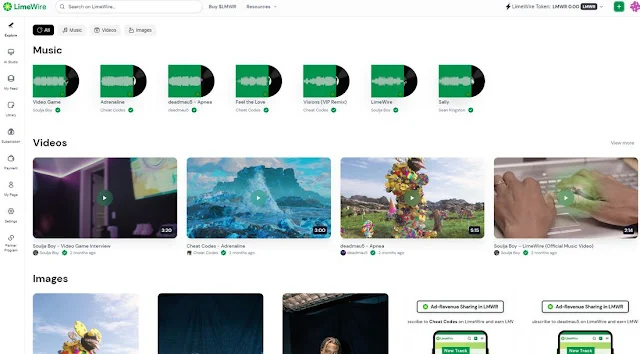
The digital landscape is witnessing a significant transformation as LimeWire, a brand once synonymous with the peer-to-peer file-sharing era of the early 2000s, completes its strategic pivot into a comprehensive generative Artificial Intelligence (AI) content publishing platform. This evolution marks a departure from its historical roots, repositioning the entity as a sophisticated ecosystem where AI-driven creativity intersects with blockchain-based monetization. In the current era of rapid technological advancement, LimeWire has emerged not merely as a tool for image generation, but as a holistic "AI Studio" designed to empower creators to produce, distribute, and profit from digital assets within a unified environment.
The Historical Trajectory and Strategic Rebirth
To understand the current iteration of LimeWire, it is essential to contextualize its historical significance and subsequent revival. Founded originally in 2000, the platform became one of the most prominent file-sharing applications globally before legal challenges led to a permanent injunction in 2010. For over a decade, the brand remained dormant until its intellectual property was acquired by entrepreneurs Paul and Julian Zehetmayr in 2022.
The new leadership recognized the shifting paradigms of the creator economy, initially relaunching LimeWire as an NFT marketplace. However, as generative AI began to reshape the creative industries in 2023, the platform underwent a second, more profound transformation. Today’s LimeWire is built on a foundation of "democratized creation," aiming to lower the barrier to entry for high-quality digital art production. By integrating advanced machine learning models with decentralized ledger technology, the platform seeks to solve the long-standing issue of creator compensation in the age of digital abundance.
Technical Architecture of the LimeWire AI Studio
The centerpiece of the platform is the LimeWire AI Studio, a versatile interface that allows users to leverage industry-leading generative models. Currently, the studio provides access to several high-performance AI frameworks, including Stable Diffusion 2.1, Stable Diffusion XL (SDXL), and DALL-E. These models enable users to generate images ranging from photorealistic portraits to abstract digital art using natural language prompts.
The technical sophistication of the studio is reflected in its granular control settings. Users are not limited to basic prompting; they can adjust "samplers" to influence the denoising process, modify the "guidance scale" to determine how closely the AI adheres to the text prompt, and select from a variety of aesthetic styles. These styles include, but are not limited to:
- Cinematic: High-contrast lighting and dramatic compositions.
- Digital Art: Vibrant, clean aesthetics suitable for modern web media.
- Pixel Art: Retro-inspired designs catering to gaming communities.
- Anime: Specialized stylization based on Japanese animation tropes.
- Analog Film: Textures and color grading reminiscent of traditional photography.
Furthermore, the company has confirmed that it is developing its own proprietary AI model. This move is intended to reduce reliance on third-party APIs and provide a unique "LimeWire signature" to the content generated on the platform, potentially offering more specialized training data tailored to its user base’s preferences.
Blockchain Integration and Automatic NFT Minting
A defining characteristic that distinguishes LimeWire from competitors like Midjourney or Adobe Firefly is its deep integration with blockchain technology. The platform has streamlined the transition from "creation" to "ownership" through an automated minting process. When a creator chooses to publish their work on the LimeWire Studio, the platform can automatically mint the content as a Non-Fungible Token (NFT) on either the Polygon or Algorand blockchains.
The choice of these specific networks is strategic. Polygon, an Ethereum scaling solution, offers high compatibility with the broader NFT ecosystem and secondary markets like OpenSea. Algorand is utilized for its high throughput and carbon-neutral footprint, appealing to environmentally conscious creators. This automated process assigns a unique digital signature to every piece of content, establishing a verifiable chain of custody and provenance.
Within the LimeWire community, these assets are not just static images; they are tradeable commodities. Fans and collectors can subscribe to a creator’s page to gain access to exclusive content. When these digital assets are traded on the secondary market, the original creator receives a 2.5% royalty fee, ensuring long-term participation in the value appreciation of their work.
The Creator Economy: Monetization and LMWR Tokens
LimeWire has introduced a multi-faceted revenue model designed to provide sustainable income for designers and artists. This model addresses the common criticism of AI tools—that they utilize creator input without providing financial returns.
Ad Revenue Sharing
One of the most innovative features is the ad revenue sharing program. LimeWire allocates up to 70% of the advertising revenue generated from views of a creator’s content back to the creator. This mirrors the monetization strategies of platforms like YouTube but applies them to the burgeoning field of generative AI art. As users browse the LimeWire feed and engage with generated images, music, or videos, the creators of those assets accumulate earnings based on engagement metrics.
The LMWR Token Ecosystem
Central to the platform’s economy is the LMWR token, an ERC-20 utility token native to the LimeWire ecosystem. Creator earnings, including ad revenue and royalties, are paid out monthly in LMWR. This cryptocurrency serves several functions:
- Trading: LMWR is listed on several major global cryptocurrency exchanges, including Kraken, ByBit, and UniSwap, allowing creators to liquidate their earnings into fiat or other digital assets.
- Platform Utility: Users can utilize LMWR to pay for prompt credits, bypassing traditional payment methods.
- Governance: Token holders may have the opportunity to participate in future platform decisions, aligning the platform’s growth with its user base’s interests.
Subscription Tiers and Accessibility
LimeWire operates on a "freemium" model, intended to attract a broad user base while providing scalable tools for professionals. The entry-level tier allows users to register for free and receive 10 daily credits, which is sufficient for approximately 20 image generations. Free users also participate in a 50% ad revenue share.
For more intensive users, the platform offers four distinct premium tiers:
- Basic Plan ($9.99/month): Provides 1,000 credits, allowing for up to 2,000 image generations, and early access to new AI models.
- Advanced Plan ($29/month): Increases the credit limit to 3,750 (approx. 7,500 images) and raises the ad revenue share to 60%.
- Pro Plan ($49/month): Designed for serious creators, offering 5,000 credits (10,000 images) and a 70% ad revenue share.
- Pro Plus Plan ($99/month): The highest tier, providing 11,250 credits (22,500 images) and the full 70% revenue share.
All premium subscribers benefit from a "Pro" profile badge, faster generation speeds, a full history of their creations, and an ad-free browsing experience.
Industry Implications and Future Roadmap
The transition of LimeWire into an AI powerhouse has drawn varied reactions from the tech and creative industries. Market analysts suggest that LimeWire’s move reflects a broader trend of "multimodal" content platforms. While the studio is currently focused on image generation, the company has officially announced that AI-generated music and video tools are in the final stages of development.
This expansion is significant. By moving into audio and video, LimeWire is positioning itself to compete with specialized AI firms like Runway and Suno AI. The inclusion of high-profile artists such as Deadmau5 and Sean Kingston in the platform’s early NFT and content phases suggests a strong push toward the music industry, potentially offering artists new ways to generate "AI-assisted" music videos or promotional materials that are instantly monetizable.
From a journalistic perspective, the broader impact of LimeWire’s model lies in its attempt to formalize the "AI-as-a-Service" (AIaaS) and "Content-as-a-Service" (CaaS) sectors. By providing the tools, the distribution network, and the payment rails in a single package, LimeWire is attempting to build a self-sustaining digital economy.
Conclusion: A New Chapter for Digital Creation
LimeWire’s resurgence is a testament to the fluidity of digital brands in the 21st century. By shedding its past as a controversial file-sharing service and embracing the future of generative AI and blockchain, it has created a unique niche for itself. The platform successfully democratizes access to sophisticated AI models while simultaneously providing a structured framework for ownership and monetization through NFTs and the LMWR token.
As the platform rolls out its music and video generation capabilities, the creative community will be watching closely. The success of LimeWire will likely depend on its ability to maintain a balance between user-friendly accessibility and the high-level features required by professional creators. For now, it stands as a compelling example of how legacy brands can be reimagined to meet the demands of the next generation of digital natives, turning the act of creation into a verifiable and profitable endeavor.
About the Author