
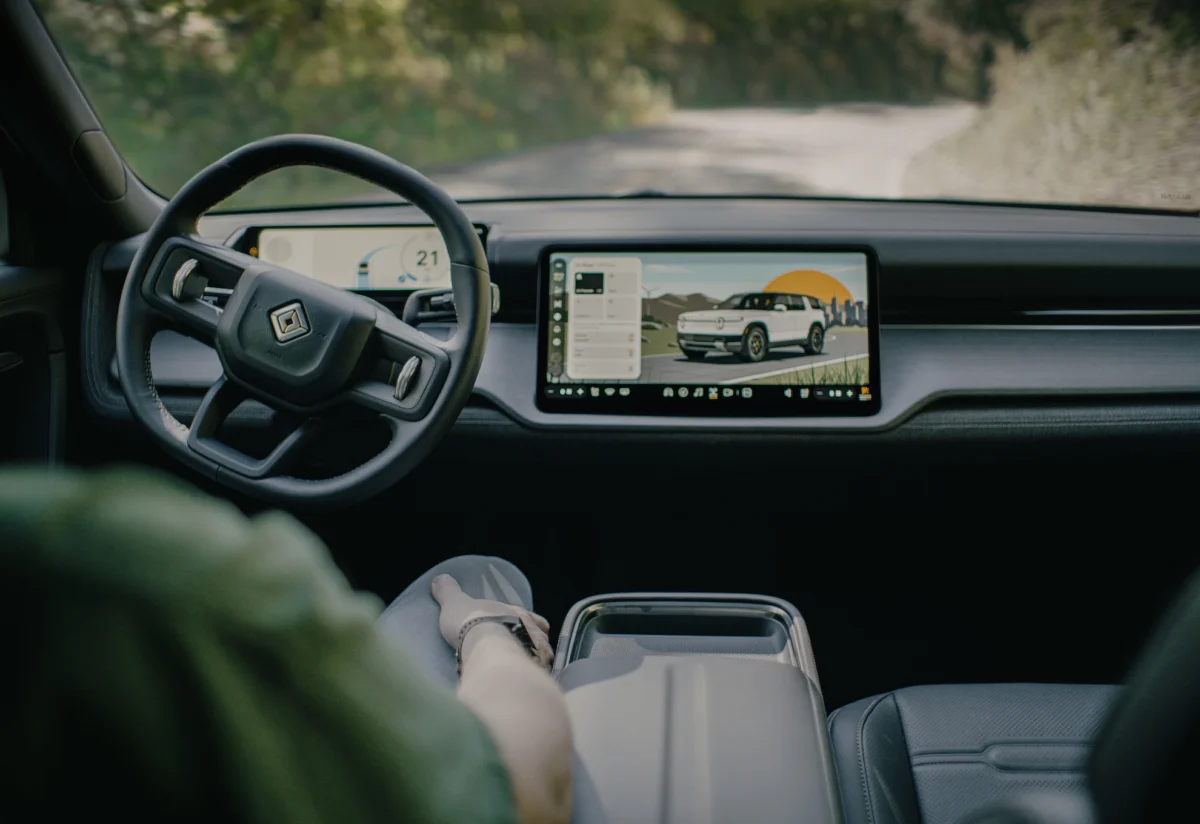
Rivian announced a significant strategic alliance with Uber on Thursday, a collaboration poised to reshape the autonomous ride-sharing landscape. The deal, potentially worth up to $1.25 billion to the electric vehicle (EV) maker, centers on the development and deployment of thousands of robotaxis based on Rivian’s forthcoming R2 SUV. This partnership marks a pivotal moment for both companies, signifying a substantial commitment to scaling autonomous mobility solutions.
A Multi-Billion Dollar Investment in the Future of Mobility
The cornerstone of this groundbreaking partnership is an initial $300 million investment from Uber into Rivian. This financial injection underscores Uber’s confidence in Rivian’s technological capabilities and manufacturing potential. Beyond the initial investment, Uber has committed to purchasing 10,000 fully autonomous R2 robotaxis. These vehicles are slated for a phased rollout, commencing in San Francisco and Miami in 2028. This aggressive timeline suggests a rapid deployment strategy, aiming to establish a significant autonomous fleet within key urban markets.
The ambitious scope of the agreement extends further, with Uber securing an option to acquire an additional 40,000 autonomous R2 SUVs from Rivian, commencing in 2030. This expansive commitment paints a picture of a long-term, scalable vision for autonomous ride-sharing. The two companies have collectively outlined plans to introduce these robotaxis across 25 cities in the United States, Canada, and Europe by the close of 2031. Crucially, the agreement stipulates that this fleet will be exclusively integrated into Uber’s existing ride-hailing network, providing a direct and substantial channel for Rivian’s autonomous vehicles.
Navigating a Complex Landscape of Opportunities and Challenges
While the financial implications of this deal are undeniably substantial for Rivian, it is also a venture fraught with considerable risk and multifaceted challenges. The R2 SUV, which will form the backbone of this robotaxi fleet, has yet to enter production. Rivian has indicated that manufacturing is anticipated to commence in June, a tight deadline given the scale of the planned deployment.
Furthermore, Rivian has not yet publicly demonstrated or deployed a self-driving system specifically engineered for the demanding operational environment of robotaxis. The complexity of navigating diverse urban landscapes, interacting with unpredictable human drivers, and ensuring passenger safety at all times presents a significant technological hurdle. Adding another layer of complexity, the robotaxis are slated to be manufactured at Rivian’s new factory in Georgia, a facility that is currently under construction. The successful and timely completion of this manufacturing hub is critical to meeting the production targets outlined in the Uber agreement.
Rivian’s Unwavering Commitment to Autonomy
Despite these considerable obstacles, the partnership underscores Rivian’s deep-seated commitment to automated driving technology, a strategic priority championed by its founder and CEO, RJ Scaringe. Scaringe has consistently articulated a vision where autonomous capabilities are central to Rivian’s future. His remarks during the company’s inaugural "Autonomy & AI Day" in December provided a clear hint at the company’s aspirations, suggesting that its advancements in this field would pave the way for "pursuing opportunities in the ride-share space."
This strategic pivot towards an AI-first approach to automated driving was formalized in 2021 when Rivian transitioned away from its previous rules-based framework for driver assistance. The company embraced a methodology that leverages large language models (LLMs) to train its systems in perceiving and navigating the complexities of the real world. This AI-driven system is designed to learn and evolve from real-world fleet data, continuously enhancing its autonomous capabilities.
The Evolution of the Rivian Autonomy Platform
The fruits of this strategic focus are evident in the Rivian Autonomy Platform, which debuted in 2024 within the automaker’s second-generation R1 vehicles. This platform serves as the foundational technology for Rivian’s phased approach to increasing driving automation. Initially, it enables hands-free driving on designated highways. The company is actively working towards a point-to-point navigation feature, expected to be released later this year, which aims to automate driving controls throughout entire journeys.
Rivian’s ultimate objective is to deliver a "hands-off, eyes-off" system. This ambitious goal necessitates significant hardware upgrades, including the integration of a lidar sensor and a sophisticated "autonomy computer" capable of processing an immense volume of data – reportedly 5 billion pixels per second. This enhanced hardware is slated to be integrated into a specific version of the R2 SUV, with a launch anticipated in late 2026.
It is crucial to note that even with these advanced features, the systems currently being developed are not classified as fully autonomous driving systems according to the most stringent definitions. In a truly fully autonomous system, the human driver is never expected or responsible for intervening in the driving process.
However, Rivian is clearly striving to achieve this ultimate level of automation. At its autonomy day event, the company outlined its roadmap for what it terms "personal L4." This designation refers to Level 4 autonomy as defined by the Society of Automotive Engineers (SAE), where a vehicle can operate autonomously within a defined geographic area without any human intervention.
Scaringe’s Optimism on the Pace of Autonomous Progress
The pursuit of advanced automated driving remains a paramount focus for Rivian, a sentiment reiterated by RJ Scaringe at SXSW 2026 just last week. He emphasized the significant financial resources being allocated to this endeavor, stating, "Our path to get to hands-off, eyes-off in 2027 is something we’re spending more money on than anything else."
Scaringe expressed strong optimism regarding the accelerating pace of progress in autonomous technology. He offered a compelling perspective on the future trajectory of development: "If you were to look at the progress in autonomy in the last five years and try to use it as a rough metric or gauge to predict the next five years, you would be wildly wrong. The rate of progress is so much different than looking forward five years than looking backwards five years. The past, in this case, is not a good predictor of the future." This statement suggests that the company anticipates exponential improvements, potentially surpassing linear projections based on historical data.
Uber’s Expanding Robotaxi Ecosystem
Rivian is not the first EV startup Uber has turned to for its robotaxi ambitions. In a parallel development last year, the ride-hailing giant announced a collaboration with Lucid Motors, working in conjunction with autonomous vehicle technology company Nuro. This partnership aims to develop robotaxis based on Lucid’s Gravity SUV. These Lucid-based robotaxis are projected to commence commercial deployment in San Francisco by the end of the current year, indicating Uber’s multi-pronged approach to fleet diversification.
Uber’s strategy involves building a robust ecosystem of autonomous vehicle partners. The company has forged alliances with over 25 dedicated robotaxi and autonomous vehicle companies globally. Among its most significant existing partnerships is with Waymo, the autonomous driving subsidiary of Alphabet. Waymo’s robotaxis are already integrated into Uber’s app and are operational in Austin and Atlanta. Furthermore, Uber has established agreements with Motional, a joint venture between Hyundai and Aptiv, and has also partnered with China’s Baidu. Demonstrating its commitment to cutting-edge AI development, Uber is also a substantial investor in Wayve, a UK-based startup focused on AI-driven autonomous systems.
The Broader Implications of the Rivian-Uber Deal
The Rivian-Uber alliance represents more than just a significant commercial agreement; it signals a potential paradigm shift in how urban transportation is conceived and delivered. The successful integration of a large fleet of autonomous vehicles onto a ride-sharing platform could fundamentally alter urban mobility, offering greater convenience, potentially reduced costs, and enhanced efficiency.
For Rivian, this partnership provides a critical pathway to scaling its manufacturing operations and accelerating its path to profitability. Securing a major order from a company of Uber’s stature can validate its technological prowess and provide the financial stability needed to navigate the capital-intensive EV industry. It also positions Rivian as a key player in the burgeoning robotaxi market, a segment with immense long-term growth potential.
For Uber, the deal is a strategic move to secure a dedicated supply of autonomous vehicles, a crucial step in its long-term vision of offering autonomous ride-sharing as a core service. By diversifying its partnerships, Uber aims to mitigate risks associated with any single supplier and ensure a robust supply chain for its future fleet. This collaboration could also lead to significant operational efficiencies and cost reductions for Uber as it moves away from its current model of relying primarily on human drivers.
However, the success of this venture hinges on several critical factors. The timely and safe deployment of the R2 SUV and its autonomous driving system is paramount. Regulatory approvals for widespread robotaxi operation in multiple cities will also play a crucial role. Public acceptance and trust in autonomous technology remain significant considerations, and the performance of these vehicles in real-world conditions will be closely scrutinized.
The coming years will be a critical period for both Rivian and Uber as they work to bring this ambitious vision to fruition. The outcome of this partnership will undoubtedly have far-reaching implications for the future of transportation, influencing the development and adoption of autonomous vehicles for years to come.
About the Author





