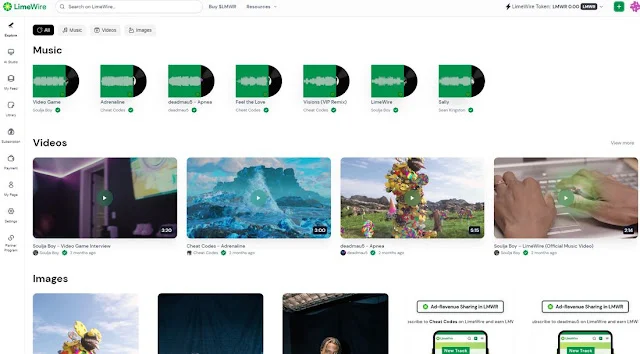
LimeWire, once the standard-bearer for peer-to-peer file sharing at the turn of the millennium, has finalized its transition into a comprehensive generative Artificial Intelligence (AI) content publishing platform. This strategic pivot represents a significant departure from its historical roots, moving away from the controversial file-sharing landscape of the early 2000s toward a regulated, blockchain-integrated ecosystem designed for modern content creators. The newly launched LimeWire AI Studio serves as a centralized hub where users can generate high-fidelity digital assets, ranging from complex imagery to forthcoming audio and video formats, while simultaneously leveraging decentralized ledger technology to secure ownership and facilitate monetization. By integrating advanced machine learning models with a revenue-sharing architecture, LimeWire seeks to redefine the relationship between AI tools and the creative professionals who utilize them.
The Evolution of a Digital Brand: From P2P to AI
To understand the current trajectory of LimeWire, it is necessary to examine the brand’s historical context. Founded in 2000 by Mark Gorton, the original LimeWire operated on the Gnutella network and became one of the most popular file-sharing applications globally. However, after years of legal battles with the Recording Industry Association of America (RIAA), the platform was shut down by a federal court injunction in 2010. The brand remained dormant for over a decade until its intellectual property was acquired in 2022 by entrepreneurs Paul and Julian Zehetmayr.
The Zehetmayr brothers envisioned a "LimeWire 2.0" that would respect intellectual property rights while maintaining the brand’s association with digital disruption. Initially relaunched as an NFT marketplace for the music industry, the platform quickly evolved to meet the surging demand for generative AI. In 2023, LimeWire officially integrated AI generation tools, positioning itself as a direct competitor to platforms like Midjourney and Adobe Firefly, but with a unique twist: the inclusion of a native cryptocurrency, LMWR, and an automated minting process that turns every creation into a tradeable asset.
Technical Infrastructure of the LimeWire AI Studio
The core of the current LimeWire offering is the AI Studio, a sophisticated interface that democratizes access to high-end generative models. Rather than relying on a single proprietary algorithm, LimeWire has adopted a multi-model approach, allowing users to select the specific engine that best suits their creative requirements. Currently, the platform supports:
- Stable Diffusion 2.1 and XL: Known for their versatility and ability to handle complex artistic prompts with high anatomical and structural accuracy.
- DALL-E 2 and 3: OpenAI’s flagship models, celebrated for their intuitive understanding of natural language and stylistic nuance.
- Proprietary Models: LimeWire is currently in the development phase of its own in-house AI models, designed to offer unique aesthetic outputs not found on other platforms.
The studio interface provides granular control over the creative process. Users can toggle between various design styles, including cinematic, digital art, pixel art, anime, and analog film. Advanced settings allow for the adjustment of samplers and guidance scales, which dictate how closely the AI adheres to the user’s text prompt versus its own creative "interpretation." This level of control is intended to bridge the gap between casual users and professional digital artists who require specific visual outcomes.
Blockchain Integration and Automated NFT Minting
A distinguishing factor of LimeWire is its seamless integration with blockchain technology. Unlike traditional AI tools where the output remains a simple image file, LimeWire offers an automated "minting" pipeline. Once a user completes a design, the platform can automatically transform the image into a Non-Fungible Token (NFT) on either the Polygon or Algorand blockchains.
The choice of these specific blockchains is a strategic decision based on scalability and environmental impact. Polygon, a Layer-2 scaling solution for Ethereum, offers high transaction speeds and negligible gas fees, making it ideal for high-volume minting. Algorand, a pure proof-of-stake (PPoS) blockchain, provides institutional-grade security and a carbon-neutral footprint, aligning with the modern creator’s concern for sustainability.
By minting content as NFTs, LimeWire provides creators with a permanent, immutable record of ownership. This digital signature is crucial in an era where AI-generated content often faces scrutiny regarding authenticity and copyright. Furthermore, these assets become part of the LimeWire marketplace, where they can be bought, sold, or traded by fans and collectors.
The Monetization Framework: Ad Revenue and Royalties
LimeWire’s business model is designed to provide sustainable income streams for creators, a feature that distinguishes it from many "closed-loop" AI tools. The platform employs a multi-tiered monetization strategy:
1. The Ad-Revenue Sharing Model
In a move reminiscent of YouTube’s partner program, LimeWire shares 70% of all advertising revenue generated from the platform with its creators. When a user publishes content on the LimeWire Studio, any ad revenue generated by other users viewing that content is tracked. This provides a passive income stream for designers, musicians, and artists whose work attracts high engagement.
2. Secondary Market Royalties
Every time a piece of content—minted as an NFT—is traded on the secondary market within the LimeWire ecosystem, the original creator receives a 2.5% royalty. This ensures that artists continue to benefit from the appreciating value of their work long after the initial sale.
3. Subscription-Based Access
Creators have the option to set up "subscriber-only" feeds. This allows them to offer exclusive content, early access to new releases, or behind-the-scenes insights to a dedicated fan base in exchange for a monthly fee. This model fosters a direct-to-fan economy, reducing the reliance on third-party intermediaries.
The LMWR Token and Ecosystem Economics
Central to the LimeWire economy is the LMWR token, an ERC-20 utility token launched on the Ethereum blockchain. LMWR serves as the primary medium of exchange within the platform. Creators receive their ad-revenue shares and royalty payments in LMWR, which can be held, used to pay for additional AI generation prompts, or traded on major global cryptocurrency exchanges including Kraken, ByBit, and UniSwap.
The tokenomics of LMWR are designed to incentivize platform growth. By using the native token for prompt payments, users often receive discounts or enhanced features, creating a circular economy that supports the token’s utility value. According to market data, the introduction of a native token has allowed LimeWire to bypass traditional payment processing delays, offering creators faster access to their earnings.
Subscription Tiers and Accessibility
While LimeWire offers a free entry point to attract new users, it utilizes a tiered subscription model to cater to different levels of professional demand. Each tier offers varying amounts of "credits," which are consumed during the AI generation process.
- Free Plan: Provides 10 credits daily, allowing for approximately 20 image generations. Users on this plan receive a 50% ad revenue share.
- Basic Plan ($9.99/mo): Increases capacity to 1,000 credits per month (up to 2,000 images) and grants early access to new AI models.
- Advanced Plan ($29/mo): Targeted at frequent creators, offering 3,750 credits and a 60% ad revenue share.
- Pro Plan ($49/mo): Provides 5,000 credits and increases the ad revenue share to 70%.
- Pro Plus Plan ($99/mo): The highest tier, offering 11,250 credits per month, capable of generating up to 22,500 images.
All premium tiers include a "Pro" profile badge, faster generation speeds, a full creation history log, and an ad-free browsing experience.
Future Outlook: Expansion into AI Music and Video
While the current iteration of LimeWire is heavily focused on image generation, the company’s roadmap indicates an aggressive expansion into other media formats. The platform has announced that tools for AI-generated music and video are in the final stages of development.
The entry into AI music is particularly symbolic given LimeWire’s history. By allowing artists to generate stems, loops, or full tracks through AI and then publish them as NFT-backed assets, LimeWire is attempting to close the loop on its 20-year journey—transforming from a platform that was once accused of hurting the music industry into one that provides it with cutting-edge tools for creation and monetization.
Industry analysts suggest that LimeWire’s success will depend on its ability to navigate the complex legal landscape surrounding AI training data. However, by partnering with established artists like Deadmau5 and Sean Kingston, the platform is signaling its commitment to a "creator-first" philosophy that respects copyright while embracing technological progress.
Conclusion and Industry Implications
The resurgence of LimeWire as an AI powerhouse represents a broader trend in the tech industry: the convergence of generative AI and Web3 technologies. By providing a platform where content is not just created but also owned and monetized, LimeWire is addressing one of the primary criticisms of the AI boom—the lack of clear value return for the human creators who provide the prompts and inspiration.
As the platform continues to evolve, it stands as a testament to brand resilience and the transformative power of emerging technology. For the digital creator economy, LimeWire offers a glimpse into a future where the barriers to high-quality content production are lowered, and the mechanisms for financial reward are built directly into the creative tools themselves. Whether for a novice experimenting with their first AI prompt or a professional artist looking to scale their digital footprint, LimeWire provides an integrated, accessible, and potentially lucrative gateway to the next generation of the internet.
About the Author