The National Collegiate Athletic Association’s annual basketball tournament, a cornerstone of American sports culture known as March Madness, is facing an unprecedented logistical crisis as university athletic departments find themselves in direct competition with the federal government for transportation resources. Recent reports indicate that the United States Department of Homeland Security, specifically through the Bureau of Immigration and Customs Enforcement, has secured a significant portion of the nation’s charter flight capacity to facilitate an escalation in detainee transfers and deportation proceedings. This collision of interests has not only disrupted the travel schedules of elite student-athletes but has also ignited a national conversation regarding the ethics of corporate and academic partnerships with aviation companies profiting from federal immigration contracts.
Logistical Strains and the Charter Aircraft Shortage
The NCAA March Madness tournament is a massive undertaking, involving 136 men’s and women’s teams competing in elimination rounds across the country from mid-March through early April. The scale of the event is reflected in its cultural and economic footprint; this year, fans registered a record-setting 36 million brackets, and viewership has reached all-time highs. However, the success of the tournament relies heavily on the availability of private charter aircraft to move teams, coaching staff, and equipment between host cities on tight schedules.

Keith Gill, the chair of the NCAA Division I men’s basketball committee, recently confirmed to reporters that the shortage of available planes has become a primary concern for the organization. Gill noted that the increased demand from ICE has significantly thinned the market for charter bookings. The NCAA has been forced to advise member schools to prepare for potential travel delays, particularly during the high-intensity opening week of the tournament. This shortage is not merely a matter of convenience; for high-stakes collegiate athletics, travel delays can impact player recovery, practice schedules, and overall competitive parity.
The Scale of Federal Immigration Aviation
The scarcity of aircraft is directly linked to a surge in flight activity by ICE. According to data compiled by the watchdog organization Human Rights First, ICE oversaw more than 13,000 flights in 2025 alone. This figure includes over 8,500 flights dedicated to "shuffling" detainees between state facilities and more than 2,200 direct deportation flights to countries such as Guatemala, Honduras, and Mexico.
The logistical machinery required to maintain this volume of movement is vast. The agency relies on a network of private charter companies, many of which also hold lucrative contracts with the NCAA and individual universities. Investigative reporting from The Athletic has identified Miami-based GlobalX as a central player in this dual-market system. GlobalX reportedly operates more than half of all federal deportation flights while simultaneously maintaining a $5 million contract with the NCAA. In previous years, the airline provided four dedicated aircraft specifically for tournament teams—planes that, in some instances, were used for deportation missions only hours or days prior to boarding student-athletes.

Chronology of the 2025-2026 Immigration Crackdown
The current travel crisis is the culmination of a year-long escalation in immigration enforcement under the administration of President Donald Trump. To understand the present situation, a review of the past twelve months is essential:
- June 2025: Initial reports emerge detailing the intersection of NCAA charters and ICE deportation flights. While the news generates some industry concern, it fails to spark a broader public movement at the time.
- October 2025: The Department of Homeland Security begins a series of high-profile enforcement actions targeting international students, creating a climate of uncertainty for the approximately 25,000 international athletes competing in NCAA sports.
- January 2026: Protests against federal deportation flights intensify in major hubs like Seattle and Minneapolis, driven by labor unions and human rights advocates.
- February 2026: The Trump administration announces a $38 billion plan to acquire and convert warehouses into large-scale immigrant detention centers, drawing widespread criticism from local communities and municipal leaders.
- March 2026: A partial government shutdown occurs as Congressional Democrats refuse to approve new ICE funding without specific behavioral guardrails for agents. Despite the shutdown, ICE operations continue using funds from previously approved legislation, while TSA agents are forced to work without pay.
- Mid-March 2026: The NCAA publicly acknowledges that ICE flight bookings are interfering with March Madness travel, bringing the issue to the forefront of the national sports discourse.
Academic and Corporate Accountability
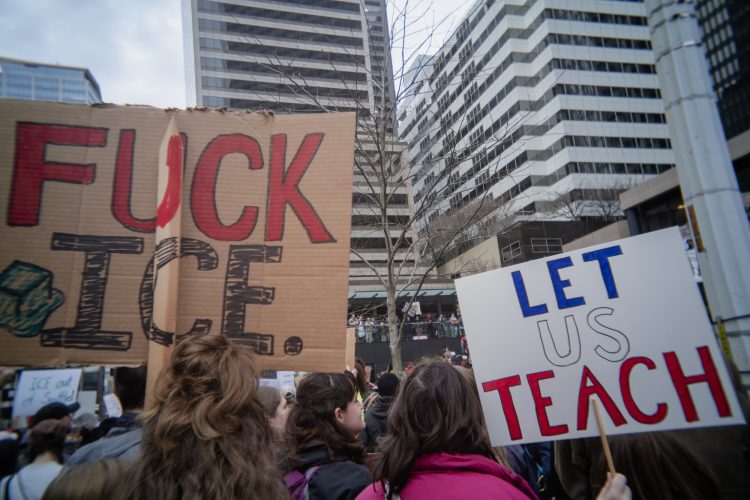
The revelation that the same planes used for collegiate sports are also utilized for mass deportations has mobilized activists and student groups. The "De-ICE These Flights" campaign, led by the Service Employees International Union (SEIU), has called on the NCAA and university presidents to sever ties with charter companies that profit from ICE contracts. The SEIU, which represents 2 million workers, argues that American universities have an ethical obligation to choose partners that align with the values of their diverse student bodies.
Similarly, the organization Arsenal PAC launched the "Don’t Fly With ICE" petition, which has garnered over 24,000 signatures. The petition triggered nearly a million emails to NCAA leadership and university athletic directors. The campaign emphasizes the moral dissonance of student-athletes—many of whom come from immigrant communities—traveling on aircraft used to deport individuals in chains.

Individual universities are also facing localized pressure. Students at the University of Houston have urged the Houston Cougars to stop contracting with GlobalX. Meanwhile, in Colorado, immigrant rights advocates have renewed calls for the University of Colorado to end its relationship with Key Lime Air, another carrier involved in detainee transport. In response to these pressures, NCAA Senior Vice President of External Affairs Tim Buckley stated that the organization must work with "all available, FAA-approved carriers" to ensure the safe and timely movement of teams.
Political Implications and Airport Chaos
The conflict over aviation resources has been exacerbated by the ongoing political stalemate in Washington. While ICE agents continue their operations, the partial government shutdown has left Transportation Safety Administration (TSA) personnel unpaid. This has led to significant staff shortages and historically long security lines at major U.S. airports during the peak spring break and March Madness travel season.
In a move that has been characterized by critics as a political maneuver, President Trump ordered ICE agents to report to airports to assist with security. However, reports from major hubs indicate that this deployment has largely resulted in confusion, with ICE officers appearing to have no defined role or authority within the TSA’s security framework. Senate Minority Leader Chuck Schumer recently criticized the move, suggesting that the presence of ICE agents at airports serves only to highlight the administration’s "chaos" and further alienate the traveling public.
The economic impact of these disruptions is substantial. Beyond the logistical costs to the NCAA, the broader travel industry is grappling with the fallout of a dysfunctional airport infrastructure. The refusal to fund TSA staff, while prioritizing the logistical needs of ICE, has created a "perfect storm" that affects millions of domestic and international travelers.
Broader Impact on International Student-Athletes
A significant but often overlooked aspect of this crisis is the impact on international student-athletes. There are roughly 25,000 international athletes in the NCAA system, many of whom are in the U.S. on F-1 student visas. The EDU Ledger has reported that the current climate of aggressive immigration enforcement has created unique risks for these individuals.
Under current visa regulations, international athletes face strict limitations on their ability to earn income through Name, Image, and Likeness (NIL) deals, as such activities can be classified as unauthorized employment. The increased visibility of international athletes during high-profile events like March Madness, combined with the presence of ICE agents at travel hubs, has led to heightened anxiety regarding visa compliance and the potential for extrajudicial targeting.

Future Outlook and the "No Kings Day" Protest
As the NCAA tournament progresses toward its conclusion in early April, the pressure on charter airlines and university administrations is expected to mount. The intersection of sports, logistics, and human rights has provided a new platform for advocacy that extends beyond traditional political circles.
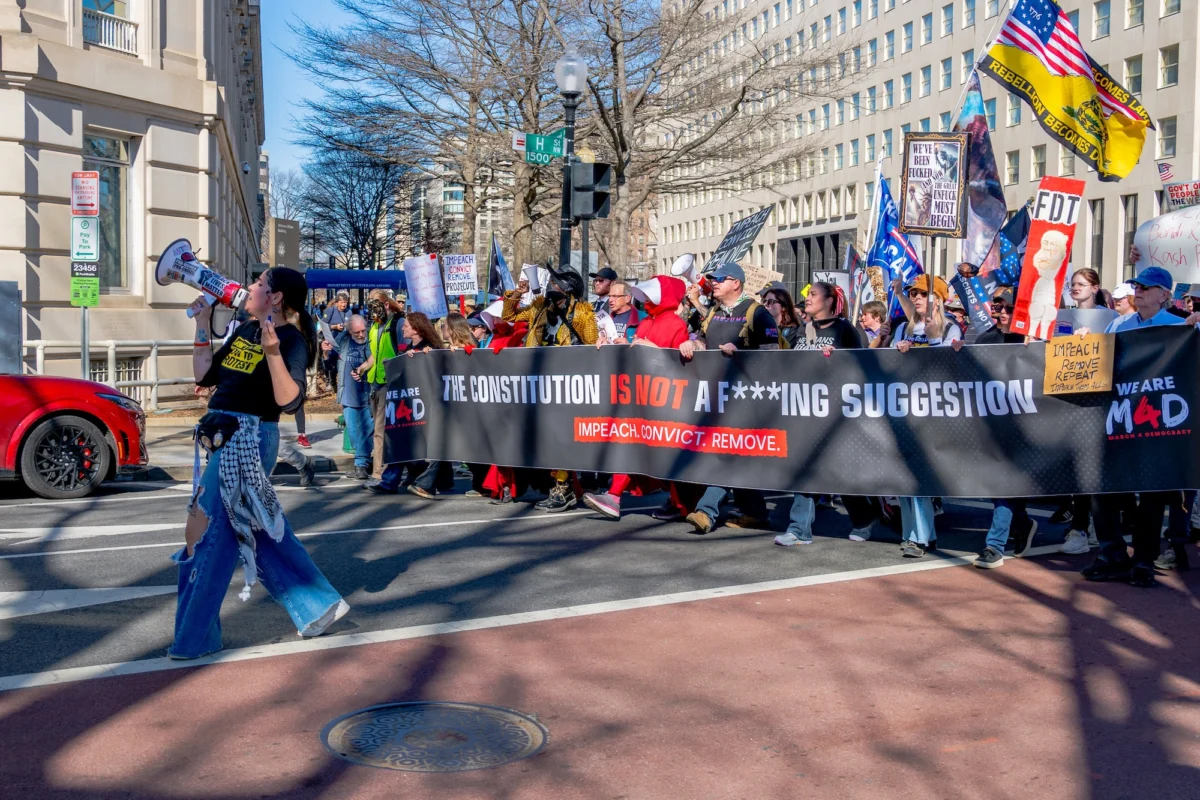
A nationwide "No Kings Day" mass protest is scheduled for Saturday, March 28. Organizers have indicated that the role of private corporations in federal immigration enforcement will be a central theme of the demonstrations. With over 3,000 events planned across the country, the protest seeks to channel public frustration over government overreach and the disruption of civic life into a cohesive movement for policy reform.
The March Madness travel crisis serves as a case study in how federal policy can have far-reaching and unintended consequences for unrelated sectors of the economy. For the NCAA, the challenge remains one of logistics and public relations. For the charter airlines, the dilemma involves balancing lucrative government contracts against the risk of brand damage and the loss of institutional clients. For the public, the situation highlights a growing tension between the administration’s immigration objectives and the functional stability of American travel and culture. As the tournament continues, the shadow of the deportation flights remains a persistent and controversial presence in the skies over the United States.
About the Author