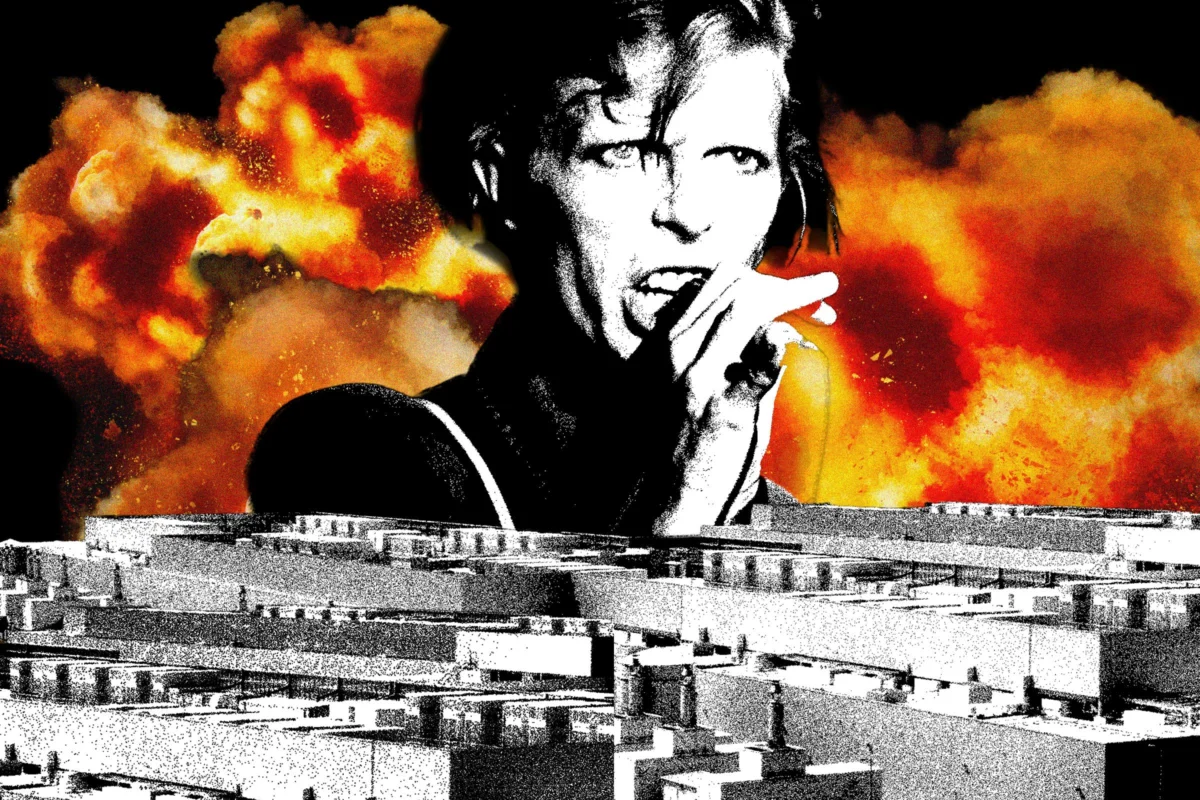
On Thursday morning, social media giant Meta debuted a new promotional video on its official Instagram account, signaling a significant shift in its public relations strategy regarding artificial intelligence. The advertisement, which features a montage of human-centric imagery, aims to reassure a skeptical public that AI technology will not lead to social isolation or human obsolescence. However, the choice of soundtrack—the 1972 David Bowie classic "Five Years"—has sparked an intense debate among cultural critics, music historians, and tech industry observers regarding the irony of using a song about the literal end of the world to market the future of technology.
The advertisement opens with a series of evocative, high-definition clips: a toddler interacting with a butterfly, parents sharing a laugh with their infant, and New York Knicks star Jalen Brunson waving to crowds during a championship parade. Over these images, a narrator delivers a manifesto of corporate confidence. "Call us optimists, call us dreamers, call us whatever the hell you want—but we’re betting on people, and we like those odds," the voiceover states. The ad also prominently features Meta’s Ray-Ban smart glasses, portraying them as a tool for capturing wholesome family moments, a move interpreted by many as an attempt to distance the hardware from ongoing privacy concerns and reports of the glasses being used for surreptitious recording.
The Narrative Conflict of Five Years
The central point of contention lies in the lyrical and thematic content of the music selected to anchor the campaign. "Five Years," the opening track of Bowie’s seminal album The Rise and Fall of Ziggy Stardust and the Spiders from Mars, is widely recognized as a haunting description of a planet facing imminent destruction.
The snippet used in the Meta advertisement focuses on lyrics that describe the sensory overload of modern life and the diversity of the human experience:
"I heard telephones, opera house, favorite melodies / I saw boys, toys, electric irons and TVs / My brain hurt like a warehouse, it had no room to spare / I had to cram so many things to store everything in there / And all the fat, skinny people / And all the tall, short people / And all the nobody people / And all the somebody people / I never thought I’d need so many people."
While these lines can be interpreted as a celebration of human variety, the context of the song—which Meta’s edit omits—is far bleaker. The opening verses of the track set a scene of global panic: "News had just come over / We had five years left to cry in / News guy wept and told us / Earth was really dying."
According to musicologists and those who worked with Bowie, the song was never intended to be an anthem of technological progress. In a 2018 interview, Mick Woodmansey, the drummer for the Spiders from Mars, recalled the emotional weight of the recording session. Woodmansey noted that the band was well aware the song was about the apocalypse and described the atmosphere as "pretty depressing." He further revealed that Bowie was in tears while recording the vocal track, overwhelmed by the narrative of a world entering its final moments.
Meta’s Defense and the Optimism Argument
When questioned about the juxtaposition of an apocalyptic song with a pro-AI message, Meta spokesperson Francis Brennan defended the creative choice. Brennan suggested that the company’s interpretation aligns with David Bowie’s own reflections on the track. "I would like to highlight what David Bowie himself said about ‘Five Years’ and its meaning: having optimism for the future," Brennan stated.
To support this claim, Meta pointed to a 1972 interview Bowie gave to NME Magazine, in which the artist discussed the era’s pervasive fear of the future. In that interview, Bowie said, "People are so incredibly serious and scared of the future that I would wish to turn the feeling the other way, into a wave of optimism. If one can take the micky out of the future, and what it is going to be like… It’s going to be unbelievably technological."
Critics, however, argue that this quote reflects Bowie’s persona at the time—a theatrical, boundary-pushing artist—rather than the literal message of the song "Five Years." Websites dedicated to the singer’s legacy, such as BowieBible.com, maintain that the song remains a "dystopian nightmare" characterized by panic, violence, and a desperate, last-minute search for redemption.
A Chronology of High-Stakes Tech Marketing
The Meta advertisement is the latest entry in a series of "lofty" marketing campaigns launched by major tech firms in 2024, all of which attempt to soften the public image of artificial intelligence. As the "AI arms race" accelerates, companies are increasingly finding themselves in a defensive posture, trying to convince users that their products are "human-centric."
- February 2022: During the Super Bowl, the now-defunct crypto exchange FTX aired an ad starring Larry David. The comedian played characters throughout history who dismissed inventions like the wheel and the lightbulb, ending with him dismissing FTX. The tagline "Don’t be like Larry" urged viewers not to miss out on the "next big thing." FTX filed for bankruptcy nine months later.
- May 2024: Apple faced a significant backlash for its "Crush!" ad for the iPad Pro. The commercial showed a massive industrial press crushing musical instruments, cameras, and books into a thin tablet. After being accused of portraying technology as a destroyer of human creativity, Apple issued a rare apology.
- July 2024: During the Paris Olympics, Google released the "Dear Sydney" ad. The commercial featured a father using the Gemini AI to write a fan letter for his daughter to send to track star Sydney McLaughlin-Levrone. The ad was widely panned for suggesting that a father would outsource his child’s personal expression to a chatbot, leading Google to pull the ad from the air.
- September 2024: Anthropic, an AI safety and research company, released an ad titled "There’s hope in hard questions." The video featured images of burning buildings and graveyards, asking "Who’s gonna hit the brakes if we need to?" before transitioning to images of families and nature, attempting to frame the company as the "responsible" alternative in the AI space.
The Role of Music Licensing and Corporate Branding
The use of "Five Years" also highlights the mechanics of the music industry’s licensing deals. In 2022, Warner Chappell Music purchased David Bowie’s entire song catalog in a deal estimated to be worth more than $250 million. This acquisition gives the publisher the legal authority to license Bowie’s music for commercial use, regardless of whether the original artistic intent aligns with the brand’s message.
Jeremy D. Larson, deputy director of Pitchfork, noted that stripping songs of their context is a standard practice in the advertising world. He cited the example of Carnival Cruise Line using Iggy Pop’s "Lust for Life"—a song explicitly about heroin addiction—to sell family vacations. However, Larson suggested that Meta’s use of Bowie for AI feels "specifically nonconsensual" given the artist’s history of protecting his creative identity.
"Meta choosing this specific song where the context for human connection is the apocalypse seems either really ignorant or really insidious," Larson said. "Then again, in that context, maybe it’s genius."
Supporting Data: The Trust Gap in AI
Meta’s aggressive branding comes at a time when public trust in AI is at a notable low. According to a 2024 survey by the Pew Research Center, roughly 52% of Americans say they feel more concerned than excited about the increased use of artificial intelligence in daily life. Only 10% reported feeling more excited than concerned.
Furthermore, Meta’s specific hardware—the Ray-Ban smart glasses—continues to face regulatory and social hurdles. While the ad focuses on "connection," privacy advocates point to the potential for "surveillance capitalism." A recent study by researchers at Harvard University demonstrated how Meta’s smart glasses could be paired with facial recognition software to identify strangers in real-time, accessing their home addresses and personal details within seconds. By focusing on imagery of infants and parades, Meta appears to be attempting to build a "firewall of sentimentality" around products that are otherwise viewed with suspicion.
Broader Impact and Industry Implications
The "Five Years" campaign underscores a fundamental challenge for Big Tech: the "uncanny valley" of corporate empathy. As Meta, Google, and Microsoft integrate AI into every facet of their ecosystems, they are struggling to sell these products as tools for human empowerment rather than replacements for human labor and connection.
Industry analysts suggest that the use of nostalgic, high-culture icons like David Bowie is an attempt to borrow "cool" and "humanity" from the pre-digital era. By associating AI with the avant-garde spirit of the 1970s, Meta hopes to frame its technology as a natural evolution of human creativity rather than a disruptive force.
However, the risk of this strategy is the "FTX Effect." When a company uses high-concept art to mask a lack of clear utility or to distract from ethical concerns, it risks a total collapse of brand credibility if the technology fails to live up to its utopian promises. For Meta, betting on the "optimism" of an apocalypse song is a high-stakes gamble that assumes the public will focus on the melody and ignore the lyrics.
As the AI landscape continues to evolve, the tension between corporate messaging and the reality of the technology remains palpable. Whether Meta’s "bet on people" will pay off, or if the world is indeed entering a "five-year" countdown to a radical and potentially destabilizing transformation, remains the central question of the modern technological age. For now, the "News Guy" is still weeping, but the tech giants are making sure he does so to a very expensive soundtrack.
About the Author