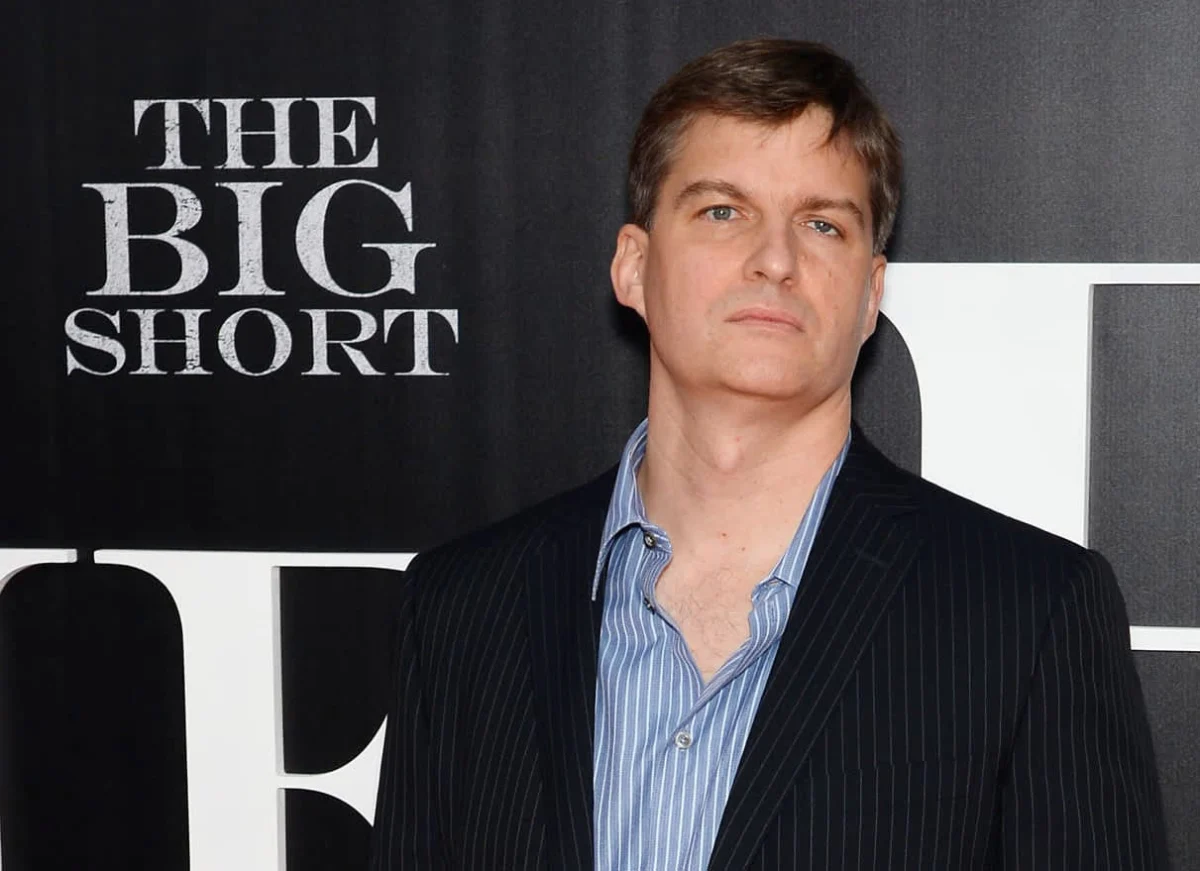
Veteran investor Michael Burry, widely recognized for his prescient wager against the U.S. housing market detailed in "The Big Short," has reaffirmed and even amplified his bearish stance against Palantir Technologies (PLTR), the artificial intelligence software firm, even in the wake of a public endorsement from former President Donald Trump. In a significant move signaling his continued skepticism about the valuations of key players in the tech sector, Burry also disclosed an increase in his short position against AI darling Nvidia (NVDA), intensifying his bets against companies that have seen meteoric rises in recent years. This strategic decision comes amidst a period of heightened volatility in the software and AI markets, prompting renewed debate about fundamental valuations versus speculative enthusiasm.
Burry’s Unwavering Conviction Against Palantir
In a detailed Substack post published on Friday, Burry articulated his steadfast commitment to his bearish wager on Palantir, an position he initiated in the fall of 2025. Despite the market’s fluctuating sentiment and the recent high-profile political backing, Burry confirmed he continues to hold long-dated put options against the company. "I now own the June 17 2027 Strike Price 50 Puts and the Decembers 19, 2026 Strike Price 100 Puts. I am not selling these today," Burry explicitly stated, signaling his long-term conviction in the impending decline of Palantir’s share price. This indicates a belief that Palantir’s stock, which closed Friday at $128.06 per share, will fall significantly below $100, and potentially even below $50, by their respective expiration dates.
Burry’s comments arrived on the heels of a Truth Social post from former President Donald Trump, who lauded Palantir’s capabilities, stating, "Palantir Technologies (PLTR) has proven to have great warfighting capabilities and equipment. Just ask our enemies!!!" This endorsement initially provided a momentary uplift to Palantir’s stock, helping it recover from intraday lows. However, the effect proved temporary, as Palantir shares concluded the week with a notable 13.7% drop, bringing their year-to-date losses for 2026 to approximately 28%. Burry acknowledged the potential for a short-term rally following Trump’s post, noting, "The stock may catch a wind here. It has been selling off with software stocks." Nevertheless, he reiterated his core thesis: "I continue to hold the puts, as I believe the fundamental value of this company is well under $50/share." This stark divergence between market price and Burry’s perceived intrinsic value underscores the intensity of his bearish outlook.
Understanding Burry’s Put Options Strategy
Michael Burry’s investment strategy, particularly his use of long-dated put options, is a sophisticated method of betting against a stock’s future performance. A put option gives the holder the right, but not the obligation, to sell a specified amount of an underlying security at a predetermined price (the "strike price") on or before a specific date (the "expiration date"). If the stock’s price falls below the strike price by the expiration date, the put option becomes profitable. The further the stock falls below the strike price, the greater the profit for the put option holder.
By acquiring put options with strike prices of $50 and $100, and expiration dates extending into 2026 and 2027, Burry is positioning himself for a substantial downturn in Palantir’s stock over an extended period. The act of "rolling the position," as Burry mentioned, typically involves closing out existing options and opening new ones, often with later expiration dates or different strike prices, to maintain the bearish exposure and adapt to market movements. This strategy allows him to manage his risk while continuing to bet on a long-term decline.
The implicit cost of such long-dated options can be substantial, reflecting the time value and volatility premium. However, it also limits Burry’s maximum loss to the premium paid, unlike shorting a stock outright, which carries theoretically unlimited risk. This measured yet aggressive approach is characteristic of Burry’s analytical and risk-aware investing style.
The "Big Short" Investor: Michael Burry’s Enduring Influence
Michael Burry’s reputation as a contrarian and highly analytical investor was cemented by his accurate forecast of the 2008 financial crisis, a narrative famously chronicled in Michael Lewis’s book "The Big Short" and its subsequent film adaptation. As the head of Scion Asset Management, Burry famously identified the burgeoning subprime mortgage bubble years before its collapse, investing heavily in credit default swaps against collateralized debt obligations (CDOs) that were widely considered safe. His success in that period earned him legendary status among investors and the public alike.
Burry’s investment philosophy is characterized by deep fundamental research, a keen eye for market inefficiencies, and a willingness to take unconventional, often lonely, positions against prevailing market sentiment. He frequently targets companies he believes are fundamentally overvalued or sectors exhibiting speculative excesses. His public pronouncements, often delivered via his Substack or previously through social media, tend to generate significant attention and can influence retail investor behavior, though institutional investors typically conduct their own independent analyses. His current bearish bets against Palantir and Nvidia signal his conviction that parts of the current market, particularly in the high-growth tech and AI sectors, are exhibiting similar characteristics of overvaluation that he identified in previous market bubbles.
Palantir Technologies: Business Model, Controversies, and Valuation Debate
Palantir Technologies, co-founded in 2003 by Peter Thiel, Alex Karp, and others, is a data analytics software company primarily known for its work with government agencies and defense contractors. Its flagship platforms, Gotham and Foundry, are designed to integrate, manage, and secure vast datasets, enabling complex analysis and decision-making for clients ranging from intelligence services to large corporations. Gotham is predominantly used by government entities for national security and defense applications, while Foundry caters to commercial enterprises seeking to optimize operations and supply chains.
The company’s deep ties to the U.S. military and intelligence community have been a cornerstone of its business model since its inception. Palantir’s technology has been deployed in various critical initiatives, including counter-terrorism operations, disaster relief efforts, and advanced defense programs. Its involvement in projects like Project Maven, a Pentagon initiative to use AI to analyze drone footage, has garnered both praise for its technological prowess and criticism regarding privacy and ethical implications of government surveillance.
Financially, Palantir has experienced significant revenue growth, particularly within its government segment. However, profitability has been a more elusive goal, and the company has often traded at premium valuations based on its growth potential and strategic importance rather than traditional earnings metrics. Analysts have long debated whether Palantir’s high price-to-sales ratios are justified, given its concentrated customer base, unique sales cycle, and the inherent controversies surrounding its work. Burry’s assessment that the company is "wildly overvalued" and its fundamental value is "well under $50/share" reflects a deep skepticism about its current market capitalization relative to its underlying profitability and future earnings potential. At its peak near $200 last year, Palantir’s market capitalization would have been extraordinarily high, potentially exceeding hundreds of billions of dollars, for a company with its current revenue and profit profile. Even at its current $128.06, its market cap remains substantial, prompting questions about sustainability from value-oriented investors like Burry.
The Geopolitical Context: Palantir and National Security
The discourse surrounding Palantir often intersects with geopolitical developments, particularly concerning U.S. national security and defense strategies. Former President Trump’s recent endorsement specifically highlighted Palantir’s "great warfighting capabilities and equipment," aligning with his administration’s emphasis on technological superiority in defense. During Trump’s second administration, Palantir has indeed been actively securing new government contracts and deepening its engagement with the Pentagon. CEO Alex Karp has maintained regular communication with the administration, navigating earlier tensions to solidify the company’s position as a critical technology provider to the U.S. government.
The speculative link to an "Iran war," as mentioned in some market commentaries, further underscores Palantir’s perceived strategic value. In a scenario of heightened geopolitical conflict, companies like Palantir, which provide advanced data analytics and decision-making tools to military and intelligence agencies, could see increased demand for their services. This perception, whether fully realized or not, contributes to the narrative of Palantir as a vital asset in modern warfare and national defense, potentially bolstering investor confidence, especially among those who prioritize strategic importance over traditional financial metrics. However, Burry’s analysis suggests that even such strategic importance does not justify what he views as an extreme overvaluation in the stock market.
Broader Market Implications: AI Sector and Nvidia’s Vulnerability
Burry’s latest Substack post also revealed an expansion of his bearish position on Nvidia, another titan of the artificial intelligence revolution. "I added to my NVDA puts, this time buying the January 27 Strike 115 puts at 3.30," he wrote. His rationale for using put options on Nvidia, rather than shorting it outright, highlights risk management: "Implied Volatility is high, so I thought about shorting it outright. Still, I like the maximum loss being limited, and time decay – also known as theta decay – won’t be significant until 2 months out. I would consider rolling before that if necessary."
Nvidia has been at the forefront of the AI boom, with its graphics processing units (GPUs) becoming the indispensable hardware for training and deploying AI models. Its stock has experienced unprecedented growth, pushing its market capitalization into the trillions of dollars and making it one of the world’s most valuable companies. This rapid ascent has fueled concerns among some analysts, including Burry, that Nvidia’s valuation may have become untethered from its long-term earnings potential, driven more by speculative frenzy than sustainable fundamentals. The high implied volatility in Nvidia’s options market, as noted by Burry, reflects the market’s expectation of large price swings, a characteristic often seen in highly speculative assets.
Burry’s simultaneous bearish bets against both Palantir and Nvidia suggest a broader conviction that the AI and software sectors, while undoubtedly transformative, may be experiencing a valuation bubble. This perspective aligns with historical patterns where groundbreaking technological shifts have often been accompanied by periods of irrational exuberance in financial markets, eventually leading to corrections. The selling off of software stocks, as Burry noted regarding Palantir, indicates a sector-wide reevaluation, which could further pressure highly valued companies like Nvidia and Palantir.
Reactions and Counterarguments: Alex Karp’s Dismissal
Michael Burry’s bearish wagers are not without their detractors, particularly from the companies he targets. Last year, when Burry’s former hedge fund, Scion Asset Management, first disclosed bearish positions against Palantir and Nvidia, Palantir CEO Alex Karp publicly dismissed Burry’s concerns. Karp famously called Burry’s wagers "super weird" and "bats— crazy" in November 2025. Karp’s comments underscored the fundamental disagreement between value investors like Burry, who focus on intrinsic worth and sustainable earnings, and growth-oriented leaders who emphasize market disruption, technological innovation, and long-term vision.
For Karp and other proponents, Palantir’s unique technology, deep government ties, and expanding commercial footprint position it for continued growth and justify its premium valuation. They argue that traditional valuation metrics fail to capture the full scope of Palantir’s strategic importance and its potential to dominate critical data-driven sectors. Similarly, Nvidia’s champions point to its technological leadership, its indispensable role in the AI revolution, and its robust ecosystem as reasons for its valuation, suggesting that the company is merely reflecting the immense economic value it creates.
Risks and Outlook for Burry’s Bets
While Michael Burry has a celebrated track record, his bearish positions are not without risk. Market sentiment can remain irrational longer than anticipated, and growth stocks can continue their upward trajectory for extended periods, even when appearing overvalued by traditional metrics. A sustained rally in Palantir or Nvidia, potentially fueled by strong earnings, new contract wins, or continued speculative interest, could significantly impact his put options. Furthermore, the timing of expiration dates means that if the stock prices do not fall below the strike prices before those dates, the options could expire worthless, resulting in a loss of the premiums paid.
However, Burry’s long-dated options provide him with considerable time for his thesis to materialize. His patient approach, combined with his willingness to roll positions, suggests a long-term conviction rather than a short-term trade. The current environment, characterized by rising interest rates, inflationary pressures, and geopolitical uncertainties, could create headwinds for high-growth, high-valuation stocks, potentially validating Burry’s bearish outlook. The ongoing debate between fundamental value and growth potential in the AI and software sectors remains a central theme for investors, with Burry’s latest moves adding a significant voice to the cautionary chorus. The coming months and years will reveal whether Burry’s latest "Big Short" proves as prophetic as his legendary bet against the housing market.
About the Author