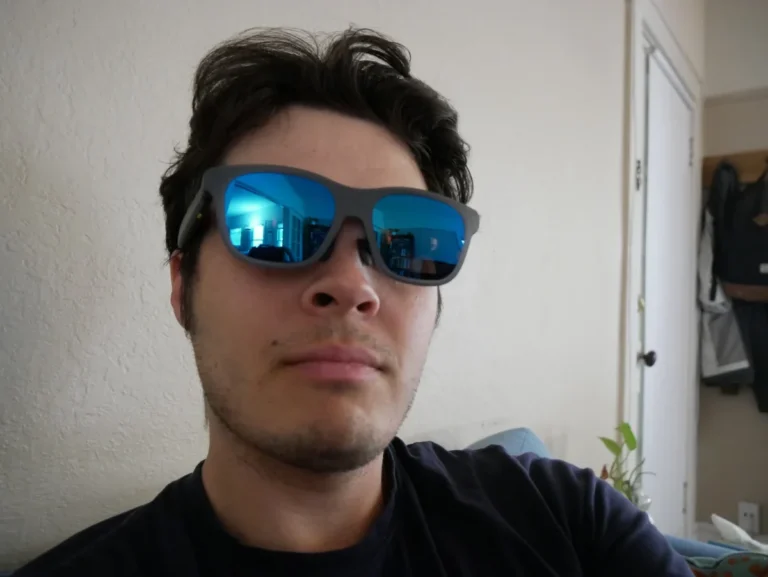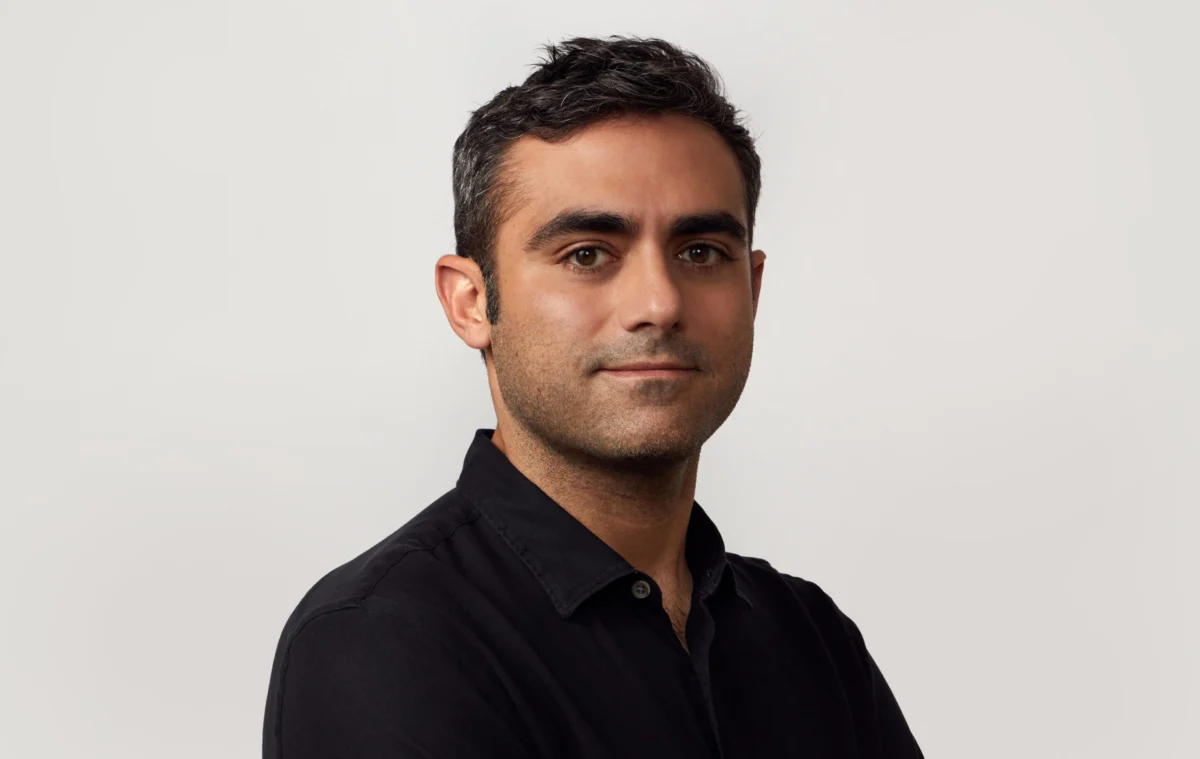
Michael Polansky possesses a remarkably unassuming demeanor, a stark contrast to the outsize egos often associated with the spheres he navigates. Seated on a sun-dappled patio outside a popular bakery in Mill Valley, California, a town known for its affluent charm and proximity to San Francisco, Polansky, with his bespectacled gaze and a friendly mien that suggests a young academic, embodies an unlikely duality. He is the co-founder of Outer Biosciences, a cutting-edge startup at the intersection of artificial intelligence and biology, and simultaneously, the creative, business, and romantic partner to global superstar Stefani Germanotta, known to the world as Lady Gaga. This dual existence places him at the nexus of celebrity culture and the clandestine world of scientific innovation, where his company has quietly dedicated years to perfecting the art of keeping living human tissue viable outside the body for extended periods, a feat achieved without widespread public knowledge until recently.
Polansky’s journey to this unique position was not a predetermined path. He grew up in Minnesota, later pursuing applied mathematics and computer science at Harvard, graduating in 2006. His initial foray into the professional world was at Bridgewater Associates, a hedge fund renowned for its distinctive culture. Polansky describes his three years there as a "really good experience," though he admits it wasn’t a place that ignited his daily passion. He characterizes Bridgewater as a "very unique place," a sentiment that hints at the unconventional environments he would later gravitate towards.
His transition from the financial sector to the vibrant ecosystem of Silicon Valley was facilitated by a serendipitous encounter. While attending a wedding in Minnesota in 2009, he reconnected with a former neighbor who happened to be Sean Parker’s assistant. Learning that Parker was seeking collaborators, Polansky, who was already contemplating a move west, seized the opportunity. A subsequent dinner with Parker in New York led to an immediate connection, and Polansky recounts quitting his job at Bridgewater the very next day to relocate to San Francisco.
Polansky’s early days in the Bay Area saw him join Founders Fund, a prominent venture capital firm, during its formative years under the leadership of its original four partners: Peter Thiel, Sean Parker, Luke Nosek, and Ken Howery. Working alongside another young principal, Brian Singerman, Polansky shared an office and describes the experience as "really, really great." His tenure at Founders Fund provided him with invaluable insights into the venture capital landscape and the early-stage development of technology companies.
When Sean Parker departed Founders Fund following his liquidity from Facebook stock, he embarked on establishing his own family office. Polansky was a key figure in this transition, taking on the responsibility of managing Parker’s diverse interests, which spanned business, investments, and philanthropy. A significant undertaking during this period was his involvement in the establishment of the Parker Institute for Cancer Immunotherapy, where he continues to serve as executive director. This chapter of his life continued until the onset of the COVID-19 pandemic, a period he notes as a turning point that "moved in a different direction."
This significant shift in his personal and professional trajectory was largely influenced by his relationship with Stefani Germanotta. Their meeting occurred in late 2019 at a birthday celebration hosted by Sean Parker. The introduction itself was a testament to the interconnectedness of their social circles, stemming from Cynthia Germanotta, Stefani’s mother and president of the Born This Way Foundation. Polansky had become acquainted with Cynthia through his philanthropic endeavors.
"She had said, you know, for months and months, ‘I want to set you up with my daughter,’" Polansky recalls, a hint of amusement in his voice. "I was like, I think you’re making fun of me." His initial skepticism was unfounded. The connection proved profound, and as Polansky laughingly recounts, the subsequent meeting of their mothers solidified the bond, with his and Germanotta’s mothers now enjoying a close friendship.
The partnership between Polansky and Germanotta extends beyond the personal realm, encompassing a shared professional vision and active collaboration. A notable example is their joint management of Germanotta’s most recent world tour, a sprawling operation that spanned three Boeing 747 aircraft. Polansky likens the logistical complexity of coordinating this global undertaking to managing "a 200-person startup that travels around the world every day."
This collaborative spirit also extends to Germanotta’s entrepreneurial ventures, most notably Haus Labs, her innovative cosmetics brand. Unlike many celebrity-endorsed brands that rely on licensing agreements, Germanotta founded Haus Labs from the ground up, a fact Polansky highlights with pride. "on her kitchen floor," he notes, emphasizing the grassroots origin of the company. Based in El Segundo, California, Haus Labs, with approximately 70 employees, is reportedly experiencing significant success in the competitive beauty market.
Germanotta’s involvement is not merely symbolic; she actively participates in Outer Biosciences’ strategic direction, serving on its board. The synergy between Haus Labs and Outer Biosciences is evident in their collaborative projects, such as the inclusion of Outer Biosciences’ chief scientist, Kyung-Jin Jang, on Haus Labs’ scientific advisory board. This cross-pollination of expertise underscores a shared commitment to scientific rigor and innovation.
From his vantage point at the sun-drenched table, Polansky speaks glowingly of his partner: "People really haven’t gotten to know a certain side of her publicly… She’s such a brilliant businessperson." This sentiment reveals a deep admiration for Germanotta’s acumen beyond her celebrated artistic talents.
From Cancer Immunotherapy to Tissue Engineering: A Scientific Pivot
Polansky’s foray into the life sciences was, by his own admission, "accidental." It emerged from his extensive work alongside Sean Parker in the field of cancer immunotherapy, a domain that was considered "very fringe" when they first engaged with it. This decade-long immersion provided him with a foundational understanding of complex biological challenges and the potential for disruptive innovation.
Outer Biosciences, co-founded in 2022 by Polansky (as CEO), Kyung-Jin Jang (Chief Scientific Officer), Chris Hinojosa (Chief Technology Officer), and Stanley King (Chief Business Officer), was born from a perceived stagnation in biological and chemical innovation compared to the rapid advancements in software development. A significant impediment identified by the founders was the ethical and practical limitation of conducting experiments directly on human subjects. The proxies commonly employed by scientists—animal models, simplified cell cultures, and lab-grown organoids—were deemed insufficient stand-ins for the intricate functions of a real human organ.
The company’s innovative approach circumvents these limitations by sourcing human skin that would otherwise be discarded, primarily from plastic surgery procedures. Outer Biosciences collaborates with a network of vetted non-profit and commercial biobanks and brokers. These organizations operate under stringent "institutional review board oversight and documented donor consent," with key partners including the National Disease Research Interchange and the Cooperative Human Tissue Network, both of which receive federal funding from the NIH and the National Cancer Institute. Polansky is meticulous in clarifying that no single government tissue network exclusively qualifies buyers and that Outer Biosciences incurs cost-recovery fees for these biological materials rather than outright purchasing them. The establishment of this intricate supply chain, ensuring tissue is received "within hours" of procurement while still viable, represented a two-year developmental effort.
Donor privacy is a paramount concern, and Polansky emphasizes that every sample is de-identified by the supplying organizations, removing any direct identifiers. A proprietary support system developed by his team then meticulously nourishes the tissue with essential nutrients and removes metabolic waste, a process that significantly extends its viability far beyond industry standards.
The conventional industry norm typically allows for only a few days of tissue viability. While sufficient for acute toxicity testing, this timeframe is inadequate for observing slower biological processes such as collagen remodeling, pigmentation changes, or barrier repair, which manifest over weeks. Dermatologists, for instance, often advise patients to expect visible changes in skin health over extended periods, underscoring the temporal nature of these biological phenomena.
Outer Biosciences’ system, however, maintains tissue viability for up to a month. Polansky asserts that the tissue retains its "day-zero architecture and preserves its day-zero epidermal, stromal and immune-associated molecular programs." In layman’s terms, tissue maintained for 30 days under the company’s care closely resembles its day-one state, though subtle distinctions persist.
The extended viability of the tissue provides a critical advantage for research, as exemplified by studies involving induced sunburn. Polansky explains that researchers can induce UVB damage in living tissue and subsequently monitor the subsequent stress, inflammatory, and recovery responses over several weeks. This allows for detailed information gathering on the biological cascade initiated by injury, without implying any therapeutic intervention in the sense of "healing" the skin.
Polansky is deliberate in framing the company’s achievements, particularly when discussing rival technologies. He posits that Outer Biosciences’ value lies not in any single component of its methodology but in the synergistic integration of its elements: the sustained viability of human tissue, a diverse donor pool enabling controlled experimental conditions, and the meticulous collection of repeated molecular measurements.
This integrated approach is powered by a closed, self-reinforcing system that leverages artificial intelligence. An AI model predicts which untested chemicals are likely to exert beneficial effects on specific skin functions. These predicted chemicals are then subjected to testing on the living tissue. The outcomes of these experiments, irrespective of whether the initial prediction was accurate, are fed back into the AI model, refining its predictive capabilities for subsequent iterations. This cyclical process of prediction, testing, and learning represents the core product Outer Biosciences currently offers: an accelerated methodology for discovering novel skincare ingredients.
This enhanced pace of discovery is a relatively recent development, representing a significant leap from the company’s initial "brute force" approach. Early on, the team relied on extensive literature reviews and collaborations with the National Cancer Institute to identify natural compounds from extreme environments. This phase yielded a limited number of promising leads over approximately 18 months. However, with the integration of AI, the company now generates a new candidate ingredient roughly every six weeks, with six active leads in its pipeline and dozens of additional "hits" recorded.
The speed of this discovery process is particularly remarkable given the finite universe of skin-active ingredients. While precise figures are elusive, the number of formally recognized active ingredients is relatively small. The FDA approves active ingredients across 13 categories of over-the-counter skin drugs, totaling approximately 120 to 130. When considering cosmetic ingredients supported by robust scientific research, this number rises to around 200. This limited pool highlights the immense opportunity for innovation that Outer Biosciences is poised to address.
Outer Biosciences operates within the realm of cosmetic ingredient discovery, which bypasses the rigorous FDA approval process required for pharmaceuticals. The pathway to market involves obtaining a standardized industry name for the ingredient, followed by safety testing conducted under guidelines established by the Organisation for Economic Co-operation and Development (OECD), an international body whose member countries recognize each other’s properly executed studies.
The company’s strategy is to license or sell its developed ingredients to beauty and pharmaceutical companies, which will then formulate them into finished products such as serums and creams under their own brands. Polansky indicates that four of Outer Biosciences’ six current leads are on a trajectory toward commercialization.
Currently, Outer Biosciences generates revenue through collaborative research partnerships. These include collaborations with pharmaceutical companies investigating the causes of severe skin rashes induced by certain cancer drugs, as well as partnerships with consumer beauty brands evaluating the efficacy of Outer Biosciences’ data against their own product development and marketing requirements.
Polansky remains circumspect regarding current fundraising efforts. To date, the company has secured approximately $23 million in funding from early investors, including Wing Ventures, Initialized, and Polansky’s own investment firm, Hawktail. Outer Biosciences employs 19 individuals, with the majority based near Cambridge, Massachusetts, excluding Polansky.
When questioned about the decision to speak publicly about the company after years of near-complete silence, Polansky points to the accumulating data and the resultant confidence within the team. "Trying to do this in private is hard," he admits, as the afternoon sun casts long shadows and the bakery staff begins preparing for closing. "We kind of want to start working in public now," he adds with a shrug, signaling a new phase of transparency and engagement.
Outer Biosciences is not alone in pursuing this groundbreaking area of research, although its unique methodology of utilizing real human tissue distinguishes it from competitors. Vivodyne, a Philadelphia-based company developing lab-grown human organ tissue for biological data generation, recently announced it has raised close to $80 million, including a $38 million seed round and a $40 million Series A, both led by Khosla Ventures. Other competitors are exploring various "organ-on-a-chip" and microphysiological systems for preclinical testing.
Polansky appears unfazed by the competitive landscape, attributing his focus to the demanding nature of his company’s work rather than arrogance. He believes there is ample room for multiple players in this burgeoning field, especially considering the absence of a readily available "biology internet" analogous to the data sources scraped by AI companies.
Outer Biosciences’ strategic advantage lies in two key areas. Firstly, the unique data it generates is not replicated elsewhere, potentially offering a more defensible market position, albeit one that requires more time to build compared to traditional software-based AI startups. Secondly, its operational costs are more modest, with comparatively low computational demands when contrasted with training large language models. Indeed, all of the company’s AI operations are currently conducted on-premise, a deliberate choice to maintain data security, as Polansky states, "we don’t want the data in the cloud."
The long-term vision for Outer Biosciences remains fluid, encompassing possibilities ranging from establishing a standalone commercial ingredients business, licensing its discoveries, or potentially restructuring around a singular breakthrough compound. Polansky emphasizes that a definitive path is not yet set, nor is it immediately necessary. The paramount objective is the development of an AI model of sufficient accuracy to enable the identification of promising avenues in skin biology without the need for exhaustive physical experimentation. This, he believes, will unlock an unprecedented rate of discovery in dermatology.
Currently, the intricate process of transforming a promising compound into a market-ready product—encompassing formulation, manufacturing scale-up, supply chain management, and safety testing—is still undertaken manually by the same scientists responsible for the initial discovery. The next strategic step on the company’s roadmap involves building a dedicated product development team composed of individuals with prior experience in these specific areas.
"I think it’s going to be fun," Polansky concludes, a sense of anticipation in his voice, "to have people know that this is what we’ve been doing." This sentiment signals a shift from a period of quiet, intensive development to one of public engagement and recognition for the groundbreaking work being conducted at Outer Biosciences.
About the Author