In today’s increasingly interconnected and geographically dispersed professional environment, understanding and effectively managing time zone differences is no longer a mere logistical challenge but a critical component of operational efficiency and successful business communication. With a workforce that spans the breadth of the United States, from the sun-drenched shores of California to the historic coasts of Maine, and with remote work becoming a pervasive reality, the concept of "time zone fatigue" has become a common ailment for businesses and their employees. This comprehensive guide aims to demystify the complexities of U.S. time zones, illuminate their significance in business operations, and provide actionable strategies for navigating these temporal disparities.
The Pervasive Impact of Time Zones on Business Operations
The modern economy is characterized by a fluidity that transcends physical boundaries. Businesses routinely interact with a diverse array of stakeholders, including clients, vendors, partners, and a distributed workforce, all of whom may be operating under different temporal conditions. This interconnectedness necessitates a granular understanding of time zones to ensure seamless operations and prevent costly misunderstandings.
Consider the fundamental aspects of daily business:
- Client and Customer Service: A client in New York expecting immediate assistance at 9 AM EST might be met with silence if their service provider in Los Angeles is still observing Pacific Standard Time (PST), where it is only 6 AM. This can lead to customer dissatisfaction and missed opportunities.
- Supply Chain Management: Coordinating orders with suppliers across different states requires precise timing. A delay in placing an order due to a time zone miscalculation can disrupt production schedules, leading to inventory shortages or overstocking.
- Internal Team Collaboration: As remote and hybrid work models become standard, teams are often spread across multiple time zones. Scheduling meetings, setting deadlines, and fostering a cohesive team culture become significantly more complex when individuals are experiencing different points in their day. According to a 2023 report by Statista, approximately 31% of U.S. workers were working remotely full-time, highlighting the prevalence of this challenge.
- Project Management: The timely execution of project milestones is paramount. A project manager in Chicago needs to be acutely aware of the time zone of a development team in Seattle to ensure that progress is tracked accurately and that collaboration occurs during overlapping work hours.
- Financial Transactions and Reporting: Many financial operations, including stock market trading and banking, operate on strict schedules tied to specific time zones. Understanding these windows is crucial for timely execution and compliance.
The implications of ignoring time zone differences can range from minor inconveniences to significant financial losses and reputational damage. In a competitive global marketplace, operational efficiency directly correlates with profitability, making temporal awareness a strategic imperative.
Understanding the Temporal Landscape: U.S. Time Zones
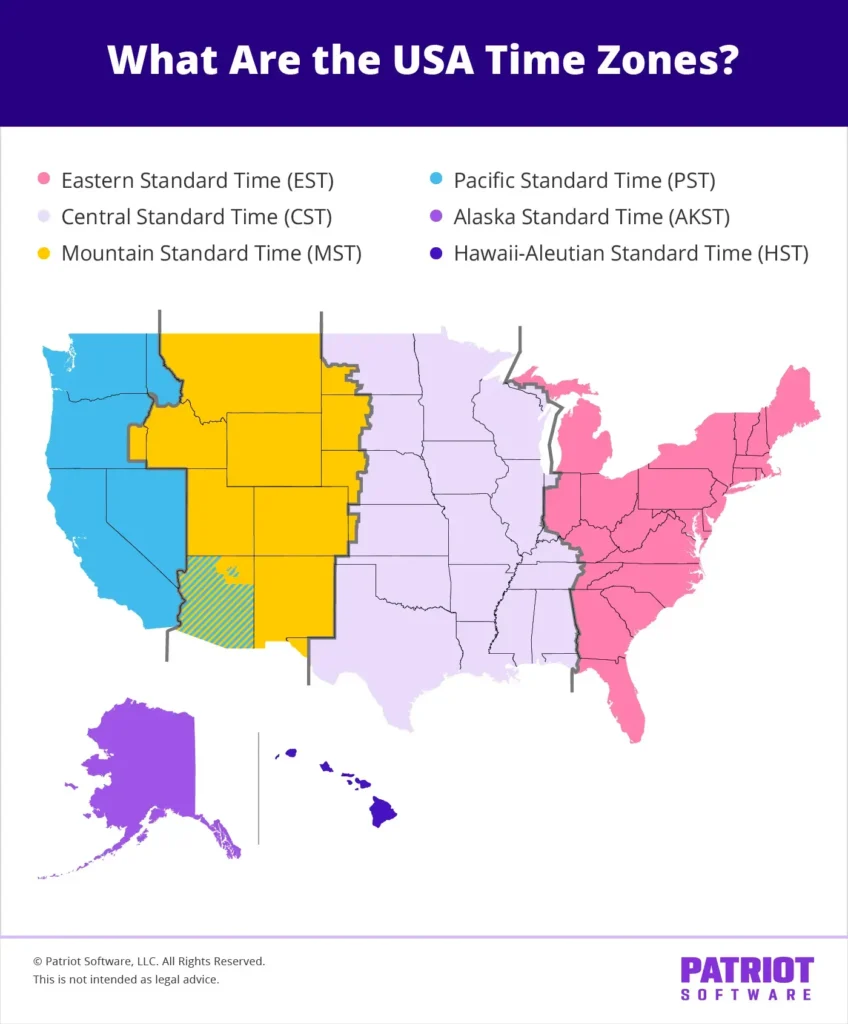
The United States, spanning from the Atlantic to the Pacific and extending to Alaska and Hawaii, is divided into several distinct time zones. These zones are established based on longitudinal lines, aiming to synchronize local time with the sun’s position, thereby maximizing daylight hours during waking periods. The six primary time zones that encompass all 50 states and the District of Columbia are:
- Eastern Standard Time (EST): This is the easternmost time zone in the contiguous United States. It is UTC-5. States primarily in this zone include Connecticut, Delaware, Florida (partially), Georgia, Maine, Maryland, Massachusetts, New Hampshire, New Jersey, New York, North Carolina, Ohio, Pennsylvania, Rhode Island, South Carolina, Vermont, Virginia, and West Virginia, along with the District of Columbia.
- Central Standard Time (CST): Located west of EST, this zone is UTC-6. It includes Alabama, Arkansas, Florida (partially), Illinois, Indiana (partially), Iowa, Kansas (partially), Kentucky (partially), Louisiana, Michigan (partially), Minnesota, Mississippi, Missouri, Nebraska (partially), North Dakota (partially), Oklahoma, South Dakota (partially), Tennessee (partially), Texas, and Wisconsin.
- Mountain Standard Time (MST): West of CST, this zone is UTC-7. Notably, Arizona (with the exception of the Navajo Nation) observes MST year-round and does not participate in Daylight Saving Time, making it a unique case. Other states in this zone include Colorado, Idaho (partially), Kansas (partially), Montana, Nebraska (partially), New Mexico, North Dakota (partially), Oregon (partially), South Dakota (partially), Texas (partially), Utah, and Wyoming.
- Pacific Standard Time (PST): The westernmost contiguous time zone, PST is UTC-8. It covers California, Idaho (partially), Nevada (partially), Oregon (partially), and Washington.
- Alaska Standard Time (AKST): This zone, UTC-9, applies to most of Alaska.
- Hawaii-Aleutian Standard Time (HST): This zone, UTC-10, includes Hawaii and a portion of the Aleutian Islands in Alaska.
It is crucial to note that several states, due to their geographical size and historical development, are divided into multiple time zones. For instance, Florida spans both EST and CST, while Idaho falls under both MST and PST. This adds another layer of complexity that businesses must consider.
The Added Dimension: Daylight Saving Time (DST)
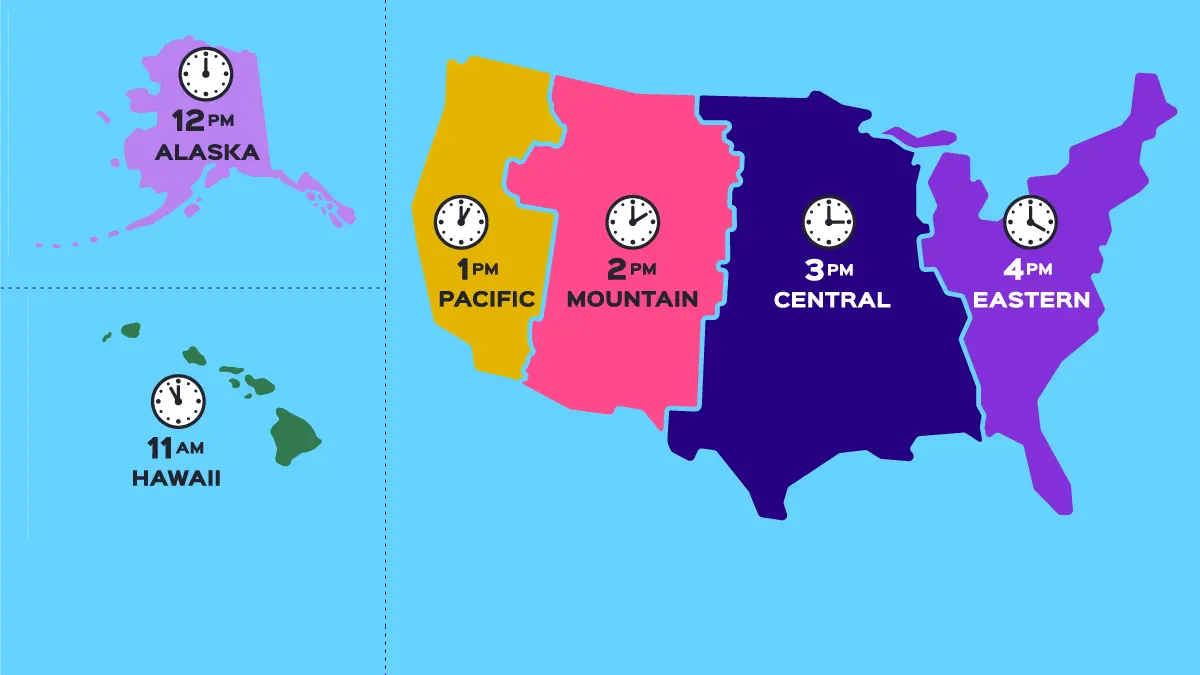
Compounding the inherent complexity of time zones is the practice of Daylight Saving Time (DST). Implemented in most of the United States, DST involves advancing clocks by one hour in the spring (typically the second Sunday in March) and setting them back by one hour in the fall (typically the first Sunday in November). The stated purpose of DST is to make better use of daylight, extending daylight hours into the evening during warmer months.
The impact of DST on time zone differentials can be significant and often counterintuitive:
- Shifting Differences: During DST, the time difference between two zones that both observe DST will remain consistent. However, when one zone observes DST and another does not, the temporal gap can fluctuate. For example, during DST, Ohio (EST) is three hours ahead of Arizona (MST), which does not observe DST. However, when Ohio falls back to EST in November, the difference shrinks to two hours, even though Arizona remains on MST.
- State Exemptions: A notable exception to DST observance exists. Hawaii and most of Arizona (specifically, all counties except the Navajo Nation) do not adjust their clocks. This means their time remains consistent year-round, creating unique temporal relationships with neighboring states that do observe DST.
- Legislative Debates: The practice of DST has been a subject of ongoing debate in the U.S. for years. Numerous legislative proposals have been introduced in Congress to make DST permanent, a move that would eliminate the biannual clock changes. As of early 2026, these proposals have not been enacted into federal law, leaving the future of DST in flux. If made permanent, the legislation would likely allow states like Arizona and Hawaii to continue observing their standard time year-round.
The observance of DST, or lack thereof, introduces a dynamic element that requires constant vigilance. Businesses must factor in these seasonal shifts when scheduling calls, setting deadlines, or communicating critical information across state lines.
Navigating the Temporal Divide: Strategies for Business Success
Successfully managing operations across multiple time zones requires a proactive and systematic approach. Here are key strategies that businesses can implement:
- Establish Clear Communication Protocols: When scheduling meetings or setting deadlines, always specify the time zone. For example, instead of "meeting at 2 PM," use "meeting at 2 PM EST (11 AM PST)." Utilizing universal time formats like Coordinated Universal Time (UTC) can also be beneficial for international operations, though for domestic U.S. business, clearly stating the relevant U.S. time zone is usually sufficient.
- Leverage Technology: A wealth of digital tools can significantly alleviate the burden of time zone management.
- Scheduling Software: Many calendar applications (e.g., Google Calendar, Outlook Calendar) allow users to view multiple time zones simultaneously and can automatically convert meeting times based on participants’ locations.
- Time and Attendance Software: For businesses with a distributed workforce, specialized software can track employee hours accurately, taking into account their local time zones. This is crucial for payroll and compliance.
- Collaboration Platforms: Tools like Slack, Microsoft Teams, and Asana often display the current time of team members, providing an immediate visual cue for scheduling and communication.
- World Clock Apps: Simple desktop or mobile applications that display the time in multiple cities or time zones can be invaluable for quick reference.
- Develop a Time Zone Cheat Sheet: For businesses with employees or frequent contacts in specific time zones, creating a readily accessible reference document can be highly effective. This document should clearly outline the time differences and any DST considerations.
- Define Core Business Hours: Establish clear operating hours for customer service and key business functions, taking into account the time zones of your primary client base or operational hubs. Communicate these hours transparently.
- Embrace Asynchronous Communication: Not every interaction needs to happen in real-time. Encourage the use of email, project management tools, and internal messaging systems for non-urgent communications, allowing individuals to respond at their convenience within their local work hours.
- Foster Empathy and Understanding: Educate your team about the challenges of working across different time zones. Encourage a culture of consideration, where team members are mindful of their colleagues’ local times when sending messages or scheduling requests, particularly outside of typical business hours.
- Regularly Review and Update: Time zone boundaries can occasionally be adjusted, and legislative changes regarding DST can occur. It is prudent to periodically review your internal resources and ensure they reflect the most current temporal landscape.
The Broader Implications and Future Outlook
The increasing prevalence of remote work and the globalization of commerce underscore the enduring importance of time zone management. As businesses continue to embrace flexible work arrangements and expand their reach, the ability to navigate these temporal complexities will become an even greater differentiator. Companies that master this skill will foster greater employee satisfaction, enhance operational efficiency, and build stronger relationships with their clients and partners.
The ongoing discussions surrounding Daylight Saving Time suggest a potential future where the biannual clock adjustments might be a thing of the past. Such a change would simplify time zone calculations but would still necessitate a robust understanding of the existing temporal divisions. Regardless of future legislative actions, the fundamental principles of clear communication, strategic use of technology, and cultural awareness will remain the cornerstones of successful time zone management.
In conclusion, while the concept of time zones might seem like a straightforward geographical division, its practical implications in the business world are multifaceted and profound. By understanding the nuances of U.S. time zones, acknowledging the impact of Daylight Saving Time, and implementing effective management strategies, businesses can transform a potential source of confusion into a streamlined aspect of their operations, ultimately contributing to their overall success.
About the Author