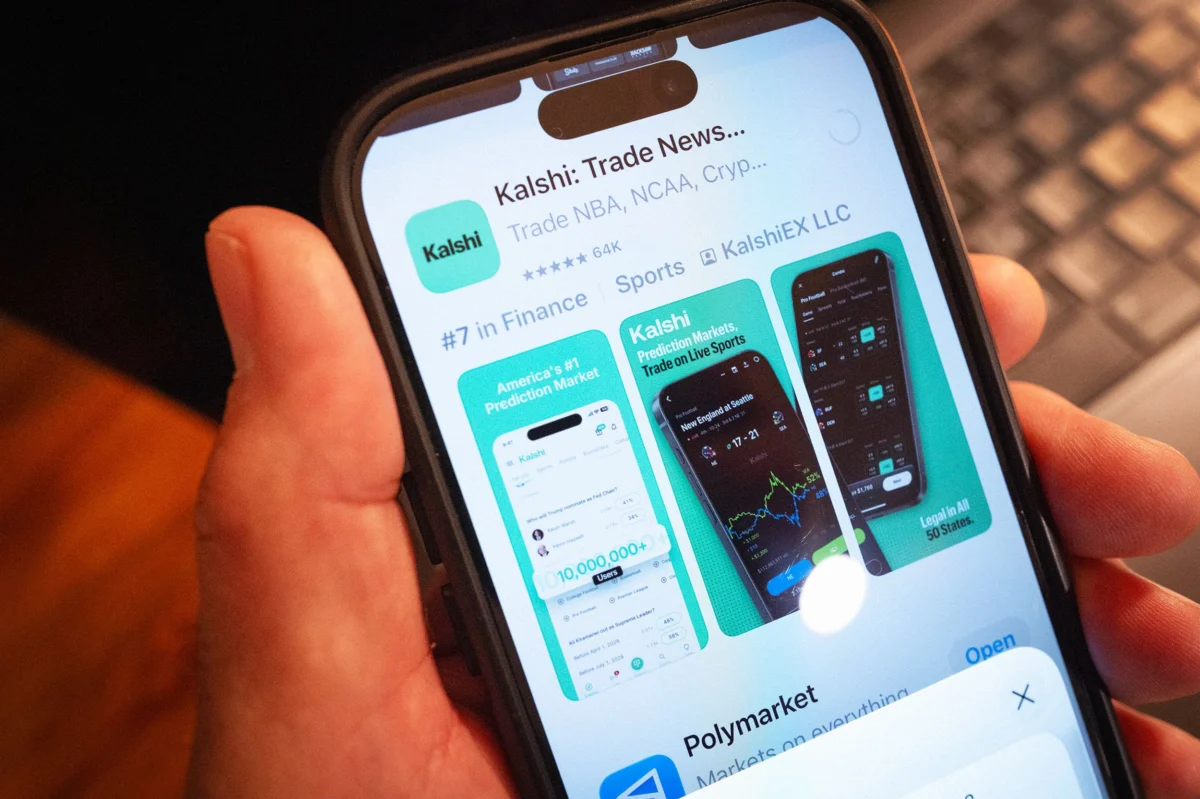
The First Judicial District Court of Nevada has issued a 14-day temporary restraining order against Kalshi, a prominent prediction market platform, effectively halting its operations within the state. The ruling, which took effect immediately, prohibits the company from offering event-based contracts related to sports, elections, and entertainment without first securing the necessary gaming licenses from state regulators. This development marks the first time a U.S. state has successfully forced the company to stop its services, signaling a significant escalation in the ongoing conflict between federal financial oversight and state-level gambling enforcement.
While Kalshi has declined to provide an official comment regarding the ruling, the court’s decision is the culmination of a year-long dispute that began when Nevada regulators issued a cease-and-desist letter to the firm. The legal battle has since evolved into what Kalshi’s legal team describes as a "jurisdictional quagmire," involving a complex tug-of-war between state and federal authorities. After the initial 14-day period, the court will convene to determine whether the ban should be extended into a preliminary injunction that would last for the duration of the ongoing litigation. Legal experts, including gaming attorney Daniel Wallach, suggest that the court is likely to maintain the ban, potentially setting a precedent for other states to follow.
The Intersection of Financial Swaps and State Gambling Laws
At the heart of the dispute is a fundamental disagreement over the legal classification of prediction markets. Kalshi, which is regulated by the Commodity Futures Trading Commission (CFTC) as a designated contract market, argues that its offerings are not bets but rather financial instruments known as "swaps." These contracts allow participants to hedge against specific real-world outcomes, ranging from Federal Reserve interest rate hikes to the winners of major sporting events like the Super Bowl or the outcome of presidential elections.
The federal government, through the CFTC, has largely supported this view. The agency maintains that it holds exclusive jurisdiction over swaps and other derivatives markets, arguing that state gambling laws should not apply to federally regulated exchanges. Michael Selig, a prominent figure within the CFTC, has previously rejected claims that the industry should be subject to state-level gaming commissions, asserting that the agency is prepared to defend its jurisdictional authority in court.
However, state regulators argue that regardless of the federal classification, the act of wagering money on the outcome of a sports game or an election constitutes gambling under state statutes. In Nevada, where the gaming industry is a primary economic driver and is strictly regulated, the lack of a state gaming license is viewed as a direct violation of public policy. The Nevada court’s decision reflects a growing sentiment among state attorneys general that prediction markets are essentially "gambling in disguise" and should be subject to the same rigorous oversight, taxation, and age restrictions as traditional sportsbooks and casinos.
A Timeline of Escalating Legal Challenges
The Nevada ruling is not an isolated incident but rather part of a nationwide trend of regulatory pushback against the prediction market industry. The timeline of these events illustrates the mounting pressure on platforms like Kalshi and its competitors.
- March 2023: Nevada gaming regulators send an initial cease-and-desist letter to Kalshi, demanding the removal of sports-related contracts for Nevada residents.
- January 2024: Nevada successfully blocks Polymarket, another major prediction market platform, from operating within the state. While Polymarket operates primarily on a global scale via blockchain technology, its domestic presence was curtailed by a similar temporary restraining order.
- Early March 2024: A federal judge in Tennessee rules in favor of Kalshi, blocking state regulators from pursuing enforcement actions against the company. This provided a brief moment of relief for the industry, highlighting the lack of judicial consensus across different states.
- Mid-March 2024: A judge in Ohio denies Kalshi’s request for a preliminary injunction against state regulators. Judge Sarah D. Morrison of the U.S. District Court for the Southern District of Ohio famously noted that the court must "avoid absurdity," rejecting Kalshi’s claim that state gambling laws were entirely preempted by federal financial regulations.
- Late March 2024: The Arizona Attorney General files criminal charges against Kalshi, accusing the company of operating an illegal gambling enterprise. This move followed a preemptive lawsuit filed by Kalshi against Arizona regulators, attempting to shield itself from state prosecution.
- Current Action: The Nevada First Judicial District Court issues the 14-day TRO, marking the most significant operational setback for Kalshi in a major gambling hub.
Regulatory Disparities and Public Policy Concerns
The rapid growth of prediction markets has exposed significant gaps in the existing regulatory framework, particularly concerning age limits and geographic prohibitions. Currently, Kalshi and similar platforms allow individuals over the age of 18 to participate in event contracts. This creates a legal paradox in states where the minimum age for sports betting is 21, or in states like Utah, where all forms of gambling are strictly prohibited.
For example, a 19-year-old in Indiana can legally trade on a prediction market regarding the outcome of a basketball game, even though state law forbids anyone under 21 from placing a traditional bet. Similarly, residents of states with total gambling bans can access these markets under the guise of financial trading. This discrepancy has drawn the ire of a bipartisan group of lawmakers who argue that prediction markets are bypassing consumer protection laws designed to prevent problem gambling and protect minors.
Critics also point to the potential for market manipulation and the ethical implications of "betting" on democratic processes. Senators from both parties have urged federal regulators to stay out of state-level lawsuits, arguing that the integrity of elections and the stability of sports should not be subject to the speculative pressures of unregulated or under-regulated wagering markets.
Financial Resilience Amidst Legal Turbulence
Despite the mounting legal and regulatory hurdles, the economic valuation of the prediction market sector continues to soar. Shortly before the Nevada ruling was announced, reports surfaced that Kalshi successfully raised $1 billion in a new funding round, bringing its total valuation to an estimated $22 billion. This represents a doubling of its valuation since the end of 2025, suggesting that venture capitalists and institutional investors remain bullish on the long-term viability of the industry.
The high valuation is driven by the belief that prediction markets provide superior data and forecasting capabilities compared to traditional polling or expert analysis. Proponents argue that because participants have "skin in the game," the market prices reflect a more accurate probability of future events. This data is increasingly valuable to hedge funds, corporations, and political analysts seeking to mitigate risk in an era of global volatility.
The influx of capital also provides Kalshi with the necessary resources to sustain a protracted legal defense. The company has demonstrated a willingness to challenge state regulators in multiple jurisdictions simultaneously, betting that federal preemption will eventually be upheld by higher courts.
Broader Implications for the Future of Event Contracts
The outcome of the Nevada case and similar battles in Arizona, Ohio, and Tennessee will likely have far-reaching implications for the broader financial and tech industries. If states are successful in reclassifying prediction markets as gambling, it could force these platforms to undergo a costly and arduous licensing process in every state where they operate. This would significantly raise the barrier to entry and could lead to a fragmented market where certain contracts are available in some states but not others.
Conversely, if Kalshi and the CFTC prevail in establishing exclusive federal jurisdiction, it could open the floodgates for a new era of financial innovation. This would allow for the expansion of event contracts into nearly every facet of life, from weather patterns and corporate earnings to cultural milestones and geopolitical shifts.
Legal analysts predict that the matter will eventually reach the U.S. Supreme Court, as the conflict between the Federal Commodities Exchange Act and state-level police powers remains unresolved. Until a definitive ruling is issued, the industry will likely remain in a state of flux, with companies navigating a patchwork of contradictory state rulings.
Official Responses and Industry Reactions
While Kalshi has remained largely silent following the Nevada order, the Arizona Attorney General’s office has been vocal about its stance. Attorney General Kris Mayes stated that "illegal gambling operations will not be tolerated under the guise of financial innovation," emphasizing that state laws are designed to protect citizens from the social and economic harms associated with unregulated betting.
On the federal side, Michael Selig of the CFTC has signaled a firm commitment to the agency’s oversight role. In previous addresses to industry stakeholders, Selig emphasized that the CFTC’s primary goal is to ensure market integrity and transparency, and that the agency views its regulatory framework as sufficient to address the risks associated with event contracts without the need for state interference.
As the 14-day restraining order in Nevada nears its expiration, the eyes of the financial and gaming worlds will be on the First Judicial District Court. The judge’s decision to either lift the ban or convert it into a preliminary injunction will serve as a critical barometer for the future of prediction markets in the United States. For now, Kalshi faces the challenge of maintaining its momentum and investor confidence while being locked out of one of the most lucrative and influential markets in the country.
About the Author