Lindsey Elliott, a former engineer with extensive experience at ExxonMobil, is spearheading a significant technological advancement in the industrial sector with her startup, Nexterity. The company, recently selected as one of the Startup Battlefield 200 participants at TechCrunch Disrupt, is developing a remote-controlled robotic system designed to automate the physically demanding and injury-prone task of tightening and loosening bolts in industrial piping. This innovation promises to enhance worker safety, boost productivity, and address labor shortages within a critical segment of the infrastructure that underpins industries ranging from oil and gas to water treatment and food processing.
The Challenge of Industrial Bolting
The core of Nexterity’s innovation lies in its focus on "bolted flange joints," the critical connections that secure sections of pipe carrying vital materials. These joints, while fundamental to infrastructure integrity, present considerable challenges for human workers. The process of loosening and tightening the numerous bolts that form these connections is inherently strenuous, often requiring significant manual force. This arduous labor is a leading cause of injuries among pipefitters and other skilled tradespeople.
Elliott, drawing upon years of experience in infrastructure planning and direct conversations with industry professionals, highlighted the human toll of this work. "Those people get really tired when they’re asked to work 12 hours a day for three months in a row," she stated in an interview with TechCrunch. "I’ve talked to pipefitters across the U.S. and Canada, and just repeatedly have been told North American pipefitting productivity is notoriously low." This low productivity is not solely due to fatigue; it is also exacerbated by a persistent labor shortage that plagues many trade industries. The demand for skilled workers often outstrips the available workforce, further straining existing personnel and increasing the likelihood of errors or accidents due to exhaustion.
From Symposium to Solution: The Genesis of Nexterity
Elliott’s journey to developing Nexterity’s robotic solution began with a deep dive into the operational realities of the industries she aimed to serve. A particularly insightful moment, as she recounted from the 13th annual Bolting Symposium, was participating in "Bolting Bingo" alongside numerous self-proclaimed "torque dorks" – the engineers and technicians who deeply understand the intricacies of bolted connections. This seemingly informal event provided a fertile ground for gathering invaluable insights.
Further engagement with the Pressure Vessels & Piping Division of the American Society of Mechanical Engineers (ASME) solidified her understanding of the industry’s specific needs. "What I learned from the people, the torque dorks per se," Elliott explained, "is that 80% of our pipes are between two to eight inches in diameter, or what they call NPS2 to NPS8. And so when you have that much repeatability, you have a fantastic candidate for automation." This statistical insight – that a vast majority of piping falls within a standardized size range – became the cornerstone of her design strategy, making automation not just feasible but highly practical.
Nexterity’s Robotic System: Engineering for Efficiency and Safety
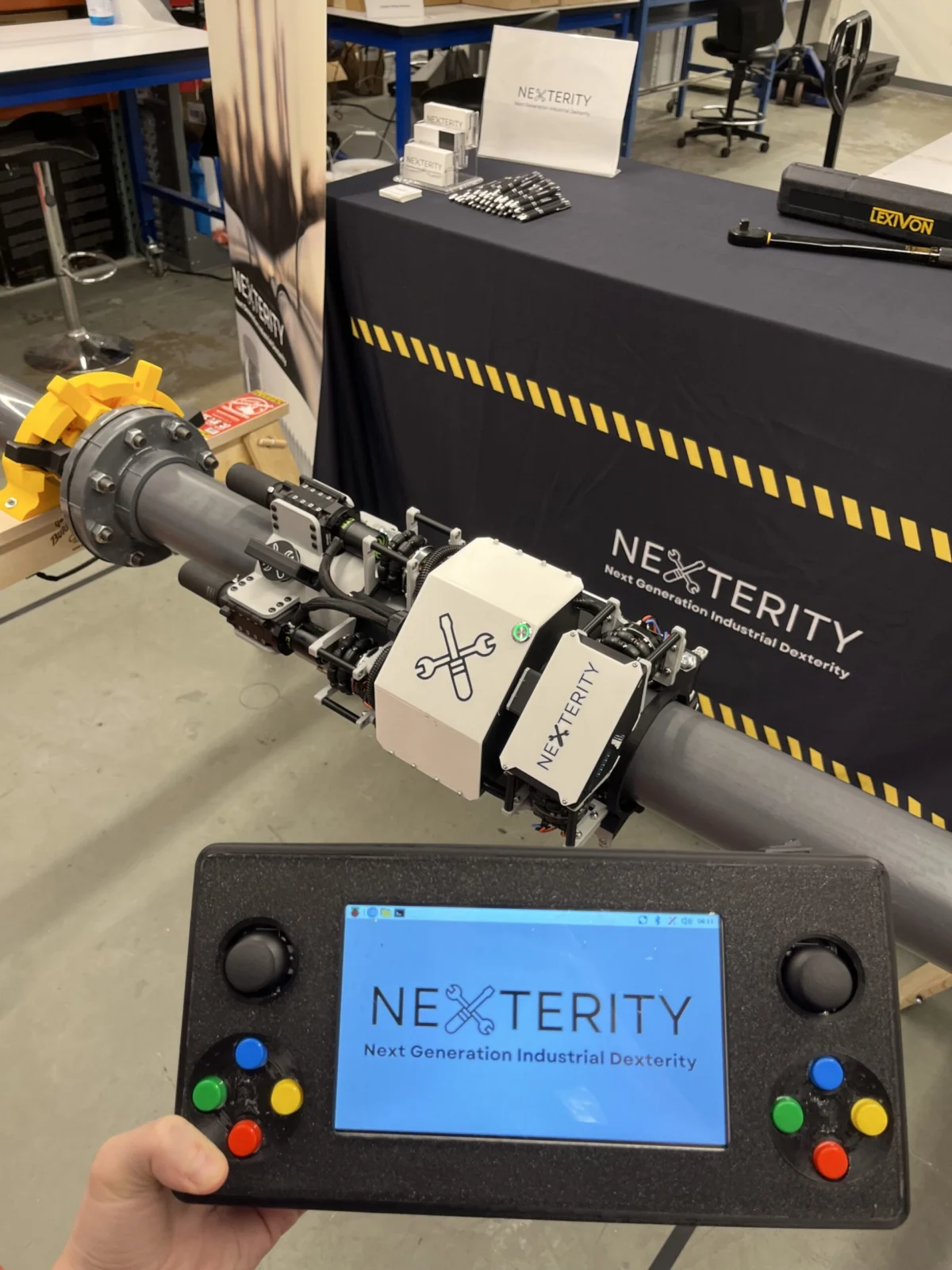
The solution developed by Nexterity is a sophisticated, yet remarkably compact, remote-controlled robot. Designed for versatility and ease of deployment, the robot consists of two primary pieces that securely fit around a pipe. Powered by rechargeable batteries, it can autonomously slide along the pipe once attached. Its core functionality lies in its ability to efficiently loosen and tighten multiple bolts simultaneously, specifically handling four bolts at a time. This simultaneous operation significantly reduces the time and physical effort required compared to manual methods.
A key aspect of Nexterity’s design philosophy is portability and adaptability. The company has engineered several configurations of the robot, each tailored to accommodate different standard pipe sizes. Despite their robust functionality, these robots are designed to be compact, fitting into a standard Pelican case. This allows a single worker to transport the equipment to a job site, facilitating rapid deployment and minimizing logistical overhead. This portability is central to Nexterity’s business model, which positions the robot as a rental asset, akin to specialized construction equipment, offering flexibility and cost-effectiveness for clients.
Broader Market Implications and Potential Impact
The market for industrial bolting solutions is far larger and more diverse than many might initially assume. Elliott emphasizes that the applicability of her technology extends beyond the traditional oil and gas sector. "I think it would shock a lot of people just how big this market is," she commented. "I mean, day to day, most of us don’t think about piping infrastructure, but even water, wastewater, water treatment, food and beverage, mining, nuclear, any kind of green and sustainable manufacturing facility – they all use the same kind of piping."
This broad applicability means Nexterity’s robotic solution has the potential to impact a wide array of industries critical to modern society. By automating the most physically demanding aspects of pipe maintenance and assembly, the technology can:
- Enhance Worker Safety: Reducing the incidence of musculoskeletal injuries and strains associated with manual bolting. This not only improves the quality of life for workers but also lowers healthcare costs and insurance premiums for companies.
- Boost Productivity: The speed and efficiency of the robotic system can significantly decrease project timelines, allowing for more work to be completed with fewer resources and less downtime. This is particularly crucial in industries where operational continuity is paramount.
- Address Labor Shortages: By making these roles less physically taxing and more technologically engaging, automation can help attract and retain a new generation of workers, while also making the work more manageable for the existing, often aging, workforce.
- Improve Precision and Consistency: Robotic systems can be programmed for precise torque application, ensuring that bolted joints are secured to exact specifications, thereby enhancing the reliability and longevity of infrastructure.
The "More Dork, Less Torque" Philosophy
Elliott’s memorable tagline, "more dork, less torque," encapsulates the essence of Nexterity’s mission. It represents a shift from brute force to intelligent application of technology. The "dork" signifies the sophisticated engineering and problem-solving that goes into creating such a system, while "torque" refers to the raw physical effort that the robot is designed to replace. This philosophy suggests a future where skilled trades are augmented by advanced robotics, leading to safer, more efficient, and ultimately more sustainable industrial operations.
The selection of Nexterity for the Startup Battlefield 200 at TechCrunch Disrupt provides a significant platform for the company to showcase its innovative technology. This exposure is expected to attract potential investors, strategic partners, and early adopters, accelerating the development and deployment of their robotic bolting systems. As industries worldwide grapple with aging infrastructure, the need for skilled labor, and the imperative for increased efficiency, solutions like Nexterity’s are poised to play a pivotal role in shaping the future of industrial work. The company’s focus on a well-defined, high-volume segment of the industrial piping market, combined with a practical, rental-based business model, positions it for substantial growth and impact.
About the Author