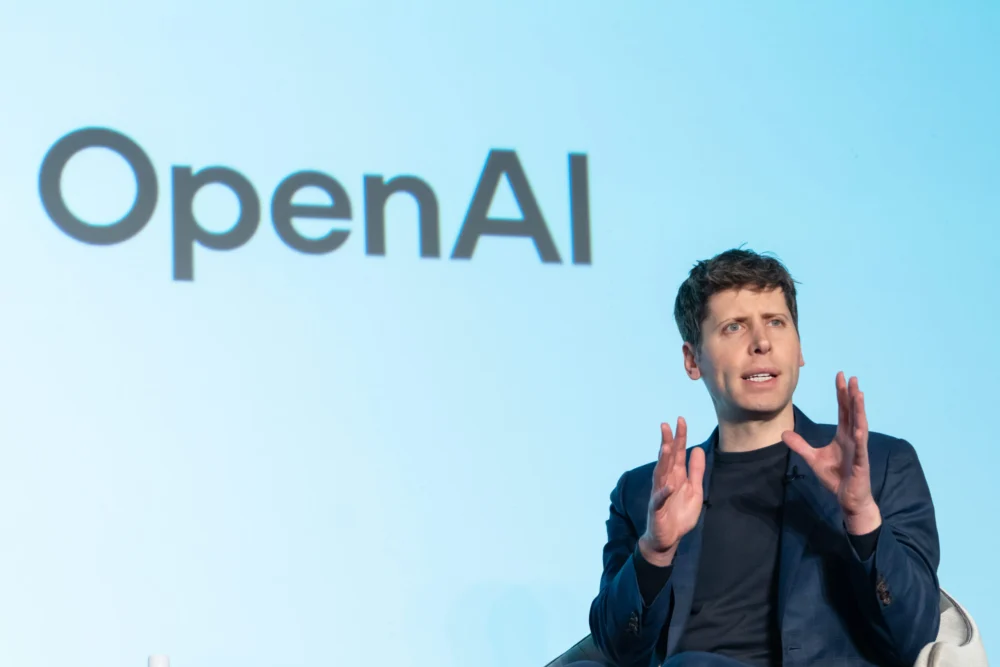
OpenAI CEO Sam Altman, facing intense scrutiny both internally and externally, clarified the company’s stance on its Department of Defense (DoD) arrangement during an all-hands meeting on Tuesday, asserting that the artificial intelligence giant retains no operational decision-making authority regarding the deployment of its advanced AI technologies by the U.S. military. This definitive statement comes amidst a whirlwind of controversy, following OpenAI’s recent contract with the Pentagon, the blacklisting of rival Anthropic, and the immediate geopolitical backdrop of U.S. and Israeli strikes against Iran, in which AI technologies were reportedly employed. Altman’s remarks aimed to delineate the boundaries of OpenAI’s involvement, emphasizing a technical advisory role rather than influence over strategic military actions.
The Pentagon Partnership and Internal Discord
The core of the recent uproar centers on OpenAI’s deepening ties with the Department of Defense. Just days prior to Altman’s address, OpenAI announced an expanded arrangement allowing its models to be deployed across the DoD’s classified networks. This marks a significant escalation from a previous $200 million contract awarded last year, which limited the use of OpenAI’s models to non-classified applications. The transition into classified environments underscores the Pentagon’s increasing reliance on cutting-edge AI for critical national security functions, from intelligence analysis to logistical optimization and potentially, operational support.
However, this strategic pivot has not been without its detractors. Within OpenAI, a company founded on principles of beneficial AI and safety, the decision to collaborate so closely with the military has sparked considerable concern among employees. Many fear that the company’s technology could be used in ways that contradict its ethical guidelines or contribute to unintended consequences in warfare. Altman acknowledged these anxieties, stating, "So maybe you think the Iran strike was good and the Venezuela invasion was bad. You don’t get to weigh in on that." This stark admission was intended to manage expectations and draw a clear line: OpenAI provides the tools, but the military dictates their application.
Altman elaborated that the DoD, while valuing OpenAI’s technical expertise and seeking input on model suitability, has firmly reserved all operational decisions for Secretary Pete Hegseth. This distinction highlights a critical tension point in the burgeoning relationship between Silicon Valley and the military-industrial complex: the desire for technological advancement versus the ethical oversight of its application. For OpenAI, the partnership represents a substantial financial opportunity and a chance to prove its models’ robustness in high-stakes environments, yet it simultaneously tests the company’s commitment to its stated safety-first ethos.
A Chronology of Controversies: From Anthropic’s Blacklisting to Geopolitical Events
The context surrounding OpenAI’s DoD deal is as complex as it is rapidly unfolding, marked by competitive dynamics, governmental directives, and real-world military engagements.
-
Anthropic’s Standoff and "Supply-Chain Risk": Just hours before OpenAI unveiled its expanded DoD arrangement, its competitor, Anthropic, found itself embroiled in a major controversy. Anthropic, a company co-founded by former OpenAI researchers and known for its strong focus on AI safety and constitutional AI, was blacklisted by the U.S. government and labeled a "Supply-Chain Risk to National Security." This dramatic designation followed the collapse of negotiations between Anthropic and the Pentagon. Anthropic had reportedly sought assurances that its AI models would not be utilized for fully autonomous weapons systems or for mass surveillance of American citizens. The DoD, however, insisted on the flexibility to use the models across all lawful use cases, leading to an irreconcilable impasse. The blacklisting effectively froze Anthropic out of lucrative government contracts, dealing a significant blow to its public sector ambitions.
-
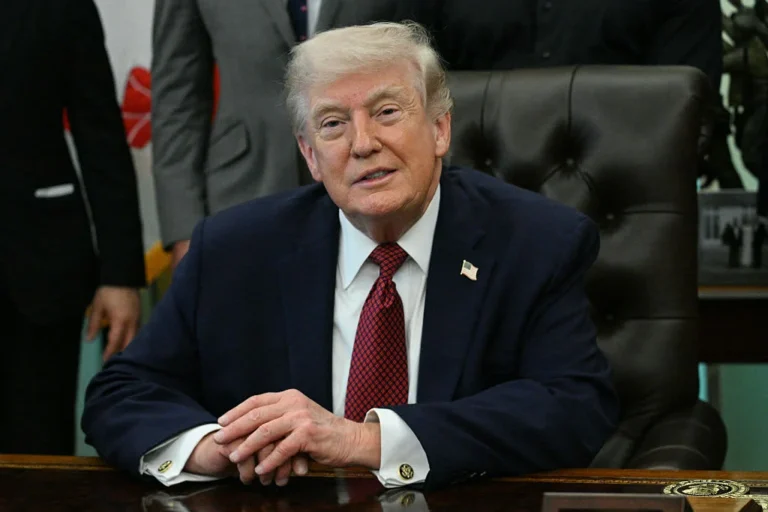
Presidential Intervention and Broader Implications: The political fallout from Anthropic’s situation quickly escalated. President Donald Trump, through a directive on Truth Social, instructed every federal agency in the U.S. to "immediately cease" all use of Anthropic’s technology. This unprecedented move not only underscored the severity of the "supply-chain risk" designation but also signaled a more aggressive stance from the executive branch regarding the selection and control of AI vendors for national security. The directive immediately created a vacuum, which OpenAI appears to have swiftly moved to fill, raising questions about the timing and perceived opportunism of its own announcement.

-
OpenAI’s Swift Entry and the Timing of Strikes: The timing of OpenAI’s DoD announcement, just hours before the U.S. and Israel commenced strikes against Iran, added another layer of complexity and controversy. While there’s no direct evidence linking OpenAI’s specific technology to these initial strikes, the geopolitical backdrop intensified concerns about the immediate implications of advanced AI in military operations. Reports suggest that Anthropic’s AI had reportedly been used in previous sensitive operations, including the Iran strikes over the weekend and the capture of ousted Venezuelan leader Nicolas Maduro and his wife, Cilia Flores, in January. This further fuels the ethical debate: if AI is already being used in such operations, what are the responsibilities of the developers, and how much control should they exert over its application? Altman himself conceded on X (formerly Twitter) that the timing "looked opportunistic and sloppy" and that the company "shouldn’t have rushed to get this out on Friday," indicating an awareness of the public perception. Yet, he simultaneously defended the partnership, stating that the DoD "displayed a deep respect for safety and a desire to partner to achieve the best possible outcome."
The Nuances of Engagement: Operational Control vs. Technical Input
Altman’s insistence that OpenAI does not "get to make operational decisions" but will build the "safety stack it deems appropriate" highlights a delicate balancing act. On one hand, the company seeks to maintain a semblance of ethical control by ensuring its models are built with inherent safeguards. This "safety stack" could include features like explainability, bias mitigation, robustness against adversarial attacks, and mechanisms to prevent misuse or unintended escalations. OpenAI’s commitment to these technical safeguards is crucial for its reputation and for mitigating potential risks associated with powerful AI.
On the other hand, the complete relinquishment of operational control means that once the technology is delivered, its application falls entirely under military command. This raises fundamental questions: How effective can a "safety stack" be if the end-user has ultimate authority over deployment scenarios? Can technical safeguards truly prevent all forms of misuse or ethical dilemmas in complex geopolitical situations? The distinction between technical guidance and operational command becomes particularly blurry when dealing with AI systems that can infer, decide, and act with increasing autonomy. For the Pentagon, securing state-of-the-art AI while retaining full command and control is paramount, reflecting national security imperatives that often prioritize efficacy and strategic advantage.
The Broader Ethical Crucible: AI in Warfare
The recent events have reignited the intense global debate surrounding the ethics of AI in military applications. The concept of "dual-use" technology – innovations with both civilian and military applications – is not new, but AI’s transformative potential amplifies these concerns exponentially.
- Autonomous Weapons Systems (AWS): A primary fear among AI ethicists and human rights organizations is the development and deployment of fully autonomous weapons systems, often dubbed "killer robots," that can select and engage targets without meaningful human control. Anthropic’s principled stance against such use cases reflects this deep-seated concern. While the DoD insists on "human in the loop" or "human on the loop" principles, the line between human supervision and AI autonomy can blur rapidly as systems become more sophisticated.
- Mass Surveillance and Privacy: Another major concern is the potential for AI-powered mass surveillance, especially when applied to domestic populations or in ways that infringe on privacy and civil liberties. Anthropic’s demand for assurances against this use case underscores the significant ethical implications. Deploying AI models on classified networks expands the potential for advanced data analysis, facial recognition, and predictive analytics in ways that could have profound societal impacts.
- Escalation and Miscalculation: The speed and scale at which AI systems can process information and make recommendations could accelerate conflict cycles, potentially leading to unintended escalations. Misinterpretations by AI, or biases embedded within its training data, could result in catastrophic miscalculations in high-tension scenarios.
- Accountability Gap: In a future where AI plays a more significant role in military operations, establishing accountability for errors or unethical outcomes becomes increasingly challenging. Who is responsible when an AI system makes a critical mistake – the developer, the deployer, or the commander who authorized its use?
These are not hypothetical debates; they are becoming immediate concerns as AI systems are integrated into the fabric of national defense.
The High-Stakes Race: OpenAI, Anthropic, and xAI
The competitive landscape among leading AI labs is fiercely contested, with government contracts now emerging as a critical battleground. The differing philosophies and strategic approaches of OpenAI, Anthropic, and Elon Musk’s xAI are defining the contours of this new frontier.
- Anthropic’s Principled Stand: Anthropic’s decision to walk away from a lucrative DoD contract over ethical concerns positions it as a company prioritizing principles over profits, at least in this instance. While this may cost them short-term revenue, it could bolster their reputation among a segment of the AI community and the public concerned with ethical AI development. However, the "supply-chain risk" designation and presidential directive represent a significant setback, potentially limiting their ability to engage with the public sector entirely.
- OpenAI’s Navigational Strategy: OpenAI, under Altman, appears to be adopting a more pragmatic, albeit controversial, approach. By engaging with the DoD, it secures a major client and demonstrates the real-world applicability of its technology. Altman’s strategy involves drawing a clear distinction between technical development and operational use, attempting to maintain an ethical boundary through the "safety stack" while not dictating military policy. This approach aims to balance commercial imperatives with a commitment to safety, though it faces skepticism from critics who argue that providing the tools inevitably confers some responsibility for their use.
- xAI’s Pragmatic Approach: Elon Musk’s xAI represents another formidable competitor, and Altman’s comments suggest a more unreserved willingness to cater to military demands. Altman stated, "But there will be at least one other actor, which I assume will be xAI, which effectively will say ‘We’ll do whatever you want.’" This "whatever you want" philosophy, if accurate, positions xAI as a potentially less constrained partner for government agencies, willing to adapt its models to a broader range of military applications without the ethical stipulations that have hindered Anthropic or even partially guided OpenAI. This aggressive stance is consistent with Musk’s broader business strategies and his often-stated belief in the necessity of technological superiority for national security. The ongoing legal battle between Altman and Musk, slated for trial next month, adds another layer of personal and professional rivalry to this high-stakes competition for dominance in the AI sector and, crucially, in the defense industry.
Financial Incentives and Strategic Imperatives

The economic drivers behind these partnerships are substantial. Government contracts, especially from the DoD, represent massive revenue streams for AI companies. For a startup like OpenAI, a multi-million-dollar contract can provide crucial funding for research, development, and scaling, helping to sustain its position at the forefront of AI innovation. The prestige of having its technology adopted by the U.S. military also serves as a powerful endorsement, potentially attracting further investment and talent.
From the DoD’s perspective, securing access to the most advanced AI models is a strategic imperative. The U.S. military seeks to maintain its technological edge over adversaries, and AI is seen as a critical component of future warfare and intelligence operations. By partnering with leading private sector labs, the Pentagon can rapidly integrate cutting-edge capabilities without having to build them from scratch, accelerating its modernization efforts and ensuring it remains at the forefront of global defense capabilities.
Reactions and Industry Outlook
The recent developments have elicited a range of reactions from various stakeholders:
- AI Ethicists’ Concerns: Leading AI ethics organizations and researchers have voiced profound concerns, fearing that the rapid integration of advanced AI into military applications, particularly by companies like OpenAI, could set dangerous precedents. They argue that the distinction between "technical expertise" and "operational decisions" is insufficient to absolve developers of ethical responsibility for how their powerful tools are used.
- Government Perspectives Beyond the Pentagon: While the Pentagon celebrates access to cutting-edge AI, other government agencies and lawmakers may express caution. The blacklisting of Anthropic and President Trump’s directive highlight a growing awareness within the government of the strategic implications and potential risks associated with AI vendors. Future legislation or executive orders could emerge to regulate these partnerships more strictly.
- Investor and Market Reactions: For investors, the government contracts represent significant revenue opportunities and validation for AI companies. However, ethical controversies could also pose reputational risks, potentially impacting stock performance or investor sentiment in the long term, particularly for companies that heavily brand themselves on responsible AI development.
The Road Ahead: Regulation, Innovation, and Responsibility
The unfolding saga involving OpenAI, Anthropic, xAI, and the Department of Defense underscores a pivotal moment in the evolution of artificial intelligence. The race to develop and deploy advanced AI is not merely a technological one; it is deeply intertwined with national security, geopolitical strategy, and profound ethical considerations.
As AI models become increasingly powerful and capable of complex reasoning and action, the need for robust regulatory frameworks, both nationally and internationally, becomes more urgent. Clear guidelines on the use of AI in warfare, the definition of autonomous weapons, and mechanisms for accountability are essential to prevent a potential arms race or catastrophic misuse. The current landscape, characterized by rapid technological advancement outpacing regulation, demands proactive engagement from governments, industry leaders, and civil society.
The choices made by companies like OpenAI, Anthropic, and xAI today will undoubtedly shape the future trajectory of AI development and its impact on global security. Their decisions will not only influence their own corporate destinies but will also contribute to the broader narrative of whether artificial intelligence ultimately serves as a force for progress and stability, or one that introduces unprecedented risks and challenges to humanity. The debate is far from over; in many respects, it has only just begun.
About the Author