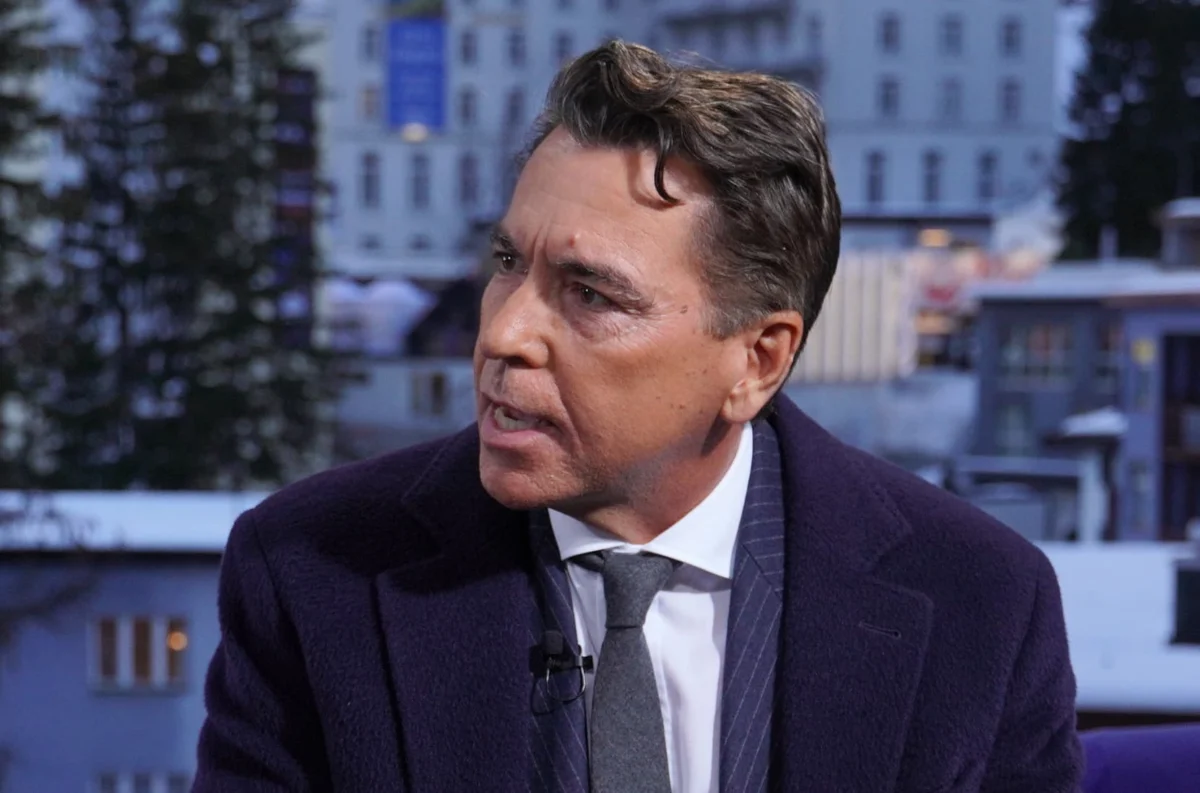
Davos, Switzerland – January 21, 2026 – Orlando Bravo, the astute founder and managing partner of Thoma Bravo, a titan in the private equity software sector, offered a robust defense of private markets today at the World Economic Forum in Davos. Speaking during a live interview on CNBC’s "Squawk on the Street," Bravo pushed back against escalating criticisms regarding private market valuations and liquidity, asserting that deep, specialized sector expertise is now the definitive differentiator separating successful ventures from faltering ones, particularly as artificial intelligence (AI) reshapes the foundational landscape of the software industry.
Bravo’s firm, Thoma Bravo, has long been recognized for its laser focus on enterprise software and technology companies, a strategy that has seen it deploy tens of billions of dollars across hundreds of acquisitions. Its distinctive approach emphasizes operational improvements, strategic integrations, and a rigorous focus on recurring revenue models within its portfolio companies. This specialization, Bravo argued, is not merely an investment preference but a fundamental shield against the market volatilities and technological upheavals that are currently challenging less specialized investment vehicles.
"We have been living in the details of the space for a very, very long time," Bravo articulated, emphasizing the firm’s granular involvement. "Not on a high level, not investing in stocks, [but] investing in companies, customer contracts, knowing the details. So, yes, as a sector specialist in private equity, our companies are very, very different." He underscored the firm’s comfort with its private credit book, attributing this confidence to "the choices we’ve made as a specialist." This statement was a direct counterpoint to the broader market anxieties regarding the transparency and underlying health of private credit portfolios.
The Crucible of Criticism: Private Markets Under the Microscope
BraBravo’s remarks arrive at a critical juncture for the private capital industry, which has faced intensifying scrutiny over the past two years. A combination of factors, including persistent inflationary pressures, a prolonged period of elevated interest rates, and a slowdown in deal-making and exit opportunities, has amplified concerns among institutional investors and financial analysts. These anxieties have manifested in a wave of markdowns across various private credit and equity funds, coupled with increased redemption pressure from limited partners (LPs) seeking greater liquidity and clarity on their holdings.
The growth of private markets has been meteoric over the last decade. Fueled by a prolonged era of ultra-low interest rates and investors’ relentless search for yield beyond traditional public markets, private equity and private credit assets under management (AUM) have swelled to unprecedented levels, surpassing an estimated $12 trillion globally by late 2025. This expansion brought with it a proliferation of funds, strategies, and, inevitably, a more diverse risk profile. However, the paradigm shift in monetary policy initiated by central banks in 2022, designed to combat inflation, fundamentally altered the operating environment for these illiquid assets. Higher borrowing costs have made leveraged buyouts more expensive, pressured company earnings, and complicated refinancing efforts for portfolio companies laden with debt.
Adding to the chorus of concern, Morgan Stanley recently issued a stark forecast, predicting that direct-lending default rates could escalate to approximately 8% in the coming year. This projection, if realized, would push default levels perilously close to the peaks observed during the tumultuous COVID-19 pandemic era, signaling significant stress within a segment of the private credit market that has historically offered attractive yields but also carries greater opacity than syndicated loans.
Further fueling the debate, John Zito, a prominent figure and Deputy CIO of Credit at Apollo Global Management, delivered a potent critique to UBS clients just last month, in December 2025. Zito contended that private equity firms were broadly misstating the value of their software holdings, boldly declaring that "all the marks are wrong." This assertion sent ripples through the industry, challenging the integrity of internal valuation models and reigniting long-standing debates about fair value accounting in illiquid asset classes. Zito’s comments underscored a pervasive skepticism that many private assets, particularly those acquired during the frothy market conditions of 2020-2021, may be carried at inflated valuations on fund balance sheets, masking potential losses and creating a misleading picture of fund performance.
Investor Confidence and the Medallia Imperative
Despite these industry-wide headwinds and public criticisms, Bravo affirmed that Thoma Bravo’s robust investor base remains steadfast. The firm counts among its LPs some of the largest U.S. pension funds and influential global sovereign wealth funds – sophisticated allocators of capital who demand rigorous due diligence and transparent reporting. "They’ve seen our marks, they’ve seen our exits, they’ve seen our progression," Bravo stated, exuding confidence. "Everybody’s extremely comfortable."
This comfort, Bravo implied, stems from Thoma Bravo’s consistent track record of generating strong returns and its commitment to transparency, even when confronting challenging investments. He then addressed one of the firm’s more visible missteps head-on: the acquisition of customer experience software company Medallia. In 2021, Thoma Bravo took Medallia private in a deal valued at $6.4 billion, a transaction that occurred at the zenith of a highly competitive M&A market for software assets. It was this specific deal that Apollo’s John Zito reportedly singled out in his December 2025 remarks, suggesting it would be "worse than people expect," according to reports in The Wall Street Journal.
Bravo offered a candid admission regarding Medallia: "When we bought it, we way overestimated or extrapolated the very high rate of growth of that company into the future. We made a mistake. And that cost us to pay too much." He acknowledged the immediate consequence, stating, "Now, the equity from our standpoint has been impaired for a long time." Crucially, Bravo emphasized that this impairment was not new information for his firm’s LPs. "Our investors, this group that holds the capital in the world, has known that for years. So there is no new news." This transparency, even in admitting an overpayment, is a cornerstone of maintaining LP trust, especially in an environment where valuation opacity is a primary concern. The Medallia case serves as a stark reminder of the risks inherent in high-multiple acquisitions, particularly when growth projections prove overly optimistic, a common pitfall in the late stages of a bull market.
AI’s Disruptive Force and Portfolio Resilience
While acknowledging the Medallia challenge, Bravo quickly pivoted to the broader strength of Thoma Bravo’s extensive portfolio. "The other 77 companies that we have, for the most part – and it’s so relevant for AI – they’re absolutely crushing it," he declared. This assertion highlights a key element of Thoma Bravo’s strategy: a diversified portfolio within a specialized sector, designed to mitigate individual company risks and capitalize on overarching industry trends.
Bravo drew a sharp and insightful distinction between the fate of many private equity-owned software companies and their publicly traded counterparts. He argued that public software firms, often operating with legacy technologies or less agile business models, face accelerating disruption from the rapid advancements in artificial intelligence. "In the public markets, if you look at it, there are many, many software companies in the public markets that will be disrupted from AI," Bravo observed. He posited that many of these companies were already on a path toward disruption, but AI’s emergence is drastically speeding up this process, making their existing business models obsolete at an unprecedented pace. Consequently, he found recent valuation declines in some public software names to be "very warranted," suggesting that the market is only now beginning to price in the true impact of AI on their long-term viability.
For Thoma Bravo’s portfolio companies, Bravo painted a different picture. Their specialized focus allows for proactive integration of AI, leveraging it as an accelerant for growth and efficiency rather than a disruptive threat. Many of these firms are B2B software providers, embedded deeply within the operational fabric of their clients, making them inherently more resilient and strategically positioned to adopt and offer AI-powered solutions. The firm’s operational expertise, honed over decades, facilitates these transformations, enabling portfolio companies to adapt their product roadmaps, enhance customer value propositions, and optimize internal processes using AI. This proactive engagement, Bravo implied, is shielding them from the existential threats facing less adaptable public market entities.
Broader Impact and Implications for Private Capital
Bravo’s discourse at Davos underscores several critical implications for the private capital industry in 2026 and beyond. Firstly, the emphasis on "deep sector expertise" signals a continuing trend towards specialization within private equity. Generalist funds, once dominant, may find it increasingly difficult to compete and generate alpha in a complex, rapidly evolving technological landscape where granular knowledge is paramount. Limited partners, seeking more predictable and resilient returns, are likely to favor managers who can demonstrate a profound understanding of specific industries and the ability to navigate their unique challenges and opportunities.
Secondly, the Medallia admission, coupled with Bravo’s broader defense, highlights the evolving standards of transparency required in private markets. As institutional investors face greater pressure to justify their allocations to illiquid assets, general partners (GPs) will need to provide more frequent, detailed, and honest reporting on portfolio performance, including acknowledging underperforming assets. The era of opaque valuations and infrequent updates is rapidly drawing to a close, replaced by a demand for greater accountability.
Thirdly, the AI revolution is not just a technological shift but a profound revaluation event for entire industries. For private equity, this means a heightened need for robust due diligence that incorporates AI’s potential impact on target companies – both as an opportunity for enhancement and a source of disruption. Investment theses must now explicitly factor in AI adoption strategies, competitive advantages derived from AI, and the risks of AI-driven obsolescence. Funds that can effectively integrate AI into their operational playbooks and help portfolio companies leverage this technology will likely outperform.
Finally, Bravo’s distinction between public and private software firms hints at a potential divergence in performance and valuation trajectories. While public markets may experience significant volatility and corrections as they grapple with AI’s disruptive force, strategically managed private software companies, particularly those backed by operationally focused firms like Thoma Bravo, might demonstrate greater resilience and capture new growth avenues. This could reinforce the appeal of private equity for LPs seeking exposure to high-growth, yet fundamentally sound, technology assets, provided GPs can deliver on their promises of operational transformation and value creation in this new AI-driven era.
In conclusion, Orlando Bravo’s resolute defense at Davos serves as a powerful testament to the belief that, even amidst intense scrutiny and unprecedented technological disruption, a specialized, detail-oriented approach to private equity can not only weather the storm but thrive by leveraging expertise to transform challenges into opportunities. His remarks provide a clear roadmap for how some of the most sophisticated private capital firms intend to navigate the complex and dynamic investment landscape of the mid-2020s.
About the Author