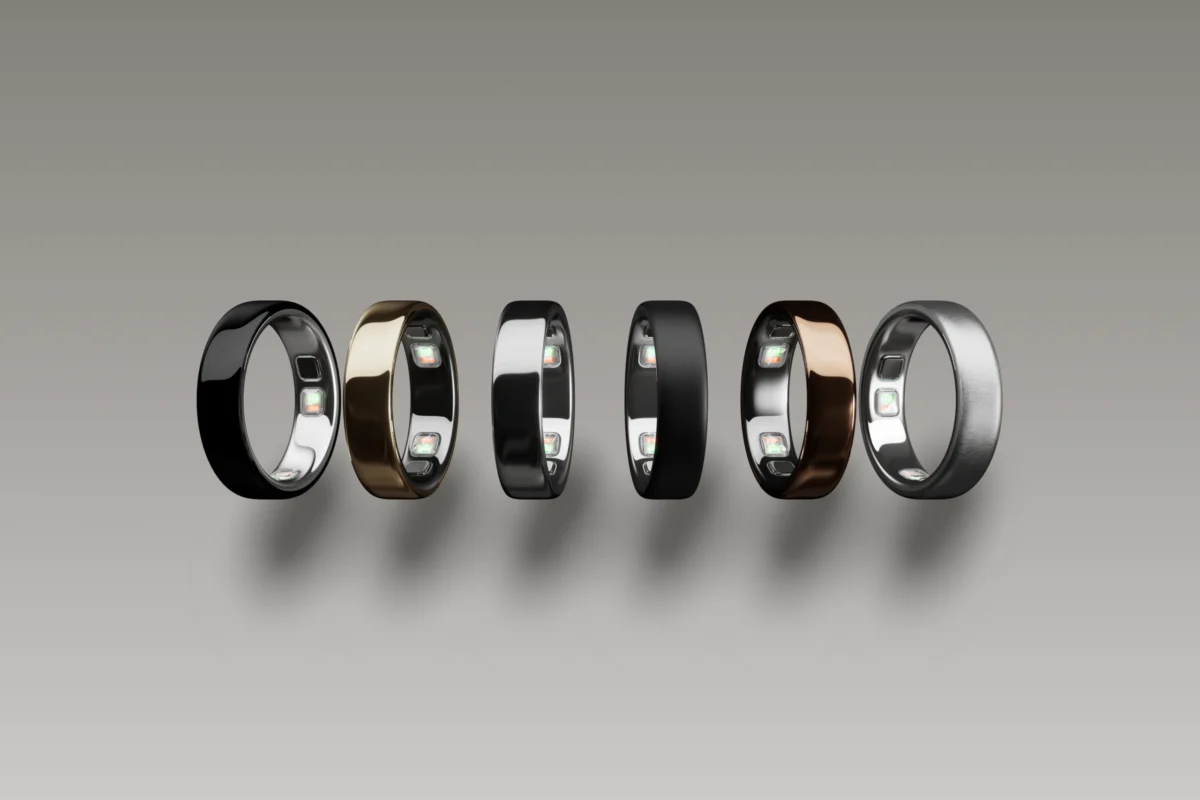
The smart ring market, once a niche segment dominated by Oura Health, is rapidly transforming into a battleground for technological innovation and market share. In a significant move signaling its confidence and ambition, the Finnish company officially filed for an Initial Public Offering (IPO) on September 3rd. This filing comes at a time when Oura is experiencing substantial growth and simultaneously facing an onslaught of new competitors eager to challenge its long-held leadership.
Oura’s robust financial performance underscores its market strength and the timing of its IPO. For the nine months ending June 30, the company reported a remarkable revenue surge, nearly doubling to $1.21 billion. This impressive financial trajectory is complemented by significant user adoption, with Oura announcing that it has sold 3.6 million rings over the past year and currently boasts approximately 5 million paid members. The company’s recent launch of the Oura Ring 5, its most slender and lightweight iteration to date, further demonstrates its commitment to product evolution and its strategic positioning in the market. This latest offering, released in early June, aims to enhance user comfort and aesthetics, potentially appealing to a broader consumer base.
However, Oura’s reign has not gone unchallenged. The smart ring landscape, once characterized by Oura’s relative solitude, is now teeming with rivals introducing innovative features and targeting diverse market segments. This influx of competition has compelled Oura to seek public funding, likely to fuel further research and development, expand its global reach, and solidify its competitive advantage against an increasingly dynamic field. The IPO filing itself represents a pivotal moment, allowing Oura to tap into public markets for capital to accelerate its growth and navigate the escalating competition.
The competitive arena is heating up with companies adopting distinct strategies to capture market attention. French company Circular, for instance, recently unveiled its upcoming ring, which will feature integrated NFC technology for contactless payments, a feature designed to integrate seamlessly into users’ daily financial transactions. Simultaneously, Chinese firm RingConn debuted its latest ring this year, differentiating itself by incorporating haptic vibrations for discreet alerts and notifications, offering a more nuanced form of user feedback.

Further intensifying the competitive pressure, Indian company Ultrahuman announced a substantial $70 million funding round this week, bolstered by investment from Qualcomm’s venture arm. This significant capital infusion is earmarked for Ultrahuman’s ambitious vision to transform smart rings into miniature computing devices. The company aims to develop rings capable of running software directly on the device, potentially enabling a wide range of functionalities from AI-driven interactions to mobile gaming. This ambitious roadmap positions Ultrahuman as a formidable contender, pushing the boundaries of what a smart ring can achieve beyond traditional health and sleep tracking.
The strategic implications of these developments are profound. The race to surpass Oura is no longer solely about incremental improvements in health and sleep monitoring. Instead, the focus has shifted towards embedding smartphone-like capabilities into these compact wearable devices. The ultimate goal appears to be creating rings that can handle increasingly complex tasks, potentially even mirroring the functionality of smartphones. This evolution is already visible in the market, with devices like the Pebble Halo, currently available only in India, featuring integrated screens. Other companies, such as Dreame, are exploring touchpads on their rings, hinting at more interactive user experiences.
This technological arms race presents a fascinating paradox. The initial appeal of smart rings lay in their unobtrusive nature, offering a less intrusive alternative to smartwatches and smartphones for health monitoring. The ability to gain insights into one’s well-being without being tethered to a screen was a key selling point. However, the current trajectory suggests a potential shift towards "mini smartphones" worn on the finger, which could reintroduce the very screen-dependency that smart rings were designed to alleviate. This evolving landscape could lead to a market that is both more feature-rich and potentially more complex for consumers to navigate.
In light of this rapidly expanding and increasingly complex smart ring ecosystem, a comprehensive overview of the key players vying for market dominance is warranted. Oura’s IPO filing serves as a catalyst for examining the competitive forces shaping the future of this burgeoning wearable technology sector.

Ultrahuman: Pushing the Boundaries of Ring Computing
Ultrahuman has emerged as a significant disruptor in the smart ring market, particularly with its ambitious vision for the future of wearable technology. Earlier this year, the company unveiled its third-generation smart ring, the $479 Ring Pro, slated for release in the U.S. in mid-September. This launch follows a period of legal challenges in the U.S. market. In October 2025, Ultrahuman’s U.S. operations were impacted by a patent dispute with Oura, which resulted in a ruling by the U.S. International Trade Commission in Oura’s favor. This ruling temporarily halted the import of new ring inventory into the United States. In response, Ultrahuman redesigned its Ring Pro with a modified form factor specifically to address Oura’s patent claims, demonstrating its resilience and commitment to market presence.
The Ring Pro boasts significant technological advancements. Its redesigned heart-rate sensing system is engineered to deliver improved signal quality during sleep, a critical period for health data acquisition. Furthermore, the integration of a new dual-core processor enhances both the accuracy of data collection and the capacity for on-device processing. This on-device processing capability is a key element of Ultrahuman’s broader strategy. The company’s aspiration extends beyond conventional health and sleep tracking, aiming to imbue its rings with the ability to run software directly on the device. This positions Ultrahuman to potentially offer sophisticated applications, from advanced AI interactions to interactive gaming experiences, directly from the ring itself. The recent $70 million funding round, with backing from Qualcomm, is a clear indicator of investor confidence in this forward-looking approach. This capital will undoubtedly accelerate Ultrahuman’s research and development efforts in this direction.
Circular: Integrating Payments and Advanced Health Monitoring
French company Circular is making notable strides in the smart ring sector with its upcoming Ring 3 series, which includes both a Pro and a Slim model. Expected to launch in early next year, these rings aim to enhance user convenience and health insights. A standout feature of the Ring 3 series is the integration of an NFC chip, enabling users to perform contactless payments directly from their ring. This functionality taps into the growing trend of contactless transactions and offers a discreet and accessible payment solution.
Beyond payments, the Ring 3 series will leverage on-finger vibration alerts for a variety of purposes. These include silent wake-up alarms, timely reminders, crucial health alerts, and other personalized notifications. The Ring 3 Pro, in particular, is set to offer a comprehensive suite of advanced health tracking features. These include FDA-cleared ECG for Atrial Fibrillation (AFib) detection, blood pressure trend monitoring, glucose tracking, sophisticated sleep analysis, and a broad spectrum of biometric data collection. The Pro model also features a slimmer design compared to its predecessors, enhancing user comfort and wearability. While pricing details for the upcoming rings have not yet been released, Circular’s focus on integrating financial convenience with advanced health monitoring positions it as a compelling option in the market. The emphasis on FDA clearance for certain health metrics also signals a commitment to regulatory compliance and a higher standard of medical-grade data.

RingConn: Focusing on Vascular Health and Discreet Alerts
RingConn has carved out a niche by focusing on specific health insights and user experience enhancements. The RingConn Gen 3, launched in May with a starting price of $349, introduces innovative vascular health insights. This feature utilizes sensor data from the ring to assess changes in vascular strain over time, requiring an initial calibration with externally measured blood pressure values. This approach offers a unique perspective on cardiovascular well-being directly from a wearable device.
In addition to its specialized vascular health tracking, the RingConn Gen 3 monitors a comprehensive range of essential metrics, including heart rate, blood oxygen saturation, sleep patterns, activity levels, and stress indicators. The ring also incorporates vibration alerts for various functions, such as notifying users of significant health changes, providing sedentary reminders, and indicating a low battery status. While Circular emphasizes a broader use of haptic feedback for communication, RingConn primarily employs vibration as a discreet mechanism for health-related alerts and user notifications. This focused approach on specific health metrics and subtle alerts differentiates RingConn within the competitive landscape, appealing to users who prioritize in-depth cardiovascular insights and understated notifications.
Samsung: Entering the Fray with Ecosystem Integration
Samsung made a significant entry into the smart ring market in 2024 with the launch of its Galaxy Ring. Priced at $399, the Galaxy Ring represents a strategic move by the tech giant to further entrench itself within its existing ecosystem of devices. For consumers already invested in Samsung’s range of smartphones, smartwatches, and other connected products, the Galaxy Ring offers a compelling proposition for seamless integration and a unified user experience.
However, when compared to some of its more specialized competitors, the Galaxy Ring’s advanced health and sleep tracking capabilities are relatively more basic. It does not offer features such as sleep apnea detection, which is available on rings from companies like RingConn, Oura, and Ultrahuman. Similarly, it lacks the AFib detection capabilities found in smart rings from Circular and RingConn. This suggests that Samsung’s initial focus may be on broad market appeal and ecosystem synergy rather than pioneering the most advanced health monitoring features. The success of the Galaxy Ring will likely depend on its ability to leverage Samsung’s established brand loyalty and extensive distribution network, appealing to a large segment of users who value convenience and integration within a familiar technological environment.

Dreame: Exploring Interactive Features and Advanced Analytics
Dreame, a relative newcomer to the smart ring arena, has unveiled a ring earlier this year that aims to blend advanced health tracking with interactive functionalities. This device features haptic alerts for alarms, incoming calls, and messages, providing users with discreet notifications. A particularly innovative aspect of the Dreame ring is its integrated touchpad, which allows users to perform simple actions such as skipping songs or taking photos on their connected smartphone. This introduces a new dimension of control and interaction for smart rings, moving beyond passive data collection.
In addition to these interactive elements, the Dreame ring is equipped to monitor a range of health metrics, including heart rate, blood oxygen levels, heart rate variability insights, and sleep analysis. While pricing and availability details for the Dreame ring have not yet been announced, its focus on both advanced analytics and user-driven interaction signals a commitment to pushing the envelope in smart ring design. The introduction of a touchpad, alongside sophisticated health tracking, suggests Dreame’s intention to offer a more engaging and versatile wearable experience, potentially appealing to a demographic that seeks both comprehensive health data and intuitive control over their digital lives.
The collective efforts of these companies underscore the dynamic evolution of the smart ring market. As Oura prepares to go public, it faces a landscape increasingly populated by innovative rivals, each seeking to redefine the capabilities and applications of this compact wearable technology. The IPO will provide Oura with the resources to respond to these challenges, but the ultimate outcome will hinge on its ability to innovate and adapt in a market that is rapidly expanding its definition of what a smart ring can be. The coming years will likely witness further technological advancements, intensified competition, and potentially a significant reshaping of the wearable technology sector.
About the Author