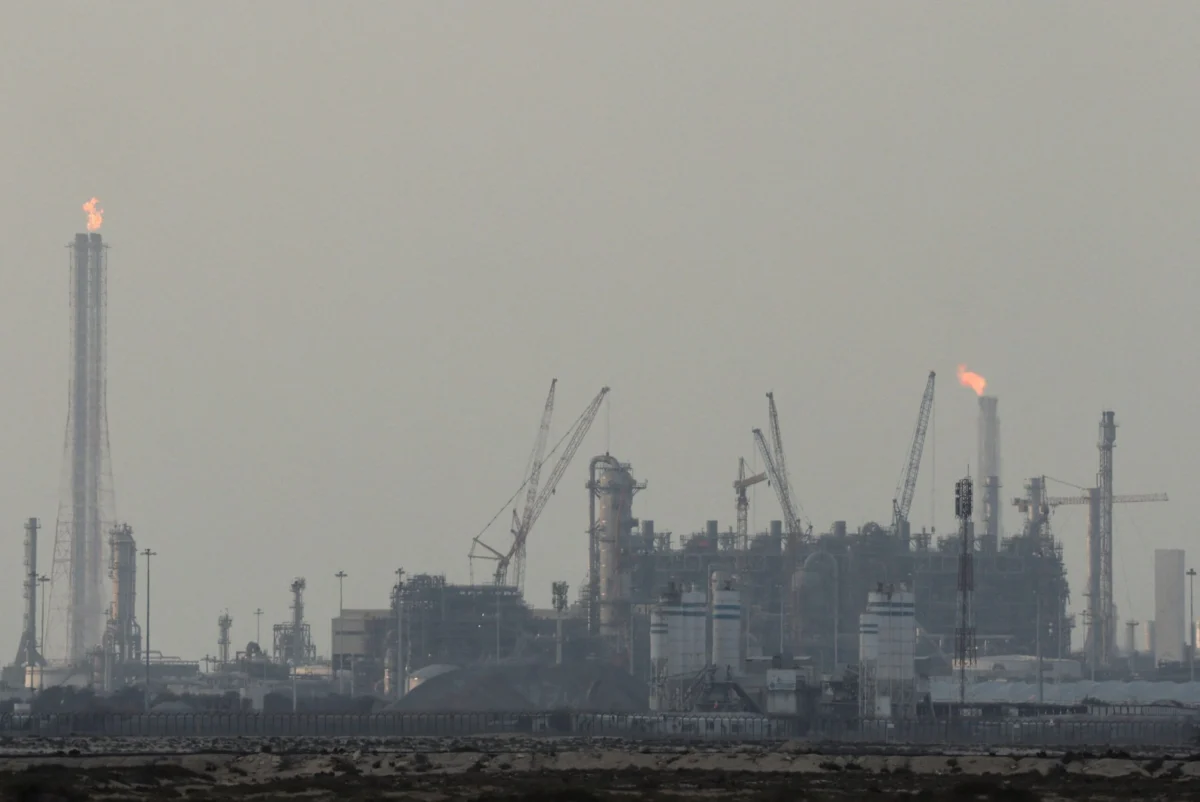
Qatar announced this week that Iranian missiles caused "extensive damage" at Ras Laffan Industrial City, a critical hub for global energy supplies and home to the world’s largest liquefied natural gas (LNG) export facility. This latest incident marks a significant escalation in the ongoing regional tensions, prompting immediate condemnation from Doha and sending shockwaves through international energy markets. The attack follows earlier drone strikes on the same facility, underscoring the volatile security landscape in the Middle East and raising serious concerns about the stability of global energy supplies.
The Escalation: A Chronology of Attacks and Threats
The missile strike on Ras Laffan Industrial City, reported by Qatar’s Foreign Ministry on Wednesday, represents a dangerous new phase in a series of retaliatory actions in the region. According to official Qatari statements, the attack inflicted considerable harm on infrastructure vital to the global energy supply chain. While emergency teams were deployed swiftly to contain fires, and no casualties were reported, the damage to such a strategic asset carries profound implications.
This missile attack comes on the heels of previous Iranian aggression. Just days prior, on March 2, 2026, Qatar had already announced the halting of its LNG production at both Ras Laffan and Mesaieed Industrial City due to earlier Iranian drone strikes. These prior attacks had already signaled a worrying trend, forcing QatarEnergy, the state-owned energy company, to implement emergency protocols and assess damage. The successive nature of these assaults, moving from drone strikes to missile attacks, indicates a deliberate and escalating strategy by Iranian forces.
The catalyst for these Iranian actions can be traced back to an earlier event: an Israeli bombing of a natural gas processing facility in Iran. This strike, perceived by Tehran as an act of aggression, triggered threats from Iran’s Revolutionary Guard to target energy facilities in allied nations, specifically naming Qatar, Saudi Arabia, and the United Arab Emirates. The current missile attack on Ras Laffan appears to be a direct fulfillment of these threats, transforming rhetoric into kinetic action and drawing Qatar, a nation that often seeks to maintain diplomatic balance, directly into the heart of the regional conflict.
Ras Laffan: A Global Energy Cornerstone Under Threat
Ras Laffan Industrial City is far more than just an industrial complex; it is a linchpin of global energy security. Located on the northeast coast of Qatar, it houses the world’s largest integrated LNG production and export facilities. Its strategic importance cannot be overstated, particularly in an era of heightened energy demand and geopolitical instability. Qatar, as the second-largest LNG exporter globally after the United States, accounts for nearly 20% of the world’s total LNG exports. This substantial contribution means that any disruption at Ras Laffan has immediate and far-reaching consequences for international energy markets, affecting major consumers in Europe, Asia, and beyond.
The facilities at Ras Laffan include vast natural gas liquefaction plants, storage tanks, and export terminals designed to process and ship billions of cubic feet of natural gas daily. The technological sophistication and sheer scale of operations make it a marvel of modern engineering and a cornerstone of Qatar’s economic prosperity. Revenues from LNG exports constitute the vast majority of Qatar’s national income, underpinning its robust economy and ambitious development projects. The "extensive damage" reported from the missile attack therefore represents not just a blow to global energy supply but also a direct threat to Qatar’s national security and economic stability. Repairing such damage could entail significant financial costs and protracted downtime, further exacerbating global supply concerns.
Qatar’s Official Response and International Outcry
In the immediate aftermath of the missile attack, Qatar’s Foreign Ministry issued a strongly worded statement, denouncing the incident as a "dangerous escalation, flagrant violation of state sovereignty, and a direct threat to its national security and regional stability." The statement underscored Qatar’s resolve, asserting its right to respond in accordance with the right to self-defense, a principle guaranteed under international law. This robust condemnation from Doha reflects the gravity with which the Qatari government views the attack, signaling a potential shift in its traditionally cautious diplomatic posture.
State-owned QatarEnergy also confirmed the deployment of emergency teams to contain fires at Ras Laffan via social media, providing crucial updates on the situation and reassuring stakeholders that initial control measures were effective and no casualties had been reported. However, the operational impact, including the extent of damage and the timeline for resuming full production, remains a critical concern for global energy markets.
The international community is widely expected to react with condemnation and calls for de-escalation. Major international bodies such as the United Nations Security Council are likely to issue statements expressing concern over the violation of sovereign territory and the threat to international peace and security. Key allies of Qatar, particularly the United States, which maintains a significant military presence at Al Udeid Air Base in Qatar, are anticipated to voice strong support for Doha and condemn Iran’s actions. The U.S. State Department and Pentagon would likely reiterate commitments to regional stability and freedom of navigation, while urging all parties to exercise restraint.
European nations and Asian economic powerhouses, heavily reliant on Qatari LNG for their energy needs, are also expected to express profound concern. For Europe, already grappling with energy supply challenges, any prolonged disruption from Qatar could lead to further price spikes and deepen an already precarious energy crisis. Similarly, major Asian importers like Japan, South Korea, and China would closely monitor the situation, as disruptions could compel them to seek alternative, potentially more expensive, LNG sources. The International Energy Agency (IEA) is likely to issue warnings about the tightening global energy balance and the need for coordinated international responses.
Geopolitical Undercurrents: The Broader "U.S.-Israeli Conflict with Iran"

The attacks on Qatari energy infrastructure are not isolated incidents but rather symptoms of a deeper, intensifying regional conflict often described as the "U.S.-Israeli conflict with Iran." This complex geopolitical struggle is characterized by long-standing rivalries, proxy confrontations across the Middle East, and concerns over Iran’s nuclear program and regional influence. Iran views itself as a bulwark against perceived U.S. and Israeli hegemony, frequently engaging in asymmetric warfare and supporting various non-state actors in the region.
The Israeli strike on an Iranian natural gas facility, which served as the immediate trigger for Iran’s retaliatory threats, underscores the direct nature of this confrontation. Iran’s Revolutionary Guard, a powerful military and economic force within Iran, plays a central role in executing Tehran’s regional strategy. Its explicit threats against energy facilities in Gulf states demonstrate a willingness to leverage critical infrastructure as a tool of geopolitical pressure and retaliation, further destabilizing an already volatile region.
Qatar’s unique position in this conflict is noteworthy. While hosting a major U.S. military base, it also maintains diplomatic channels with a wide array of regional actors, including, to some extent, Iran. This balancing act has historically allowed Qatar to play a mediating role in regional disputes. However, being directly targeted by Iranian missiles complicates this delicate diplomatic strategy, potentially forcing Qatar to re-evaluate its security posture and regional alignments. The attacks effectively drag Qatar more explicitly into the direct line of fire, challenging its traditional policy of strategic neutrality.
Impact on Global Energy Markets: A Volatile Landscape
The immediate aftermath of the missile attack saw significant upheaval in global energy markets. Brent crude prices, the international benchmark, surged by more than 7% to $111.23 per barrel by late afternoon ET on Wednesday, reflecting acute market anxiety over supply disruptions. U.S. West Texas Intermediate (WTI) crude also climbed, rising about 4% to $100.04. These sharp increases highlight the extreme sensitivity of energy markets to geopolitical events in the Middle East, a region that remains the world’s most critical source of oil and gas.
Beyond the immediate price spikes, the escalating attacks on Middle East oil and gas infrastructure threaten to intensify the massive energy supply disruption already triggered by the ongoing regional conflict. Analysts from Citigroup, for example, projected that Brent crude prices could average $130 per barrel in the second and third quarters if broad attacks on energy infrastructure persist and the Strait of Hormuz remains closed for a prolonged period. Such sustained high prices would not only fuel global inflation but could also push several economies towards recession, impacting industries, transportation, and household budgets worldwide.
The Strait of Hormuz, a narrow maritime chokepoint between the Persian Gulf and the Gulf of Oman, is particularly vulnerable. It is the most important trade choke point for oil, with approximately 20% of the world’s daily oil supplies – or roughly 21 million barrels per day – typically passing through it. The original article notes that oil tanker traffic through the Strait has already plunged due to Iranian attacks on commercial ships. Any further closure or significant disruption in this vital waterway would have catastrophic consequences for global energy supply, effectively isolating a significant portion of the world’s crude oil from international markets. Such a scenario would lead to unprecedented price volatility and could trigger a full-blown global energy crisis.
The targeting of LNG facilities adds another layer of complexity. While oil markets are accustomed to Middle Eastern volatility, the direct attack on a major LNG exporter like Qatar affects the global natural gas market, which has become increasingly interconnected and sensitive, particularly since recent European efforts to diversify away from Russian gas. The disruption of Qatari LNG could force buyers to compete for limited supplies from other producers, driving up natural gas prices globally and exacerbating energy poverty in vulnerable regions.
Regional Stability on the Brink
The missile attack on Ras Laffan pushes regional stability further to the brink. It raises the specter of a broader, more direct conflict, potentially drawing in additional regional and international actors. The precise targeting of critical energy infrastructure demonstrates a willingness to inflict severe economic damage, escalating the conflict beyond proxy skirmishes to direct assaults on sovereign nations. This increases the risk of miscalculation and unintended escalation, making de-escalation efforts exceedingly difficult.
Maritime security in the Persian Gulf and surrounding waterways, already compromised by previous attacks on commercial shipping, faces even greater threats. Insurance premiums for shipping through the region are likely to soar, further increasing the cost of global trade. The flow of goods and raw materials, not just energy, could be severely impacted, creating bottlenecks in supply chains worldwide.
For Qatar, the attacks necessitate a reassessment of its security posture and diplomatic strategy. While its vast wealth provides resources for defense, the scale of the threat underscores the limitations of even well-resourced nations against sustained missile and drone attacks. The incident may prompt Qatar to seek stronger security assurances from its allies, potentially leading to increased military cooperation and defense investments.
Looking Ahead: The Path to De-escalation (or Further Conflict)
The coming days and weeks will be critical in determining the trajectory of this escalating crisis. The international community’s response, particularly from major powers like the United States, will be crucial in either containing the conflict or allowing it to spiral further. Diplomatic efforts, though challenging given the entrenched positions of the parties involved, will be essential to prevent a wider conflagration. Calls for restraint and adherence to international law from the United Nations and other multilateral organizations will be paramount.
For energy markets, the focus will remain on the duration of the disruptions at Ras Laffan and the broader security situation in the Strait of Hormuz. Any indications of prolonged outages or further attacks will sustain market volatility and keep energy prices elevated. The world is watching closely, understanding that the consequences of this regional conflict extend far beyond the Middle East, threatening to destabilize global energy security and economic prosperity on an unprecedented scale. The deliberate targeting of critical infrastructure like Ras Laffan serves as a stark reminder of the fragile balance underpinning the global economy and the urgent need for a diplomatic resolution to the region’s deepening crises.
About the Author