In an unprecedented move that signals a deepening ideological divide within the world’s leading artificial intelligence laboratory, a group of rank-and-file OpenAI employees has collectively donated more than $215,000 to Guardrails Alliance, a super PAC dedicated to advancing stricter federal regulations on frontier AI development. This grassroots financial mobilization serves as a direct counterweight to Leading the Future, a rival pro-industry super PAC that has secured over $100 million in funding from high-profile technology executives, including OpenAI’s own president and co-founder, Greg Brockman.
The emergence of this internal opposition highlights a growing friction between the technical staff responsible for building AI systems and the executive leadership tasked with navigating the commercial and political landscape. While OpenAI has long maintained a public commitment to the safe development of artificial general intelligence (AGI), the decision by several of its key research engineers to self-fund a political lobbying group suggests a lack of confidence in the company’s internal safety protocols and its external political influence.
The Financial Landscape of AI Political Action Committees
The Guardrails Alliance launched last month with an initial funding pool of $5 million. Positioned as a populist coalition, the group draws support from tech workers, labor unions, and civil society organizations. Its primary objective is to advocate for legislative frameworks that hold private corporations accountable for the societal risks posed by advanced AI models, including disinformation, algorithmic bias, and existential safety concerns.
According to internal data shared exclusively with journalists, seven current OpenAI employees and one former staff member have contributed to the group. While the total amount donated by these individuals—approximately $215,000—is a fraction of the $15 million target set by Guardrails Alliance for the current election cycle, the symbolic weight of these contributions is significant. The donations represent a rare instance of employees using their personal wealth to actively oppose the political agenda of their own employer’s leadership.
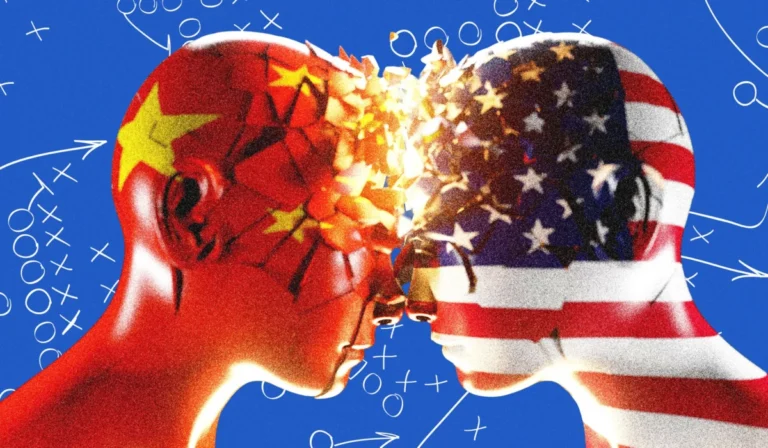
In stark contrast, Leading the Future (LTF) remains the dominant financial force in the AI lobbying space. Bolstered by a $50 million commitment from Greg Brockman and his wife, Anna, as well as significant backing from Palantir and other Silicon Valley titans, LTF has positioned itself as a defender of "innovation." The group argues that heavy-handed regulation would stifle American competitiveness, particularly in the ongoing technological race with China.
Internal Dissent and the Research Engineer Perspective
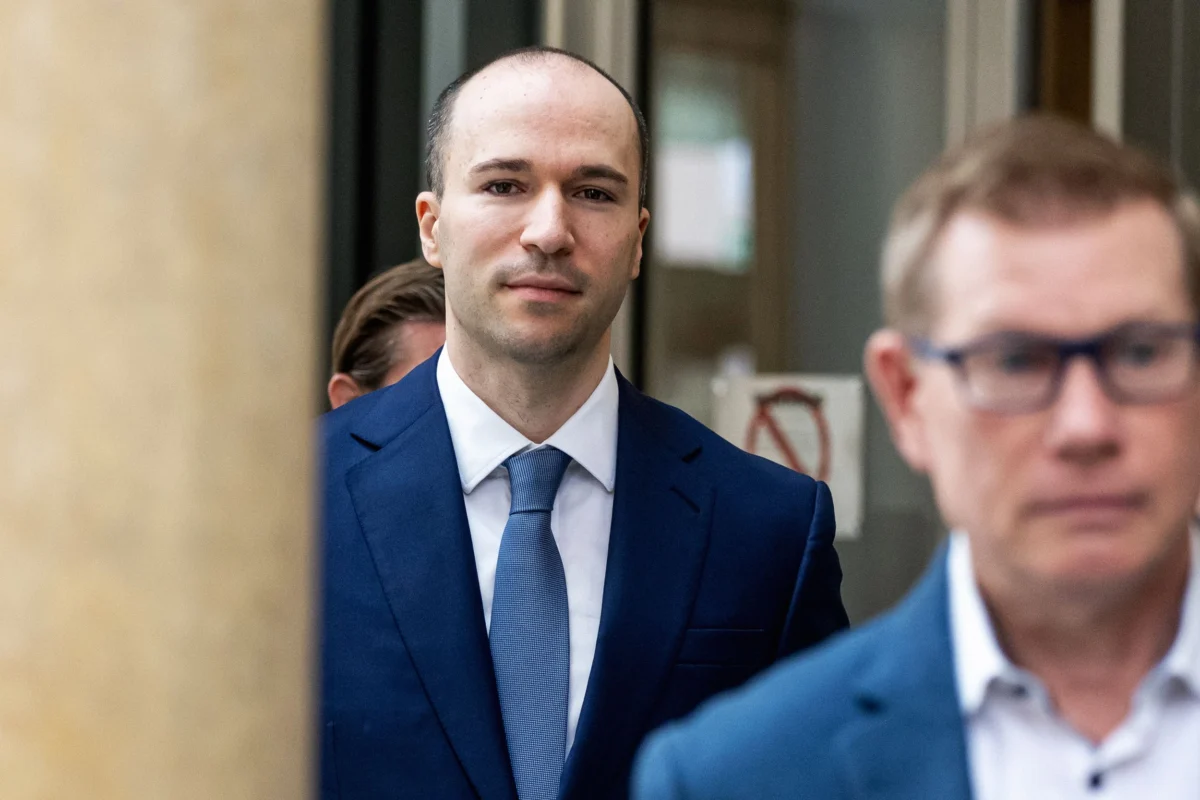
The largest individual contribution from the OpenAI cohort came from Juan Felipe Cerón Uribe, a research engineer who has been with the company since 2022. Cerón Uribe, who donated $200,000, has spent the last four years focused on developing strategies to mitigate the potential harms caused by large-scale AI models. His decision to donate was born out of a concern that technical safety research is insufficient without the backing of enforceable law.
"In this time, I’ve become concerned that all that research will have gone to waste if it doesn’t translate to guardrails that hold private companies accountable for the responsible development of AI," Cerón Uribe stated. He specifically cited Greg Brockman’s involvement with Leading the Future as a primary motivator for his donation, characterizing the executive-backed PAC as an effort to keep the industry unregulated.
Other donors from within OpenAI’s safety and alignment teams include Gabriel Wu, Julie Steele, and Jason Wolfe, each of whom contributed $5,000. These researchers represent the core of OpenAI’s "alignment" mission—the technical challenge of ensuring AI systems act in accordance with human values. Their financial support for Guardrails Alliance suggests that even those closest to the technology believe that internal corporate governance is an inadequate substitute for federal oversight.
David Farhi, a former research manager who left OpenAI last summer after a seven-year tenure, also contributed $3,000. Farhi expressed disappointment that leadership-backed groups like Leading the Future appear to be working against the foundational mission of OpenAI by attempting to preemptively shut down regulatory discourse.
The Strategic Battle for the 2026 Midterms
The rivalry between Guardrails Alliance and Leading the Future is not merely theoretical; it has already manifested in high-stakes political contests. During the recent primary election for New York’s 12th Congressional District, the two groups found themselves on opposite sides of a $27 million spending blitz.
The focal point of that race was Alex Bores, the author of New York’s landmark AI safety legislation. Bores, who advocated for transparency and safety testing for frontier models, became a primary target for Leading the Future. The pro-industry PAC spent heavily to oppose his candidacy, ultimately contributing to his defeat in the primary. Guardrails Alliance, along with Public First Action—another safety-focused PAC backed by $20 million from Anthropic—supported Bores, but their combined resources were unable to match the overwhelming financial pressure from the pro-industry side.
Shaunna Thomas, co-founder of Guardrails Alliance and a veteran Democratic strategist, remains undeterred by the financial disparity. "We’re not going to match our opponents dollar-for-dollar; we don’t have to," Thomas said. "When you expose what the AI PACs are doing, the people reject it. We’re leveraging public opinion that already exists, and it’s less expensive to do that."
Thomas noted that the threat of a $100 million war chest often silences politicians who might otherwise support regulation. By providing a counter-narrative and a degree of financial cover, Guardrails Alliance hopes to embolden lawmakers to pursue "common-sense" safety requirements. The group is currently eyeing several races in the 2026 midterms, including a potential challenge in California’s 34th Congressional District.
Corporate Neutrality and the "Personal Capacity" Defense
OpenAI’s leadership has attempted to walk a fine line between the political activities of its executives and its official corporate stance. When asked for comment regarding the employee donations, an OpenAI spokesperson pointed to a June blog post clarifying that Greg Brockman’s involvement with Leading the Future is in a "personal capacity."
The company stated that its employees are "free to participate in the political process in their personal capacities, including by donating or providing advice to candidates, campaigns, and political organizations." However, this distinction has done little to soothe internal anxieties. Many employees have reportedly pressed executives for clearer explanations regarding the company’s ties to Leading the Future, particularly given that OpenAI’s Global Affairs Chief, Chris Lehane, admitted to helping set up the PAC and advising Brockman on his political giving.
Critics argue that when the president and the head of global affairs for a company are instrumental in a $100 million political organization, the "personal capacity" defense becomes a semantic technicality. The internal donations to Guardrails Alliance can thus be viewed as a vote of no confidence in the company’s claims of political neutrality.
The Broader Landscape: A Three-Way Ideological Split
The emergence of Guardrails Alliance adds a third pillar to the increasingly complex AI policy landscape:
- The Pro-Innovation Bloc (Leading the Future): Primarily funded by founders and venture capitalists. They emphasize speed, deregulation, and national security through technological dominance.
- The Corporate Safety Bloc (Public First Action): Backed by companies like Anthropic. They support regulation but are often viewed as representing "Big AI" interests, potentially favoring regulations that create barriers to entry for smaller competitors.
- The Populist/Worker Bloc (Guardrails Alliance): Funded by rank-and-file engineers, unions, and civil society. They focus on labor protections, corporate accountability, and preventing the concentration of power in the hands of a few "ultra-wealthy and unaccountable individuals," as donor Gabriel Wu phrased it.
This three-way split suggests that the future of AI regulation will not be a simple binary choice between "rules" and "no rules." Instead, it will be a battle over who writes the rules and whose interests those rules serve.
Analysis of Implications for AI Governance
The fact that AI researchers are donating their own salaries to influence policy indicates a shift in the perceived locus of power. For years, the debate over AI safety was confined to academic papers and internal "safety boards." However, the dissolution of safety teams at various major labs and the pivot toward aggressive commercialization have moved the battleground to Washington D.C. and state capitals.
The $215,000 from OpenAI employees, while small in the context of a $15 million or $100 million goal, serves as a "whistleblower" of sorts in the political economy. It signals to lawmakers that the consensus within the industry is not as monolithic as industry lobbyists might suggest. If the very people building the models are calling for "guardrails," it becomes much harder for lobbyists to argue that such regulations are "anti-tech" or "technically impossible."
As the Federal Election Commission prepares to release more detailed filings on July 15, the tech industry and political analysts alike will be watching closely. The identity of further donors, such as former Andreessen Horowitz partner John O’Farrell, suggests that the dissatisfaction with the "innovation at all costs" narrative is spreading beyond the engineering ranks and into the upper echelons of Silicon Valley’s investment class.
Ultimately, the clash between Guardrails Alliance and Leading the Future represents the privatization of AI governance. In the absence of clear federal leadership, the future of the world’s most transformative technology is being negotiated through the competing checkbooks of its creators. Whether a populist movement of engineers can successfully challenge the influence of tech billionaires remains the central question of the 2026 political cycle.
About the Author