Bengaluru-based startup Runable has successfully closed a $21 million Series A funding round, co-led by Susquehanna Venture Capital and Nexus Venture Partners, with participation from existing investors Together Fund and Array VC. This all-equity primary funding round values the company at $65 million post-investment, signaling a significant vote of confidence in Runable’s ambitious vision to move beyond AI-driven website and app creation and into the critical realm of customer acquisition and business expansion.
The burgeoning field of artificial intelligence has democratized the creation of digital assets, empowering individuals and businesses to launch websites and applications with unprecedented ease. However, Runable, founded in 2025, identifies a substantial unmet need in the post-creation phase: the challenge of actually finding customers and fostering sustainable business growth. This strategic pivot addresses a critical gap in the market, where the ability to build is rapidly becoming commoditized, while the ability to grow remains a significant hurdle for many enterprises, particularly small and medium-sized businesses (SMBs).
"In the end, a business doesn’t require Codex or Claude Code or anything [related to code generation]," stated Umesh Kumar, co-founder and CEO of Runable, in an exclusive interview. "They require real outcomes. If I am paying an agency $10,000 to run my Google Ads, can someone come in and do it for me for a lower price? That’s where Runable comes in." This sentiment underscores the startup’s core mission: to provide tangible business results rather than simply digital tools.
Runable’s approach is distinctly different from established AI giants like Anthropic and OpenAI, and coding platforms such as Cursor, Lovable, and Replit, which primarily focus on the development and creation of software. The Bengaluru-based startup, with its lean 15-person team, is developing a sophisticated AI agent designed to proactively find customers, execute targeted ad campaigns, generate compelling presentations, and strategically promote businesses across a multi-channel digital landscape, including search engines, social media platforms, and AI chatbots.
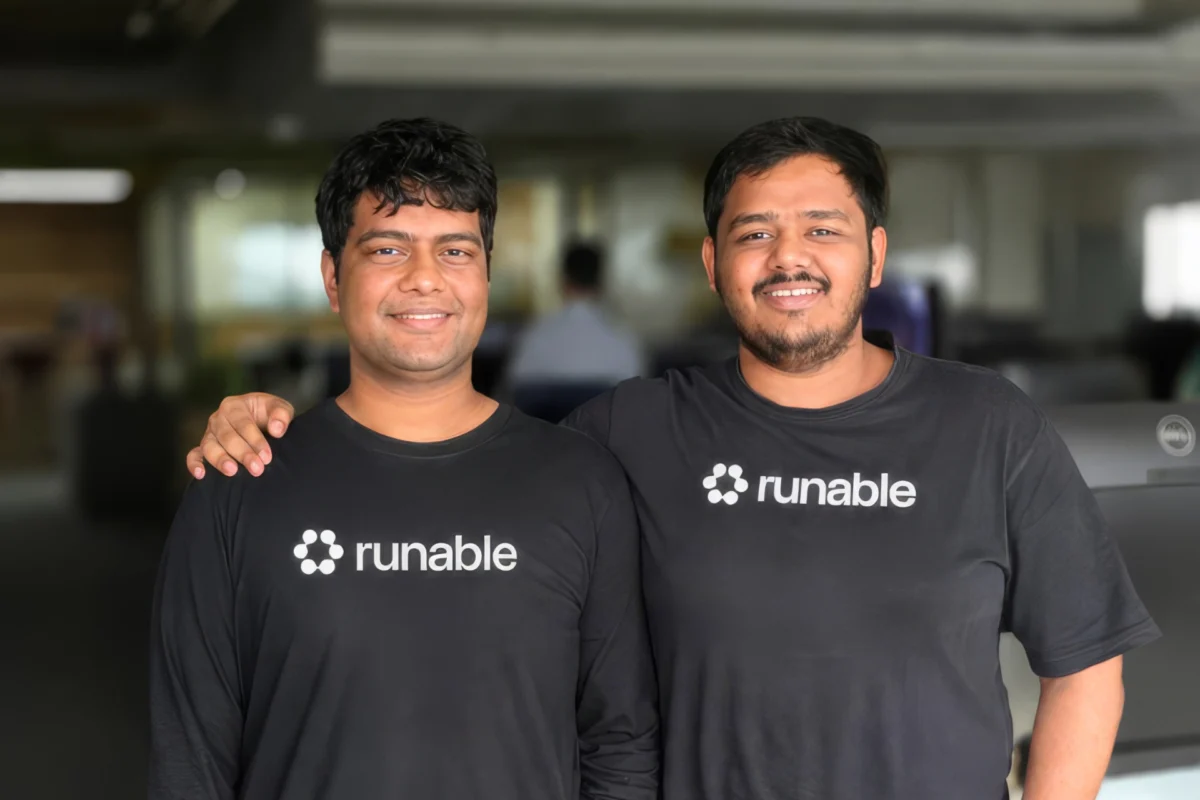
The genesis of Runable’s current trajectory can be traced back to its initial focus as an AI infrastructure startup. Co-founders Umesh Kumar and Saksham Sarda, along with their team, were initially engaged in building browser technology for large-scale data scraping. However, they observed a consistent pattern of user requests that extended beyond data acquisition. Clients began leveraging their browser-based agent to generate various content, including slide decks and websites. This emergent user behavior prompted a strategic re-evaluation and a pivotal shift towards developing a more generalized AI agent capable of addressing a wider spectrum of business needs.
This pivot proved to be a catalyst for rapid growth. According to Kumar, Runable transitioned from zero to a $2 million annualized revenue run rate within a mere three weeks of launching its payment system in March. This accelerated market adoption highlights the pent-up demand for solutions that bridge the gap between digital creation and business expansion.
Currently, Runable’s AI agent empowers users to construct websites, applications, presentations, and other forms of content through intuitive natural language prompts. Beyond content creation, the platform intelligently manages underlying infrastructure requirements, including deployment processes and analytics tracking. The company is now actively expanding its agent’s capabilities into the "grow" segment of the business lifecycle. This includes functionalities such as running ad campaigns, managing social media presences, optimizing search engine optimization (SEO), and enhancing a business’s visibility within AI chatbot results, among a suite of other growth-oriented tasks.
Kumar articulated the ultimate objective: to enable small business owners to delegate the entire customer acquisition process to Runable. Instead of manually setting up websites, integrating analytics tools, configuring advertising accounts, and launching marketing campaigns, business owners can simply task Runable with achieving specific customer acquisition targets.
The platform has already garnered significant traction, with approximately 1.7 million registered users. The United States, the United Kingdom, and Japan represent Runable’s largest markets. While the platform also has a user base in Brazil, the company is strategically intensifying its focus on the top three markets, anticipating Japan to emerge as a leading market alongside the U.S. in the near future.
The Evolving Landscape of AI and Business Growth
The rapid advancement of AI technology has presented both opportunities and challenges for startups like Runable. While AI tools have lowered the barrier to entry for digital creation, the competition is intensifying, with major AI model providers increasingly developing their own integrated agent solutions.
Despite this competitive pressure, Kumar believes Runable’s distinct advantage lies in its ability to orchestrate the entire workflow required to achieve tangible business outcomes for SMBs. This encompasses not only the creation of digital assets but also the crucial elements of infrastructure management, data analytics, and effective distribution – all integrated seamlessly without necessitating users to stitch together multiple disparate services.
In a practical demonstration, TechCrunch requested Runable’s agent to build and deploy a website for a fictional coffee subscription business, set up analytics, and subsequently attract its initial 100 visitors with a modest advertising budget of $25. Runable successfully constructed the website and prepared a preliminary ad campaign. However, the campaign execution was paused, requiring the connection of an advertising account.
A similar test conducted on Cursor revealed comparable limitations. Cursor also prepared an ad campaign but mandated access to a Meta Ads account and a payment method, alongside a third-party service for permanent website deployment. While Runable demonstrated a greater capacity to handle website infrastructure within its platform, an external ad account remained a prerequisite for initiating ad spending.
Addressing these limitations, Runable clarified that its ability to run ads without customers needing to connect their own advertising accounts is currently available for advertisements placed on ChatGPT. The startup has established strategic partnerships that facilitate these ad placements, though the specifics of these relationships were not disclosed, with Kumar describing them as a "soft wedge" into broader advertising integrations.
Kumar explicitly stated that Runable is not aiming to compete directly with coding agents on their own turf. For developers primarily engaged in local file work or extensive code writing, tools such as OpenAI’s Codex or Anthropic’s Claude Code may offer a more suitable solution. Runable’s primary target audience comprises non-technical small business owners who may find the intricacies of configuring various tools and services to transform an AI-generated product into a functioning business overwhelming.
Runable identifies general-purpose agents like Manus and Genspark as its closest competitors, given their similar target users and market focus. However, Runable intends to differentiate itself by leveraging AI to actively help businesses secure customers, rather than solely concentrating on AI-driven building processes.
Financial Performance and Future Economic Outlook
While Kumar declined to disclose specific figures for current revenue or the exact number of paying customers, he provided insights into platform usage. Over the past 90 days, Runable users collectively consumed over 1 trillion tokens, with an estimated 60% to 70% of this usage attributed to paying customers.
This substantial usage comes with associated costs. Kumar candidly acknowledged that Runable currently operates with negative gross margins, a situation partly attributable to the company subsidizing AI usage for its customers. The startup employs a hybrid strategy, utilizing a mix of third-party AI models and developing its own proprietary solutions. Runable anticipates that declining inference costs for AI models will significantly improve its economic efficiency over time.
"We are seeing this path where you can provide the same quality of inference at almost 10x less cost," Kumar remarked, highlighting the potential for substantial cost reductions in AI processing. This projected decrease in operational expenses is crucial for achieving profitability and scaling the business effectively.
The long-term success of Runable will hinge on its ability to navigate the increasingly competitive AI landscape. As major AI model providers continue to enhance their own agent capabilities, Runable must consistently demonstrate its unique value proposition. Its focus on delivering end-to-end business growth solutions, from initial digital presence to customer acquisition, positions it as a compelling alternative for SMBs seeking tangible results without the burden of complex technical integrations. The recent infusion of $21 million in Series A funding provides Runable with the necessary resources to further develop its AI agent, expand its market reach, and solidify its position as a leader in the post-creation phase of the digital business lifecycle. The company’s strategic direction, coupled with its early market traction, suggests a promising future for AI-powered business expansion solutions.
About the Author