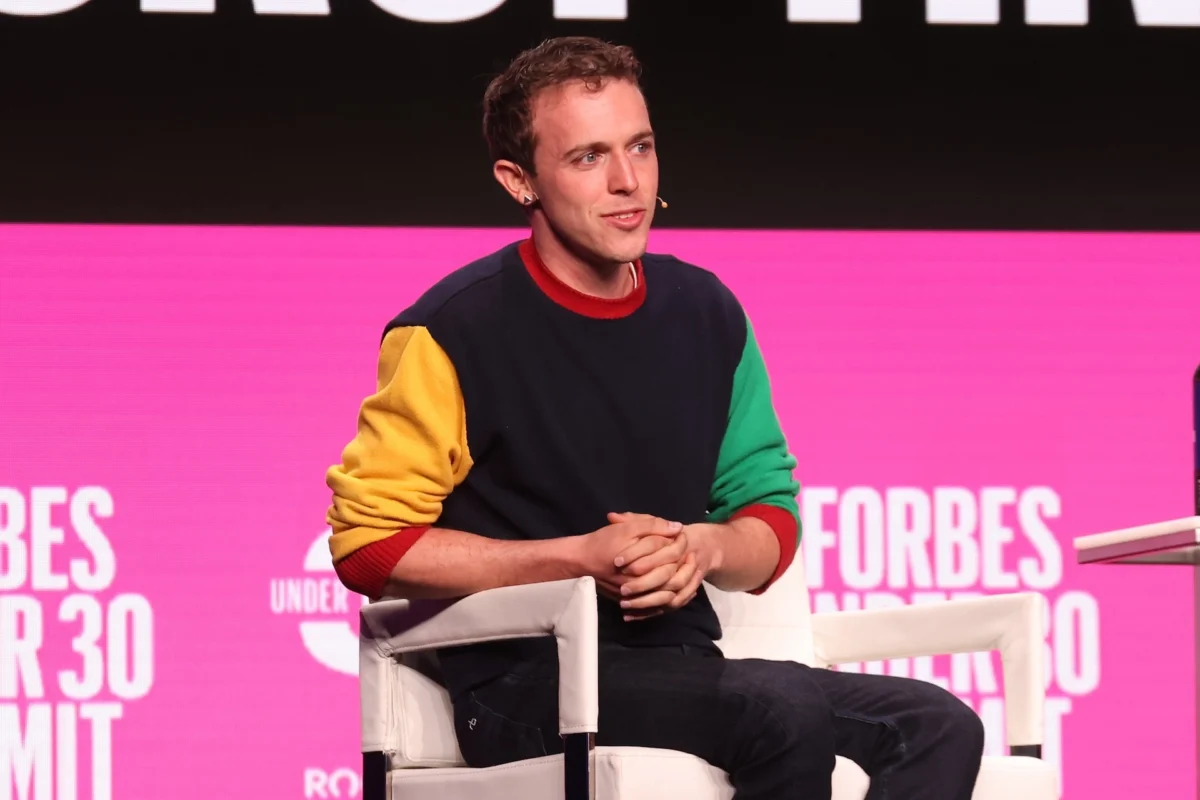
Ryan Breslow, the enigmatic and often controversial entrepreneur who made a high-stakes return as CEO of Bolt last year, is making a determined stand to save the checkout processing startup he co-founded in 2014. After years marked by significant legal battles and public clashes with investors, Breslow is now spearheading a crucial bridge funding round aiming to secure up to $27 million. This critical financing initiative emerges in the wake of a precipitous 97% drop in the company’s valuation, which plummeted from a peak of $11 billion in early 2022 to a mere $300 million today, painting a stark picture of the challenges Bolt has faced in a rapidly shifting tech landscape.
The Precipitous Fall: From Unicorn Status to Underdog Struggle
Bolt’s trajectory from a celebrated unicorn to a company fighting for survival encapsulates the dramatic shifts experienced by many high-growth tech startups in recent years. In the venture capital landscape of early 2022, flush with liquidity and optimism, Bolt commanded an impressive $11 billion valuation. This period was characterized by aggressive investment in companies prioritizing rapid expansion over immediate profitability, often fueled by generous multiples. However, as global economic headwinds gathered pace, marked by rising interest rates, inflation concerns, and a general recalibration of investor sentiment, the tech industry entered a significant downturn. High-flying valuations, particularly for unprofitable entities, became unsustainable. Bolt was not immune to this market correction, and its valuation contracted severely, mirroring a broader trend where numerous startups faced down-rounds, difficult layoffs, or outright collapse. The staggering 97% decline to $300 million underscores the brutal reality of this market reset and the operational challenges the company encountered during a period of leadership transition and internal strife.
A Bridge to Somewhere: Understanding the Critical Financing
The current funding initiative, structured as a bridge round, represents a short-term financial lifeline designed to sustain Bolt until it can secure its next major funding infusion. Such rounds are typically employed by companies in one of two scenarios: either they are performing well and need interim capital to reach specific milestones before a larger fundraise, or they are facing cash constraints and require time to restructure operations or achieve profitability. Breslow declined to disclose Bolt’s current cash reserves, though he maintains the company is "nearing profitability" and experiencing a return to growth after a period of shrinking revenue.
The terms of this bridge round are particularly indicative of Bolt’s precarious position and Breslow’s resolve. The capital, raised from existing investors, is structured as a convertible note. This means the investment will convert into equity at a discount once Bolt successfully closes a future, larger funding round. Crucially, the round includes a "pay-to-play" provision, a mechanism often used in distressed financings. This punitive clause dictates that existing backers who choose not to participate in the current round will face significant dilution of their equity holdings in the company. Such a provision is a powerful incentive, effectively compelling investors to either double down on their commitment or risk seeing a substantial portion of their previous investment devalued. Breslow’s personal commitment of $5 million to the round serves as a potent signal of his unwavering belief in Bolt’s future, an effort to instill confidence among wary investors.
A Founder’s Unwavering Resolve and a Tumultuous History
Ryan Breslow’s journey with Bolt has been anything but conventional. A Stanford dropout, he co-founded the company at the ambitious age of 19 in 2014, driven by a vision to simplify online checkout. His tenure, however, has been punctuated by periods of intense growth, followed by significant controversy. In 2022, Breslow stepped down from the CEO role, only to return to the helm in March 2025, three years later. This period away from direct leadership coincided with some of Bolt’s most challenging times, including legal battles and public disagreements with investors that reportedly strained internal and external relations.
Breslow firmly believes that Bolt’s struggles were exacerbated by his absence. He maintains that the company lost critical customers when he was not at the helm, asserting, "I believe in Bolt more than anyone could possibly imagine. I believe Bolt is worth saving." This deep conviction is not merely rhetorical; it is backed by his personal financial commitment and his rejection of alternative opportunities. Breslow revealed that he has been offered $10 million to start a new company, an option he has refused, preferring instead to dedicate himself to the "nightmare of a situation with Bolt" and attempting to restore it to its former glory. This steadfastness highlights a founder’s profound attachment to their creation, even in the face of immense adversity.
A Chronology of Funding Attempts and Investor Dynamics
Bolt’s funding history provides a telling narrative of its highs and lows, and the complex relationship between its founder and investors.
- 2014: Ryan Breslow co-founds Bolt, embarking on its mission to revolutionize online checkout.
- Early 2022: Bolt achieves its zenith, reaching an $11 billion valuation, reflecting investor enthusiasm for its one-click checkout technology amidst a booming e-commerce market.
- Later 2022: The company attempts to raise a substantial $450 million Series E round at an ambitious $14 billion valuation. This effort, however, spectacularly collapses. The deal unraveled amid revelations that one investor, publicly named as a lead backer, denied any participation, while another offered "marketing credits" instead of actual cash. This situation led to lawsuits from prominent existing investors, including BlackRock and Hedosophia, seeking to block the round. While these lawsuits were later voluntarily dismissed by all parties, the incident severely damaged investor confidence and the company’s reputation.
- March 2025: Following a period away from direct leadership, Ryan Breslow is reinstated as CEO, signaling a shift in strategic direction and a renewed effort to stabilize the company.
- April 2025: Shortly after his return, Breslow indicates to TechCrunch that he is in "early conversations" regarding a new funding round, acknowledging the necessity of fresh capital.
- Present: More than a year after these initial discussions, the current bridge round is publicly announced. Breslow notes that, unlike the tumultuous 2022 attempt, this new fundraise has received approval from Bolt’s board and a "majority of preferred" shareholders, suggesting a more unified front among key stakeholders. While he didn’t disclose how many of Bolt’s nearly 100 existing investors will participate, at least one angel backer has confirmed their intention to double down on their investment.
Strategic Pivot: The Super App and AI-Driven Efficiency
Breslow’s vision for Bolt’s resurgence hinges on two primary pillars: a "super app" strategy and aggressive adoption of artificial intelligence for operational efficiency. He articulates his ambition by stating, "I think we can be the Lyft to Stripe’s Uber," positioning Bolt as a formidable alternative in the competitive payments landscape, albeit with a distinct approach.
The "super app" introduced last year is central to this strategy. It aims to integrate a broad spectrum of financial services, including peer-to-peer payments, cryptocurrency functionalities, and traditional credit card processing, all consolidated within Bolt’s signature one-click checkout experience. This ambitious move seeks to create a more comprehensive financial ecosystem, potentially increasing user engagement and offering diverse revenue streams beyond traditional checkout services. However, the "super app" model is notoriously challenging to execute, requiring robust infrastructure, extensive regulatory compliance, and significant user adoption to succeed against established players in multiple financial sectors.
In terms of operational efficiency, Breslow claims AI is a game-changer for the company. Despite drastically shrinking its headcount from approximately 900 employees in 2021 to around 60 today, he asserts that AI is enabling Bolt to achieve unprecedented productivity. "We’re getting probably 10 times more done, shipping 10 times faster because of AI," he stated. This lean operational model, heavily reliant on automation and advanced algorithms, is critical for a company aiming for profitability after a period of high burn and shrinking revenue. It also reflects a broader industry trend where AI is being leveraged to optimize workflows and reduce labor costs, particularly in the wake of the tech industry’s post-pandemic recalibration. Breslow also maintains that Bolt possesses an invaluable "moat" – a unique competitive advantage that would be impossible for competitors to replicate from scratch, though he did not elaborate on its specific nature in the provided context.
Challenges and Outlook: A High-Stakes Turnaround
The success of this bridge round and Bolt’s long-term survival remain highly uncertain. While Breslow projects that participation from Bolt’s roughly 100 investors will total at least $15 million, hitting the full $27 million target will require broad buy-in, especially given the "pay-to-play" provision and the company’s tumultuous history. The ambiguity surrounding Bolt’s current cash reserves and the precise timeline for achieving profitability adds another layer of risk for potential investors.
This bridge financing, while framed as a strategic step towards a larger Series E2 round, carries the implicit weight of being potentially Bolt’s last shot at survival. The journey of transforming a company that has experienced such a dramatic decline in valuation, coupled with a controversial past, is an arduous undertaking. It demands not only substantial capital but also unwavering execution, renewed investor confidence, and a clear, viable path to sustainable growth. Breslow’s personal commitment and his conviction are evident, but the market’s reception to this turnaround effort will ultimately determine Bolt’s fate.
Broader Implications for the Startup Ecosystem
Bolt’s narrative serves as a compelling case study in the volatile world of venture-backed startups, particularly in the post-boom era. Its dramatic valuation swing highlights the perils of inflated market expectations and the swift consequences of a capital-constrained environment. The "pay-to-play" provision in its current funding round underscores the increasing power of new money in distressed situations, often at the expense of earlier investors.
Moreover, Breslow’s determined return and his refusal to abandon Bolt despite lucrative offers to start anew illustrate the profound personal investment many founders have in their creations. It challenges the conventional wisdom that advises founders to cut their losses and move on when a venture faces such existential threats. Bolt’s story will continue to be watched closely by investors, entrepreneurs, and industry analysts as it navigates this critical juncture, offering valuable insights into the resilience of founders, the evolving dynamics of venture capital, and the complex path to recovery for once-dominant tech unicorns.
About the Author