The global effort to mitigate the environmental impact of plastic waste is undergoing a fundamental shift in strategy, moving beyond traditional waste management to address the crisis at its source. For decades, the environmental movement has rallied around the "Three Rs"—Reduce, Reuse, and Recycle. However, as international negotiators gather to finalize a United Nations legally binding instrument to end plastic pollution, industry leaders and policymakers are increasingly advocating for a "Fourth R": Replacement. This strategic pivot focuses on upstream innovation, emphasizing the design and adoption of alternative materials that are inherently sustainable, rather than relying solely on downstream waste collection and processing systems that have historically struggled to keep pace with production volumes.
The limitations of the current downstream-focused model are starkly illustrated by global statistics. According to the Organization for Economic Co-operation and Development (OECD), global plastic production has doubled since the turn of the century, reaching nearly 400 million tonnes annually. Of this, only an estimated 9% is successfully recycled, while approximately 22% is mismanaged, leaking into the environment through open pits, illegal dumping, or terrestrial and aquatic litter. Industry experts, including Karin Forsberg, Vice President of the Energy Division and Head of Strategic Partnerships at Alfa Laval, argue that focusing exclusively on the end of the material lifecycle is structurally insufficient. This realization is driving a surge in interest in material replacement, particularly in sectors where plastic leakage is most difficult to prevent.
The Industrial Scaling Challenge: Bridging the "Valley of Death"
While the scientific community has successfully developed numerous alternatives to traditional petroleum-based plastics—ranging from seaweed-derived polymers to biogenic materials—the transition from laboratory success to industrial reality remains a significant hurdle. This gap, often referred to in industrial circles as the "Valley of Death," occurs when a technology is technically proven but lacks the infrastructure, capital, and supply chain maturity to compete with the highly optimized economics of the fossil-fuel-based plastics industry.
The challenge of scaling is not merely a matter of building larger factories; it is an exercise in managing multi-dimensional uncertainty. A first-of-a-kind (FOAK) production facility must demonstrate process stability, consistent product quality, and cost-effectiveness simultaneously. For many startups in the bio-materials space, the capital requirements are prohibitive. Investors typically demand evidence of operational performance before committing hundreds of millions of dollars, while downstream manufacturers are hesitant to switch their production lines to new materials without a guaranteed, steady supply of high-quality feedstock.
Conventional plastics have benefited from over half a century of optimization, subsidies, and global infrastructure. To counter this, proponents of the "Fourth R" argue that the priority for new materials must initially be on reliability and quality rather than immediate cost parity. Economic optimization typically follows through repetition, operational learning, and the achievement of economies of scale. However, bridging this initial gap requires a new model of industrial cooperation.
A Chronology of the Global Policy Response
The push for material replacement is occurring against the backdrop of an unprecedented diplomatic effort. The timeline of the United Nations process to develop an international legally binding instrument on plastic pollution highlights the urgency of the situation:
- March 2022: At the UN Environment Assembly (UNEA-5.2) in Nairobi, 175 nations endorsed a historic resolution to end plastic pollution and forge an international legally binding agreement by 2024.
- November 2022 (INC-1): The first meeting of the Intergovernmental Negotiating Committee (INC) took place in Uruguay, setting the stage for discussions on the scope and objectives of the treaty.
- May 2023 (INC-2): Held in Paris, this session saw the development of a "zero draft" of the treaty, which included options for both mandatory and voluntary measures regarding plastic production and design.
- November 2023 (INC-3): Negotiations in Nairobi focused on the technical details of the draft, with significant debate over whether to include production caps on primary plastic polymers.
- April 2024 (INC-4): In Ottawa, delegates worked to refine the text, emphasizing the need for "sustainability-by-design" and the role of alternative materials.
- November 2024 (INC-5): The final scheduled negotiating session in Busan, South Korea, aims to finalize the treaty text.
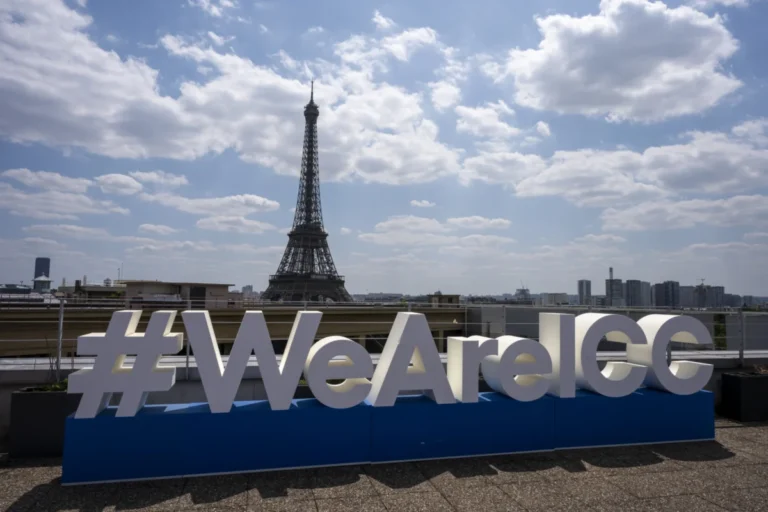
Throughout this process, organizations like the International Chamber of Commerce (ICC) have advocated for a framework that supports innovation. The ICC’s position emphasizes that the treaty should provide harmonized global standards and principles to accelerate the transition to a circular economy. By creating a predictable regulatory environment, the treaty can de-risk investments in the very "Replacement" technologies that are currently struggling to scale.
Case Study: The Partnership Model of Alfa Laval and RWDC Industries
A practical illustration of how the industrial scaling challenge can be overcome is found in the collaboration between the Swedish engineering firm Alfa Laval and RWDC Industries. Alfa Laval, a company with a 140-year history in heat transfer, separation, and fluid handling, has pivoted its expertise toward supporting the bio-economy. RWDC Industries, based in Singapore and the United States, specializes in producing polyhydroxyalkanoates (PHA)—a class of biopolymers produced through microbial fermentation of plant-based oils.
Unlike traditional plastics, PHA is fully biodegradable in soil, water, and marine environments, making it an ideal "Replacement" for single-use applications where waste management is often ineffective. However, producing PHA at a scale that can impact global markets requires sophisticated process technology.
The relationship between the two companies evolved from a standard vendor-customer arrangement into a strategic technical partnership. By integrating their engineering teams, the partners were able to refine production conditions and adapt industrial equipment specifically for the nuances of biological production. This collaborative approach distributes risk; rather than a material developer bearing the entire burden of technical failure, the partnership allows for shared learning and faster iteration.
According to Karin Forsberg of Alfa Laval, this model is essential for rapid transformation. "Industrial transformation moves faster when expertise is shared early, risks are reduced collaboratively, and partnerships are built with scale in mind from the outset," Forsberg noted in a recent industry interview. This sentiment reflects a growing trend where large, established industrial players provide the "scaling backbone" for smaller innovators.
Supporting Data: The Economic and Environmental Case for Change
The shift toward replacement materials is supported by a growing body of economic data. A report by the Pew Charitable Trusts and SYSTEMIQ, titled "Breaking the Plastic Wave," suggests that by 2040, a comprehensive circular economy approach—including significant material substitution—could reduce the volume of plastic entering the oceans by 80% compared to a "business-as-usual" scenario.
Furthermore, the market for bioplastics and biodegradable polymers is projected to grow significantly. Market research indicates that the global bioplastics market, valued at approximately $11.6 billion in 2022, is expected to expand at a compound annual growth rate (CAGR) of over 18% through 2030. This growth is driven by consumer demand, corporate sustainability commitments, and tightening regulations, such as the European Union’s Single-Use Plastics Directive.
However, the data also highlights a massive investment gap. To achieve the goals of the proposed UN treaty, global investment in plastic alternatives and circular infrastructure must increase by an estimated $1.2 trillion by 2040. This underscores the importance of the "enabling environment" mentioned by industry leaders—policies that incentivize the use of sustainable materials and remove subsidies for fossil-fuel-based feedstocks.
Official Responses and Stakeholder Perspectives
The global business community has expressed a range of reactions to the proposed treaty and the emphasis on upstream solutions. The Business Coalition for a Global Plastics Treaty, which includes over 200 major companies (such as Unilever, Coca-Cola, and Nestlé), has called for a treaty that includes "legally binding global rules and measures" to drive circularity. This group specifically highlights the need for criteria to exclude "chemicals of concern" and to promote the use of "safe and sustainable alternatives."
Conversely, some representatives from the petrochemical industry have voiced concerns that overly aggressive production caps could lead to supply chain disruptions and higher costs for essential products in the medical and food safety sectors. They argue that the focus should remain on improving waste management and chemical recycling technologies.
The ICC has bridged these perspectives by calling for "harmonized principles" that allow for regional flexibility while ensuring a level playing field. The consensus among many industrial leaders is that the treaty must not only mandate change but also provide the mechanisms—such as technology transfer and financial assistance—to make that change feasible for developing nations.
Broader Impact and Future Implications
The integration of "Replacement" into the global environmental strategy marks a maturing of the circular economy concept. It acknowledges that some materials are fundamentally incompatible with a healthy environment, no matter how efficient the recycling system becomes. By focusing on "sustainability-by-design," industries are beginning to view material choice as a critical component of corporate governance and risk management.
The long-term implications of this shift extend beyond environmental protection. The transition to biogenic and biodegradable materials has the potential to reshape global supply chains, creating new agricultural opportunities and reducing the geopolitical dependencies associated with petroleum production.
As the UN negotiations reach their final stages, the focus will remain on how to translate high-level treaty goals into concrete industrial action. The experience of companies like Alfa Laval suggests that the technology exists, but the pace of adoption will depend on the strength of international cooperation and the willingness of the private sector to move from siloed innovation to integrated partnership. The "Fourth R" is no longer just a theoretical concept; it is becoming the cornerstone of a new industrial era defined by materials that are designed to serve humanity without harming the planet.
About the Author