The landscape of American technology and public health shifted significantly this week as Apple Inc. initiated a high-stakes legal battle against OpenAI, alleging the theft of proprietary hardware secrets. This development coincides with a growing internal rift at OpenAI, where employees have launched a political action committee to advocate for stricter industry regulations. Simultaneously, the state of New York has enacted a landmark moratorium on data centers, while federal transparency concerns rise regarding the use of artificial intelligence in government deregulation. Compounding these technological tensions, the United States is currently grappling with a record-breaking outbreak of cyclosporiasis, a parasitic infection that has spread across more than 30 states, highlighting critical vulnerabilities in the national food safety and public health infrastructure.
The Apple vs. OpenAI Legal Conflict: A Battle Over Hardware Secrets
On Friday, Apple Inc. filed a comprehensive lawsuit against OpenAI, alleging that the artificial intelligence research firm has engaged in a systematic effort to misappropriate confidential hardware designs and trade secrets. The litigation centers on the claim that OpenAI, which has traditionally focused on software and large language models, is aggressively pursuing hardware ambitions by leveraging stolen intellectual property from Apple’s most secretive projects.
According to court filings, the alleged theft involves unreleased iPhone components, proprietary designs, and internal documents regarding secret hardware initiatives. At the heart of the dispute is Tang Tan, OpenAI’s current Chief Hardware Officer, who previously spent 24 years at Apple as a high-ranking executive. Apple alleges that Tan and other former employees encouraged departing staff to bring proprietary information and unreleased technology to OpenAI.
The scale of talent migration is a central point of the complaint; OpenAI has reportedly hired more than 400 former Apple employees over the past few years. Furthermore, OpenAI’s hardware division was significantly bolstered last year by the $6.5 billion acquisition of IO Products, a startup co-founded by Tan and other former Apple luminaries, including Scott Cannon and Evans Hankey, with legendary designer Jony Ive also involved in OpenAI’s hardware collaborations.
Industry analysts suggest that Apple’s primary motivation may not be financial damages, but rather the preservation of its ecosystem. As the industry moves toward "audio-first" platforms and AI agents that do not require traditional screens, Apple faces a potential threat to the iPhone’s dominance as the primary computing platform. By initiating discovery—a legal process that will likely expose internal OpenAI communications—Apple seeks to slow down its rival’s hardware development cycle and protect its "walled garden" approach to technology.
Internal Strife and the Rise of the Guardrails Alliance
While facing external legal pressure from Apple, OpenAI is also contending with an internal ideological schism. A group of current and former employees has launched a super PAC named the "Guardrails Alliance" to advocate for stronger federal oversight of frontier AI laboratories. The group debuted last month with $5 million in initial funding, with a stated goal of reaching $15 million by the end of the current election cycle.
The Guardrails Alliance serves as a direct counterweight to the "Leading the Future" fund, a $100 million pro-AI PAC supported by OpenAI executives such as Greg Brockman. While Leading the Future pushes for a "growth at all costs" policy agenda—often aligned with deregulation efforts—the Guardrails Alliance represents a populist movement within the tech workforce. One notable donor, research engineer Juan Felipe Cerón Uribe, contributed $200,000 to the cause, reflecting the concerns of technical staff who fear that rapid AI deployment without safety protocols could lead to significant societal harm.
This internal political friction highlights a demographic divide within Silicon Valley. While top-tier executives often align with conservative or libertarian deregulation agendas to maintain competitive edges, the broader workforce increasingly identifies with liberal-leaning regulatory frameworks. This tension is reportedly palpable within OpenAI’s internal communications, where newer hires—sometimes colloquially referred to by veterans as the "MAGA-aligned" contingent—clash with long-term researchers focused on AI safety and ethics.
New York’s Landmark Data Center Moratorium
The physical infrastructure of the AI boom is also facing legislative resistance. New York Governor Kathy Hochul recently signed an executive order establishing the nation’s first statewide moratorium on large-scale data centers. The one-year pause applies specifically to "hyperscale" facilities requiring 50 megawatts of power or more.
The moratorium is a response to escalating concerns over the environmental and economic impact of data centers on local communities. These facilities are notorious for their massive energy consumption, which can spike utility bills for residents, and their significant water usage for cooling systems. Governor Hochul stated that while progress is essential, it should not come at the expense of "noise pollution, depleted water supplies, or higher utility bills."
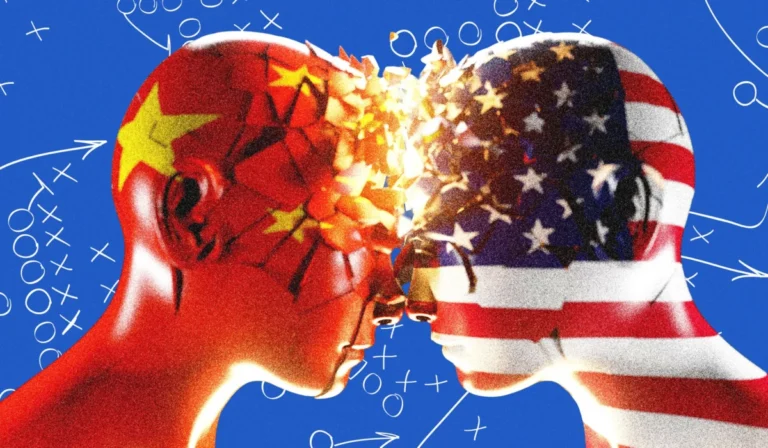
The move has drawn sharp criticism from former President Donald Trump, who took to social media to label the decision a "terrible mistake." Trump argued that data centers are "money machines" and "liquid gold" for state economies, warning that such regulations would cause the United States to lose the technological arms race to China. However, the moratorium includes carve-outs for projects already under construction or those with existing permits, suggesting the immediate impact on the AI race may be more symbolic than catastrophic.
DOGE and Transparency Concerns in Federal AI Use
Transparency issues have also emerged at the federal level involving the Department of Government Efficiency (DOGE), an initiative associated with Elon Musk. Recent investigations into the Department of Housing and Urban Development (HUD) revealed that DOGE members used AI tools to shape housing policy and identify agency rules for rescission or contract cancellation.
Democracy Forward, a nonprofit legal organization, filed Freedom of Information Act (FOIA) requests to understand how these AI tools influenced policy. However, the agency has reportedly stonewalled these requests, claiming an "AI exemption" that does not exist under current U.S. law. Critics argue that using automated systems to cancel government contracts or deregulate industries without public oversight creates a "black box" of governance.
Key figures in this effort include Scott Langmack, a former property technology executive, and Christopher Sweet, then a university student. Langmack has since moved into a senior role at the Office of Management and Budget (OMB), raising concerns that the opaque methodologies used during the DOGE initiative are now being entrenched within the permanent federal bureaucracy.
The National Cyclosporiasis Outbreak: A Public Health Crisis
Parallel to these technological and political shifts, the United States is facing its most severe outbreak of cyclosporiasis on record. The Centers for Disease Control and Prevention (CDC) has confirmed cases in more than 30 states, with the total number of suspected infections approaching 7,000. Michigan has emerged as the epicenter, reporting over 3,700 cases.
Cyclosporiasis is caused by a microscopic parasite, Cyclospora cayetanensis, typically transmitted through contaminated food or water. The illness is characterized by severe, "explosive" diarrhea that can last for weeks, leading to dangerous levels of dehydration, particularly in the elderly and immunocompromised. Public health officials have identified raw produce, specifically bagged lettuce and leafy greens, as the most likely culprits.
The severity of the outbreak has highlighted the impact of recent budget cuts at the CDC. Reports indicate that nearly 25% of the CDC’s workforce has been reduced under recent administrative shifts, hampering the agency’s ability to conduct real-time outbreak investigations. Furthermore, the Cyclospora parasite is notoriously difficult to eradicate; it is resistant to traditional cleaning agents like bleach, chlorine, and vinegar. Health experts are currently advising consumers to vigorously scrub all raw vegetables, even those labeled as "pre-washed," as the parasite can easily latch onto the crevices of leafy greens.
Implications for the Future of Tech and Policy
The convergence of these events suggests a period of intense volatility for the American technology sector and the regulatory bodies that oversee it. The Apple vs. OpenAI lawsuit may redefine intellectual property boundaries in the age of generative AI, potentially forcing companies to become even more insular regarding their hardware-software integration.
Politically, the rise of employee-funded PACs like the Guardrails Alliance indicates that tech workers are no longer content to let executive leadership dictate the industry’s social and political impact. As the 2024 election approaches, AI regulation—and the infrastructure required to support it—is poised to become a central campaign issue, as evidenced by the conflicting stances of state governors and national political figures.
Finally, the cyclosporiasis outbreak serves as a stark reminder that while the nation focuses on the "uncanny valley" of digital intelligence, the physical safety of the citizenry remains dependent on robust, well-funded traditional infrastructure. Whether in the form of food safety or energy grid management, the rapid advancement of technology continues to outpace the regulatory and public health frameworks designed to manage its consequences.
About the Author