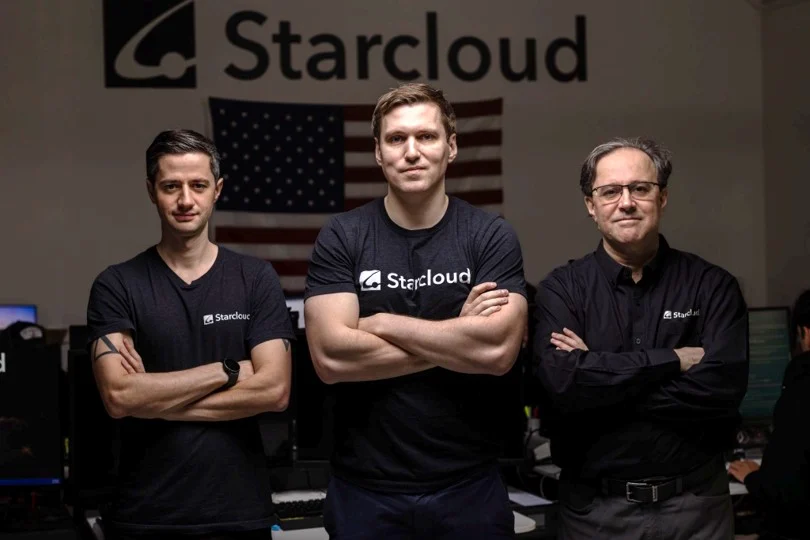
Starcloud, a burgeoning startup at the forefront of developing satellites capable of performing advanced AI inference in orbit, has announced a substantial $250 million extension to its Series A funding round, originally closed in March at $170 million. This latest capital injection elevates the company’s valuation to an impressive $2.3 billion, underscoring significant investor confidence in its ambitious vision to establish an orbital data center network. The total Series A funding now stands at $420 million, marking a pivotal moment for the nascent space compute sector.
Deep Dive into Orbital AI Inference: A New Frontier
Starcloud’s core mission revolves around deploying "data centers in space," a concept that promises to revolutionize how AI processing is conducted. Unlike traditional terrestrial data centers, orbital AI inference leverages the unique advantages of space-based infrastructure. By bringing computational power closer to data sources, particularly from Earth observation satellites, Starcloud aims to dramatically reduce latency and bandwidth requirements for processing vast amounts of spatial data. This proximity is crucial for real-time analytics, rapid decision-making, and applications where immediate insights from satellite imagery or remote sensors are paramount.
The potential applications are far-reaching, spanning critical sectors from defense and intelligence to environmental monitoring, precision agriculture, and disaster response. Government agencies, identified as key early customers, could benefit immensely from on-orbit processing of sensitive data, enhancing national security and operational efficiency without the need to downlink raw data to Earth. For commercial entities, this could translate into faster insights for optimizing supply chains, monitoring infrastructure, or even powering advanced autonomous systems. The ability to perform AI inference directly in orbit also offers enhanced data sovereignty and security, reducing vulnerabilities associated with terrestrial data transfer and storage. This paradigm shift could unlock new possibilities for AI-driven solutions that are currently constrained by the physics of data transmission over long distances.
Starcloud’s Financial Ascent: The $420 Million Series A and $2.3 Billion Valuation
The $250 million extension, led by Manhattan West Ventures, signifies a robust endorsement from the investment community. Key participants in this expanded round include industry giants Nvidia and Cisco, alongside prominent venture capital firms such as Benchmark, EQT, Soma, NFX, 776, Cedar Capital, Goanna Capital, and Standard Capital. A source familiar with the deal confirmed that Nvidia alone contributed $25 million, highlighting the strategic importance of this collaboration.
This significant capital infusion will primarily be directed towards scaling Starcloud’s manufacturing capabilities and accelerating the development of its most ambitious spacecraft to date, Starcloud-3. This next-generation orbital data center is specifically designed to leverage the immense payload capacity of SpaceX’s forthcoming Starship rocket. Furthermore, CEO Philip Johnston has explicitly stated that a substantial portion of the newly acquired funds will be allocated to proactively secure launch capacity, a critical and increasingly challenging aspect of operating in the rapidly evolving space industry. The total valuation of $2.3 billion places Starcloud firmly among the top-tier private space companies, reflecting investor belief in the long-term viability and transformative potential of space-based AI.
The Looming Launch Capacity Crisis: A Strategic Imperative
One of the most pressing challenges for Starcloud, and indeed for many players in the burgeoning New Space economy, is the tightening market for rocket transportation. Philip Johnston articulated this concern to TechCrunch, stating, "We can see what’s coming – we’re going to need to book an enormous amount of launch." Starcloud has already submitted requests to the Federal Communications Commission (FCC) to operate a staggering 88,000 spacecraft, a number that underscores the monumental scale of its planned constellation and the corresponding demand for launch services.
The current landscape is dominated by SpaceX, whose Falcon 9 rocket has been the workhorse of the industry for over a decade. However, SpaceX is planning to phase out the Falcon 9 program by 2028, transitioning its focus to the much larger, fully reusable Starship vehicle. While Starship promises unprecedented payload capacity and significantly lower launch costs once operational and routinely reusable, its development and operational readiness have faced delays. Elon Musk recently announced a delay in the attempt to catch a returning Starship rocket, pushing the first re-flight to late 2026 or early 2027. This transition period creates considerable uncertainty and a bottleneck for satellite operators like Starcloud.
Johnston emphasized the urgency of securing future launch slots, noting, "As soon as we can, we want to get under contract with things like Starship. One of the biggest costs is now on securing your launch capacity… launch is pretty constrained right now because [SpaceX’s] Falcon 9 program is scheduled to end in 2028." This sentiment is echoed across the industry, where launch costs were already identified as one of the most brutal economic challenges for orbital data center startups. The scarcity of launch opportunities has become so acute that one unnamed startup has reportedly decided to build its own rockets to ensure access to space.
Adding to the complexity, competing heavy-lift rockets, such as Blue Origin’s New Glenn and United Launch Alliance’s (ULA) Vulcan, are not yet flying regularly. Similarly, new medium-lift vehicles like Rocket Lab’s Neutron are still in development and not yet on the launch pad. This lack of readily available alternatives intensifies the pressure on companies to secure slots on proven vehicles or take a gamble on those still in development. The geopolitical landscape and increasing demand from government and commercial sectors further exacerbate the supply-demand imbalance, making launch capacity a strategic asset. Starcloud’s proactive fundraising to secure these contracts is a testament to the critical nature of this issue for its long-term operational success.
Pioneering Hardware: Starcloud-2, Starcloud-3, and the Nvidia Partnership
Despite the launch market challenges, Starcloud remains focused on its immediate and long-term hardware deployment plans. The company is preparing to launch two of its new generation 8 kW compute satellites, dubbed Starcloud-2, on rideshare flights in 2027. These satellites are designed to perform orbital inference tasks for a diverse range of customers, including U.S. government agencies, demonstrating the immediate utility and market readiness of its technology. To support future missions and mitigate reliance on a single provider, Starcloud is actively considering purchasing a dedicated Falcon 9 launch and exploring contracts with other providers.
The ultimate vision for Starcloud, however, is deeply intertwined with the success and reusability of SpaceX’s Starship. The Starcloud-3 spacecraft, intended to be Starcloud’s largest orbital data center, is specifically designed to capitalize on Starship’s unparalleled payload capacity and the promise of significantly reduced launch costs through rapid reusability. Philip Johnston maintains strong confidence in SpaceX’s ability to achieve these reusability goals, despite the ongoing development challenges. "Obviously if we can’t book any SpaceX launch capacity in 2029, that will be challenging for us," Johnston acknowledged, highlighting the critical dependency.
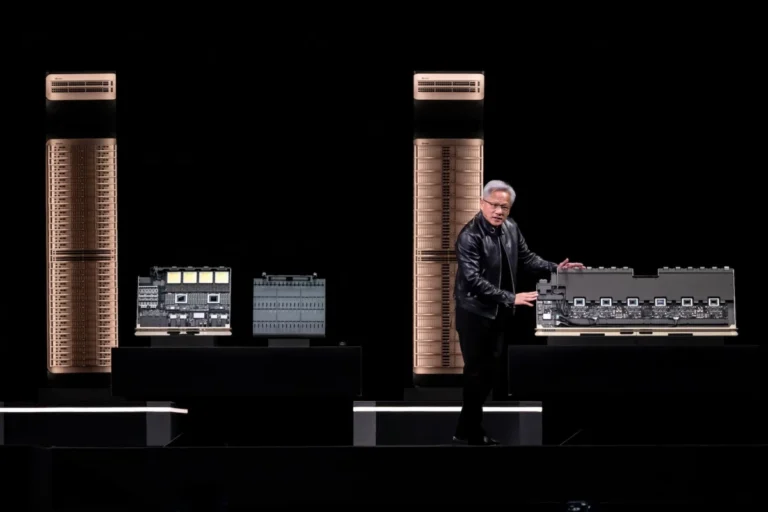
A cornerstone of Starcloud’s technological edge is its groundbreaking partnership with Nvidia. Starcloud currently holds the unique distinction of being the only known company operating a Nvidia H100 terrestrial data center GPU in orbit and the first to successfully train an AI model using it. This achievement is significant, as most other space GPUs are typically designed for edge processing, with lower power and computational capabilities. The insights gleaned from operating a high-performance H100 in the harsh space environment are invaluable. Starcloud is actively sharing these learnings with Nvidia, directly contributing to the development of Nvidia’s first purpose-built GPU for space, tentatively named the Vera Rubin Space-1 chip.
Johnston elaborated on the strategic importance of Nvidia’s investment: "The reason they’ve chosen to do this investment now is because of all of this data that we got from Starcloud One. They, more than any other VC, did way more technical duty on this than anybody else." This collaborative development underscores a deep technical partnership rather than just a financial investment. Starcloud engineers are working closely with Nvidia, tracking critical design considerations for the space-ready chip, including the intricate relationship between the chip’s running temperature and the size of the radiators required to dissipate heat, the optimal placement of radiation shielding to protect sensitive electronics from cosmic rays, and the extensive ruggedizing necessary for the chips to withstand the extreme vibrations and g-forces of a rocket launch. While the Vera Rubin Space-1 chip is still in development, Starcloud aims to fly it into orbit by late 2028, further solidifying its position at the forefront of orbital AI computation.
Manufacturing & Operational Expansion: Building the Future in Woodinville
To support its ambitious deployment schedule and accelerate the development of its advanced spacecraft, Starcloud is rapidly expanding its operational footprint. The company is currently developing production lines within a sprawling 100,000-square-foot facility located in Woodinville, Washington. This strategic location places Starcloud in close proximity to other major players in the New Space industry, including SpaceX and Amazon, which are also establishing satellite manufacturing operations in the region for their respective communications networks. This concentration of aerospace talent and infrastructure fosters a rich ecosystem for innovation and collaboration.
Starcloud’s team, currently comprising 25 employees, is experiencing rapid growth, reflecting the company’s aggressive expansion plans. The Woodinville facility will be instrumental in enabling Starcloud to manufacture its thousands of satellites efficiently and at scale, a critical prerequisite for building out its proposed 88,000-spacecraft constellation. The ability to rapidly iterate on design, test components, and assemble satellites in-house will be key to meeting its deployment targets and maintaining a competitive edge in the fast-evolving space compute market.
Challenges and Outlook: Navigating the New Space Era
Starcloud’s journey, while marked by significant financial and technological milestones, is not without considerable challenges. The primary hurdle remains the unpredictable and constrained launch market, particularly the successful and rapid operationalization of SpaceX’s Starship. The entire orbital data center thesis heavily relies on Starship’s promised low-cost, high-frequency reusability to make large-scale deployment economically viable. Any significant delays or failures in Starship’s development could have profound implications for Starcloud’s deployment timeline and overall business model.
Beyond launch, technological maturation presents another set of challenges. Developing space-hardened AI hardware, managing power and thermal loads in orbit, and ensuring the longevity and reliability of thousands of satellites in the harsh space environment are complex engineering feats. The collaboration with Nvidia on the Vera Rubin Space-1 chip is a testament to addressing these challenges head-on, but the path to full operationalization of an orbital AI network remains technically demanding.
Despite these hurdles, Starcloud’s recent funding extension and strategic partnerships underscore a powerful belief in the transformative potential of orbital AI. For the broader space industry, Starcloud’s progress signifies a diversification beyond traditional satellite communications and Earth observation, moving towards space as an active compute platform. This shift could unlock unprecedented capabilities for AI applications, creating a new layer of global data infrastructure that is faster, more secure, and more resilient than purely terrestrial alternatives. Starcloud’s trajectory will serve as a crucial bellwether for the viability and impact of this next frontier in artificial intelligence.
About the Author