In a significant move poised to reshape the landscape of AI-powered productivity, Superhuman, a prominent developer of an AI-centric email client and a growing suite of enterprise tools, has announced its acquisition of Fathom, a Y Combinator-backed startup specializing in AI meeting notetakers. This strategic acquisition marks Superhuman’s entry into the competitive realm of automated meeting intelligence, a critical component for delivering on the promise of proactive AI in the workplace. Rather than developing an internal solution from the ground up, Superhuman opted for Fathom’s established technology and user base, signaling a clear "build vs. buy" decision driven by market dynamics and development complexities.
The Strategic Imperative: Proactive AI and Meeting Intelligence
The core vision driving the evolution of AI-powered productivity platforms is the automation of routine and complex tasks, ultimately freeing up human capital for higher-value work. Traditionally, this automation has been reactive, initiated by user prompts or predefined workflows. However, the next frontier in AI productivity lies in its ability to proactively anticipate needs and initiate actions without explicit user commands. For this to materialize, understanding the context, decisions, and action items discussed in meetings is paramount. Meetings, often considered the heartbeat of organizational collaboration, are rich repositories of unstructured data that, when processed by AI, can unlock unprecedented levels of efficiency.
Superhuman’s foray into notetaking is a direct response to this strategic imperative. The company recognizes that to move beyond reactive assistance, its AI must be deeply integrated into the conversation layer of business operations. By acquiring Fathom, Superhuman gains immediate access to sophisticated technology capable of capturing, transcribing, summarizing, and extracting key insights from live meetings. This capability is not merely about digitizing notes; it’s about creating a dynamic, real-time understanding of ongoing work, enabling Superhuman’s AI to suggest next steps, update relevant databases, draft communications, and even initiate workflows autonomously.
Fathom’s Journey: From Y Combinator to Acquisition
Founded in 2020, Fathom quickly established itself as a significant player in the burgeoning AI meeting notetaker market. The company successfully navigated the competitive startup landscape, securing over $30 million in funding from a diverse group of investors. PitchBook data from 2024 valued Fathom at $94 million, underscoring its rapid growth and perceived market potential. Its investor roster included notable entities such as Zoom Apps Fund, Telescope Partners, BoxOne Ventures, and Maven Ventures, reflecting broad confidence in its technology and business model. The company also attracted individual high-profile investors, including Reddit CEO Steve Huffman, former Twitch CEO Emmett Shear, and Cruise co-founder Kyle Vogt, further validating its innovative approach.
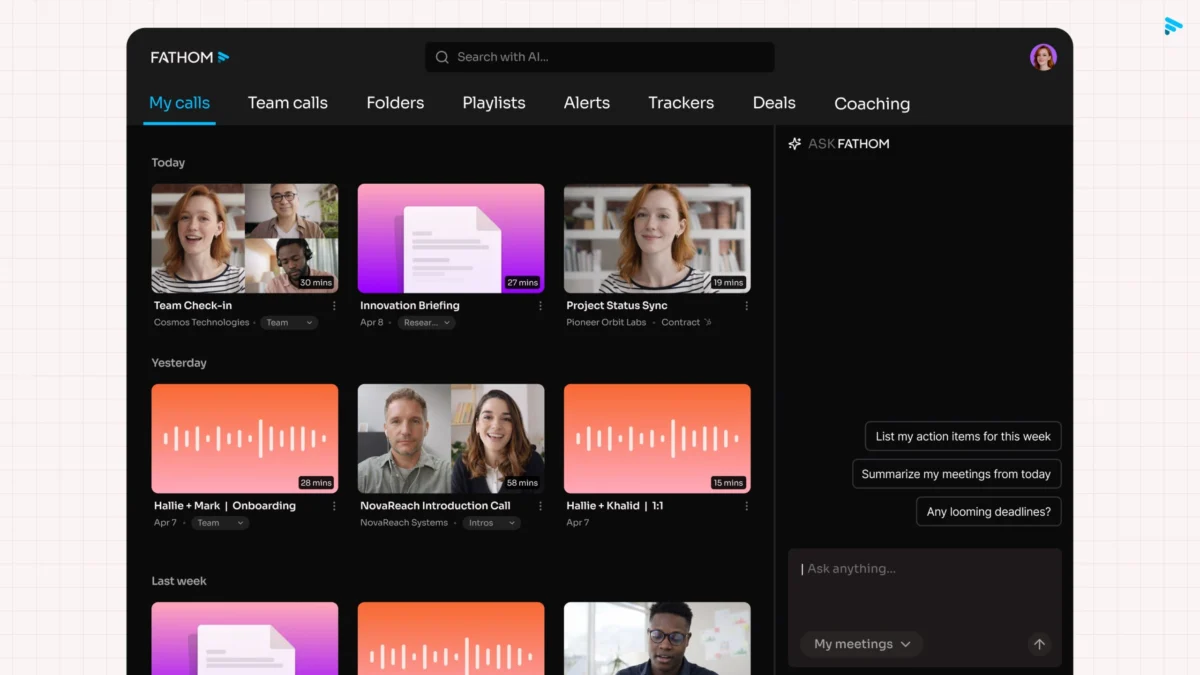
Fathom’s success was largely attributed to its user-centric product strategy, which featured a generous free plan. This accessibility allowed the platform to amass an impressive user base, boasting over 400,000 monthly active users (MAU) and facilitating the recording of over 1 million meetings since its inception. This substantial adoption demonstrated the clear market demand for intelligent meeting assistance and Fathom’s ability to deliver a valuable solution. Its technology provided real-time transcription, automated summaries, and the ability to highlight key moments, transforming the often-tedious task of meeting documentation into an efficient, automated process.
The Build vs. Buy Dilemma: Superhuman’s Realization
The decision to acquire Fathom was not made lightly. Superhuman, known for its rapid development cycles and innovative product launches, initially explored building an internal notetaker solution. TechCrunch reported that Superhuman had tested an internally developed notetaker with select users earlier this year. However, this internal development process brought to light the significant complexities involved in creating a truly robust and performant meeting intelligence platform.
Shishir Mehrotra, Superhuman’s CEO, openly acknowledged these challenges. "We’ve been working internally on this area for a while as well. I think it greatly increased our confidence in the demand in this category. It also becomes very clear how deep the products in this category are and how much you need to build," Mehrotra told TechCrunch. He elaborated on the deceptively simple appearance of these tools, stating, "A lot of these products make the job feel really easy, but it’s actually quite tricky to do a great job in all parts [of meeting recording]."
The intricacies Mehrotra alluded to encompass a wide range of technical hurdles: achieving high accuracy in real-time transcription across diverse accents and audio qualities, robust speaker identification, sophisticated natural language processing for summarization and action item extraction, seamless integration with various video conferencing platforms (Zoom, Google Meet, Microsoft Teams), stringent data privacy and security protocols, and the ability to handle large volumes of concurrent meetings. Recognizing Fathom’s established expertise and mature product in these areas, Superhuman determined that an acquisition offered a faster, more efficient path to integrating this critical functionality into its expanding ecosystem. Mehrotra expressed particular admiration for the "technical intricacies built by the Fathom team," hinting at advanced capabilities that align with Superhuman’s high standards for product excellence, including the potential for "surfacing meeting context in real time."
A Crowded Arena: The Intense Competition in AI Notetaking
The market for AI meeting notetakers and intelligence platforms is characterized by intense competition, with numerous startups vying for market share. Companies like Granola, Read AI, and new entrant Wispr have collectively raised hundreds of millions of dollars to fuel their growth and innovation. Granola, for instance, recently secured $125 million, pushing its valuation to an impressive $1.5 billion as it expands beyond basic notetaking into broader enterprise AI applications. Read AI has also raised substantial funding, reportedly $50 million, to integrate its bot with platforms like Slack and email, demonstrating the trend towards ecosystem integration.
This highly competitive environment exerts significant pressure on venture-backed notetakers. Despite achieving healthy customer bases or impressive revenue run rates, the market demands more than just accurate transcription and summarization. To sustain growth and justify valuations, these platforms are increasingly expected to evolve into comprehensive meeting intelligence solutions, offering features such as:
- Advanced Action Item Management: Tracking tasks, assigning ownership, and setting deadlines directly from meeting discussions.
- CRM Integration: Automatically updating customer records with meeting details, sentiment analysis, and follow-up actions.
- Business Intelligence: Extracting trends, identifying common objections, or recognizing key themes across multiple meetings.
- Proactive Suggestions: Offering relevant documents, past meeting notes, or contact information based on the live conversation.
- Custom Workflows: Allowing users to define specific actions to be triggered post-meeting, such as creating project tickets or sending automated follow-up emails.
This evolving market landscape likely played a role in Fathom’s decision to be acquired. While Fathom had built a robust product, the resources and distribution required to compete effectively and expand into these broader enterprise AI functionalities are immense. Richard White, Fathom’s CEO, highlighted Superhuman’s "massive reach" and its extensive user base, estimated at 40 million, as a pivotal factor. "I have always thought about M&A in terms of speed of building a product that everyone uses, and a part of that comes down to distribution," White stated. He added, "If we were to operate Fathom as a stand-alone company, we would have to build a lot of things that are already in the Superhuman platform." This indicates a recognition that joining forces with a larger platform like Superhuman provides immediate access to a vast user base and a ready-made infrastructure, accelerating product adoption and reducing redundant development efforts.
Superhuman’s Expanding Ecosystem: A Unified AI Platform
The acquisition of Fathom fits seamlessly into Superhuman’s broader strategy of building a comprehensive, AI-first productivity suite. Superhuman has been steadily expanding its platform beyond its acclaimed email client. Its current offerings include a sophisticated docs application, an integrated calendar, a database solution, and a recently launched AI agent builder platform. With a meeting notetaker now at its core, Superhuman is poised to create a truly unified and intelligent workspace.
The synergies are profound and transformative. A meeting notetaker, integrated into Superhuman’s ecosystem, can serve as a central data hub, enabling a cascade of automated actions and insights:
- Automated Email Drafting: Post-meeting summaries and action items can be instantly converted into draft emails for attendees or relevant stakeholders, complete with pre-filled details and follow-up tasks.
- Dynamic Data Updates: Decisions made during meetings can automatically update entries in Superhuman’s database solution or connected CRM systems, ensuring data accuracy and eliminating manual entry.
- Streamlined Scheduling: Follow-up meetings or task reminders can be automatically scheduled in the calendar, reducing the friction of post-meeting coordination.
- Empowered AI Agents: The newly launched AI agent builder platform can leverage rich meeting data to create highly specialized agents. These agents could proactively extract insights, generate detailed reports from accumulated meeting notes, monitor project progress based on commitments made, or even suggest strategic shifts based on recurring themes identified across multiple discussions.
- Real-time Contextual Assistance: During a meeting, Superhuman’s AI could potentially surface relevant documents, past communications, or related projects based on the live discussion, providing participants with immediate, context-aware information.
This vision positions Superhuman not just as a collection of productivity tools, but as an intelligent operating system for professional work, where AI acts as a central orchestrator, proactively managing information flow and automating complex workflows across different applications.
Implications for Users and the Market
For Fathom’s existing 400,000 monthly active users, the acquisition by Superhuman promises enhanced integration and a potentially richer feature set within a broader productivity ecosystem. While immediate changes to Fathom’s generous free plan remain to be seen, the integration into Superhuman’s premium-focused platform suggests a potential evolution in its offering. The scale of Superhuman’s platform, with its 40 million user base, offers Fathom’s technology unprecedented reach, potentially solidifying its position as a leading AI notetaker.
From a market perspective, this acquisition is likely to signal further consolidation in the AI productivity space. As the demand for comprehensive, AI-driven solutions grows, smaller, specialized tools will increasingly seek integration with larger platforms to ensure long-term viability and expanded distribution. This trend underscores the increasing importance of ecosystem play in the competitive landscape of enterprise software. Superhuman’s move solidifies its position as a significant contender in the race to build the ultimate AI-powered workspace, challenging established players and setting new benchmarks for integrated productivity. The future of work, as envisioned by Superhuman, is one where AI seamlessly supports, anticipates, and automates, making human productivity truly superhuman.
About the Author