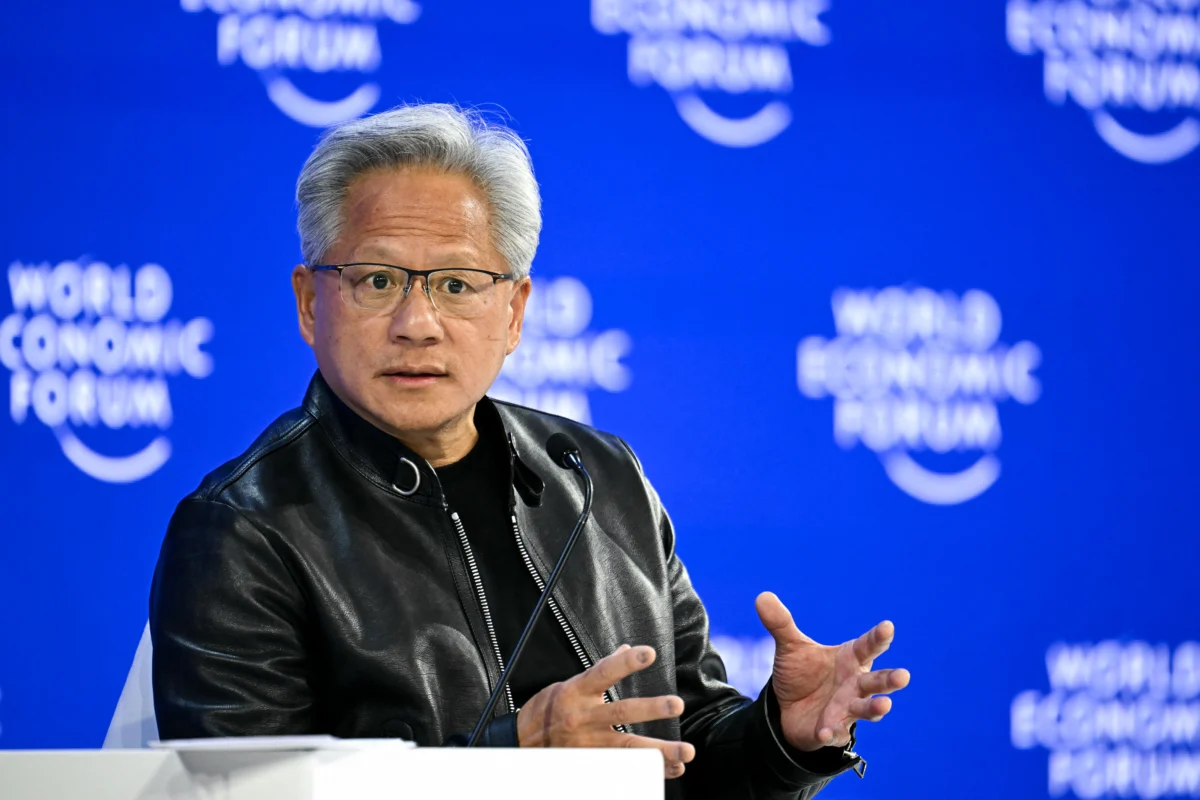
The tech world was abuzz on Monday morning as Nvidia CEO Jensen Huang found himself on stage at the All-In Summit in Los Angeles, engaged in a discussion about the future of artificial intelligence. The unexpected interruption came not from a technical glitch or a disruptive audience member, but from a phone call that Huang could not ignore – it was from former President Donald Trump. The surreal moment, captured by attendees and immediately circulating on social media, highlighted a convergence of powerful figures from the realms of technology, venture capital, and politics.
Huang, visibly surprised but seemingly unfazed, informed his audience that he was receiving a call from the former President. Referencing the hosts of the All-In podcast – venture capitalists Chamath Palihapitiya, Jason Calacanis, David Friedberg, and David Sacks, who also hold advisory roles within political circles – Huang described the group as "the besties." This casual remark underscored the informal nature of the summit, a gathering known for candid discussions among influential figures in the tech and investment communities.
In a move that undoubtedly sent ripples through public relations departments across Silicon Valley, Huang opted to put President Trump on speakerphone, allowing the summit’s attendees to listen in on the conversation. This decision, whether strategic or spontaneous, amplified the already considerable attention on the event and brought the intersection of AI policy and political discourse into sharp relief.
President Trump, upon hearing Huang’s explanation, offered a lighthearted jab at the tech titan’s perceived technological prowess. "The great thing about life is Jensen can develop the most complex computer chip in the world… but he can’t figure out how to put you on speaker," Trump quipped. While Huang may have been seeking assistance with speakerphone functionality, his ultimate goal was to project the call for the benefit of the assembled audience, demonstrating a willingness to engage directly with the former President on a public platform.
The conversation between Huang and Trump took place against the backdrop of a significant debate within the AI community regarding the pace of technological advancement. Onstage, Huang and the All-In hosts had been discussing a call to action by Anthropic CEO Dario Amodei. Amodei, in a widely circulated post, advocated for a deliberate slowing of the pace at which AI capabilities are improved, a sentiment echoed by prominent figures like Elon Musk and Sam Altman, CEOs of SpaceX and OpenAI, respectively. Huang’s own views on this matter have been more divergent, suggesting a different perspective on the urgency and direction of AI development.
President Trump, when brought into the discussion, expressed a strong opinion on the calls to slow down AI development, framing it as a potentially detrimental move for American interests. "They’re just playing right in the hands of a lot of people that don’t want to see it happen," Trump stated, his voice resonating through the speaker. He pointed to potential adversaries, including "political people" and specifically named China, as beneficiaries of such a slowdown. He unequivocally declared, "And we’re not going to let that happen. It’s a hoax."
Huang’s response was swift and affirmative, aligning himself with the former President’s stance. "You’re right. We’re not going to let that happen, sir," Huang replied, a statement that was met with applause from the audience, indicating a significant segment of attendees who resonated with this pro-development perspective.
The Broader Context of AI Development and National Security Concerns
The dialogue on stage touched upon a more profound and increasingly debated aspect of AI: its potential impact on national security and economic competitiveness. President Trump and his allies, including figures like Y Combinator CEO Garry Tan, have previously articulated a view that opposition to large-scale data center construction, a critical component of AI infrastructure, is part of a coordinated international effort to undermine American economic growth. This perspective often frames environmental and community concerns as orchestrated "psyops" designed to stifle innovation.
However, this interpretation contrasts sharply with data reflecting public sentiment. Recent Gallup polling consistently demonstrates significant public apprehension regarding the proliferation of data centers. For instance, a substantial majority of Americans, often cited as seven in 10, express opposition to the construction of data centers in their immediate vicinities. The primary drivers of this concern are multifaceted. Over 50% of respondents in various surveys cite the detrimental effects of data centers on vital environmental resources, including water consumption and energy demands. Furthermore, approximately 20% of the public expresses concerns about the potential for increased living costs and the overall impact on their quality of life, factors that can arise from rapid industrial development in residential areas.
This juxtaposition of public concern and the "national security" framing of AI development reveals a complex policy landscape. The calls for caution in AI development, exemplified by Amodei’s proposal, are often rooted in genuine concerns about job displacement, the potential for misuse of advanced AI systems, and the ethical implications of unchecked technological progress. Conversely, figures like Trump and some in the tech industry view any attempt to regulate or slow down AI progress as a direct threat to America’s global standing and economic prosperity, particularly in the face of perceived competition from nations like China.
Trump’s Reassurance and the Future of AI Leadership
President Trump’s remarks to Huang conveyed a clear message of support for aggressive AI advancement. "We have to be a little bit careful… We have to do things and we have to do them prudently, but that doesn’t mean we’re going to stop an industry," Trump stated, acknowledging the need for some level of consideration while emphasizing the imperative to maintain forward momentum. He further elaborated, "So I’m with you all the way. I didn’t even know how you felt about it. I just hoped you felt the same way as me. We’re going to lead." This statement positioned Trump as a staunch advocate for unfettered AI development and underscored his belief that America must maintain its leading edge in this critical technological frontier.
The exchange served as a powerful endorsement from a prominent political figure for Nvidia, a company at the forefront of AI hardware development. Huang’s alignment with Trump on this issue, particularly in contrast to other AI leaders, could have significant implications for future policy debates and industry positioning.
Analysis of Implications
The unexpected phone call and subsequent public conversation between Jensen Huang and Donald Trump at the All-In Summit carries several notable implications for the technology sector and the broader political landscape:
-
Political Alignment and Influence: The direct engagement between a leading AI executive and a former President signals a potential deepening of political ties within the tech industry. Trump’s vocal support for rapid AI development, framed as a national imperative, could galvanize support among those who prioritize economic growth and technological dominance. This could translate into political advocacy and lobbying efforts aimed at shaping AI policy in a less regulatory direction.
-
Divergence in AI Governance Discourse: The incident highlights a significant rift in how AI development should be managed. While a segment of the AI community, including figures like Amodei, Musk, and Altman, are advocating for caution and ethical considerations, Huang and Trump represent a counter-narrative emphasizing aggressive progress and competitive advantage. This polarization suggests that future debates on AI governance will be contentious, with competing visions for its development and deployment.
-
Public Perception and Data Center Concerns: The summit’s discussion touched upon the public’s apprehension towards data centers, a crucial element for AI infrastructure. Trump’s dismissal of these concerns as a "hoax" or "psyop" may resonate with some in the tech industry but risks alienating a significant portion of the public that is increasingly aware of the environmental and community impacts of such facilities. The Gallup polling data underscores that public opposition is not merely a fringe issue but a widespread sentiment that policymakers cannot afford to ignore. Addressing these concerns through transparent communication and sustainable practices will be crucial for the long-term acceptance of AI infrastructure.
-
Geopolitical Implications: Trump’s explicit mention of China as a competitor underscores the geopolitical dimensions of the AI race. The perception that slowing AI development in the U.S. would cede ground to adversaries is a powerful motivator for many policymakers and industry leaders. This framing can influence international relations, trade policies, and national security strategies related to artificial intelligence.
-
Nvidia’s Strategic Positioning: For Nvidia, a company heavily invested in the hardware that powers AI, Huang’s public embrace of a pro-development stance, particularly when validated by a figure of Trump’s stature, could be a strategically advantageous move. It positions the company as a champion of American innovation and economic growth in a critical technological field, potentially influencing government contracts and regulatory frameworks in its favor.
The brief but impactful exchange at the All-In Summit served as a microcosm of the larger debates shaping the future of artificial intelligence. It underscored the intertwined nature of technological advancement, economic policy, and political discourse, suggesting that the path forward for AI will be navigated through these complex and often conflicting arenas. The voices of both innovation advocates and those calling for caution will continue to shape how this transformative technology is developed and integrated into society.
About the Author