The rapid evolution of Artificial Intelligence (AI) has shifted discussions from theoretical potential to the pressing realities of deployment. No longer confined to research labs or impressive demonstrations, AI is actively integrating into core business operations, powering autonomous vehicles, and animating robots navigating complex physical environments. This transition inevitably brings critical questions to the forefront: Would organizations confidently entrust an AI agent with access to sensitive company systems? Are businesses prepared to place their employees in autonomous vehicles? Can a robot reliably interpret and respond to an unpredictable physical world? These are no longer speculative inquiries for AI innovators; they represent immediate, tangible challenges where safety and security are not merely features but foundational prerequisites for product viability and widespread adoption.
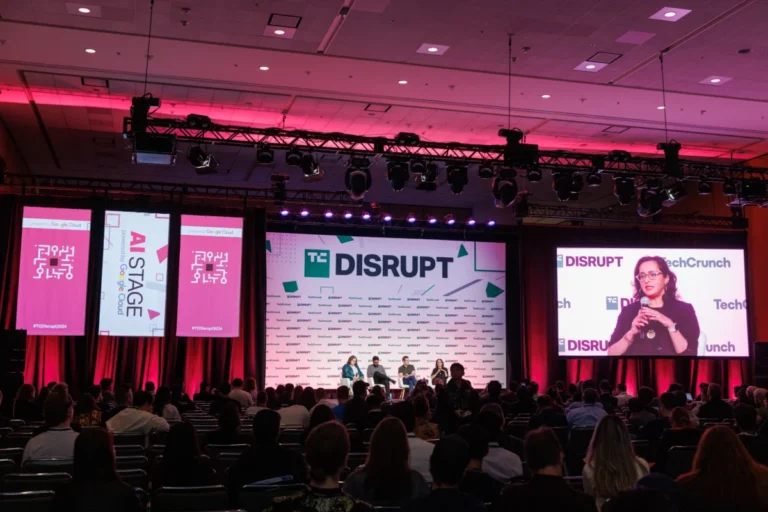
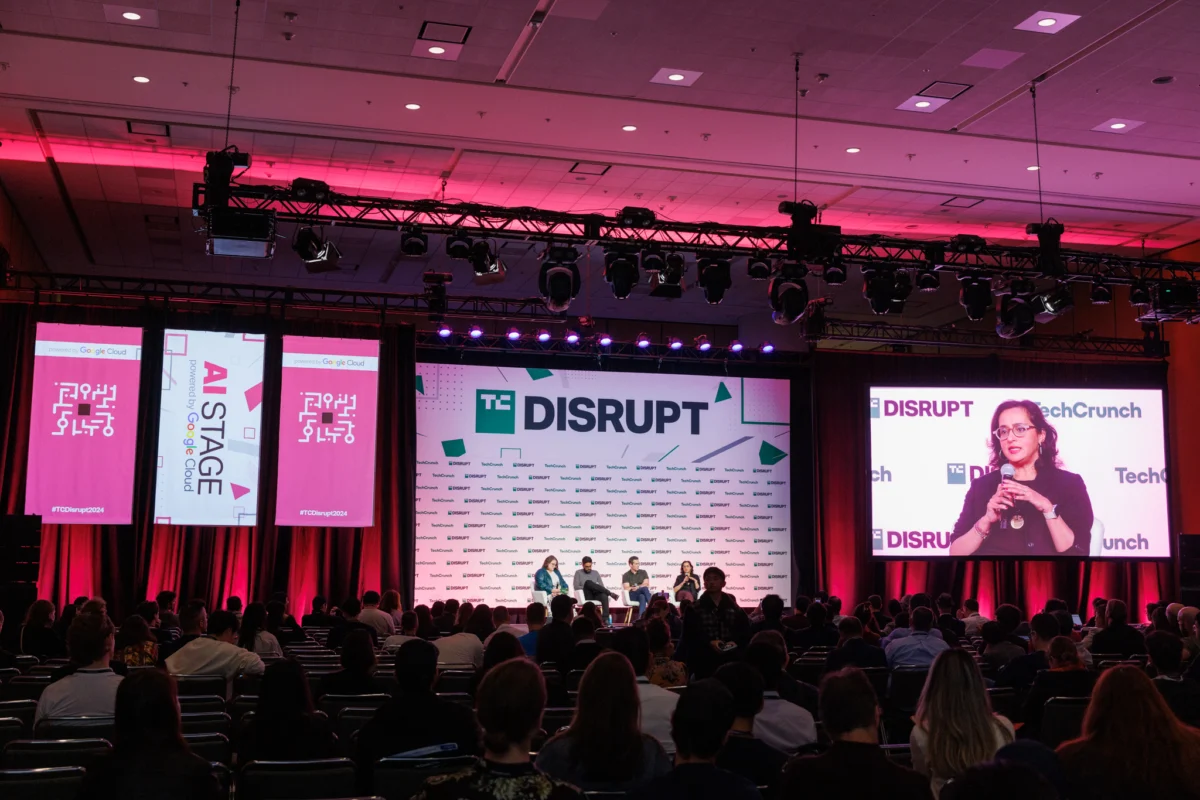
TechCrunch Disrupt 2026, scheduled from October 13-15 at Moscone West in San Francisco, is set to become a focal point for these crucial discussions. The esteemed conference, a long-standing barometer for emerging technologies and startup innovation, will dedicate significant attention to the paramount themes of AI safety and security. Across its specialized AI Stage and Real World AI Stage, five distinct sessions have been curated to directly confront these challenges, offering founders, investors, and industry leaders invaluable insights into building AI systems that can earn and sustain the trust of both individuals and enterprises. With over 200 sessions spanning six industry stages, numerous roundtables, and breakout discussions, Disrupt 2026 anticipates drawing more than 10,000 founders, investors, operators, and tech leaders, alongside showcasing over 300 exhibiting startups. The event serves as a critical nexus for networking, knowledge exchange, and shaping the future trajectory of AI.
The global AI market, valued at approximately USD 150 billion in 2023, is projected to surge at a compound annual growth rate (CAGR) exceeding 37% through 2030, underscoring the urgency of addressing these foundational issues. As AI moves beyond pilots and into production, the implications for security, ethical governance, and reliability become profound. The curated sessions at Disrupt 2026 reflect this imperative, offering deep dives into the complexities of securing AI agents, navigating enterprise-level deployments, fortifying cloud infrastructure against novel AI threats, and ensuring the absolute reliability of AI systems operating in the physical world. For founders building the next generation of AI, understanding and proactively addressing these trust hurdles will be paramount to market success. Early bird registration for Disrupt 2026 offers savings of up to $200, with an additional 50% discount on a second pass, available until September 25 at 11:59 p.m. PT.
Navigating Enterprise AI Deployment: Lessons from Anthropic’s Front Lines
The journey of AI integration within enterprises often presents a paradox: immense potential contrasted with significant deployment hurdles. While many organizations embark on AI pilots with enthusiasm, a considerable number find themselves stalled, failing to translate experimental success into measurable business value. This dichotomy forms the core of the session, "What Anthropic Sees When Enterprises Actually Deploy Claude." Cat de Jong, Head of Applied AI at Anthropic, a leading AI research and deployment company, brings a unique, firsthand perspective to this challenge. Her role involves working directly with enterprises as they endeavor to integrate Anthropic’s AI model, Claude, into critical workflows.

De Jong’s insights will illuminate the crucial distinctions between successful AI deployments and those that remain perpetually in pilot mode. Enterprises frequently encounter obstacles related to data quality, integration complexity, ethical considerations, and a lack of clear strategic alignment. The session will delve into practical strategies for overcoming these hurdles, emphasizing the need for robust governance frameworks, clear performance metrics, and a deep understanding of an organization’s specific operational context. For AI founders aiming to penetrate the enterprise market, de Jong’s experience offers an invaluable blueprint for navigating the intricate landscape of corporate adoption, underscoring that technical prowess alone is insufficient without a clear path to production and demonstrable value. The discussion will likely highlight the importance of modularity, explainability, and the ability to tailor AI solutions to specific industry compliance and regulatory standards.
The Unseen Threat: Addressing the AI Agent Security Problem
The advent of autonomous AI agents, capable of independent action and decision-making within digital environments, introduces an entirely new dimension to cybersecurity. While offering unprecedented efficiencies, these agents also present novel and complex security vulnerabilities that traditional application-level permissions may be ill-equipped to handle. The session, "The Agent Security Problem Nobody Is Talking About," will bring this critical, often overlooked, issue to the forefront of discussion on the AI Stage.
Ric Smith, President of Products and Technology at Okta, a prominent identity and access management provider, and Gavriel Cohen, co-founder and CEO of NanoCo, will lead this vital conversation. They will dissect the architectural decisions and infrastructure-level considerations essential for securing agentic AI. The discussion is expected to cover the limitations of current permission models, which were not designed for systems with autonomous agency, and explore how to establish granular control over what an AI agent can access, execute, and modify within an enterprise’s digital ecosystem. The implications extend beyond data breaches, encompassing potential for manipulation, unauthorized operations, and systemic vulnerabilities if agent access is not meticulously managed. This session is particularly crucial for founders developing AI agents, emphasizing that security must be an inherent component of the product roadmap, not an afterthought. The panelists will likely advocate for a shift towards zero-trust architectures specifically adapted for AI agents, multi-factor authentication for agent actions, and continuous monitoring of agent behavior for anomalous activities.
Securing the AI Enterprise: Navigating the Cloud’s New Complexities
Enterprise adoption of AI is contingent not just on innovative capabilities but also on stringent security, governance, and observability frameworks. The integration of AI products into critical business systems transforms the cloud computing landscape, introducing new vectors of risk and demanding sophisticated defensive strategies. The AI Stage session, "Securing the AI Enterprise: Why the Cloud Just Got a Lot More Complicated," will dissect these evolving complexities.
The panel features leading voices in cybersecurity: Rudy Mitra, VP of Security Services at AWS; Katie Moussouris, CEO of Luta Security and a renowned vulnerability researcher; and cybersecurity veteran Wendy Nather. Together, they will examine the foundational infrastructure required to safeguard enterprises as AI assumes increasingly autonomous roles. Their insights will cover the expanded attack surface presented by AI models, the challenges of ensuring data privacy and compliance within AI workflows, and the necessity of robust audit trails and real-time monitoring to detect and respond to AI-specific threats. For founders developing AI solutions for enterprise clients, this session offers a crucial understanding of the non-negotiable security requirements that dictate market entry and sustained adoption. It underscores that trust in enterprise AI is built upon transparent governance, verifiable security measures, and the ability to demonstrate resilience against sophisticated cyber threats. The discussion will likely touch upon AI supply chain security, adversarial AI attacks, and the imperative for shared responsibility models between AI developers and cloud providers.

When Failure is Not an Option: Building Trust in Physical AI Systems
The deployment of AI in the physical world elevates the stakes considerably. Unlike errors confined to a digital screen, mistakes made by AI in autonomous vehicles, aircraft, industrial robots, or defense systems can have catastrophic real-world consequences. This critical challenge forms the focus of the Real World AI Stage session, "Building AI Systems When Failure Is Not an Option."
This session gathers a distinguished panel of experts from sectors where AI safety is paramount: Nathan Michael, Chief Technology Officer at Shield AI, a leader in autonomous defense systems; Mikell Taylor, Director of Robotics Strategy at General Motors, a pioneer in automotive autonomy; and Raquel Urtasun, founder and CEO of Waabi, an innovator in self-driving technology. These leaders will tackle one of the most formidable questions facing hard tech founders: How can one definitively determine when an autonomous system is sufficiently safe for deployment? The conversation will delve into establishing a robust safety culture, the rigorous methodologies required for testing and validating AI performance in unpredictable environments, and the complexities of navigating evolving regulatory frameworks. It will also explore how companies can cultivate public trust when the tangible risks of failure are so high. This session is indispensable for anyone working on physical AI, emphasizing that a meticulous approach to safety, from design to deployment, is not merely a technical requirement but a moral and business imperative. Topics will likely include formal verification methods, simulation-based testing at scale, human-in-the-loop oversight, and the ethical implications of autonomous decision-making in life-critical applications.
The Robotics Data Dilemma: Paving the Way for a ChatGPT Moment
While large language models have experienced exponential growth fueled by vast datasets, the robotics sector faces a distinct challenge: a "data problem." Unlike the readily available internet-scale data for LLMs or extensive sensor data for self-driving cars, robots require highly specific, real-world interaction data to learn and adapt, which is often difficult, expensive, and time-consuming to collect. This data scarcity represents a significant bottleneck hindering the widespread scaling of physical AI. The Real World AI session, "Robots Are Waiting for Their ChatGPT Moment. Here Is What Is Standing in the Way," will explore this critical impediment.
Les Karpas, Nvidia’s Inception Global Head of Physical AI, will lead the discussion, exploring potential pathways to overcome this data gap. The session will examine how advancements in data pipelines, sophisticated simulation environments, and the development of specialized foundation models for robotics could collectively accelerate the field. Karpas will outline the technical and strategic steps necessary to build, test, and deploy more capable, reliable, and trustworthy robots that can operate effectively in complex, dynamic environments. For founders and engineers in the physical AI domain, this session offers a forward-looking perspective on how robotics can achieve its own "ChatGPT moment" – a breakthrough that democratizes access to robust, adaptable robotic intelligence and earns the public and industrial trust required for broad adoption in the real world. The discussion will likely highlight synthetic data generation, reinforcement learning from simulation, and the potential for transfer learning from large-scale pre-trained models to accelerate robot learning and generalization.
The Imperative of Trust: A Unifying Theme for AI’s Future
The five specialized sessions at TechCrunch Disrupt 2026 coalesce around a single, overarching question that every AI founder must address: Can people truly trust what you are building? While the allure of creating smarter models, more capable agents, or groundbreaking robots is undeniable, the journey from innovation to widespread market adoption is critically dependent on earning and maintaining trust. This involves not only demonstrating technical efficacy but also ensuring robust safety, unwavering security, and consistent reliability.

TechCrunch Disrupt 2026 offers an unparalleled platform for founders to engage with these multifaceted challenges. Beyond the five highlighted sessions, the event features a comprehensive agenda designed to foster collaboration, knowledge sharing, and strategic partnerships. Attendees will have the opportunity to network with thousands of industry peers, connect with potential investors, and explore cutting-edge solutions from exhibiting startups. The collective wisdom shared by thought leaders from companies like Anthropic, Okta, AWS, Shield AI, General Motors, Waabi, and Nvidia underscores the industry-wide recognition that addressing AI safety and security is not merely a regulatory compliance exercise but a fundamental driver of innovation and market growth.
In an era where AI is poised to redefine industries and daily life, the discussions at Disrupt 2026 will be instrumental in shaping a future where intelligent systems are not only powerful but also inherently trustworthy. The ability to build secure, reliable, and ethically sound AI will ultimately determine its acceptance and integration into society. Securing a pass to Disrupt now offers a timely opportunity to gain a competitive edge, learn from the pioneers tackling these challenges, and contribute to the responsible advancement of artificial intelligence. The deadline to save up to $200 on your pass, and avail a 50% discount on a second ticket, is September 25 at 11:59 p.m. PT. This is a crucial opportunity for innovators to immerse themselves in the solutions and strategies that will bridge the gap between breakthrough technology and real-world, trusted adoption.
About the Author