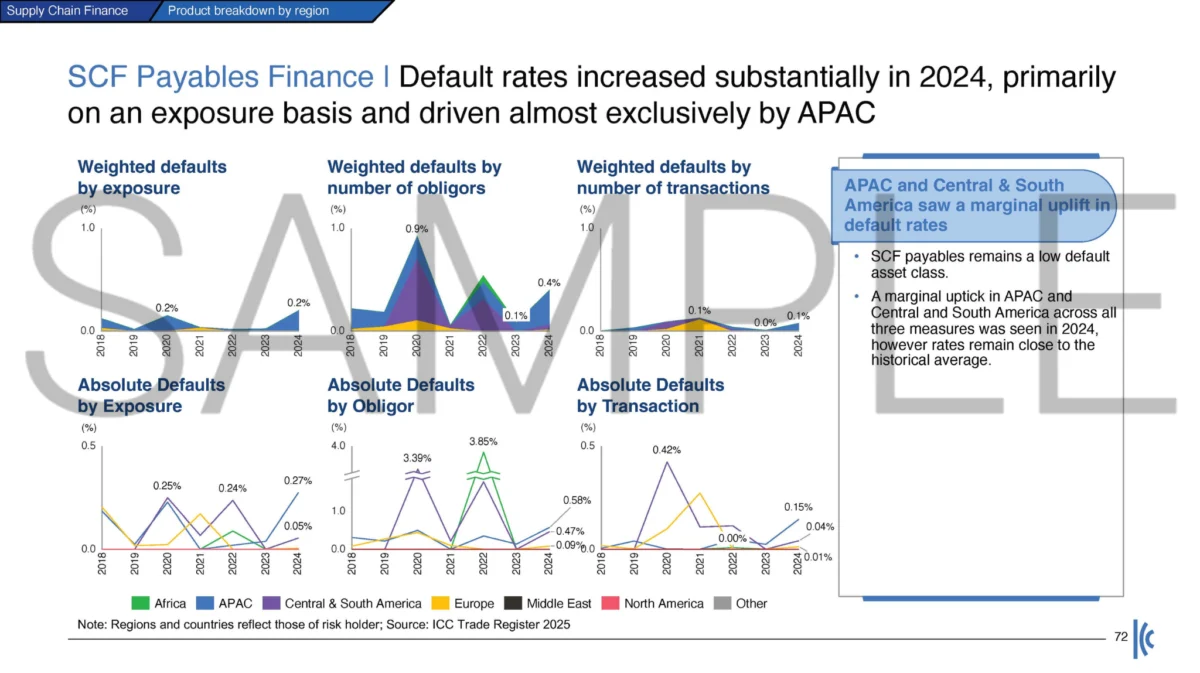
The International Chamber of Commerce (ICC) has announced the upcoming release of the 2026 edition of the ICC Global Trade Intelligence Report, a comprehensive analysis designed to serve as the definitive benchmark for the global trade and supply chain finance industry. Drawing upon more than a decade of aggregated data and encompassing a staggering $25.7 trillion in transactions, this report represents the most robust dataset available to financial institutions, regulators, and non-bank corporations. The 2026 iteration arrives at a critical juncture for the global economy, as trade patterns shift in response to geopolitical realignments, digital transformation, and an intensified focus on Environmental, Social, and Governance (ESG) standards.
The Evolution of Trade Finance Intelligence
The ICC Global Trade Intelligence Report, formerly known as the ICC Trade Register, was established over ten years ago with a primary mission: to provide an objective, data-driven evidence base for the low-risk nature of trade finance. In the aftermath of the 2008 global financial crisis, regulatory frameworks like the Basel Accords sought to impose stricter capital requirements on banks. However, the ICC argued that trade finance—which is generally short-term, self-liquidating, and backed by physical goods—carried a significantly lower risk of default than other forms of corporate lending.
To prove this, the ICC partnered with leading global banks to create a centralized repository of default and loss data. Over the years, this initiative has evolved from a regulatory advocacy tool into a strategic intelligence asset. Today, the report is produced through a high-level strategic partnership between the International Chamber of Commerce, the Boston Consulting Group (BCG), and Global Credit Data (GCD). This collaboration ensures that the data is not only collected with academic rigor but also analyzed through a lens of strategic business application, helping banks optimize their portfolios and identify emerging market opportunities.
Methodology and the Power of Aggregated Data
The integrity of the ICC Global Trade Intelligence Report is rooted in its methodology. The 2026 report is powered by data contributions from 22 of the world’s largest global member banks. These institutions provide granular details on their trade finance portfolios, including transaction types, geographical exposure, and credit performance.
By aggregating this data, the ICC is able to present a macro-level view of the industry that no single bank could achieve on its own. The $25.7 trillion in transactions covered by the report provides a statistically significant sample size that allows for deep dives into specific products, such as Letters of Credit (LCs), Import/Export Loans, and Supply Chain Finance (SCF) programs. The methodology employed by Global Credit Data ensures that the information is standardized across different banking systems, providing a "common language" for risk assessment that is recognized by central banks and international regulators.
Addressing the Global Trade Finance Gap
One of the most pressing issues the 2026 report aims to address is the widening global trade finance gap. According to recent estimates from the Asian Development Bank (ADB), the gap—the difference between requests and approvals for trade finance—has surged to approximately $2.5 trillion. This gap disproportionately affects Small and Medium-sized Enterprises (SMEs) in emerging markets, who often lack the credit history or collateral required by traditional lending models.
The ICC Global Trade Intelligence Report plays a vital role in narrowing this gap by providing empirical evidence of trade finance’s safety. By demonstrating consistently low default rates—often lower than investment-grade corporate bonds—the report encourages banks to expand their lending appetites. Furthermore, the 2026 report is expected to include specific regional data analysis, offering insights into risk performance in high-growth corridors across Southeast Asia, Africa, and Latin America. This localized intelligence allows financial institutions to tailor their risk models to specific markets, potentially unlocking billions of dollars in liquidity for underserved regions.
Strategic Focus Areas for the 2026 Edition
As the global trade landscape becomes increasingly complex, the 2026 report will expand its scope to include several new and critical areas of focus.
Digitalization and the Model Law on Electronic Transferable Records (MLETR)
The transition from paper-based trade to digital ecosystems is no longer a luxury but a necessity. The 2026 report will examine how the adoption of digital standards, such as the UNCITRAL Model Law on Electronic Transferable Records (MLETR), is impacting operational efficiency and risk profiles. Digitalization is expected to reduce the "friction" in trade finance, lowering the cost of compliance and making it easier to detect fraudulent activities through real-time data tracking.
ESG Integration and Sustainable Trade
Sustainability is a primary driver of modern corporate strategy. The 2026 ICC report will provide insights into how banks are integrating ESG metrics into their trade finance decision-making processes. This includes the tracking of "green trade finance" products and the assessment of environmental risks within global supply chains. As regulators in the EU and North America introduce stricter mandatory reporting requirements, the ICC’s data will be instrumental in helping banks benchmark their progress toward net-zero goals.
Geopolitical Shifts and Supply Chain Resilience
The concepts of "nearshoring" and "friendshoring" have moved from theory to practice. The 2026 report will analyze shifts in trade flows as multinational corporations diversify their supply chains away from traditional manufacturing hubs. By tracking default and loss rates across shifting trade corridors, the report will help institutions understand the risk implications of these structural changes in the global economy.
Regulatory Impact and Capital Adequacy
For global financial institutions, the ICC Global Trade Intelligence Report is an essential tool for navigating the complexities of the Basel III and Basel IV frameworks. Regulatory treatment of trade finance often hinges on the "Credit Conversion Factor" (CCF) and "Probability of Default" (PD).
Banks use the ICC report to advocate for risk-weighting that accurately reflects the historical performance of trade assets. Without the data provided by the ICC, trade finance products might be subject to higher capital charges, which would inevitably lead to higher costs for borrowers and a further contraction of available credit. The 2026 report will continue to provide the quantitative backing needed for banks to engage with regulators, ensuring that trade finance remains a viable and affordable tool for global commerce.
Insights for Non-Bank Corporations and Sponsors
While the report is a cornerstone for the banking sector, its utility extends to non-bank corporations, insurers, and technology providers. For corporate treasurers, the report offers a benchmark to compare their own supply chain finance programs against global standards. It provides a clear view of market trends, helping them negotiate better terms with their banking partners and understand the risk landscape of the markets in which they operate.
Furthermore, the ICC has opened sponsorship opportunities for non-bank entities. This allows technology firms and logistics providers to align themselves with the industry’s leading source of intelligence, gaining visibility among the world’s top financial decision-makers. The strategic partnership between ICC, BCG, and GCD ensures that the report remains at the cutting edge of industry thought leadership, making it an attractive platform for organizations looking to shape the future of trade.
Chronology of the ICC Trade Intelligence Initiative
The journey toward the 2026 report has been marked by several key milestones:
- 2009: The ICC Trade Register is launched in response to the liquidity crunch, aiming to protect trade finance from overly restrictive post-crisis regulations.
- 2014: The project expands its database significantly, incorporating data from over 20 global banks and covering millions of transactions.
- 2018: The partnership with Boston Consulting Group is solidified, shifting the focus toward strategic intelligence and market trends.
- 2021: The report introduces more sophisticated ESG and digitalization metrics, reflecting the changing priorities of the global economy during the COVID-19 pandemic.
- 2024-2025: The transition to the "Global Trade Intelligence Report" branding occurs, signaling a move toward a more holistic, data-driven platform available through digital interfaces.
- 2026 (Upcoming): The full report, including the Global Overview and regional deep dives, is set for release, featuring the most comprehensive analysis of post-pandemic trade resilience to date.
Expert Perspectives and Industry Reaction
While official statements regarding the 2026 report are pending the full release, industry experts suggest that the document will be more influential than ever. Analysts from the Boston Consulting Group have noted that in an era of "polycrisis"—where economic, environmental, and geopolitical shocks occur simultaneously—data transparency is the only way to maintain market stability.
Leading trade finance practitioners have emphasized that the ICC report acts as a "stabilizer" for the industry. By providing a factual basis for risk, it prevents knee-jerk reactions from credit committees during times of market volatility. The 2026 report is expected to be met with high demand from risk officers and strategic planners who require validated data to justify their expansion into emerging markets or their investment in new digital trade platforms.
Conclusion: The Path Forward for Global Trade
The ICC Global Trade Intelligence Report 2026 is more than just a collection of statistics; it is a strategic roadmap for the future of international commerce. By bridging the gap between raw data and actionable insight, the report empowers financial institutions to make informed decisions that support global economic growth. As the world moves toward a more digital, sustainable, and fragmented trade environment, the intelligence provided by the ICC, BCG, and Global Credit Data will remain the "seat at the table" where the future of the industry is shaped.
Access to the full 2026 package—including the Global Overview, regional data analysis, and product-specific reports—will be available soon through the ICC’s digital channels. For the 22 member banks and the wider financial community, the report remains the indispensable guide for navigating the risks and opportunities of the $25 trillion global trade finance market.
About the Author