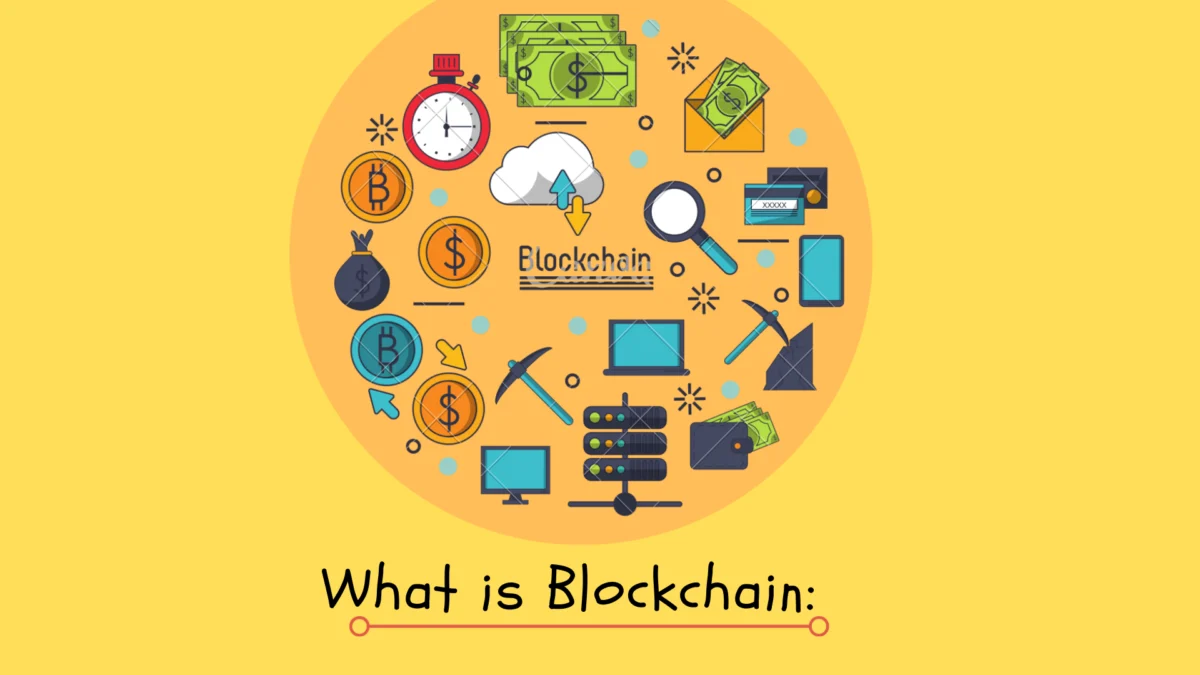
Blockchain technology represents a fundamental shift in how data is stored, verified, and transmitted across the global digital landscape, moving away from centralized authorities toward a distributed model of consensus. While the public consciousness often equates blockchain exclusively with volatile cryptocurrencies like Bitcoin, the underlying architecture—formally known as Distributed Ledger Technology (DLT)—is currently being integrated into the core operations of multi-billion-dollar enterprises, government infrastructures, and global supply chains. At its essence, a blockchain is a shared, immutable ledger that facilitates the process of recording transactions and tracking assets in a business network. Virtually anything of value can be tracked and traded on a blockchain network, reducing risk and cutting costs for all parties involved. This transition from traditional centralized databases to decentralized protocols marks the third major evolution of the internet, often referred to as Web3, where trust is established not by intermediaries such as banks or government agencies, but through cryptographic proofs and peer-to-peer verification.
The Chronological Development of Decentralized Systems
The conceptual framework for blockchain did not emerge in a vacuum but was the result of decades of research into cryptography and data integrity. The timeline of this technology reveals a steady progression toward the solution of the "double-spending" problem—the risk that a digital currency could be spent more than once.
In 1991, mathematicians Stuart Haber and W. Scott Stornetta introduced the first practical solution for time-stamping digital documents so that they could not be backdated or tampered with. Their work utilized a cryptographically secured chain of blocks to store the time-stamped data. By 1998, computer scientist Nick Szabo expanded on these concepts by proposing "Bit Gold," a decentralized digital currency that required users to complete a proof-of-work function with solutions being cryptographically put together. Although Bit Gold was never implemented, it served as a direct precursor to the modern blockchain structure.
The definitive breakthrough occurred in October 2008, amidst the global financial crisis, when an individual or group using the pseudonym Satoshi Nakamoto released a whitepaper titled "Bitcoin: A Peer-to-Peer Electronic Cash System." This document detailed a method of using a peer-to-peer network to generate what was described as "a system for electronic transactions without relying on trust." On January 3, 2009, Nakamoto mined the "genesis block" of the Bitcoin blockchain, which contained a headline from The Times newspaper regarding bank bailouts, signaling the technology’s intended role as an alternative to traditional financial institutions. By 2015, the launch of Ethereum by Vitalik Buterin introduced "smart contracts," which are self-executing contracts with the terms of the agreement directly written into code, expanding blockchain’s utility far beyond simple currency transfers.
Technical Architecture: How Distributed Ledgers Function
To understand the operational mechanics of a blockchain, one must view it as a digital ledger that is duplicated and distributed across an entire network of computer systems. Unlike a standard database, where a central administrator has the authority to alter or delete entries, a blockchain records information in "blocks" that are linked together using cryptography. Each block contains a cryptographic hash of the previous block, a timestamp, and transaction data.
The process begins when a new transaction is initiated. This transaction is bundled with other pending transactions into a "block." This block is then broadcast to a network of nodes (computers) that validate the transaction using a consensus mechanism. The two most prominent mechanisms are Proof of Work (PoW), where miners solve complex mathematical puzzles to secure the network, and Proof of Stake (PoS), where validators are chosen based on the number of tokens they hold. Once the network reaches a consensus that the transactions are valid, the block is added to the existing chain in a permanent and unalterable way.
This structure ensures immutability. If a malicious actor attempts to change a single transaction in an old block, the hash of that block changes. Because every subsequent block contains the hash of the previous one, the entire chain would "break," and the rest of the network would immediately reject the alteration. This creates a "trustless" environment where participants do not need to know or trust each other to conduct secure business.
Decentralization and the Mitigation of Security Risks
The primary advantage of blockchain technology is decentralization, which eliminates the "single point of failure" inherent in traditional data storage. In a centralized system, such as a traditional bank’s server, a successful hack or hardware failure can compromise the entire dataset. In contrast, a blockchain is maintained by thousands of independent nodes across the globe.
If one node experiences a technical failure or is compromised by a cyberattack, the remaining nodes continue to operate and maintain the correct version of the ledger. To successfully "hack" a blockchain, an attacker would theoretically need to gain control of more than 51% of the network’s computing power (in a PoW system) or a majority of the staked assets (in a PoS system). For established networks like Bitcoin or Ethereum, the cost and logistical requirements of such an attack are so high that they are considered practically impossible. This high level of security is why blockchain is increasingly being used for sensitive data, including legal contracts, state identification systems, and medical records.
Industrial Adoption and Real-World Applications
While the financial sector was the first to be disrupted by blockchain, the technology has found critical applications in supply chain management and food safety. Large-scale retailers and manufacturers, including Walmart, Unilever, and Siemens, have begun utilizing blockchain to solve the complex problem of traceability.
One of the most prominent examples is IBM’s Food Trust, a blockchain-based cloud network that offers participating retailers, suppliers, and growers data from across the food ecosystem. Historically, tracing a contaminated food product (such as lettuce infected with E. coli) back to its source could take weeks, as investigators had to manually parse through paper records from multiple different companies. With blockchain, this process is reduced to seconds. By scanning a digital code on a package, a retailer can see the product’s entire journey—from the farm to the processing plant, the distributor, and finally the store shelf. This rapid response capability is essential for preventing widespread outbreaks and reducing the economic impact of product recalls.
Furthermore, in the pharmaceutical industry, companies like Pfizer are exploring blockchain to secure the drug supply chain, ensuring that counterfeit medications do not enter the market. In the realm of intellectual property, artists and musicians are using blockchain to register their work and automate royalty payments through smart contracts, ensuring they are compensated fairly without the need for predatory middle-men.
Supporting Data and Market Projections
The economic impact of blockchain is expanding at an exponential rate. According to market research data, the global blockchain market size was valued at approximately $17.5 billion in 2023 and is projected to grow at a compound annual growth rate (CAGR) of over 30% through 2030. This growth is driven by the increasing demand for transparent and secure transaction records across sectors.
Investment in blockchain startups by venture capital firms reached record highs in the early 2020s, with billions of dollars flowing into decentralized finance (DeFi) and infrastructure projects. Despite the "crypto winter" of 2022, the underlying development of blockchain technology remained steady. Major financial institutions, including JPMorgan Chase and Goldman Sachs, have developed their own internal blockchain platforms to settle cross-border transactions faster and at a lower cost than the traditional SWIFT network.
Challenges and Comparative Analysis
Despite its potential, blockchain technology is not without significant challenges. One of the primary criticisms involves the energy consumption of Proof of Work networks. The Bitcoin network, for instance, requires substantial electricity to power the specialized hardware used for mining. However, the industry has seen a massive shift toward sustainability; the Ethereum network’s transition to Proof of Stake in 2022 reduced its energy consumption by over 99.9%.
Another challenge is scalability. Traditional payment processors like Visa can handle tens of thousands of transactions per second, whereas early blockchains could only handle a fraction of that. This has led to the development of "Layer 2" solutions—protocols built on top of the main blockchain to handle transactions more efficiently—which are currently being tested and deployed to bring blockchain performance up to commercial standards.
In comparing a blockchain to a traditional database, the distinction lies in control and history. A standard database allows for "CRUD" operations (Create, Read, Update, Delete). A blockchain only allows for "Append" and "Read." You cannot delete or change the past on a blockchain, which provides a level of auditability that a traditional database cannot match.
Future Implications and Global Integration
As we look toward the next decade, the integration of blockchain into daily life is expected to become largely invisible to the end-user, much like the protocols that power the internet (TCP/IP). Experts predict that by 2026, blockchain will be a standard component of corporate accounting and auditing. Governments are also exploring Central Bank Digital Currencies (CBDCs), which would use blockchain technology to modernize national currencies and improve the efficiency of monetary policy.
The shift toward decentralization represents more than just a technical upgrade; it is a shift in the power dynamics of the digital age. By returning ownership of data to the individual and removing the need for central gatekeepers, blockchain has the potential to create a more equitable and transparent global economy. While the technology is still in its formative years, the transition from speculative asset to foundational utility is well underway, signaling a future where "trust" is built into the very code of our societal interactions. For CEOs, entrepreneurs, and policymakers, the question is no longer whether to adopt blockchain, but how quickly they can integrate it to remain competitive in an increasingly decentralized world.
About the Author