For years, marketing professionals have been cautioned against fixating on "vanity metrics" – those impressive-sounding numbers like website traffic and search engine rankings that, while seemingly positive, often fail to translate into tangible business outcomes or profitability. This long-standing advice, however, has taken on a new dimension with the advent of artificial intelligence in search. What were once considered gold-standard indicators of success are now being re-evaluated, with traffic and search rank potentially joining the ranks of metrics that require a more nuanced interpretation.
The shift is driven by the rapid integration of AI-powered search functionalities, such as AI Overviews and generative AI chatbots, into mainstream search engines. These technologies are fundamentally altering how users discover information and, consequently, how brands engage with potential customers. While traditional metrics still hold some value, they no longer paint a complete picture of a brand’s performance in the evolving digital landscape.
For over a decade, marketers have relied heavily on metrics like website visits and page-one rankings on Search Engine Results Pages (SERPs) as key performance indicators (KPIs). A surge in traffic and a prominent position in search results typically signaled a healthy marketing strategy. However, the emergence of AI search has introduced a new paradigm. According to a study by Semrush, visitors arriving via AI search convert at an impressive 4.4 times the rate of those coming from standard organic traffic. This data suggests a potential scenario where a brand could experience a 40% reduction in overall traffic yet still achieve success through AI-driven discovery. Conversely, maintaining a top-tier ranking in traditional search might not guarantee visibility across the rapidly expanding array of AI search engines.
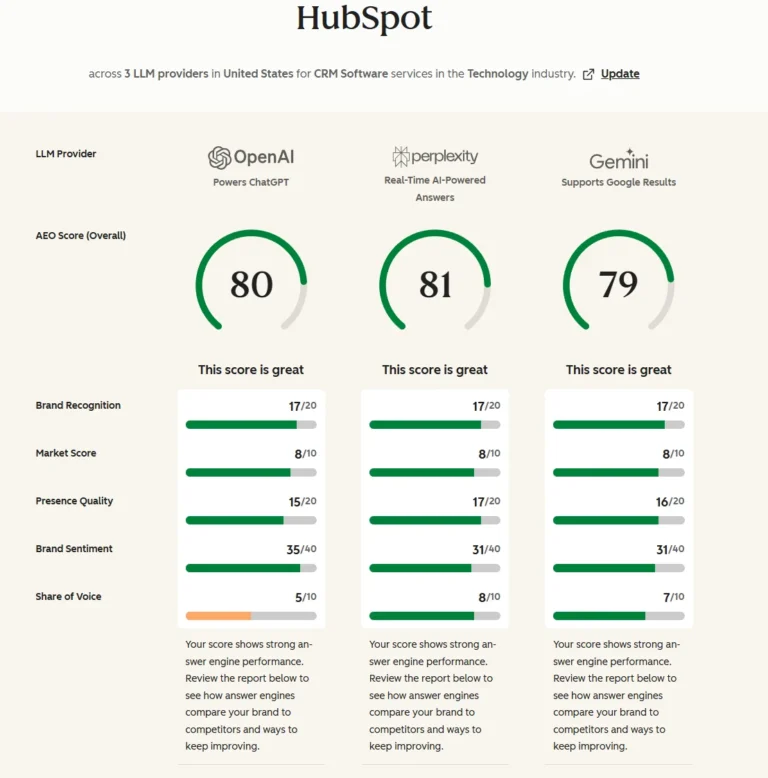
This widening gap underscores the critical need for specialized AI search performance KPIs. These new metrics are designed to measure a brand’s visibility within AI-generated answers, track attribution signals, and, most importantly, assess the direct impact of AI search on conversions and revenue. This guide delves into these essential KPIs, outlining how to measure them and, crucially, how to connect AI search visibility to a company’s sales pipeline and overall profitability. For organizations seeking to understand their current standing, tools like HubSpot’s AI Search Grader offer a swift method to benchmark brand visibility across AI answer engines, providing a foundational understanding before implementing more detailed measurement strategies.
"Vanity Metrics" in AI Search Reporting: What Not to Track
The prevalence of AI Overviews in search results is rapidly increasing. Data from BrightEdge indicates that AI Overviews now appear in approximately 48% of all Google searches, a significant jump from 31% just a year prior. This widespread integration has a tangible impact on user behavior; when AI Overviews are present, organic click-through rates can plummet by as much as 61%, even for the top-ranked traditional search result.
These statistics highlight why the traditional reliance on organic traffic and click-through rates as primary success indicators in search is becoming insufficient. While the allure of high numbers remains, the context has fundamentally changed. Marketers must recognize that simply tracking impressive-sounding metrics without understanding their connection to business objectives can lead to misinterpretations and misallocation of resources. The danger lies in becoming captivated by "vanity metrics" that offer superficial appeal but lack substantive business impact.
Within the realm of AI search, several metrics can easily fall into this category if not carefully considered:
- Raw AI Answer Volume: Simply noting how often a brand’s content appears in AI answers, without context or comparison, can be misleading. A high volume might indicate broad reach but doesn’t necessarily translate to quality engagement or conversions.
- Generic Keyword Rankings in AI: While traditional keyword rankings were once paramount, their relevance in AI search is diminishing. AI engines synthesize information from multiple sources, and a "ranking" in the traditional sense may not apply or accurately reflect visibility.
- Unattributed Website Traffic from AI: If AI-referred traffic is lumped in with general organic or direct traffic without specific segmentation, its unique characteristics and conversion potential can be overlooked.
- Total Number of AI Mentions (Without Context): Similar to raw answer volume, a large number of mentions is meaningless without an understanding of who those mentions are serving, whether they are accurate, and if they are leading to desired actions.
The core issue with these metrics is their lack of context and their disconnection from actual business outcomes. While they might look impressive on a dashboard, they fail to answer the critical questions about how AI search is contributing to lead generation, customer acquisition, and revenue growth. Without this context, marketers risk celebrating surface-level numbers while missing the underlying performance indicators that truly drive business success.
What AI Search Performance KPIs Should You Track?
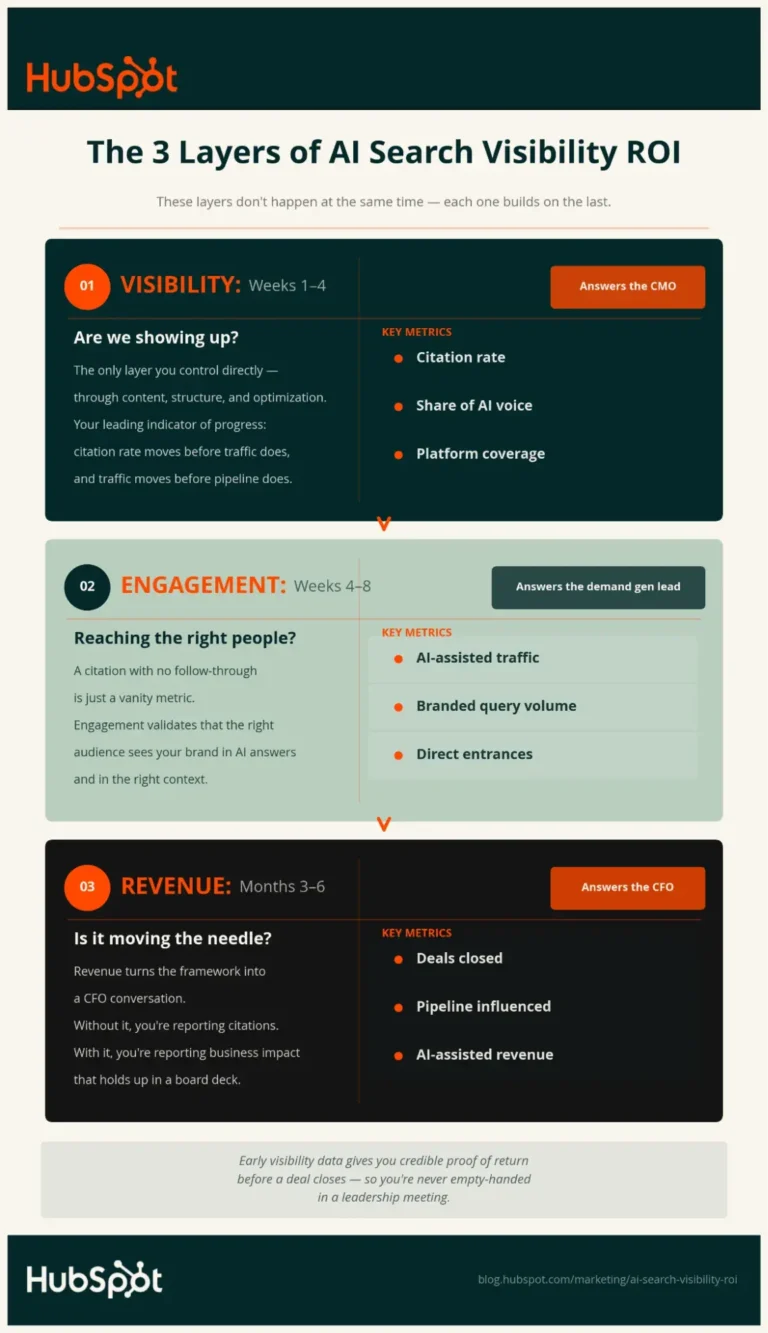
To navigate the complexities of AI search effectively, marketers need to adopt a new set of KPIs that accurately reflect performance in this evolving environment. These AI search performance KPIs can be broadly categorized into three interconnected layers:
- Direct Metrics: These metrics provide a foundational understanding of a brand’s presence and performance directly within AI search results. They offer quantifiable data on visibility and competitive positioning.
- Proxy Metrics: These indicators offer insights into user behavior and engagement that are influenced by AI search, even if direct attribution is challenging. They serve as valuable indicators of intent and potential downstream impact.
- Outcome Metrics: These are the ultimate measures of success, directly linking AI search activities to tangible business results such as leads, pipeline, and revenue.
It’s important to note that not every organization may have immediate access to all direct metrics, especially those related to revenue attribution. However, the goal is to establish a comprehensive reporting framework that integrates all three layers, moving beyond reliance on a single, potentially misleading, data point. For those embarking on this measurement journey, tools like HubSpot’s free AI Search Grader can provide an initial benchmark of AI search visibility and competitive standing, serving as an excellent starting point for developing a more robust measurement practice.
Direct Metrics: Measuring AI Visibility and Engagement
Direct metrics provide the most immediate insights into how a brand is performing within the AI search ecosystem. These are the numbers that directly quantify presence and competitive standing.
1. AI Visibility Rate
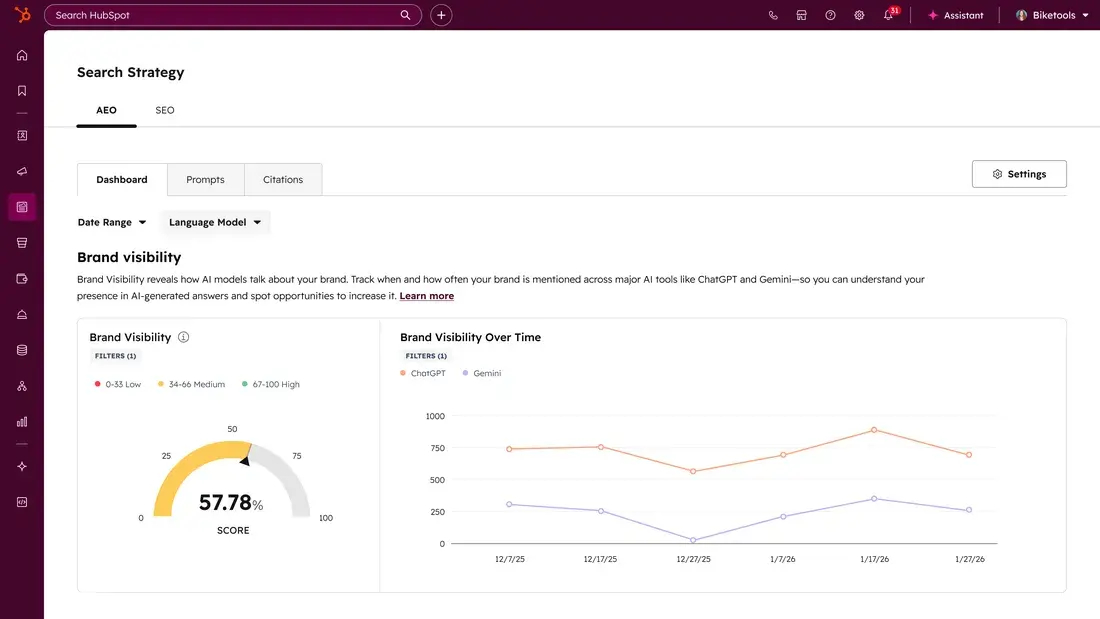
The AI Visibility Rate is a foundational metric that measures how frequently a brand’s content appears in AI-generated answers across a defined set of prompts. In essence, it answers the question: "Are we showing up for the people we want to reach?" This metric is crucial for understanding a brand’s discoverability in AI-driven search environments.
To accurately measure AI Visibility Rate, marketers need to:
- Define a Comprehensive Prompt Set: This involves creating a curated list of questions that accurately reflect how the target audience searches for information related to the brand’s products or services. This set should encompass a variety of search intents, from informational queries to transactional ones.
- Execute Prompts Across AI Platforms: The prompts must be run across the major AI search engines where target audiences are likely to be searching. This includes platforms like ChatGPT, Gemini, and Perplexity, among others. The AI landscape is diversifying, with platforms like Claude and Gemini gaining significant traction. Goodie’s 2026 Wave 2 report indicated a notable shift, with ChatGPT’s share of B2B AI referrals dropping from 89% to 63% in just eight months, while Claude and Gemini captured 18.5% and 10.6% respectively. Therefore, a multi-platform approach is essential.
- Track Brand Appearances: The core of this metric is to count the instances where the brand is cited or mentioned in the AI-generated responses for each prompt.
- Calculate the Rate: The AI Visibility Rate is typically calculated as the percentage of prompts for which the brand was cited, out of the total number of prompts executed.
2. Citation Share
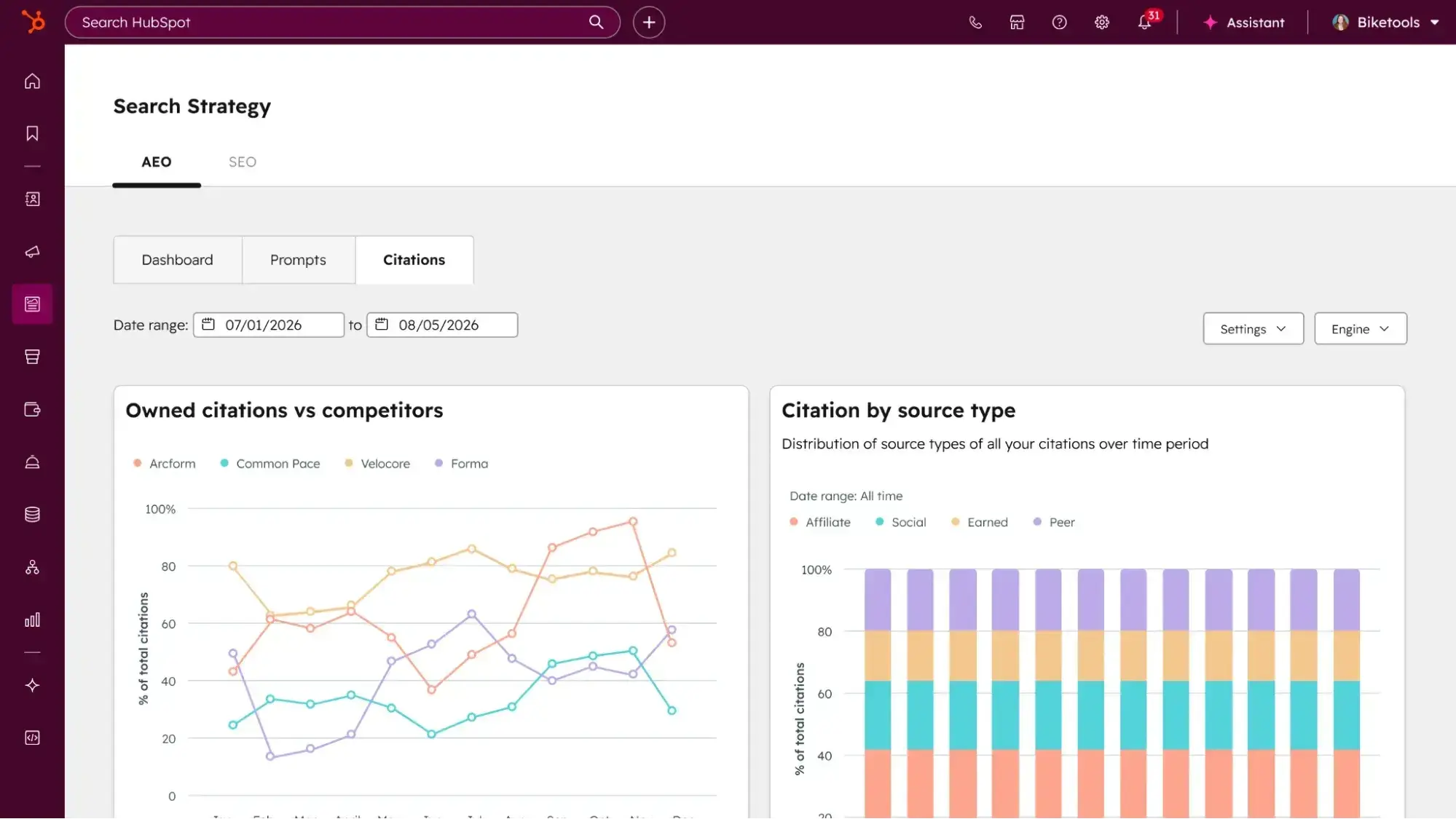
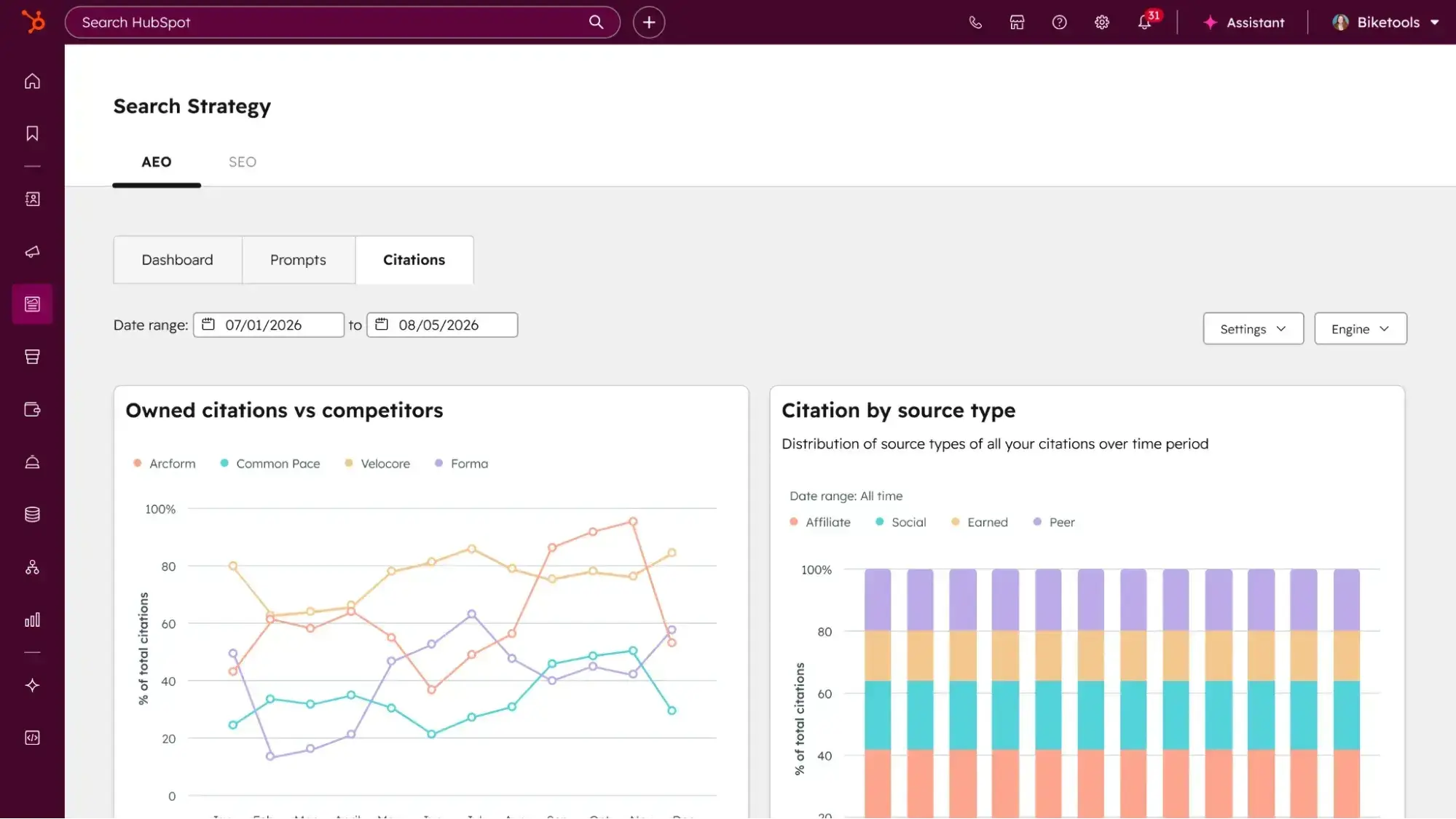
Citation Share takes AI Visibility Rate a step further by contextualizing a brand’s presence relative to its competitors. It answers the question: "How visible are we compared to others in the AI search landscape?" This metric is analogous to "share of voice" in traditional marketing but is specifically applied to AI-generated citations.
Calculating Citation Share involves:
- Identifying Competitors: A clear understanding of the competitive landscape is essential.
- Running the Same Prompt Set for Competitors: To get an accurate share of voice, the same set of prompts used to measure a brand’s visibility must be executed for each identified competitor.
- Comparing Citation Counts: The number of times a brand is cited is then compared to the total number of citations across all competitors for the same prompt set.
- Calculating the Percentage: Citation Share is calculated as (Brand’s Citations / Total Competitor Citations) * 100.
A high Citation Share indicates a dominant presence within AI search results for relevant queries, while a low share suggests an opportunity to improve visibility and outmaneuver competitors.
Answer Accuracy and Sentiment
While visibility is important, the quality of that visibility is paramount. AI engines, despite their sophistication, can sometimes generate inaccurate or misleading information. A brand cited frequently but with incorrect details (e.g., outdated pricing, incorrect feature descriptions, or misaligned use cases) can inadvertently harm its reputation and deter potential customers.
To address this, marketers should track:
- Answer Accuracy: This involves a qualitative assessment of whether the information presented in AI answers about the brand is correct and up-to-date. It requires human review to verify facts, figures, and product details.
- Sentiment Analysis: This measures the overall tone and perception conveyed by the AI’s summary or mention of the brand. Is it positive, neutral, or negative? This can be assessed through manual review or by leveraging sentiment analysis tools on the AI-generated text.
These metrics are crucial for ensuring that AI visibility translates into positive brand perception and avoids potential reputational damage.
Proxy Metrics: Understanding AI-Influenced Behavior
Direct attribution for AI search can be challenging due to the nature of how these AI engines function. Often, they don’t pass clear referral data. Therefore, proxy metrics become essential for inferring the impact of AI on user behavior and potential business outcomes.
3. Branded Search Lift
Branded Search Lift is a powerful proxy metric that measures the increase in direct branded searches on traditional search engines (like Google) that can be attributed to AI discovery. Research from Scrunch highlights that when an AI platform recommends a brand to a user with no prior exposure, that user becomes 182% more likely to search for the brand directly on Google within the following week and 117% more likely to visit the brand’s website directly.
This phenomenon occurs when a user encounters a brand in an AI answer, closes the AI interface, and then independently searches for the brand name on a traditional search engine. Since this subsequent search is not directly linked to the AI interaction via referral data, it typically appears as organic branded search or direct traffic. Tracking this "lift" in branded search volume following periods of increased AI visibility can serve as a strong indicator of AI’s influence on user intent and brand recall.
Measuring Branded Search Lift involves:
- Establishing a Baseline: Monitor branded search volume and direct traffic to the website before and during periods of focused AI search optimization.
- Correlating with AI Visibility: Analyze whether increases in AI visibility and citation share correlate with a subsequent rise in branded search queries and direct website visits.
- Utilizing Search Console Data: Google Search Console provides data on branded search queries, which can be analyzed for trends.
4. AI-Influenced Engagement
When AI search directs traffic to a website, that traffic often exhibits distinct engagement patterns compared to standard organic traffic. Studies, such as those by Similarweb, have shown that visitors referred by AI platforms like ChatGPT tend to spend more time on-site, view more pages per session, and convert at higher rates on transactional sites compared to visitors from traditional Google searches.
Understanding these engagement patterns helps marketers identify which content or messaging resonates most effectively with AI-referred visitors and pinpoint areas for improvement. Key engagement metrics to track for AI-referred traffic segments include:

- Average Session Duration: How long do users stay on the site?
- Pages Per Session: How many pages do they navigate?
- Bounce Rate: What percentage of users leave after viewing only one page?
- Scroll Depth: How far down pages do users scroll?
- Time on Page: How long do they spend on specific content?
Tools like Google Analytics 4 (GA4) are instrumental in segmenting and analyzing this AI-referred traffic, allowing for a deeper understanding of user behavior and content effectiveness.
5. AI-Influenced Conversion Rate
The intent behind AI search queries is often highly developed. By the time an AI engine directs a user to a website, the user has frequently already synthesized options, compared alternatives, and pre-qualified themselves as a potential customer. This pre-qualification means that AI-referred visitors are often more ready to take action.
Ahrefs’ research found that while AI-referred visitors constituted only 0.5% of their website sessions, they were responsible for a remarkable 12.1% of all signups, representing a 23x conversion differential. This data strongly suggests that AI search users arrive with a clear intent to convert.
Measuring AI-Influenced Conversion Rate involves:
- Segmenting Conversions in GA4: Differentiate conversions based on AI traffic sources.
- Comparing Conversion Rates: Analyze the conversion rates of AI-referred sessions against those from organic search and direct traffic.
- Identifying High-Intent Users: Recognize that AI search can effectively deliver users who are further along the buyer’s journey.
Outcome Metrics: Connecting AI Search to Revenue
The ultimate goal of any marketing endeavor is to drive measurable business results. Outcome metrics bridge the gap between AI search visibility and tangible contributions to the bottom line.
6. AI Revenue Contribution (via CRM)
This KPI is the pinnacle of AI search performance measurement, directly linking AI visibility to revenue generated. While analytics tools may struggle with direct attribution, integrating AI discovery signals into a Customer Relationship Management (CRM) system provides a pathway to connect AI influence to closed deals.
Measuring AI Revenue Contribution requires a multi-faceted approach:
- Self-Reported Attribution: Incorporate "How did you first hear about us?" fields in lead forms, surveys, and post-purchase questionnaires, with explicit options for AI engines (e.g., ChatGPT, Gemini, Perplexity). This captures the zero-click discovery path that traditional analytics miss.
- CRM Integration: Utilize CRM systems (like HubSpot’s Smart CRM) to create custom contact properties to log "AI Discovery Source." This allows for tracking contacts from their initial AI-influenced discovery through the entire deal cycle.
- Deal Reporting: Map AI-influenced leads to closed revenue using deal reporting functionalities within marketing hubs. This provides a concrete number that leadership can act upon, demonstrating the financial impact of AI search efforts.
While self-reported attribution is not perfectly precise, it captures a critical signal that other methods miss. By layering this with branded search lift and direct traffic analysis, marketers can build a defensible case for the revenue contribution of AI search.
How to Measure AI Visibility and Citation Share
Establishing a robust system for measuring AI visibility and citation share is a new frontier in marketing. Unlike traditional SEO, where ranking KPIs and traffic benchmarks are well-established, AI search measurement requires building a consistent and repeatable tracking framework.
1. Establish Your Prompt Set for Visibility Tracking
The foundation of AI visibility measurement is a well-defined prompt set. This is a curated collection of questions that accurately represent how your target audience interacts with AI search engines. A comprehensive prompt set should include approximately 30-50 prompts categorized into three key areas:
- Broad Informational Queries: These are general questions related to industry topics or broad product categories.
- Specific Product/Service Queries: These are more targeted questions about your offerings or those of your competitors.
- Transactional Queries: These prompts reflect user intent to make a purchase or take a specific action.
2. Input Prompts into Your AI Visibility Tool
Once the prompt set is established, it can be fed into an AI visibility tracking tool. While manual execution across platforms like ChatGPT, Gemini, and Perplexity is possible, specialized tools like HubSpot’s AI Search Grader automate this process, updating citations daily.
The importance of tracking across multiple platforms cannot be overstated. The AI search landscape is dynamic, with user preferences shifting and new engines gaining prominence. Relying solely on one platform, such as ChatGPT, would provide an incomplete picture. Marketers must monitor their presence on all major AI surfaces, including:
- ChatGPT: A leading conversational AI model.
- Gemini: Google’s advanced AI model.
- Perplexity AI: An AI-powered answer engine.
- Microsoft Copilot: Integrated into Microsoft products.
- Claude: Developed by Anthropic.
Understanding the nuances of retrieval logic, citation behavior, and user intent across these platforms is crucial for a comprehensive AI search strategy.
3. Evaluate and Document Findings
After running the prompts, a thorough evaluation and documentation of the findings are essential. This involves:
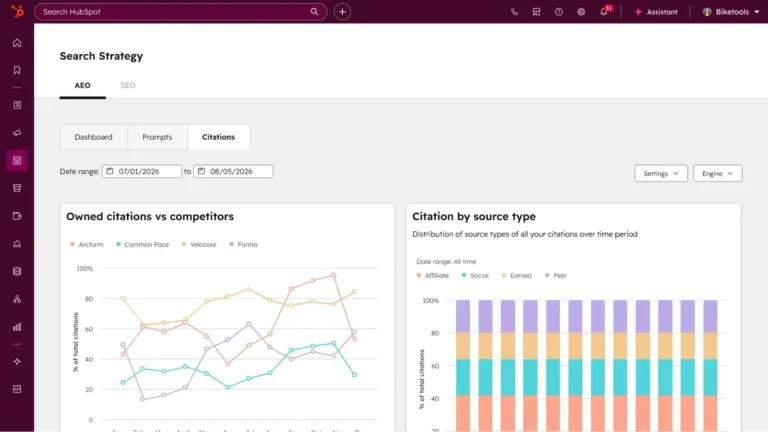
- Tracking Citation Changes: Monitor whether a brand’s citations are increasing or decreasing over time, and compare these trends with those of competitors.
- Recording Key Data Points: Document the total number of prompts executed, the average visibility rate, and the total number of responses analyzed.
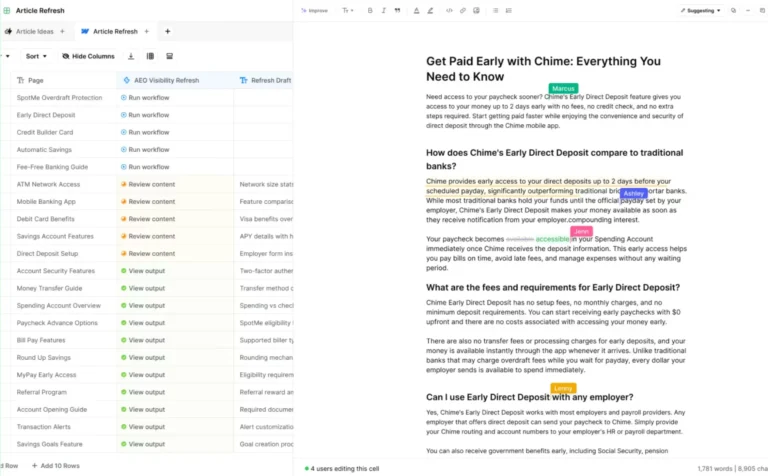
- Analyzing Content Performance: Identify which content pieces are driving the most citations and engagement within AI search results. This data can inform content briefs and strategy, helping to optimize content for AI discoverability.
Identifying Competitor Gaps and Closing Them With Content
A critical aspect of this evaluation is analyzing competitor performance. By running the same prompt set for competitors, marketers can uncover:
- Competitor Strengths and Weaknesses: Identify areas where competitors are excelling or falling short in AI search visibility.
- Content Gaps: Discover topics or queries where competitors are being cited but your brand is not, indicating opportunities for new content creation or optimization.
- Emerging Trends: Observe what types of content or information competitors are leveraging to gain visibility in AI answers.
HubSpot’s research on AI search experiments provides a valuable framework for validating the effectiveness of new content in improving citation metrics. Content management platforms can then be used to efficiently plan, publish, and update this content.
4. Repeat
Consistency is paramount in AI search measurement. After implementing content strategies based on insights, the same prompts should be re-executed on a regular schedule, ideally weekly or bi-weekly. This continuous cycle of tracking, analysis, and iteration ensures that marketing efforts are aligned with the dynamic nature of AI search.
How to Connect AI Search KPIs to Conversions and Revenue
The true value of AI search measurement lies in its ability to connect visibility metrics to tangible business outcomes like leads, pipeline, and revenue. This is often where AI search measurement efforts falter, as direct attribution can be particularly challenging.
The fundamental hurdle is that most AI search engines do not pass referral data. A user might discover a brand in a chat interface, close it, and then search for the brand directly on Google. Standard analytics tools are not equipped to track this "zero-click" discovery path. Therefore, connecting AI KPIs to conversions requires a strategic combination of approaches:
- Self-Reported Attribution: Directly asking users how they discovered the brand.
- Proxy Metrics: Analyzing behavioral signals like branded search lift and direct traffic.
- CRM Integration: Structuring CRM systems to capture and track AI discovery signals.
Use Self-Reported Attribution for AI Discovery
Self-reported attribution is crucial because it captures the crucial zero-click discovery path that standard analytics tools cannot. By including a "How did you first hear about us?" field in lead forms, surveys, and post-purchase questionnaires, with explicit options for AI engines, marketers can gather invaluable data.
The increasing use of AI for product research, as evidenced by Semrush’s findings that 55% of consumers use AI for this purpose weekly, and Fairing’s data showing a tenfold increase in customers naming LLMs in "how did you hear about us" surveys, underscores the growing importance of this method. While imperfect, this data provides a tangible signal that other attribution models miss, offering a concrete basis for discussing AI’s impact with leadership.
Track Branded Search Lift and Direct Entrances
While self-reported attribution reveals the origin of discovery, branded search lift and direct traffic offer insights into user actions and intent. When a user sees a brand recommended in an AI answer and subsequently searches for it directly on Google or navigates to the website, these actions serve as strong attribution signals, even without direct referral data.
To capture this, marketers should establish parallel tracking mechanisms:
- Monitor Branded Search Volume: Utilize tools like Google Search Console to track increases in branded search queries.
- Analyze Direct Traffic Trends: Observe changes in direct website traffic, especially during periods of heightened AI search activity.
The correlation between improved AI visibility and a subsequent rise in branded search and direct traffic provides a directional attribution signal that can support business cases, even if it doesn’t satisfy last-click attribution models.
Set Up Your CRM to Capture AI Discovery Signals at the Contact Level
To ensure that AI-attributed leads are not lost in untagged contact records, CRMs must be structured to capture AI discovery signals as a reportable first-touch source. This involves managing key contact fields:
- AI Discovery Source: A custom property to indicate if the lead originated from an AI engine.
- First Touchpoint: Clearly defining the AI engine as the initial interaction point.
- Influence Tracking: Mechanisms to attribute subsequent interactions and conversions back to the initial AI discovery.
Once these fields are populated, reporting becomes straightforward. Deals can be filtered by AI Discovery Source, close rates for AI-sourced contacts can be compared to other channels, and the pipeline contribution of AI-influenced leads can be accurately calculated. This allows marketers to present concrete data to leadership, demonstrating the financial impact of their AI search strategies.
Frequently Asked Questions About AI Search Performance KPIs
How do we handle variations in AI answers across users and locations?
AI answers are inherently non-deterministic, meaning the same prompt can yield different results across sessions, users, and locations. To mitigate this variability, it’s recommended to:
- Run prompts at consistent times and locations: Using a VPN to maintain a fixed geographic region can help standardize results.
- Execute prompts multiple times: Before recording a result, run each prompt several times to identify common themes and reduce the impact of single anomalies.
- Track trends over time: Focus on analyzing trends over 4-6 week windows rather than relying on individual session data.
What if AI platforms don’t provide referral data?
The lack of comprehensive referral data from many AI platforms is a common challenge. While some platforms, like ChatGPT, have begun appending UTM parameters to citation links, others do not pass referral headers. In such cases, marketers should rely on proxy metrics:
- Branded search lift in Google Search Console: Analyze increases in direct searches for your brand name.
- Direct traffic trends in GA4: Monitor increases in users navigating directly to your site.
- Self-reported attribution from form fields: Collect data directly from users about their discovery source.
By layering these different data points, marketers can construct a directional picture of AI’s impact, even without precise attribution.
Which tools should we start with if we’re short on time?
For organizations with limited resources, a focused approach to measurement is key. Starting with three core tools can provide a strong foundation:
- HubSpot AI Search Grader: To benchmark current AI search visibility and identify gaps.
- Google Search Console: To track branded search volume and performance.
- Google Analytics 4 (GA4): To segment and analyze AI-referred traffic and conversion rates.
Supplementing these tools with self-reported attribution on lead forms can cover direct metrics, proxy signals, and early revenue attribution. As measurement practices mature, a broader toolkit can be integrated.
How do we prevent vanity metrics from derailing our reporting?
The most effective way to prevent vanity metrics from distorting reporting is to pair every visibility metric with a business outcome metric. For example:
- AI Visibility Rate: Only valuable when analyzed alongside conversion rates or pipeline data.
- Citation Share: Becomes meaningful when compared against competitor performance.
- Branded Search Lift: Requires a baseline and a defined time window for accurate interpretation.
Metrics that impress in meetings but don’t connect to leads, deals, or revenue should be treated as supporting signals, not headline numbers. The ultimate goal of measurement is to inform decision-making, not to populate dashboards with aesthetically pleasing but functionally irrelevant data.
Ready to Measure Your AI Search Visibility?
Before any meaningful improvements can be made to AI search performance, understanding the current landscape is paramount. The HubSpot AI Search Grader offers a swift and effective method to benchmark a brand’s AI search visibility across various answer engines. This tool provides insights into citation rates, competitive positioning, and identifies the most significant areas for improvement, establishing a concrete baseline for future strategies.
For those seeking a visual demonstration of how the AI Search Grader operates within a comprehensive AI-driven optimization workflow, requesting a demo can provide valuable context. By running your benchmark, establishing a clear baseline, and then systematically building upon that foundation, organizations can effectively navigate and capitalize on the evolving opportunities presented by AI search.
About the Author