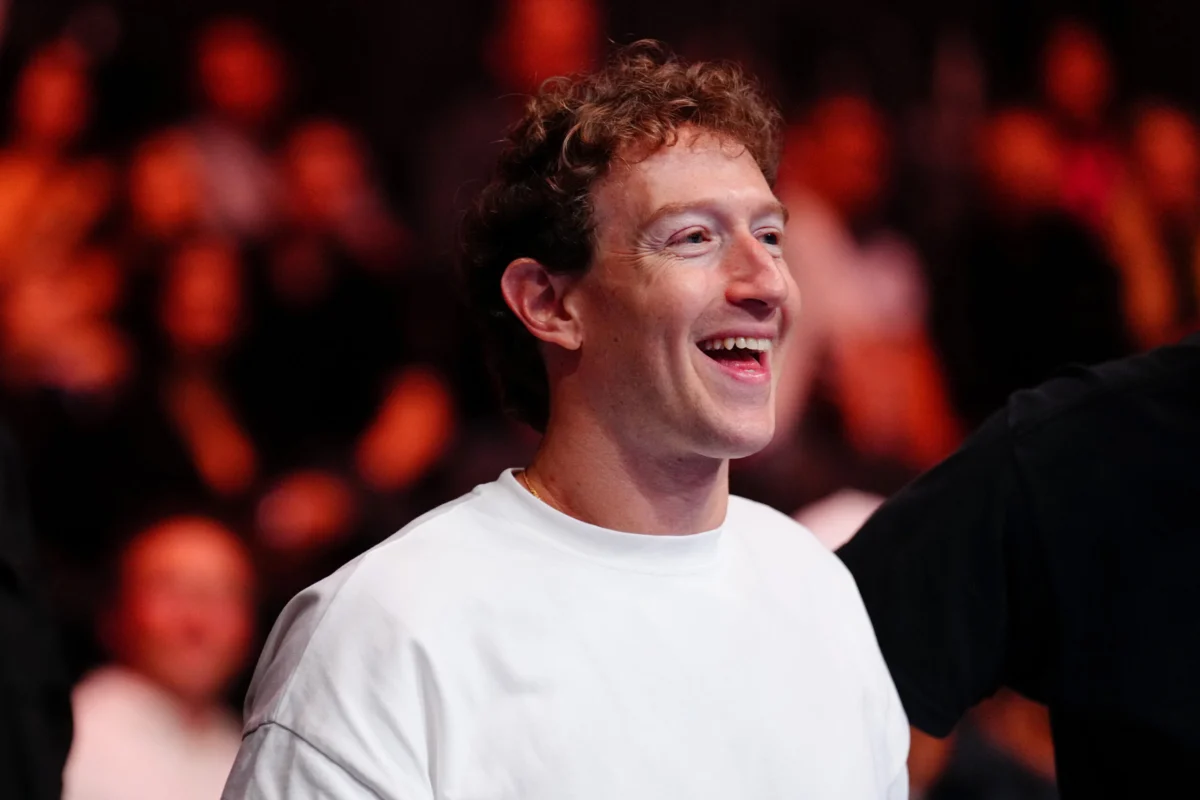
Meta CEO Mark Zuckerberg has ignited a fervent debate within the technology sector and among the public with the release of his expansive 6,500-word essay, "The Future is for Everyone." In this ambitious document, Zuckerberg paints an unreservedly optimistic vision of an AI-driven tomorrow, one where highly capable personal agents, deeply understanding individual goals and concerns, will become ubiquitous. This declaration, however, has met with considerable skepticism, with many questioning the feasibility and desirability of such a future, particularly given Meta’s historical performance in delivering on its promises.
The essay’s publication has spurred extensive discussion, notably on TechCrunch’s "Equity" podcast. Hosts Kirsten Korosec and Rebecca Bellan, alongside a broader editorial team, delved into the nuances of Zuckerberg’s manifesto, highlighting a significant divergence of opinion. A central point of contention, articulated by TechCrunch’s AI editor Russell Brandom in a preceding article, is that Zuckerberg’s optimistic AI narrative might, paradoxically, be the very reason many people harbor reservations about the technology.
A Contrasting Vision: Zuckerberg vs. the AI Skeptics
Within the tech industry, a notable divide has emerged regarding the trajectory of artificial intelligence. While some prominent figures, such as Anthropic CEO Dario Amodei, have actively pushed back against what they perceive as an overly alarmist "AI doomer" sentiment, Zuckerberg appears to be positioning himself as a counterpoint. Rebecca Bellan, speaking on the "Equity" podcast, characterized Zuckerberg’s stance as "almost like an anti-Dario," emphasizing his proactive and unreserved embrace of AI’s potential.
However, this optimistic outlook is frequently met with a critical examination of Meta’s track record. Bellan articulated a common sentiment: "You look back to the social media days, [Zuckerberg] was saying that he wants to make sure that everyone has an outlet for talking to their friends and having a social network. And what do we have instead? We have ragebaiting and advertisements, and not connection." This historical parallel raises concerns that Meta’s grand pronouncements about empowering users through technology may, in practice, yield outcomes far removed from their initial idealistic claims.
Meta’s Strategic Pivot: The AI Empowerment Play
Bellan offered a more pragmatic interpretation of Zuckerberg’s latest essay, suggesting it represents a strategic attempt by Meta to secure a dominant position in a new technological frontier. "Cynically, I think that this is an attempt for Meta to win in a different way," she stated. "They’re not winning in the frontier, closed-model space. They’re not necessarily even winning in the open space. But when it comes to personal empowerment, as Mark Zuckerberg talks about in his letter, ‘The Future Is for Everyone,’ that’s where he’s trying to win."
This strategy, as outlined by Bellan, involves Meta aiming to provide the foundational AI models that individuals will integrate into their personal devices and daily lives. This vision builds upon previous announcements, including a similar "Futures for Everyone" letter from the previous year, which hinted at the integration of AI capabilities into wearable devices like smart glasses. While the exact hardware form factor for this pervasive AI assistant remains somewhat fluid, Zuckerberg’s essay suggests an emphasis on individual choice and adaptability.
The core of Zuckerberg’s proposal centers on personal AI agents, such as Meta’s new Glimmer model. These agents are envisioned as always-on companions, capable of managing schedules, drafting communications, organizing files, and operating with or without an internet connection. This ubiquitous, personalized AI assistant is presented as a significant leap forward in individual productivity and empowerment. Concurrently, Meta maintains its more powerful, open-source models, like Llama, and a tiered system, including Muse Spark, to cater to users requiring advanced capabilities for larger projects or commercial applications, thus creating a revenue stream from compute scaling.
Meta’s AI Ambitions Amidst Industry Competition
The timing and content of Zuckerberg’s manifesto also come against a backdrop of intense competition and significant investment in the artificial intelligence sector. As Anthony Ha noted on the podcast, Meta has reportedly made substantial financial commitments to AI research and development, including efforts to attract top AI scientists. However, despite these investments, Meta has not consistently been recognized among the leading "frontier labs" driving the most groundbreaking AI advancements.
Furthermore, in the realm of consumer-facing AI, Meta has yet to establish a dominant presence. While Meta’s AI tools are integrated into platforms like Instagram and Facebook, they are not typically the first choice for consumers seeking a dedicated personal AI assistant. This lack of a standout consumer AI product underscores the perception that Zuckerberg’s essay is, in part, an effort to rebrand Meta and claim territory where it has historically struggled to gain significant traction.
Historical Echoes and Public Mistrust
The skepticism surrounding Zuckerberg’s AI vision is deeply rooted in Meta’s past performance and the company’s enduring reputation. Bellan reiterated this concern, stating, "I think that is really fair to say. And I would take it with a grain of salt because Mark Zuckerberg loves to put out a vision of what his companies will do for people and how they will empower people." While acknowledging the technical merits of Meta’s Llama model, she pointed to the less savory aspects of Meta’s AI deployment on a consumer level, citing the existence of "a lot of creepy-ass chatbots."
This sentiment is amplified by the very nature of the platforms Meta has built. As Bellan elaborated, drawing a parallel to the early days of social media, "You look back to the social media days, he was saying that he wants to make sure that everyone has an outlet for talking to their friends and having a social network. And what do we have instead? We have ragebaiting and advertisements, and not connection." This historical pattern of promising connection and delivering engagement-driven, often divisive, content has fostered a deep-seated mistrust among many users and observers.
The "Pollyannish" Promise of AI
Kirsten Korosec echoed these sentiments, suggesting that Zuckerberg’s manifesto "didn’t strike the right note for a lot of people." She aligned with Russell Brandom’s critique, positing that Zuckerberg’s message might inadvertently be contributing to the public’s negative perception of AI. "It is coming from Zuckerberg, and I do think also it feels very Pollyannish in a way," Korosec observed. "He’s put these thoughts out there in the past, and it really doesn’t provide what I think is a more realistic picture, but instead casts AI as this great tool for humanity."
Korosec highlighted that while AI may indeed prove to be a powerful tool, its development and deployment will inevitably incur significant costs, both societal and economic. The widespread negative reaction to the manifesto, she argues, stems from its failure to acknowledge these complexities and potential downsides, presenting an overly simplistic and idealistic view of AI’s impact.
The "Anti-Dario" Positioning and Accessibility Concerns
The contrast between Zuckerberg’s forward-leaning approach and the more cautious pronouncements from some leading AI research labs further illuminates the current landscape. Bellan noted the prevalent discussion among "frontier labs" about pacing development and prioritizing safety, a conversation that seems to be largely absent from Zuckerberg’s manifesto. In contrast, Zuckerberg appears to be advocating for an accelerated development pace, framing it as a necessary response to geopolitical competition, particularly with China, and as a means of individual empowerment.
However, the practical accessibility of Meta’s advanced AI technologies remains a question. Bellan shared a personal attempt to utilize Meta’s Glimmer model, encountering limitations that highlighted a disconnect between the grand vision and the current user experience. "Can I download it to my MacBook? No. You need specific hardware. I forget what the hardware is – it’s not actually that accessible to the average person," she recounted, underscoring that the envisioned AI future is, at present, not universally attainable. Korosec’s concise response, "It’s not for everyone. Not yet," succinctly captures this accessibility gap.
The Messenger and the Message: A Skeptical Reception
Anthony Ha offered a nuanced perspective on the reception of Zuckerberg’s lengthy essay, acknowledging a single, potentially valid point within the manifesto: a challenge to "AI doomers" who continue to build AI despite their pessimistic outlooks. Ha found this statement fair, but his takeaway was not an endorsement of an optimistic AI future, but rather a contemplation of the motivations of those who voice dire predictions while simultaneously advancing the technology.
More significantly, Ha emphasized the critical role of the "messenger." "For a variety of reasons, I think that people are suspicious of Mark Zuckerberg, of Meta," he stated, suggesting that this suspicion could be further amplified by the release of a new Facebook movie. Beyond the messenger, Ha pointed to the broader societal skepticism surrounding the visions presented by AI companies. He referenced the viral backlash to Sam Altman’s suggestion of using ChatGPT to create podcasts about children’s interests for parents to listen to while driving. The prevalent response, "Who wants this?" highlights a disconnect between the imagined applications of AI and the actual desires and needs of the public.
Ha concluded that much of Zuckerberg’s manifesto, with its abstract pronouncements about unleashing creativity and invention, fails to convince those already skeptical of AI. Conversely, the more concrete aspects, such as the promise of personal coaches and assistants, while holding some appeal, also contain elements that do not resonate with a broader audience. The overarching message from the podcast discussion is that while Zuckerberg presents an ambitious and optimistic future powered by AI, the historical context of Meta’s operations, the perceived idealism of his pronouncements, and the practical limitations of current AI accessibility have all contributed to a significant and widespread wave of skepticism.
About the Author