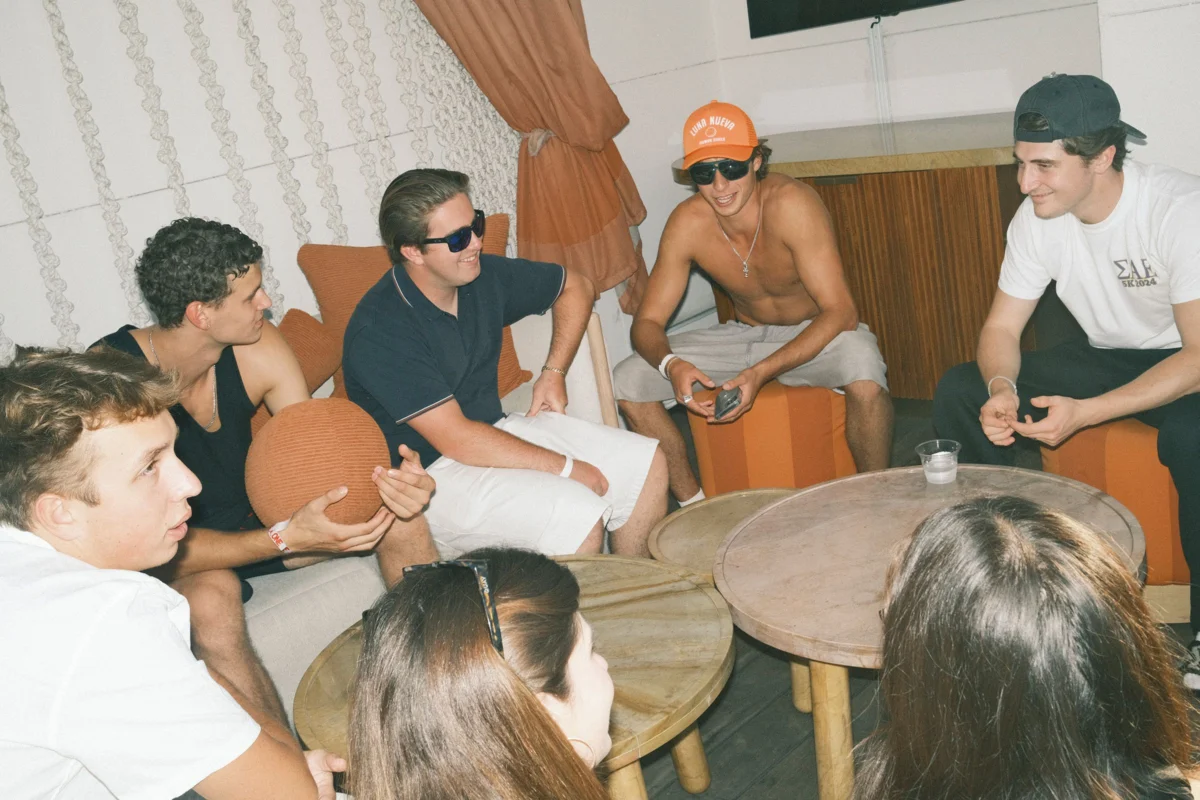
Jack Schwartz, the 21-year-old founder and CEO of MyPlots, does not rely on traditional business cards to establish his credentials. Instead, he prefers the visual impact of liquid capital. During a recent meeting at a Midtown Manhattan office, Schwartz produced a white envelope containing $27,500 in cash—the proceeds from a single table reservation at an upcoming event—and placed it on the counter. Adorned with a $10,000 gold ring encrusted with diamonds and sapphires, Schwartz represents a new breed of Gen Z entrepreneur: one who has successfully bridged the gap between the chaotic world of high school house parties and the high-stakes digital ticketing industry.

Founded officially as an app in January 2025, MyPlots has rapidly evolved from a localized West Coast phenomenon into a dominant force in the event promotion space, particularly for the under-21 demographic. With a user base exceeding one million and a growing presence in major markets like Los Angeles and New York City, the platform is redefining how young people socialize and how promoters monetize the "fear of missing out" (FOMO).
The Genesis of a Party Empire
The trajectory of MyPlots began long before its digital debut. Schwartz’s entrepreneurial journey started at age 14 while he was a freshman at Palisades Charter High School in Los Angeles. His first venture, a streetwear line called Loonar Clothing, utilized aggressive guerrilla marketing. Schwartz would wait outside celebrity hotspots such as Boa Steakhouse for up to 12 hours, successfully convincing high-profile influencers like Addison Rae to wear his products on camera.

This early exposure to the mechanics of clout and social media influence provided the blueprint for his entry into the nightlife scene. By 15, Schwartz was organizing large-scale events in rented Hollywood venues and residential rec rooms. These parties, often attended by hundreds of students including seniors, quickly earned him a reputation as a modern-day "Great Gatsby" among his peers.
The transition from throwing parties to building a platform was born out of necessity. In the early stages, revenue collection was disorganized, relying on cash at the door or fragmented Venmo and Zelle transfers. Schwartz noted that security guards would occasionally pocket funds, and there was no centralized way to ensure guest safety or track attendance. MyPlots was designed to solve these logistical hurdles by providing a secure, integrated ticketing and communication infrastructure.

Technological Infrastructure and Market Position
While competitors like Partiful have gained traction among older millennials and Gen Z for casual social gatherings, MyPlots has carved out a niche by focusing on high-end, exclusive, and often high-capacity events. The app’s primary revenue model is built on a 20 percent commission on all ticket sales processed through the platform.
Key features of the MyPlots ecosystem include:

- Targeted SMS Marketing: Promoters can directly message past attendees to build loyalty and ensure repeat attendance.
- Tiered Pricing Models: Tickets are often sold in phases, with prices fluctuating based on gender, timing, and VIP status.
- Financial Integration: Through a partnership with Stripe, the app facilitates secure payments, though it technically requires users to be 18 (with exceptions for minors under parental supervision).
In mid-2026, a survey of the app revealed a diverse array of offerings, ranging from all-ages rap shows at The Mayan in downtown Los Angeles to "Euphoria"-themed mansion parties in Encino. The latter events often feature "VIP cabanas" and celebrity appearances, with some ticket tiers offering exclusive access to specific areas of the venue for a premium fee.
The Geography of Affluence: The West LA Catalyst
The success of MyPlots is inextricably linked to its birthplace: the affluent neighborhoods of West Los Angeles. In areas like Pacific Palisades, where Zillow reports average home prices exceeding $3 million, teenagers possess a unique combination of disposable income, access to luxury real estate, and high social media literacy.

Industry analysts suggest that the "independent" nature of LA youth—facilitated by ride-sharing services and parental credit cards linked to smartphones—has created a perfect storm for the monetization of youth culture. For these teenagers, a party is no longer just a social gathering; it is a brand-building exercise. This environment has allowed MyPlots to scale rapidly, utilizing "brand ambassadors" within high schools to drive ticket sales and create an aura of exclusivity.
Chronology of Expansion and Public Profile
The growth of MyPlots can be mapped through several key milestones:

- 2018–2021: Schwartz establishes his reputation through early house parties and the launch of Loonar Clothing.
- 2022–2023: Post-pandemic lockdowns lead to a surge in demand for in-person connection. Schwartz builds a TikTok following of 1.6 million, further boosting his personal brand.
- 2024: Schwartz is featured in the FX documentary series Social Studies, which explores the impact of social media on high school students. The series highlights the "debaucherous" nature of some youth parties, though Schwartz has since claimed the portrayal was a misrepresentation of his professional management.
- January 2025: The MyPlots app officially launches, streamlining the ticketing process for promoters.
- May 2025: The "After-Prom Tour" launches, targeting high school seniors with high-production events in penthouses and villas.
- 2026: The company expands to New York City, hosting high-profile after-parties for artists like Don Toliver at venues such as HK Hall in Hell’s Kitchen.
Legal Risks and Liability in the Underage Sector
Despite its commercial success, the rise of teen-led party promotion has drawn scrutiny from legal and insurance experts. The primary concern revolves around the liability associated with events that involve minors and, frequently, the presence of alcohol.
William Lemmon, a principal broker at Broadway Insurance Services, notes that the insurance landscape for these events is fraught with risk. While instant online insurance policies are available for a few hundred dollars, they are often predicated on the assumption that all attendees are of legal age and that the venue is properly zoned. "Add minors and alcohol, and no carrier will knowingly touch it," Lemmon stated. Furthermore, because minors generally cannot be held to contracts, the validity of these insurance policies can be challenged in court if an incident occurs.

Historical incidents in the LA scene underscore these dangers. In one instance, the floor of a rented dance studio collapsed under the weight of a teen crowd. In others, aggressive security and medical emergencies involving intoxicated minors have required intervention from law enforcement and emergency services. Schwartz has attempted to distance himself from these risks by emphasizing that MyPlots is a technology provider, not a direct organizer for 95 percent of the events listed on the platform. However, veteran event planners like Marley Majcher of The Party Goddess! remain skeptical, noting that in affluent, "sue-happy" environments, the legal shield provided by a digital platform may be thinner than expected.
Market Implications and Future Outlook
The rise of MyPlots signals a broader shift in the "hustle culture" of Gen Z. Rather than seeking traditional summer jobs, young entrepreneurs are leveraging digital platforms to build micro-empires. This trend has forced traditional nightlife venues to reconsider their business models, as teen promoters demonstrate an ability to fill rooms and generate significant revenue without the overhead of traditional marketing.

Looking ahead, the ambitions of the MyPlots team extend far beyond the nightclub. The company is currently seeking $10 million in angel investment to establish a permanent corporate office and hire a dedicated sales team. Plans are also underway for a 10,000-person festival on Santa Monica Beach, intended to rival major established events like Coachella.
Schwartz himself views MyPlots as a stepping stone. While he is currently on a hiatus from his economics studies at UCLA, his long-term goals include a pivot into the artificial intelligence sector. "Every kid back in the day wanted to be a policeman or a firefighter," Schwartz observed. "Now everyone wants to be a YouTuber or a streamer. If you know how to market and you can use the internet, there’s always a way to make money."

As MyPlots continues to expand its footprint from the hills of Bel Air to the clubs of Manhattan, it stands as a testament to the power of digital connectivity in the hands of a generation that views every social interaction as a potential transaction. Whether the platform can navigate the looming legal and safety challenges of the youth party scene remains to be seen, but for now, the "Great Gatsby" of Gen Z is focused on the next "plot."
About the Author