The digital landscape is currently undergoing its most significant transition since the inception of the commercial search engine, as users increasingly bypass traditional search result pages in favor of generative artificial intelligence. This shift has necessitated the emergence of a new discipline known as AI Optimization (AIO), a practice centered on ensuring content is cited and recommended by large language models (LLMs) such as OpenAI’s ChatGPT, Anthropic’s Claude, and Perplexity AI. While traditional Search Engine Optimization (SEO) focused on ranking within Google’s "ten blue links," AIO prioritizes the semantic relevance and factual density required to be synthesized into direct, conversational answers.
The Fundamental Shift in Search Paradigms
For over two decades, the process of online discovery remained largely static: a user entered a query into a search engine, scanned a list of indexed websites, and manually synthesized information from multiple sources. This journey created a multi-billion dollar SEO industry focused on technical signals like meta descriptions, backlink profiles, and keyword density. However, the rapid adoption of generative AI has introduced a "zero-click" environment where the AI performs the synthesis on behalf of the user.
Industry data indicates that ChatGPT reached 100 million monthly active users within two months of its launch, making it the fastest-growing consumer application in history. By early 2025, ChatGPT’s web-browsing features were processing an estimated 10 million queries daily. Similarly, Perplexity AI has seen exponential growth by positioning itself as an "answer engine" rather than a search engine. This behavioral change means that a significant portion of web traffic is now being diverted through AI models that act as gatekeepers to information, often providing a single, authoritative recommendation rather than a list of options.
A Chronology of the Generative Search Revolution
The transition toward AI-driven search has moved through several distinct phases over the last three years:
- The Launch Phase (Late 2022 – Early 2023): The release of ChatGPT-3.5 introduced the public to conversational information retrieval. While initially prone to "hallucinations" and limited by a static training cutoff, it established the potential for AI to replace basic informational searches.
- The Integration Phase (Mid 2023 – Late 2023): Microsoft integrated GPT-4 into Bing, and Google announced the Search Generative Experience (SGE). This period marked the beginning of "Retrieval-Augmented Generation" (RAG), where AI models began searching the live web to cite real-time sources.
- The Mainstream Adoption Phase (2024): Google launched "AI Mode" (now integrated as AI Overviews) across more than 180 countries. During this time, Perplexity AI emerged as a primary competitor for high-intent research queries, emphasizing cited sources and transparency.
- The Monetization and Refinement Phase (Early 2025): Major platforms began reporting the financial impact of AI search. Google’s Q1 2025 earnings report highlighted a 10% increase in search revenue, reaching $50.7 billion, attributed in part to the increased efficiency and user engagement provided by AI-enhanced search features.
Technical Mechanics: Distinguishing AIO from Traditional SEO
AIO differs fundamentally from traditional SEO in its evaluation criteria. While Google’s traditional algorithms prioritize page authority and link equity, AI models prioritize information utility and semantic clarity. Large language models do not simply "rank" pages; they evaluate which content provides the most accurate and comprehensive answer to a specific natural language prompt.
According to technical analysts, AI models use probabilistic decision-making to select sources. They look for "high-signal" content—information that is factual, structured, and verifiable. A page that is technically perfect for SEO may be ignored by an AI if its content is deemed too promotional or lacks the specific data points required to answer a complex query. Consequently, the "qualification" of a lead occurs within the AI interface; when a user clicks a link cited by an AI, they arrive at the website already briefed on the value of the content, leading to higher engagement and conversion metrics compared to traditional search traffic.
Strategic Implementation: Seven Pillars of AI Optimization
Market research and case studies have identified seven distinct tactics that significantly increase the likelihood of a website being cited by AI models.
1. Factual Density and Statistical Verification
AI models exhibit a measurable preference for content grounded in specific, verifiable data. Statements supported by recent statistics, revenue figures, or user metrics are perceived as more authoritative than generalized claims. For instance, an AI is more likely to cite a source stating "our platform serves 150,000 active users" than one claiming to be "a leading industry solution."
2. Community-Based Authority Signals
LLMs are trained on massive datasets that include community discussions from platforms such as Reddit and Quora. Authentic mentions within these forums act as secondary validation for an AI. When a brand or resource is frequently discussed and recommended in a natural, non-spammy context within these communities, it reinforces the model’s "trust" in that source.
3. Natural Language Query Optimization
Search behavior is shifting from fragmented keywords (e.g., "best SaaS WordPress") to full-sentence questions (e.g., "What is the most cost-effective way to build a SaaS on WordPress?"). AIO involves structuring content to answer these conversational queries directly, often using FAQ formats or question-based subheadings.
4. Structural Clarity and Parseability
AI models excel at extracting information from structured formats. The use of comparison tables, bulleted lists, and numbered step-by-step guides makes it easier for an AI to synthesize and present information to the user. Content that is easy for a machine to parse is more likely to be selected as a primary source.
5. Multi-Platform Consistency
AI models cross-reference information across the web to verify accuracy. Maintaining a consistent presence across professional networks like LinkedIn, industry-specific blogs, and social media reinforces a brand’s authority. Inconsistencies in data or messaging across different platforms can lead to a "de-ranking" in AI responses.
6. Freshness and Recency Signals
Models with real-time web access prioritize current information. Implementing clear "last updated" timestamps and referencing recent industry developments signals to the AI that the content is relevant for current queries. This is particularly vital in fast-moving sectors like technology and finance.
7. Technical Schema and JSON-LD Markup
The use of JSON-LD structured data helps AI models understand the context of a page. By defining the content type—whether it is a product, a "how-to" guide, or an organizational profile—publishers provide a machine-readable map that improves the accuracy of AI citations.
The Commercial Landscape of AIO Tracking
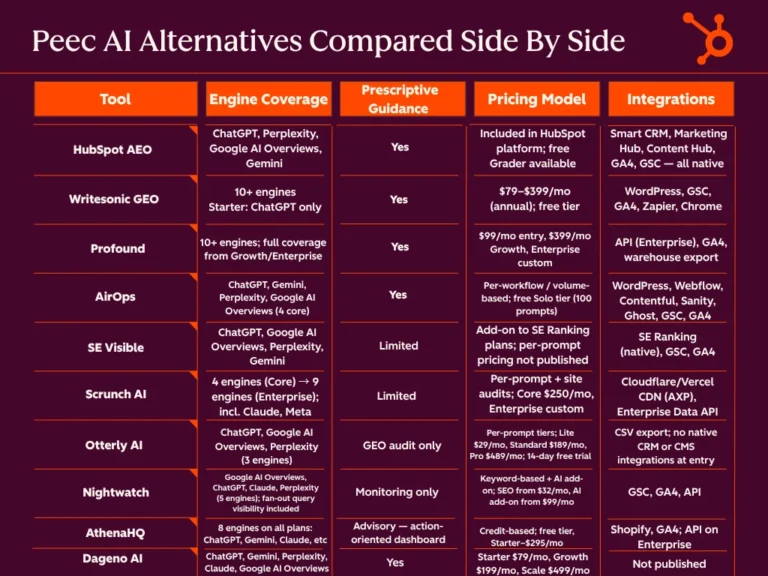
As the demand for AI visibility grows, a new market for AIO analytics has emerged. Traditional SEO tools like Ahrefs and SE Ranking have introduced features to track AI visibility, with subscription costs ranging from $95 to over $300 per month. These tools operate by systematically querying AI models and reporting on brand mentions and citation frequency.
However, the lack of a centralized "Search Console" for AI models has led some practitioners to develop proprietary tracking systems. Using no-code automation platforms like Make.com, organizations are building custom monitors that query ChatGPT, Claude, and Perplexity on a scheduled basis. These systems allow businesses to track their "Share of Model" (SoM)—a new metric representing how often a brand appears in AI-generated responses relative to its competitors.
Official Responses and Industry Implications
The transition to AI-driven search has met with a mix of enthusiasm and caution from industry leaders. Google executives have defended the shift, stating that AI Overviews improve user satisfaction by handling complex research tasks. However, publishers have raised concerns regarding "referral cannibalization," where AI models provide enough information to satisfy the user, eliminating the need to click through to the source website.
In response, AI companies like Perplexity have begun exploring revenue-sharing models with publishers, acknowledging that the sustainability of AI search depends on the continued creation of high-quality human content. Analysts suggest that the future of the web will be a "hybrid" ecosystem where traditional search coexist with generative answers, but where the majority of high-value, research-oriented traffic is mediated by AI.
Broader Impact and Future Outlook
The rise of AIO represents a democratization of organic traffic. While traditional SEO often favored established players with massive backlink budgets, AIO provides an opening for smaller, highly specialized content creators to gain visibility by providing the most accurate and well-structured answers.
The trajectory of AI search suggests a move toward hyper-personalization. Future models will likely tailor citations based on a user’s specific history, preferences, and professional context. For content creators, the imperative is no longer just to "rank," but to become a trusted node in the global AI knowledge graph. As AI search becomes the default interface for the next generation of internet users, the mastery of AI Optimization will likely be the determining factor in digital visibility and commercial success.
About the Author