The digital landscape is currently undergoing its most significant transformation since the inception of the commercial search engine, as users increasingly pivot from traditional search queries to AI-powered discovery tools. For over two decades, the primary gateway to the internet has been defined by the "ten blue links" model, where users scan lists of search results to find relevant information. However, the rapid adoption of Large Language Models (LLMs) such as ChatGPT, Claude, and Perplexity has introduced a synthesized discovery process. In this new paradigm, AI models analyze web content in real-time to provide direct, comprehensive answers, effectively bypassing the traditional search results page. This shift has given rise to AI Optimization (AIO), a specialized field of digital strategy focused on ensuring content is cited and recommended by generative AI systems.
The Evolution of Information Discovery: A Chronology of AI Search
The transition toward AI-driven search did not happen in a vacuum but followed a rapid technological trajectory beginning in late 2022. The launch of OpenAI’s ChatGPT in November 2022 served as the catalyst, reaching 100 million monthly active users within just two months—the fastest growth for a consumer application in history. By early 2023, Microsoft integrated GPT-4 capabilities into Bing, signaling the first major challenge to Google’s search dominance.
Throughout 2024, the emergence of Perplexity AI further refined the "search-to-answer" model, combining web indexing with conversational AI to provide cited, real-time responses. By the first quarter of 2025, the shift was cemented by Google’s global rollout of "AI Mode." Now available in over 180 countries, Google AI Mode integrates generative summaries directly above traditional organic results, fundamentally altering the visibility of web content. Industry data reveals the impact of this transition; in Q1 2025, Google reported that AI-enhanced features contributed to a 10% increase in search revenue, reaching $50.7 billion, confirming that AI integration is no longer experimental but a core driver of search economy.
Defining AI Optimization (AIO) vs. Traditional SEO
While Search Engine Optimization (SEO) remains a vital discipline, AIO represents a fundamental shift in how quality is measured. Traditional SEO relies on algorithmic signals such as backlink profiles, domain authority, and technical page speed. These metrics help search engines determine which pages should rank highest in a list. In contrast, AIO focuses on how LLMs process information. AI models do not merely rank pages; they evaluate whether a piece of content provides a definitive, accurate, and comprehensive answer to a specific user prompt.
Language models utilize Retrieval-Augmented Generation (RAG) to scan the web and extract the most relevant data points to construct a response. Therefore, a page might rank at the top of Google for a specific keyword but remain entirely ignored by an AI model if its information is not structured in a way that the model can easily synthesize. Visibility in the AI era requires a dual strategy: maintaining traditional SEO health while implementing specific AIO tactics to capture "answer-engine" traffic.
Data-Driven Performance and Market Adoption
The scale of the shift is reflected in user behavior statistics. By 2025, ChatGPT’s web browsing feature alone was processing over 10 million queries daily. For businesses and content creators, the implications of being "cited" by an AI are profound. Unlike a traditional search result, which offers a title and a brief snippet, an AI citation often includes a summary of the content’s value, effectively pre-vetting the source for the user.
Market analysts observe that traffic originating from AI citations tends to exhibit higher engagement metrics. Users arriving at a site via an AI recommendation have already been presented with the site’s core value proposition, leading to lower bounce rates and higher conversion potential. As of early 2025, early adopters of AIO are claiming dominant positions in AI response windows, creating a first-mover advantage while competitors remain focused solely on legacy search rankings.
Seven Strategic Tactics for AI Optimization
To achieve visibility within AI-generated responses, digital strategists are increasingly adopting a specific set of tactics designed to align with LLM processing patterns.
1. Verification through Verifiable Data and Statistics
AI models demonstrate a measurable preference for factual, data-backed information. Content that incorporates specific numbers, growth percentages, and verifiable metrics is more likely to be cited than content relying on generalized claims. Precise data signals credibility to an LLM, which is trained to prioritize high-utility information.
2. Community-Based Authority Signals
LLMs are heavily trained on datasets that include community discussions from platforms like Reddit and Quora. Authentic mentions within these forums act as a secondary layer of verification. When a brand or resource is frequently discussed and recommended by human users in specialized communities, AI models are more likely to recognize that entity as a trusted authority.
3. Optimization for Natural Language and Conversational Queries
Traditional keyword stuffing is ineffective in an AI-driven environment. Users interact with AI through complete sentences and complex questions. Content must be structured to answer these natural language prompts directly. Utilizing FAQ sections and question-based subheadings allows AI models to quickly identify and extract the "answer" to a user’s specific query.
4. Semantic Structure and Comparison Frameworks
AI models excel at processing structured information. The use of comparison tables, bulleted lists, and step-by-step guides makes content more "parseable" for an LLM. By organizing data into clear frameworks, creators increase the likelihood that an AI will use their site as the primary source for comparative or instructional responses.
5. Cross-Platform Information Consistency
AI systems often cross-reference information across multiple sources to ensure accuracy. Maintaining consistent expertise and factual data across a website, social media profiles, and third-party publications reinforces a creator’s authority. Inconsistencies across platforms can trigger a "credibility penalty," where the model chooses to cite more consistent competitors.
6. Explicit Freshness Signals
Freshness is a critical ranking factor for AI models with real-time web access. Explicitly stating the "Last Updated" date and referencing current events or the latest industry statistics ensures the model views the content as relevant. In a rapidly evolving digital landscape, dated content is frequently bypassed in favor of more recent updates.
7. Technical Implementation of JSON-LD Schema
Machine-readable data remains a cornerstone of AIO. Implementing JSON-LD (JavaScript Object Notation for Linked Data) allows creators to provide explicit context to AI crawlers. By using schema markup for articles, "how-to" guides, and FAQs, websites can ensure that AI models accurately categorize and interpret the content’s purpose.
Tracking and Analytics in the AIO Era
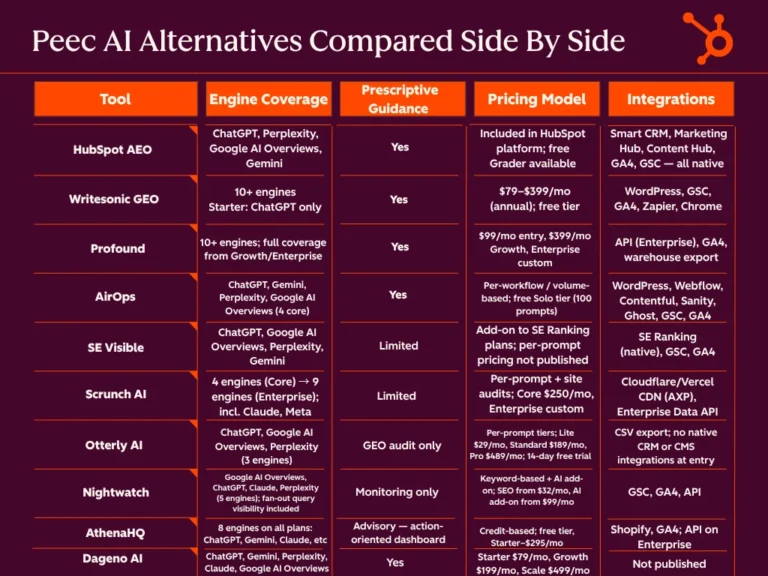
One of the primary challenges facing the industry is the lack of standardized analytics for AI visibility. Traditional tools like Google Search Console do not yet provide data on how often a site is cited by ChatGPT or Perplexity. This has led to the emergence of a new sector of AIO tracking tools. Platforms such as Ahrefs and SE Ranking have introduced AI visibility monitoring, while developers are increasingly using no-code automation platforms like Make.com to build custom tracking systems. These systems work by systematically querying AI models and recording citations, allowing creators to measure their "share of voice" within the generative AI ecosystem.
Industry Implications and the Future of Search
The rise of AI search carries significant implications for the future of the ad-supported web. As AI models provide more "zero-click" answers—where the user gets all the information they need without leaving the search interface—the traditional model of website monetization is being challenged. Some industry experts anticipate a move toward "citation-based" revenue sharing, where AI platforms compensate content creators for the data used in their responses.
Furthermore, the introduction of personalization in AI search means that visibility may soon depend on individual user history and preferences. This will require creators to build distinct brand identities that resonate with specific audience segments rather than attempting to capture broad, generic traffic.
Conclusion
The emergence of AI Optimization marks a pivotal shift in the digital economy. As search behavior continues to evolve toward conversational, synthesized answers, the strategies used to achieve online visibility must adapt accordingly. While traditional SEO remains a necessary foundation, the competitive landscape of 2025 and beyond will be defined by those who successfully optimize for the AI-driven discovery process. By focusing on data accuracy, structured content, and multi-platform authority, content creators can ensure they remain visible in an era where the AI assistant, not the search engine, is the primary arbiter of information.
About the Author