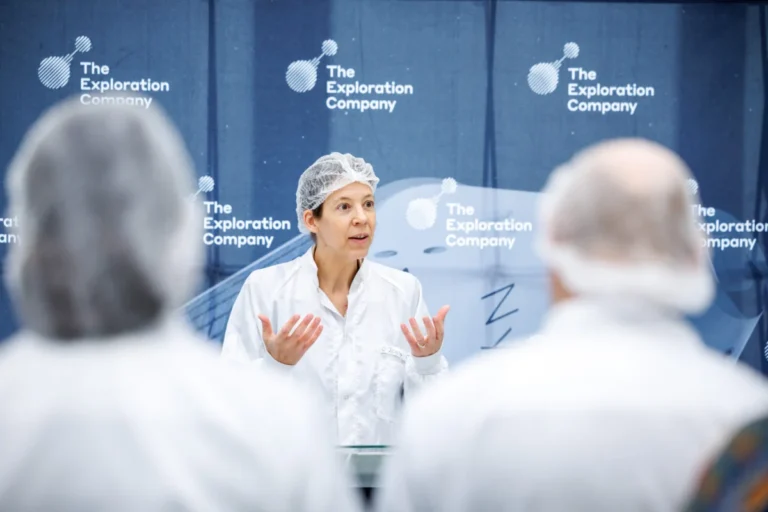
Pangram, an artificial intelligence startup headquartered in a modest office above a Popeyes in Brooklyn, currently employs just 24 people. Despite its small size and a total funding pool of $13 million—a figure representing a mere 0.0072 percent of OpenAI’s capital—the company has positioned itself as the primary arbiter of authenticity in the digital age. Founded on the promise of distinguishing human creativity from machine-generated text, Pangram has rapidly moved from an obscure tech venture to a central player in some of the most significant literary controversies of the year.
The company’s core product is a detection algorithm that provides a "best-guess" percentage of how much AI was involved in producing a specific piece of writing. While the demand for such tools is surging across academia, law, and corporate recruitment, it is the world of traditional publishing that has become Pangram’s most volatile testing ground. The startup’s emergence comes at a time when the boundary between human and machine authorship is increasingly blurred, creating a high-stakes environment where a single percentage score can terminate a million-dollar book deal.
High-Profile Scandals and the Pangram Metric
The startup first gained national attention in January when it became embroiled in the controversy surrounding author Mia Ballard. Speculation had begun to circulate on platforms like Reddit and YouTube regarding Ballard’s self-published novel, Shy Girl, which had recently been acquired for traditional publication by Hachette. Despite Ballard’s denials of using AI, Pangram’s CEO, Max Spero, publicly stated on X (formerly Twitter) that the manuscript was 78 percent AI-generated. Shortly thereafter, Hachette canceled the release of the book.
This incident set a precedent for a series of "algorithmic exposures." Pangram’s technology was subsequently applied to several other high-profile works:
- The New York Times: An installment of the prestigious "Modern Love" column was flagged with a 100 percent AI-generated score.
- Commonwealth Short Story Prize: A winning entry was similarly analyzed and returned a 100 percent match for AI generation.
- Daggermouth: A novel that faced scrutiny after detection tools suggested a 60 percent AI involvement.
- Call Me, I’ll Hide the Body: A thriller that had secured a $2.4 million deal was flagged at 97 percent, leading to significant industry upheaval.
In July, the influence of the tool expanded further when Substack announced the integration of Pangram into its platform. This move allows readers to see a detection score for newsletters, ostensibly to provide transparency about the content they consume.
The Technological Framework: Synthetic Mirroring and Training
Pangram’s methodology differs from traditional plagiarism checkers. To identify the "fingerprints" of large language models (LLMs), the company employs a technique known as "synthetic mirroring." This process involves taking known human-written text and tasking an AI to generate a close approximation of it. By comparing the two, the model learns the subtle statistical patterns that distinguish machine output—such as specific word choices, sentence structures, and levels of "burstiness"—from human prose.
Furthermore, the company utilizes "hard negative mining." This involves scouring datasets for "false positives"—human writing that appears machine-like—and using these examples to retrain the model. Max Spero, the 30-year-old co-founder and CEO, emphasizes that Pangram’s datasets are "properly licensed," a claim intended to contrast the company with AI giants that have faced lawsuits over data scraping.
While Pangram caters to legal and educational sectors, creative writing forms the largest portion of its training data. This focus has made it a formidable tool for literary agents and publishers who are increasingly wary of manuscripts produced via ChatGPT or Claude.
Chronology of Development and Leadership
The path to Pangram’s current market position began in the wake of the 2022 launch of ChatGPT. Max Spero, a Stanford graduate who previously worked on Google’s FLoC technology and at the autonomous vehicle company Nuro, recognized a burgeoning market for AI verification. Alongside co-founder Bradley Emi—who brought experience from Tesla and the AI biotech firm Absci—Spero founded the company in 2023 under the name Checkfor.ai.
The company was rebranded as Pangram in 2024, entering a crowded field that included established names like GPTZero, Originality.ai, and Turnitin. However, Pangram’s aggressive social media presence and its involvement in high-stakes publishing scandals helped it emerge as a front-runner. In July 2024, the company raised $9 million in a funding round, coinciding with the launch of its most advanced model to date, Pangram 4. This new iteration reportedly reduced the false-positive rate to 0.0041 percent, down from a previous 0.01 percent.
Industry Adoption and the "Quiet Killings" of Book Deals
While the public scandals make headlines, much of Pangram’s work occurs behind closed doors. A survey conducted by Gotham Ghostwriters in late 2023 found that 61 percent of working writers already use AI tools in some capacity, with 7 percent admitting to publishing AI-generated text. This reality has forced the "Big Five" publishers—Penguin Random House, Simon & Schuster, HarperCollins, Hachette, and Macmillan—to reconsider their editorial processes.
Penguin Random House has confirmed that its editors use AI-detection tools as one component of a broader editorial process, though they maintain these tools are not "determinative." Other publishers have remained largely silent on their specific protocols. However, literary agents are increasingly proactive. Todd Shuster, co-CEO of the Aevitas literary agency, began using Pangram after being introduced to the tool by computer science researcher Tuhin Chakrabarty. Shuster noted that the tool has led to "difficult conversations" with authors whose work flagged high AI scores, sometimes resulting in requests for total rewrites or the termination of representation.
Ethical Concerns: Bias, Neurodiversity, and False Positives
Despite the company’s claims of high accuracy, the rise of AI detection has been met with significant pushback from the creative community. Critics, including Sam Illingworth, a professor of critical AI literacy at Edinburgh Napier University, argue that detectors are inherently flawed and potentially biased.
A major concern involves linguistic bias. Research, including a notable study from Stanford University, suggests that AI detectors are more likely to flag the writing of non-native English speakers as AI-generated. This is because non-native writers often use more formal, predictable sentence structures that mirror the statistical averages favored by LLMs. Similarly, neurodiverse writers have expressed concerns that their unique writing patterns may be disproportionately flagged.
This issue has a racial dimension in the publishing world. The three most prominent books caught in Pangram-related scandals—Shy Girl, Daggermouth, and Call Me, I’ll Hide the Body—were all authored by writers of color. Regina Brooks, president of the Association of American Literary Agents, has called for the industry to pay close attention to these inequities, noting that the decision of "whose work gets scanned" remains a human process susceptible to bias.
Technical Limitations and the "Humanizer" Loophole
The reliability of Pangram and its competitors is also challenged by the evolution of "humanizing" tools. A recent working paper from the University of Notre Dame, titled "Why AI Detection Fails for Academic Integrity," highlighted a significant vulnerability. While Pangram’s 3.2 model was effective at catching light AI editing, it failed significantly when AI-generated text was put through a "humanizer"—a tool specifically designed to add human-like variance to machine prose. In these cases, Pangram’s detection rate dropped to less than 4 percent.
Furthermore, Pangram’s accuracy is tied to the length of the text. The company admits its tool performs poorly on segments under 100 words. Context also matters; an identical passage may receive a different score if scanned as a standalone excerpt versus being part of a full chapter. This creates a "gray area" for writers who use AI for brainstorming or structural assistance but write the final prose themselves. Pangram’s data shows that human essays heavily rewritten by AI are still identified as "human-written" nearly 42 percent of the time.
Implications for the Future of Originality
Max Spero maintains that Pangram’s goal is transparency rather than the total prohibition of AI. He has even offered cash bounties to writers who can prove they wrote work that the tool flagged as AI, though he notes that no one has successfully claimed the reward. The company’s roadmap includes "higher granularity," aiming to eventually detect even minor AI-assisted edits.
The broader implication for the literary world is a shift toward a "guilty until proven innocent" model of authorship. As platforms like Substack integrate these tools, the pressure on creators to provide "proof of work" increases. For an industry that has historically relied on the "voice" and "soul" of the author, the transition to a world governed by algorithmic verification represents a fundamental shift in how society values the written word.
As Pangram continues to expand its headcount and its reach, the tension between the efficiency of AI and the sanctity of human creativity remains unresolved. While the startup provides a necessary service for an era of mass-produced machine content, its influence underscores a growing anxiety: in the race to detect the machine, we may inadvertently penalize the very human idiosyncrasies that make literature worth reading.
About the Author