The landscape of urban life and digital content creation has undergone a seismic shift as 2026 witnesses the emergence of a new class of celebrity: the humanoid robot. Across the globe, from the historic streets of Warsaw to the neon-lit avenues of Miami, 4-foot-tall metallic figures are no longer confined to laboratory testing floors. Instead, they are hiking mountains, dancing at sports championships, and engaging in sophisticated verbal banter with passersby. This phenomenon, driven by a convergence of affordable Chinese hardware and advanced large language models (LLMs), has transformed the public’s perception of robotics from cold industrial tools to emotive, social entities.
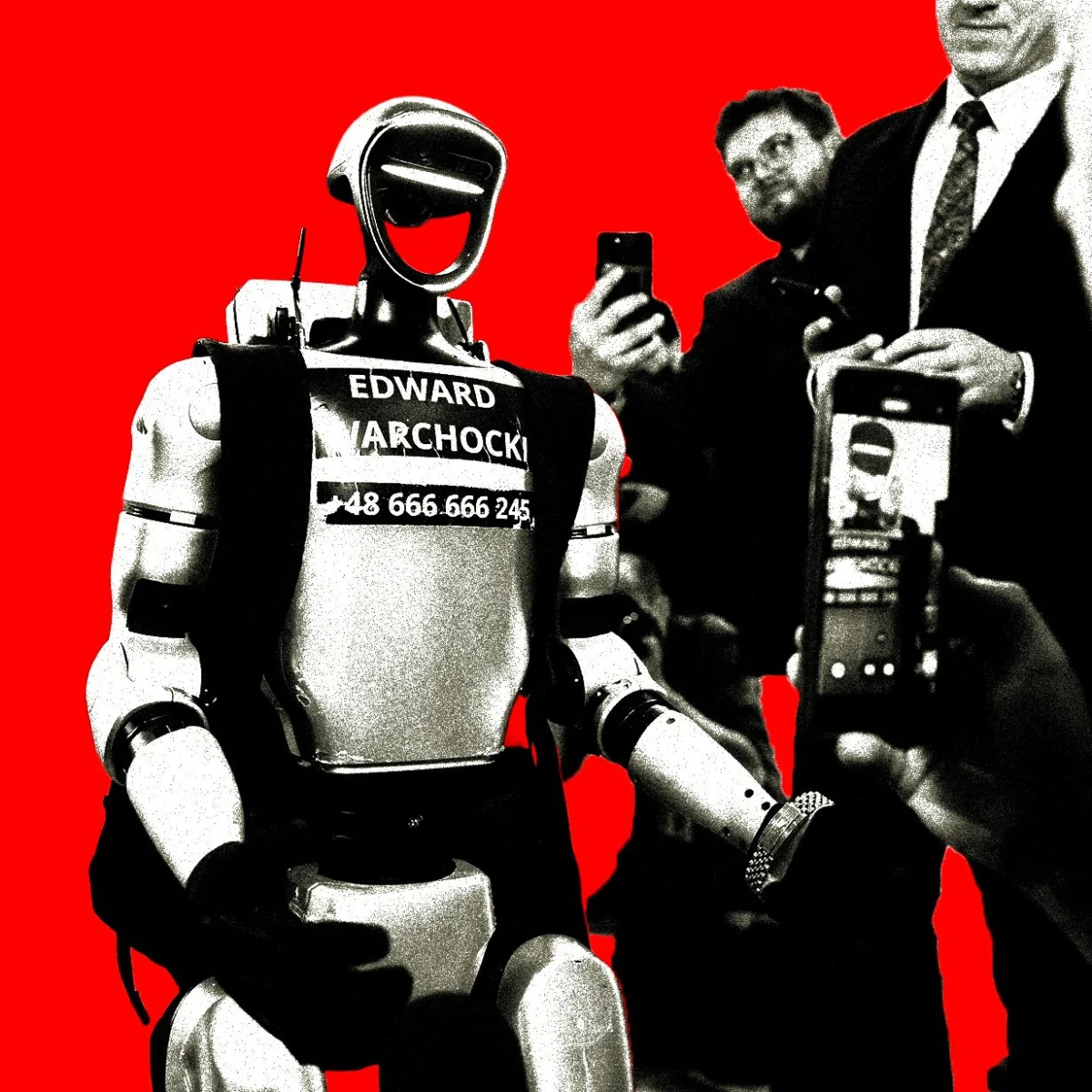
At the forefront of this movement is Edward Warchocki, a humanoid robot that has become a national sensation in Poland. Created by software developer Bartosz Idzik and his partner Radosław Grzelaczyk, Edward represents a milestone in human-robot interaction. When silent, the robot is a 40-kilogram machine of aluminum and sensors; however, when integrated with an LLM, it adopts a personality described by Idzik as "very emotional and easy to make friends with." This transition from a silent machine to a conversationalist was pivotal. Initial public reactions to the robot were marked by apprehension, but the introduction of live Polish-language conversational capabilities turned fear into fascination.
The Genesis of a Digital Icon: The Case of Edward Warchocki
The journey of Edward Warchocki began approximately six months ago when Idzik and Grzelaczyk imported a humanoid frame from China. The name "Edward" was a tribute to Grzelaczyk’s dog, Eddie, while "Warchocki" was derived from the Polish word warczeć (to growl), creating a persona that felt authentically local despite its foreign hardware.
The robot’s rise to fame was rapid. Edward’s itinerary has included a formal visit to the Polish parliament to converse with lawmakers, hiking expeditions, and a viral incident in April 2026 where the robot—outfitted with a backpack and a luxury watch—successfully chased a sound of wild boars out of a Warsaw residential area. These stunts have translated into massive digital engagement, with Edward amassing over 1 million followers and a staggering 4 billion views across various social media platforms.
This success is not an isolated incident. In Austin, Texas, a robot known as "Rizzbot" has gained notoriety for wearing a cowboy hat and flirting with pedestrians. In New York, "Bart Robot" became a symbol of local pride after a video of it breakdancing with fans following a New York Knicks championship victory went viral. In Miami, the "Brickell Clanker" has become a staple of the city’s nightlife and sporting culture, frequently seen partying with fans during the World Cup.
The Unitree G1: The Hardware Powering the Trend
Despite their diverse personalities and geographic locations, these influencers share a common technological lineage. Most are iterations of the Unitree G1, a humanoid model produced by the Chinese firm Unitree. Standing roughly the size of a child, the G1 is characterized by its aluminum limbs, a hollowed-out face ringed by blue LED lights, and a price point that has disrupted the global robotics market.
Unitree has positioned itself as the leader in the commercialization of humanoid robotics, succeeding where many Western firms have remained in the research and development phase. The company’s financial disclosures, released ahead of its impending initial public offering (IPO) on the Chinese stock market, reveal a robust business model. In 2025, Unitree reported that more than 50% of its revenue was generated from direct sales of humanoid robots to consumers and commercial enterprises, rather than industrial contracts or research grants.
The company shipped 5,511 humanoid units in 2025 alone, with an average unit price of less than $25,000. Significantly, 43% of these sales were to international customers, indicating a global demand for accessible humanoid technology. Last year also marked the first time the company achieved profitability, a rare feat in the capital-intensive field of robotics.
Economic and Regulatory Hurdles in the United States
While the hardware is increasingly accessible, the cost of entry for aspiring robot handlers remains significant, particularly in the United States. Jake Cooperstein, a 24-year-old entrepreneur in Miami, illustrates the financial commitment required to enter the "humanoid influencer" space. Although Unitree lists a base G1 model at approximately $13,500, American distributors often price the unit closer to $19,000 after accounting for tariffs, shipping, and taxes.
For those seeking more advanced capabilities, the costs escalate. Cooperstein opted for the U5 variation, a model designed for educational and research purposes that allows for extensive software modification and features more dexterous, human-like hands. This model carries a price tag of roughly $66,000.
Cooperstein’s "Brickell Clanker" has proven to be a viable business asset. By charging between $800 and $1,200 per hour for appearances at nightclubs, corporate events, and influencer parties, Cooperstein is part of a new "clanker economy." However, the future of this industry in the U.S. is currently clouded by regulatory uncertainty. In July 2026, the Federal Communications Commission (FCC) announced a ban on the importation of new Chinese-made humanoid robots, citing national security and data privacy concerns. While existing models like the G1 and the newer, lighter R1 (dubbed "Lil Clanker" by Cooperstein) remain legal for those who already own them, the ban prevents the entry of next-generation hardware into the American market.
The Technical Reality: Teleoperation vs. Autonomy
The public image of these robots often suggests a level of autonomy that does not yet exist in practice. While LLMs allow the robots to speak fluently and respond to questions, their physical movements are largely controlled via teleoperation. Owners like Idzik and Cooperstein use remote interfaces to navigate the robots through crowded public spaces.
The reliance on teleoperation is primarily a safety measure. Although the G1 is equipped with sensors and software capable of autonomous navigation, the risk of a mechanical malfunction or a software glitch causing the robot to collide with a person remains a significant liability. "When we bring the robots out, we are teleoperating most of the time," Idzik noted, citing the unpredictability of urban environments.
Currently, the G1 comes pre-programmed with a limited library of gestures and movements—roughly 20 gestures and 15 dance moves. Creating new behaviors, such as the "Viking Row" gesture Cooperstein taught the Brickell Clanker to perform for soccer fans, requires specialized technical knowledge. This gap between the robot’s verbal "intelligence" and its physical "clumsiness" remains the primary barrier to moving humanoids from social media stunts to "real" jobs, such as domestic cleaning or assembly line work.
Implications and the Future of Humanoid Integration
The rise of humanoid influencers raises profound questions about the future of labor and social interaction. Analysts are divided on whether these machines will ever transition from novelty items to productive economic contributors. While Unitree’s sales figures suggest a burgeoning market, the utility of the robots is currently limited to entertainment and marketing.
There is also a psychological dimension to the trend. The use of LLMs to give robots a "personality" has proven highly effective at inducing empathy in humans. As seen with Edward Warchocki, a machine that was once viewed as a potential threat becomes a beloved community figure once it can crack a joke or share an "emotional" sentiment. This anthropomorphism is a powerful tool for public relations, but it also complicates the ethical landscape of AI, as users may form genuine emotional attachments to machines owned and operated by corporations or private influencers.
In Europe and Asia, the regulatory environment remains more permissive than in the United States. MERA Robotics, the firm co-founded by Idzik, now operates a fleet of 20 humanoid robots across Poland, the Middle East, and Southeast Asia. By diversifying the "personalities" of these robots, the company is testing the limits of how many different roles a single hardware model can play in the global cultural zeitgeist.
As Unitree prepares for its IPO, the robotics industry stands at a crossroads. The success of the G1 has proven that there is a massive global appetite for humanoid forms, provided they are affordable and communicative. Whether these "clankers" remain a social media fad or evolve into the primary workforce of the 2030s will depend on advancements in battery life, physical autonomy, and the resolution of the ongoing geopolitical trade wars surrounding Chinese technology. For now, however, the future is already walking the streets, taking selfies, and dancing at the World Cup, one teleoperated step at a time.
About the Author