The West Coast of North America is currently navigating a quiet but profound ecological transformation that began over a decade ago, leading to the collapse of kelp forests and the rise of "urchin barrens." In 2013, a catastrophic event known as Sea Star Wasting Syndrome decimated populations of the sunflower sea star (Pycnopodia helianthoides), a primary predator of sea urchins. Deprived of their natural check, purple sea urchin (Strongylocentrotus purpuratus) populations surged by as much as 10,000 percent in some regions, leading to the systematic deforestation of the Pacific’s underwater kelp canopies. Today, a burgeoning industry known as urchin ranching is emerging as a market-driven solution to this environmental crisis, transforming an ecological pest into a high-value culinary delicacy.
The Chronology of a Coastal Collapse
The destabilization of the Pacific coastal ecosystem did not happen overnight, but rather through a series of compounding environmental stressors. The primary catalyst was the 2013 bacterial outbreak that caused sea stars to develop lesions, lose limbs, and eventually dissolve into piles of white tissue. Within two years, the sunflower sea star was nearly extinct in its southern range, eventually being listed as Critically Endangered by the International Union for Conservation of Nature (IUCN).

Following the loss of the sea stars, the region was hit by a marine heatwave known as "The Blob" between 2014 and 2016. This period of abnormally high ocean temperatures further stressed kelp forests, which require cold, nutrient-rich waters to thrive. In Northern California alone, kelp coverage plummeted by more than 95 percent.
With the predators gone and the kelp weakened, purple sea urchins began to graze uncontrollably. Unlike many species that perish when their food source vanishes, sea urchins are biologically resilient. When they consume all available kelp, they enter a state of dormancy or "starvation mode." In this state, they stop growing and their edible gonads—known as uni—shrink to nothing. These "zombie urchins" can survive for years in a dormant state, preventing kelp from ever regrowing and creating permanent "urchin barrens" where little else can survive.
From Ecological Pest to Culinary Delicacy
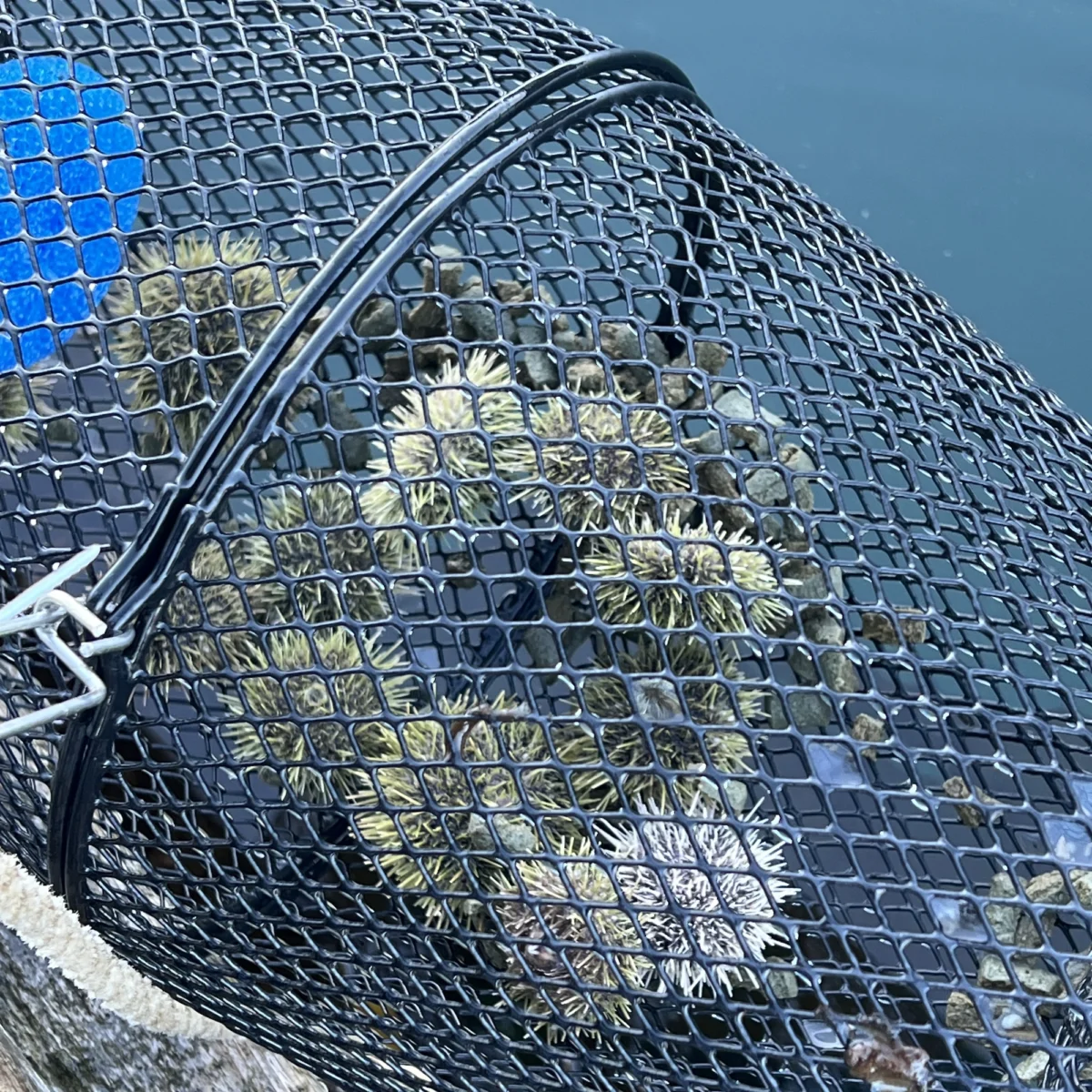
The traditional response to urchin overpopulation has been culling, often involving divers smashing the invertebrates with hammers to clear space for kelp restoration. However, this method is labor-intensive and provides no economic return. Urchin ranching offers a more sophisticated alternative: divers collect the starving urchins from the barrens and transport them to onshore aquaculture facilities.

In these "ranches," the urchins are placed in flow-through tanks and fed a specialized diet of sustainably harvested kelp or nutrient-rich pellets. Over a period of roughly 10 weeks, the urchins’ internal organs—the uni—rebuild. Uni is a prized ingredient in Japanese cuisine and high-end global gastronomy, often retailing for significant prices in sushi markets. By fattening up the "empty" urchins, ranchers create a valuable product while simultaneously removing the grazers that prevent kelp recovery.
The Mechanics of Sustainable Aquaculture
Several pioneering companies are leading the charge in this new sector. The Cultured Abalone Farm, located on the California coast, originally focused on edible sea snails but expanded into purple urchin ranching six years ago. According to Andie Van Horn, the farm’s farm-to-fork manager, the goal was to create a viable food product that maintained a positive ecological impact.
The process is remarkably efficient. The farm utilizes a "lawnmower boat" that sustainably trims only the top layer of wild kelp canopies, ensuring the kelp continues to grow while providing the necessary nutrients for the ranched urchins. Because the facility uses a flow-through system—pumping water directly from the ocean—natural parameters like pH, salinity, and temperature are maintained by the sea itself, reducing the energy footprint of the operation.

In Oregon, OoNee Sea Urchin Ranch is taking the concept a step further by developing a closed-loop ecosystem within their tanks. To manage the waste produced by the urchins, the company introduced sea cucumbers into the system. The sea cucumbers act as natural cleaners, consuming urchin waste and "crumbs" from kelp pellets. The waste from the sea cucumbers, in turn, can be used to fertilize seaweed, which the company plans to sell as a secondary product. This biomimicry ensures that the aquaculture operation functions as a miniature version of a healthy reef.
Economic and Scientific Data Supporting Restoration
The economic stakes of kelp forest loss are significant. Kelp forests are among the most productive ecosystems on Earth, providing an estimated $500 billion in annual global ecosystem services. They act as nurseries for commercial fish species, sequester carbon at rates far higher than terrestrial forests, and protect coastlines from erosion by buffering wave energy.
Data from recent surveys suggests that targeted urchin removal can lead to rapid kelp recovery. In the Santa Barbara Channel, The Cultured Abalone Farm is collaborating with students from the University of California, Santa Barbara, and Santa Barbara City College to conduct formal surveys. Early results indicate that when urchin density is reduced below a certain threshold, kelp spores—which can remain dormant on the seafloor—quickly germinate and re-establish the canopy.

Aaron Huang, CEO of OoNee Sea Urchin Ranch, notes that while the numbers are still far from the "healthy" density of one urchin per square meter, the trend is moving in the right direction. Volunteer divers from Reef Check, a citizen science organization, have begun documenting the return of kelp in areas where ranching collection is most active.
Expert Perspectives on Scaling the Solution
Marine biologists emphasize that for urchin ranching to be a true ecological solution, it must be scaled significantly. Brenda Konar, a marine biologist at the University of Alaska Fairbanks, has studied the impact of green urchin ranching in the North Pacific. She argues that humans must effectively step into the ecological vacuum left by the disappearance of sea stars and sea otters.
"If you had a big enough production and you could just go in and collect hundreds of these things, eventually you’re going to run out of urchins," Konar stated. By acting as the "top predator," the ranching industry can simulate the natural checks and balances that once kept the ecosystem in equilibrium. Konar believes that while it may take years to fully revert the barrens back into lush kelp forests, the interim benefit is a sustainable, high-protein food source that requires no land, no fresh water, and no fertilizers.

Market Challenges and Consumer Education
One of the primary hurdles for the industry is consumer perception. While red urchins (Mesocentrotus franciscanus) have traditionally been the standard for uni due to their large size, the smaller purple and green urchins are less familiar to the public.
Ranchers are working to change this through taste-testing events and partnerships with local seafood distributors like Get Hooked. Early feedback suggests that ranched purple urchins often possess a sweeter, more tender profile than their wild-caught red counterparts. Van Horn compares the variety in urchins to that of oysters, where different species offer distinct flavor profiles and textures suitable for different culinary applications.
By positioning purple urchins as a "restorative" seafood choice, ranchers are appealing to the growing demographic of "climatarians"—consumers who make dietary choices based on the environmental impact of their food.

Broader Implications for Global Marine Health
The success of urchin ranching on the West Coast could serve as a blueprint for other regions facing similar "barren" crises. From the coastlines of Norway and Japan to the waters of Tasmania, urchin overpopulation is a global phenomenon driven by climate change and the overfishing of natural predators like lobsters and large fish.
The shift toward restorative aquaculture represents a departure from traditional "extractive" fishing. Instead of merely taking from the ocean, urchin ranching requires active participation in the health of the habitat. For leaders like Aaron Huang, this is the ultimate goal: a return to a more traditional, hands-on relationship with nature that uses modern technology to solve man-made problems.
As the industry grows, it faces the dual challenge of maintaining profitability while ensuring that its primary goal—ecological restoration—remains at the forefront. If successful, urchin ranching may prove that the best way to save an ecosystem is to find a way to make its restoration a sustainable part of the global economy. In the words of Brenda Konar, the process may be slow, but "in the meantime, you’re going to be feeding a lot of people" while the kelp slowly regains its foothold on the Pacific floor.
About the Author