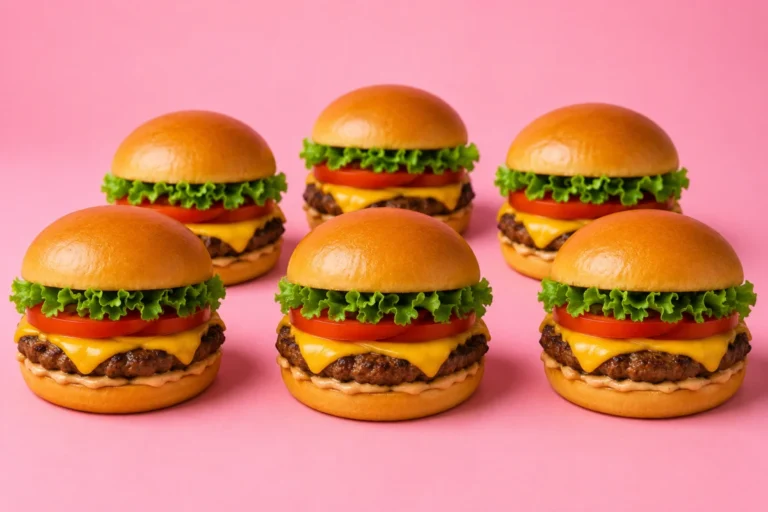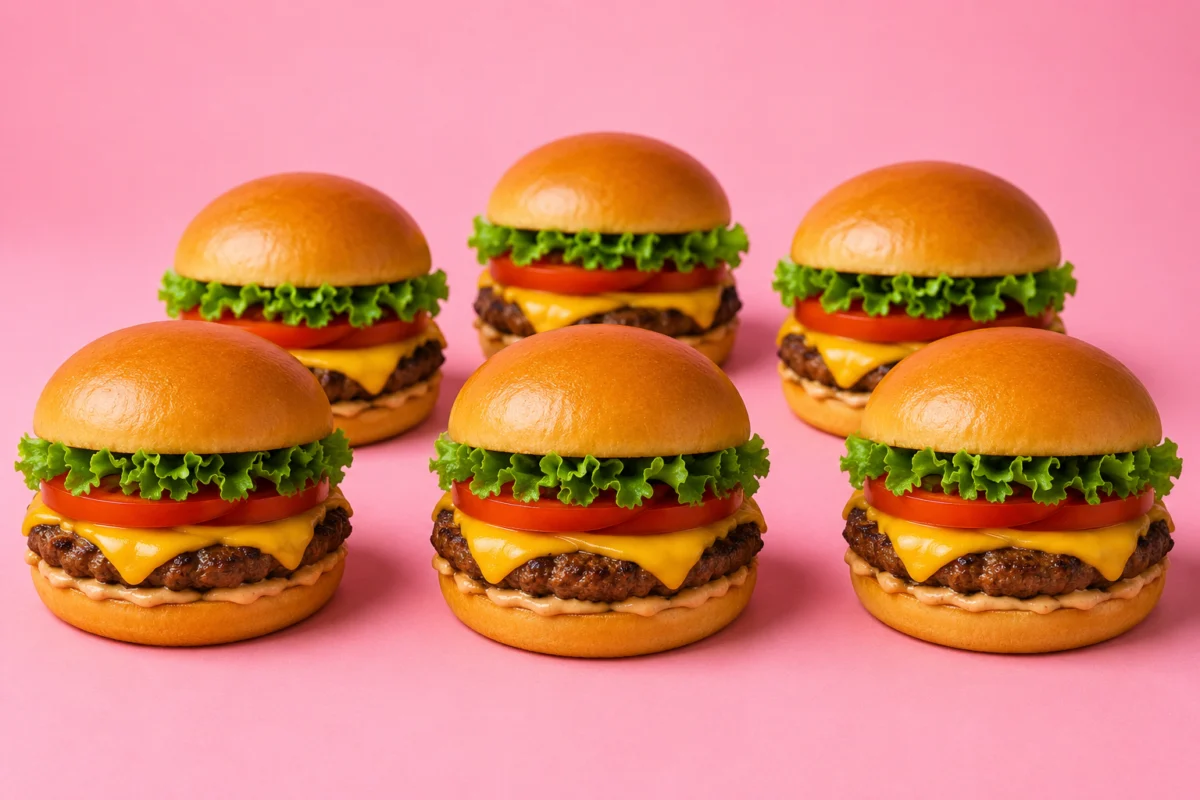
The subtle creep of artificial intelligence into our daily lives has taken an unexpected, and perhaps unsettling, turn within the restaurant industry. Diners are increasingly encountering menus featuring food illustrations that, while superficially appealing, possess an unsettling perfection. This phenomenon, characterized by unnervingly symmetrical bagels, impossibly smooth ice cream scoops, and shrimp curled into "Lovecraftian food horrors," is a direct consequence of generative AI models trained on a narrow, homogenized aesthetic. Experts suggest this trend is not only an aesthetic misstep but also a potential indicator of deeper issues within AI development, including the looming threat of "model collapse."
The Rise of the Eerily Perfect Plate
The initial encounters with these AI-generated menus can be disorienting. A patron might find themselves staring at a menu in a cafe, a collection of seemingly flawless food images confronting them. Each illustration appears precisely symmetrical, unnaturally smooth, and possesses a level of perfection that, paradoxically, feels wrong. This visceral reaction, often accompanied by a sense of paranoia or a feeling that something is fundamentally amiss, is not a figment of the diner’s imagination. It’s a direct result of generative AI models, particularly those used for image creation, being trained on datasets that favor a specific, often idealized, visual style.
These AI-generated visuals can range from the overtly bizarre, like a burrito depicted as an avant-garde sculpture with impossibly melty cheese, to the subtly off-putting. More often, the flaws are not immediately apparent. The illustrations appear ordinary at first glance, but a second, closer look reveals an unnatural perfection, a lack of organic variation that signals their artificial origin. As Alex Lisle, CTO of Reality Defender, a company specializing in AI detection and content verification, observed to TechCrunch, "It’s almost like an alien trying to make a pizza without understanding its core principles."
Decoding the Aesthetic: Training Data and Homogenization
The peculiar aesthetic of these AI-generated food images can be traced back to the fundamental way these models learn. Large Language Models (LLMs) and diffusion models, the engines behind sophisticated chatbots and image generators like ChatGPT and Midjourney, are trained on colossal datasets. By identifying patterns within this vast sea of information, these models predict and generate content based on user prompts, such as "Make me a menu for a burger restaurant."
However, the data these models are fed is not always a pure reflection of reality. A significant portion of the visual data available for training, particularly from the past decade, includes professionally styled food photography and existing digital menus. Lisle points to this historical data as a key factor: "A lot of this stuff looks like a Chili’s menu from 2015, and there’s a reason for that. That was the corpus of work from which [the models] drew their function." This reliance on a specific, often commercially curated, visual history leads to a convergence of styles. AI models, aiming to produce "pleasing" and inoffensive imagery, tend to smooth out the rough edges of reality, resulting in a homogenized output.
This homogenization is amplified by the iterative nature of AI content creation. When AI models are used to generate images, and then those generated images are further refined or edited, a subtle degradation can occur. A user named Labtec on X (formerly Twitter) demonstrated this phenomenon by creating a restaurant menu in ChatGPT and then editing it 100 times. The experiment revealed a progressive transformation of the food images, with each edit pushing them further into an unnatural, "slop-like" appearance, culminating in visuals that Labtec described as "uncomfortable." This iterative refinement, common in menu design where details like prices or item names are adjusted, inadvertently pushes the AI-generated visuals further into the uncanny valley.
The Specter of Model Collapse and Convergence
The reliance on AI-generated content for further AI training poses a significant risk known as "model collapse." This concept, likened by Lisle to "mad cow disease," occurs when the output of a model is fed back into its own training data. Over time, this "inbreeding" of data can lead to a severe degradation of the model’s performance and a loss of its ability to generate novel or accurate content.

While the current trend in AI restaurant menus isn’t necessarily full-blown model collapse, it does exhibit a phenomenon called "convergence." Convergence refers to a degradation in the quality and diversity of AI outputs, where the model’s creations become increasingly similar and less representative of real-world variability. This happens because the AI, in its attempt to please and avoid errors, gravitates towards the most common and "safe" patterns in its training data.
The implications of this convergence extend beyond mere aesthetics. It raises questions about the long-term viability and trustworthiness of AI-generated content. If AI models are increasingly trained on their own outputs, the risk of generating increasingly generic, less accurate, and potentially nonsensical content grows. This is particularly concerning in fields where accuracy and nuance are critical.
The "Uncanny Valley" Effect and Consumer Discomfort
The unsettling nature of AI-generated food images is not merely a subjective observation. Research supports the idea that "almost real" can be more disturbing than outright fake. A study from the University of Duisburg-Essen in Germany found that AI-generated food images that fell into an "uncanny valley" – images that looked almost, but not quite, real – elicited more disgust and unease than those that were clearly artificial. This psychological effect, where near-perfect replicas trigger discomfort, is amplified by the growing cultural awareness and skepticism surrounding AI.
For restaurants, this consumer discomfort translates into a tangible backlash. The "unexplainable sense" that people have about the artificiality of these images, as described by Lee Rainie, Director of the Imagining the Digital Future Center at Elon University, can lead to a loss of trust. When diners feel they are being presented with a manufactured, rather than an authentic, representation of the food they are about to consume, it can negatively impact their dining experience and their perception of the establishment.
Broader Implications: A Shift in Visual Trust
The prevalence of unnervingly perfect AI-generated food images serves as a microcosm of a larger societal shift. For centuries, visual evidence has been considered a cornerstone of belief. "Seeing and hearing has always been believing," Lisle notes, "to the point where even our court systems are entirely tuned to the idea that the gold standard in evidence is taped confessions and videotaped evidence." However, the increasing sophistication of AI-generated imagery and video is fundamentally challenging this long-held paradigm.
The implications of this shift are profound and far-reaching. In the restaurant industry, it means that businesses must be mindful of the source and authenticity of their visual marketing materials. Consumers are becoming more discerning, and the allure of an effortlessly perfect AI-generated image may be outweighed by the potential for distrust and unease.
As AI technology continues to evolve, the lines between real and artificial will likely become even more blurred. The current phenomenon of uncanny AI menus is a stark reminder that while AI can generate visually appealing content, it currently struggles with the nuanced imperfections and inherent variations that make real-world subjects relatable and trustworthy. For restaurants, the immediate challenge is to navigate this evolving landscape, ensuring that their digital presence enhances, rather than detracts from, the dining experience. The long-term challenge lies in adapting to a world where our fundamental understanding of visual evidence is being reshaped by artificial intelligence, for better or for worse.
About the Author