The digital marketing landscape in 2022 is undergoing a significant transformation as artificial intelligence (AI) moves from a niche experimental technology to a fundamental pillar of content strategy. As businesses face increasing pressure to produce high-quality, SEO-optimized material at a rapid pace, AI content generators have emerged as essential tools for maintaining competitive relevance. These platforms, largely powered by advanced large language models such as OpenAI’s GPT-3, are designed to assist creators in generating everything from short-form social media copy to comprehensive long-form articles. This technological shift is not merely about speed; it represents a fundamental change in the economics of content production, allowing small enterprises and individual creators to achieve a scale of output previously reserved for large-scale media agencies.

The Evolution of Generative AI: A Brief Chronology
To understand the current state of AI content tools in 2022, it is necessary to examine the technological trajectory of the last several years. The foundation for today’s tools was laid in 2019 with the release of GPT-2 by OpenAI, which demonstrated that machines could generate coherent, albeit sometimes repetitive, text. However, the true "paradigm shift" occurred in June 2020 with the introduction of GPT-3, which featured 175 billion parameters—a massive increase over its predecessor.
By early 2021, the first wave of commercial applications began to surface. Startups like Jasper (then known as Jarvis) and Copy.ai began building user-friendly interfaces atop these language models. Throughout late 2021 and early 2022, these tools evolved from simple "text predictors" into sophisticated content assistants capable of understanding specific brand voices, SEO requirements, and multi-language translations. This period also saw significant rebranding efforts, such as Jarvis becoming Jasper in early 2022 to avoid trademark conflicts with Marvel, signaling the industry’s move toward professionalization and mainstream corporate adoption.
Primary Market Leaders and Technical Capabilities
1. Jasper AI: The Standard for Long-Form Content
Jasper AI has established itself as the premier solution for professional writers and marketing teams. Known for its "Boss Mode" feature, the platform allows users to provide direct commands to the AI, facilitating a collaborative writing process. Jasper’s primary strength lies in its ability to maintain context over long documents, reducing the "hallucination" effect often seen in lesser models. In 2022, the platform integrated heavily with SEO tools like SurferSEO, creating a workflow that addresses both creative and technical requirements.
2. Copy.ai: Versatility and Template-Driven Design
While Jasper focuses on long-form depth, Copy.ai has captured the market for high-volume marketing copy. With over 90 templates ranging from "Hook Text" for digital ads to product descriptions, Copy.ai is optimized for the "blank page" problem. Its interface is designed for rapid iteration, making it a favorite for social media managers and e-commerce specialists who require dozens of variations for A/B testing.

3. Frase: The Convergence of AI and SEO
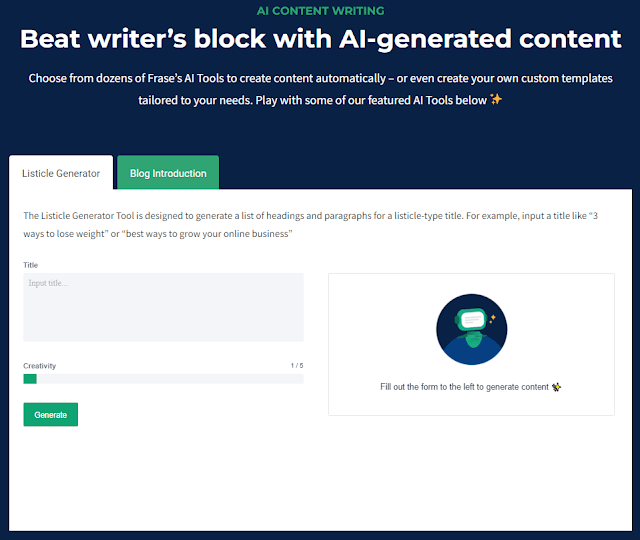
Frase represents a specialized segment of the market that prioritizes search engine performance. Unlike general-purpose writers, Frase analyzes the top-performing search results for a given keyword and uses AI to generate content briefs and drafts that directly address the gaps in existing content. This data-driven approach ensures that the generated text is not only readable but also strategically aligned with Google’s ranking algorithms.
4. Article Forge: High-Degree Automation
Article Forge occupies a unique niche by requiring minimal human intervention. Users provide a primary keyword and sub-keywords, and the AI generates a complete article from scratch. While it offers less granular control than Jasper or Copy.ai, it is highly efficient for creating foundational content or "PBN" (Private Blog Network) material where speed and cost-effectiveness are the primary metrics.
5. Rytr: Accessibility and the Freemium Model
Rytr has gained significant traction in 2022 by lowering the barrier to entry. Offering a robust free tier and a mobile-friendly interface, it has become the tool of choice for students and solo entrepreneurs. Despite its lower price point, Rytr utilizes the same underlying GPT technology as its more expensive competitors, providing high-quality output for short-form tasks like emails and blog outlines.
6. Writesonic: Multi-Platform Marketing Utility
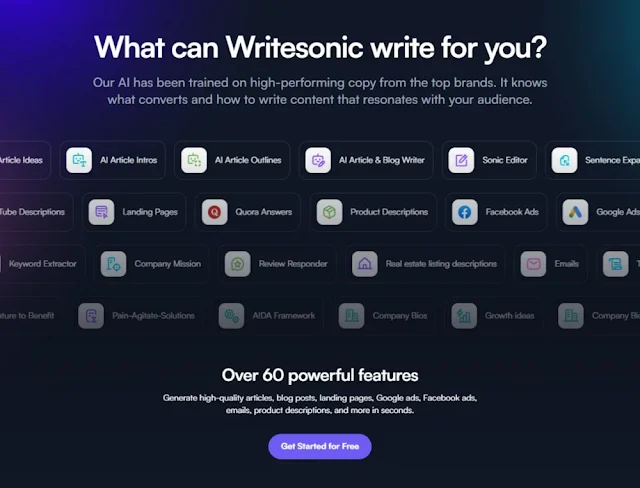
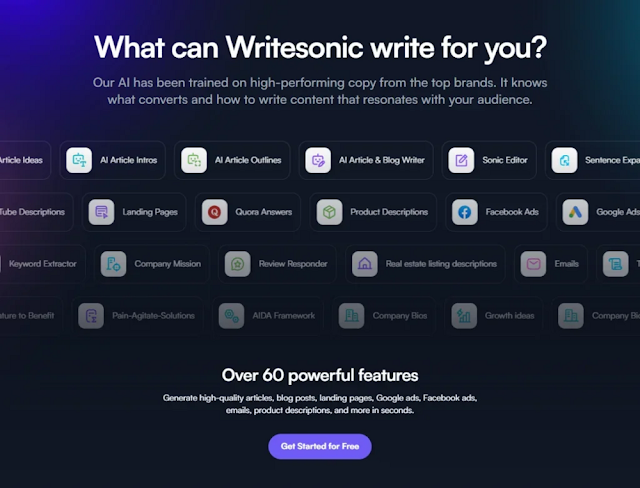
Writesonic is engineered for the modern digital ecosystem, offering specific modules for LinkedIn posts, Google Ads, and landing pages. Its standout feature in 2022 is the "AI Article Writer 3.0," which guides users through a four-step process: ideas, outlines, intros, and the final draft. This structured workflow reduces the cognitive load on the user while maintaining a high standard of output.

7. Copysmith: Enterprise-Level Collaboration
Copysmith focuses on the needs of large teams and e-commerce agencies. It offers features like bulk content generation and team collaboration folders, which are essential for managing large-scale content calendars. Its integration with platforms like Shopify and Google Chrome makes it a seamless part of a professional marketing stack.
8. Hypotenuse.ai: E-commerce Optimization
Hypotenuse.ai specializes in product descriptions and marketing visuals. By analyzing product attributes, the AI generates persuasive copy that adheres to retail best practices. In 2022, it expanded its capabilities to include blog generation, but it remains most respected for its ability to handle large catalogs of product data with high accuracy.

9. Kafkai: Niche-Specific Generation
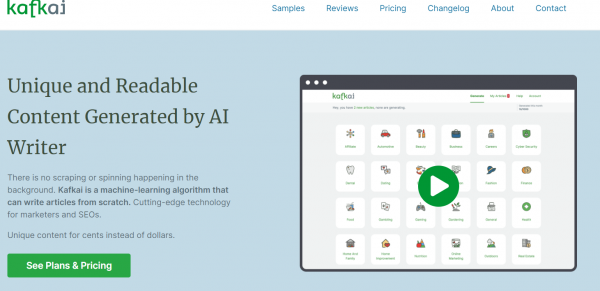
Kafkai utilizes a different approach by training its models on specific niches. This results in content that is often more "on-topic" for specialized industries than general-purpose models. It is particularly effective for SEO practitioners who need to populate niche websites with relevant, topically authoritative text.
10. Peppertype.ai: Speed and Simplicity
Peppertype.ai is praised for its clean user interface and the speed at which it generates ideas. It acts as a "creative assistant," helping writers brainstorm titles, meta descriptions, and social media captions. It is particularly popular among small business owners who need to manage their own digital presence without a dedicated copywriting team.
Supporting Data: The Impact of AI on Productivity
Industry data from 2022 indicates a massive surge in AI adoption. According to market research, the AI in marketing sector is projected to reach a valuation of over $15 billion by the end of the year. Surveys of digital marketing agencies suggest that AI tools can reduce the time spent on initial drafts by up to 50% and lower the cost per article by 30% to 70%, depending on the complexity of the topic.
Furthermore, a study of content performance showed that AI-assisted articles, when properly edited by humans, perform as well as—and sometimes better than—entirely human-written content in terms of search engine rankings. This is attributed to the AI’s ability to analyze and integrate high-frequency keywords more consistently than manual writers.

Official Responses and Industry Sentiment
The rise of these tools has prompted a range of responses from major industry players. In early 2022, Google’s Search Quality team addressed the issue of AI-generated content. While Google’s guidelines initially suggested that automated content was against their terms of service, the company later clarified its stance. The focus has shifted toward "Helpful Content." Google’s official position is now that the method of production (human vs. AI) is less important than the value, accuracy, and "helpfulness" provided to the end-user.
Professional writing organizations have expressed a more cautious sentiment. The focus within the creative community has shifted from "AI replacement" to "AI augmentation." Many leading copywriters now view AI as a "junior writer" that handles the grunt work of research and drafting, allowing the human editor to focus on strategy, emotional resonance, and fact-checking.

Broader Impact and Future Implications
The proliferation of AI content generators in 2022 marks the beginning of a new era in information architecture. As these tools become more sophisticated, the distinction between human-authored and machine-generated text will continue to blur. This has significant implications for digital literacy and the "trust economy."
For businesses, the primary impact is the democratization of content. A startup with a limited budget can now produce the same volume of educational content as a multi-national corporation. However, this also leads to "content inflation," where the sheer volume of available information makes it harder for any single piece to stand out.
Looking forward, the integration of AI will likely move beyond text into multi-modal generation, where a single prompt can generate an article, an accompanying image, and a short-form video script simultaneously. The tools listed above are the pioneers of this movement, setting the stage for a future where AI is an invisible but omnipresent partner in all forms of digital communication. The challenge for 2023 and beyond will not be how to generate content, but how to ensure that the massive influx of automated information remains accurate, ethical, and genuinely beneficial to the global audience.
About the Author