The Evolution of Generative AI: A Brief Chronology
To understand the current state of AI tools in 2025, it is necessary to examine the rapid acceleration of the technology over the past three years. The journey began in late 2022 with the public release of large language models (LLMs) that introduced the masses to text-based generative AI. By 2023, the focus shifted toward visual synthesis, with diffusion models allowing for the creation of photorealistic imagery from text prompts.
The year 2024 was defined by the "video revolution," as multimodal models began to generate consistent temporal data, solving the "flicker" issues that plagued early AI cinematography. Entering 2025, the industry has moved into the era of "Agentic AI," where tools do not merely respond to prompts but understand complex project goals, manage multi-step workflows, and maintain brand consistency across various media formats. This chronological progression has set the stage for a suite of tools that offer unprecedented power to individual creators and enterprise marketing teams alike.
1. OpenAI ChatGPT: The Central Intelligence for Content Strategy
ChatGPT remains the foundational pillar of the AI content ecosystem in 2025. Having evolved far beyond a simple chatbot, the current iterations utilize advanced reasoning capabilities to function as a comprehensive content architect. In the professional sphere, it is utilized for deep-research synthesis, multi-platform campaign mapping, and long-form scriptwriting that adheres to specific rhetorical structures.
The 2025 version of ChatGPT features "Persistent Memory" and "Brand Voice Profiles," allowing the AI to retain a deep understanding of a creator’s past work, stylistic preferences, and target audience demographics. Data from McKinsey indicates that companies utilizing advanced LLMs for content ideation have seen a 40% reduction in time-to-market for major campaigns. For the modern creator, ChatGPT serves as the "Editor-in-Chief," refining raw ideas into structured, executable plans.
2. Canva Magic Studio: Democratizing High-End Visual Design
Canva has solidified its position in the market by integrating the "Magic Studio," a suite of AI tools that automate the most tedious aspects of graphic design. By 2025, the platform has moved toward "Generative Layouts," where the AI analyzes a brand’s assets and automatically generates a month’s worth of social media content in seconds.
Key features include "Magic Switch," which instantly converts a single design into multiple formats—transforming a vertical Instagram Reel into a horizontal YouTube thumbnail or a detailed infographic—while maintaining visual hierarchy. Industry analysts suggest that Canva’s AI integration has reduced the barrier to entry for professional-grade design, allowing small-to-medium enterprises (SMEs) to compete with larger firms that possess dedicated design departments.
3. RunwayML: The Frontier of AI-Generated Cinematography
RunwayML has emerged as the industry standard for AI video production, particularly with the maturation of its Gen-3 Alpha models. In 2025, the platform offers "Director Mode," giving creators granular control over camera movement, lighting, and physics within generated scenes. This tool is no longer just for experimental clips; it is being used to produce high-end commercials and segments of independent films.
The ability to perform "In-Painting" on video—removing or replacing objects in motion with perfect temporal consistency—has traditionally required hours of manual rotoscoping. RunwayML’s AI completes these tasks in real-time. According to a 2024 report by the Motion Picture Association, AI-assisted post-production tools like Runway have reduced visual effects (VFX) budgets by an average of 30% for independent productions.
4. Midjourney: Mastering the Aesthetic of Digital Artistry
Midjourney continues to dominate the AI imagery space through its focus on artistic "vibe" and photographic precision. By 2025, Midjourney V7 has solved the remaining challenges of AI art, such as complex anatomical accuracy and the rendering of legible text within images. The platform has transitioned from a Discord-based interface to a sophisticated web-based studio, offering "Style Tuning" features that allow creators to lock in a specific visual aesthetic across thousands of generated images.
For content creators, this means the ability to create a cohesive visual brand without the need for expensive photoshoots. The tool is increasingly used in the pre-visualization phase of major film and advertising projects, allowing creative directors to iterate on concepts at a fraction of the traditional cost.
5. Synthesia: The Proliferation of Virtual Presenters
Synthesia has revolutionized the corporate and educational sectors by providing high-fidelity AI avatars. In 2025, these avatars possess "Micro-Expression Technology," making them indistinguishable from human presenters in most professional contexts. This technology allows for the "localization" of video content at a global scale; a single video can be generated in over 120 languages, with the avatar’s lip movements and gestures automatically synced to the translated audio.
"The scalability of video was previously limited by human endurance and studio availability," notes digital media analyst Sarah Jenkins. "Synthesia has effectively decoupled video production from these physical constraints." This tool is particularly impactful for internal training and global news delivery, where speed and linguistic flexibility are paramount.
6. Descript: The Shift to Text-Based Media Editing
Descript has redefined the editing workflow for podcasters and video creators by treating audio and video as text. In 2025, its "Underlord" AI assistant can automatically identify the most engaging segments of a long-form recording and repurpose them into short-form clips for TikTok and Reels.
The platform’s "Overdub" feature, which allows creators to correct speech by simply typing new words, has reached a level of realism that eliminates the need for re-recording sessions. This "non-destructive" editing environment allows for a level of iterative creativity that was previously impossible in traditional linear editing software.
7. ElevenLabs: The New Standard for Synthetic Audio
ElevenLabs has become the dominant force in AI voice synthesis, offering "Speech-to-Speech" capabilities that allow creators to map their emotional delivery onto a different voice. In 2025, the tool is widely used for dubbing international content, creating audiobooks, and providing voices for non-player characters (NPCs) in gaming.
The ethical implications of this technology remain a point of discussion. ElevenLabs has responded by implementing "Voice Captcha" and digital watermarking to prevent unauthorized voice cloning. Despite these challenges, the efficiency gains are undeniable; publishers report that AI-narrated audiobooks have allowed them to increase their output by 500%, bringing titles to market that were previously deemed financially unviable for human narration.
8. Tribescaler: Engineering Virality Through Algorithmic Insight
Tribescaler represents the niche of AI tools focused specifically on "hook" generation and audience engagement. In 2025, the tool functions by analyzing real-time trending data across X (formerly Twitter), LinkedIn, and Threads to suggest content structures that are statistically more likely to trigger platform algorithms.
This tool is essential for the "Ghostwriter" economy, where professionals manage the digital presence of high-level executives. By utilizing AI to refine headlines and opening statements, users report a significant increase in "impression-to-click" ratios. It represents the move toward data-driven creativity, where the "what" is decided by the human, but the "how" is optimized by the machine.
9. Clickable: Data-Driven Advertising Automation
Clickable addresses the intersection of creative design and performance marketing. In 2025, the platform uses AI to generate hundreds of ad variations based on a single creative brief, then uses predictive modeling to suggest which variation will perform best on specific platforms like Meta or Google Ads.
This "automated A/B testing" saves brands thousands of dollars in wasted ad spend. By analyzing successful historical data, Clickable ensures that every visual and copy element is optimized for conversion. For digital marketers, this shifts the workload from manual asset creation to high-level strategy and budget management.
10. Copy.ai: Enterprise-Grade Content Workflows
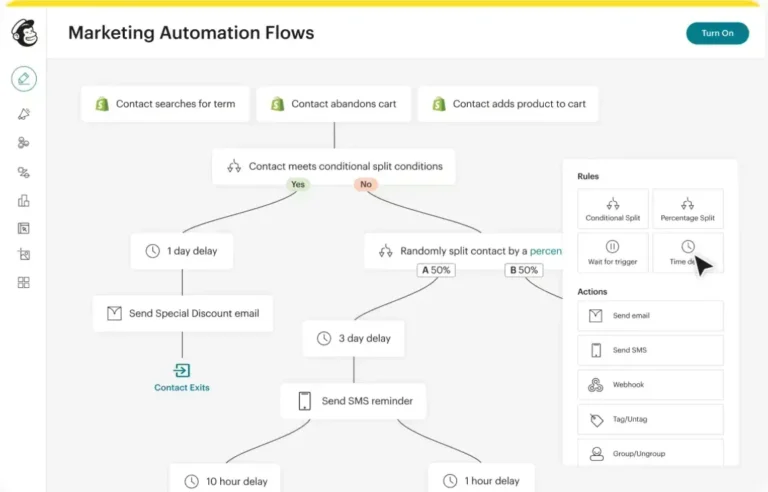
Copy.ai has evolved from a simple copywriting tool into an "AI Marketing OS." In 2025, it focuses on "Workflows," which allow teams to automate complex sequences—such as taking a raw transcript from a webinar and automatically generating a blog post, a newsletter, five LinkedIn updates, and a series of promotional emails.
The platform’s strength lies in its "Knowledge Base" integration, which ensures that all generated content is factually accurate based on a company’s internal documents. This addresses the "hallucination" problem common in earlier AI models and makes it a trusted tool for highly regulated industries like finance and healthcare.
Broader Impact and Implications for the Creative Workforce
The proliferation of these ten tools in 2025 has sparked a significant debate regarding the future of creative labor. While the productivity gains are measurable—with some reports suggesting a 5x increase in output for individual creators—there are concerns regarding the devaluation of traditional skills.
Economic Shift: The "Middle-Management" of content creation (entry-level editing, basic copywriting, and stock design) is seeing a rapid decline in demand. Conversely, there is a surging demand for "AI Orchestrators"—professionals who can manage multiple AI systems to produce complex, high-value outputs.
Ethical and Legal Landscape: As of 2025, the legal framework surrounding AI-generated content remains in flux. Significant court cases regarding copyright and "fair use" of training data continue to shape how these tools are used. Most major platforms have now implemented "AI Disclosure" labels to maintain transparency with audiences.
The Human Premium: Paradoxically, as AI content becomes ubiquitous, "Human-Only" content is beginning to command a premium. Authenticity, lived experience, and personal brand loyalty have become the new currencies of the digital economy. The most successful creators in 2025 are those who use AI to handle the "commodity" aspects of creation while doubling down on their unique human perspective.
In conclusion, the AI toolset of 2025 represents a move toward the augmentation of human potential. By offloading the mechanical and repetitive aspects of production to specialized AI systems, creators are being liberated to focus on the elements that machines cannot replicate: genuine innovation, emotional resonance, and strategic vision. The future of content creation is not a choice between human and machine, but a sophisticated collaboration between the two.
About the Author