The modern business landscape, increasingly characterized by remote workforces and geographically dispersed operations, presents a unique set of logistical challenges. Among the most persistent and often underestimated is the intricate web of United States time zones. What might seem like a minor inconvenience can quickly escalate into significant operational disruptions, impacting everything from meeting scheduling and project deadlines to customer service and employee productivity. This pervasive issue, often dubbed "time zone fatigue," affects businesses with employees in neighboring states or across the country, demanding a clear understanding of temporal distinctions to ensure seamless communication and collaboration. This comprehensive guide delves into the intricacies of U.S. time zones, their impact on business operations, the nuances of Daylight Saving Time, and practical strategies for navigating these temporal divides effectively.
The Business Imperative of Time Zone Awareness
In an era where business operations are no longer confined by geographical boundaries, understanding time zones is not merely a matter of convenience but a critical business necessity. The proliferation of remote work, which saw a dramatic surge during the COVID-19 pandemic and has continued to remain a significant aspect of the modern workforce, means that teams are frequently spread across multiple states, each potentially operating under a different temporal framework. According to a 2023 report by McKinsey & Company, approximately 58% of American workers have the opportunity to work remotely at least one day a week, with a substantial portion of these embracing full-time remote arrangements. This widespread adoption necessitates a robust strategy for managing temporal discrepancies.
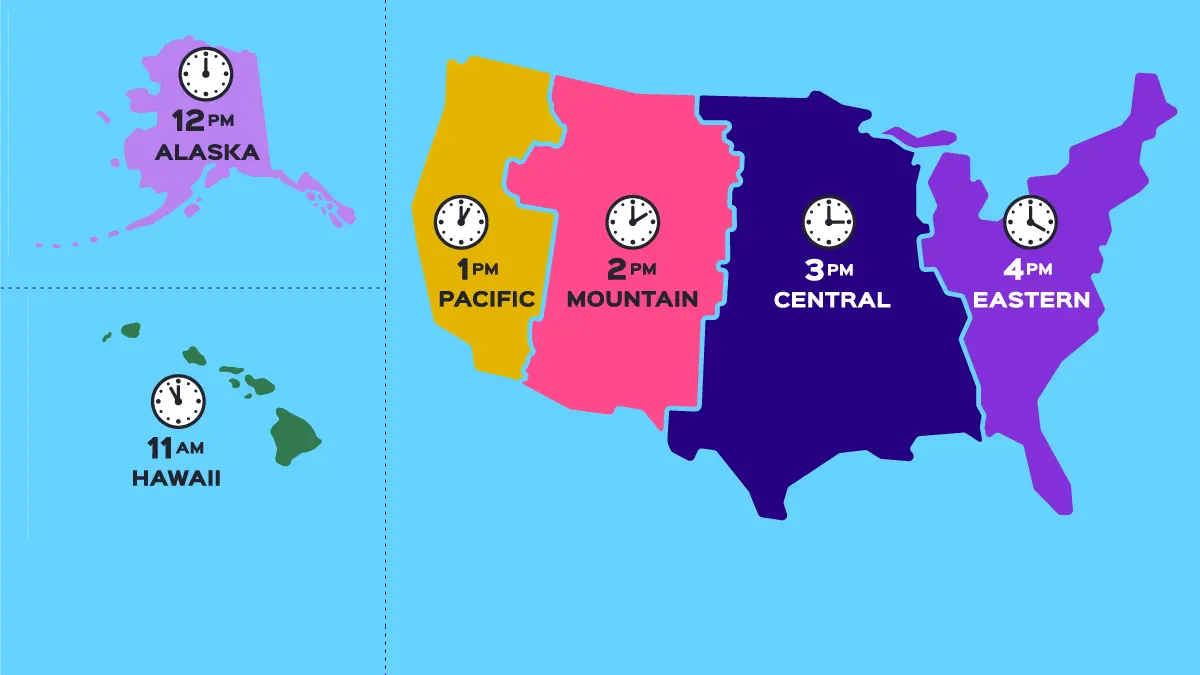
The implications of ignoring time zones can be far-reaching. Imagine a scenario where a sales team in New York, operating on Eastern Standard Time (EST), attempts to contact a key client in Los Angeles, observing Pacific Standard Time (PST). If the call is made at 4:00 PM EST, it is only 1:00 PM PST, potentially catching the client unprepared or during their lunch break. Conversely, attempting to reach the client at 4:00 PM PST would mean calling at 7:00 PM EST, well after standard business hours for the New York team. Such misalignments can lead to missed opportunities, strained client relationships, and a perception of unprofessionalism.
Furthermore, internal operations are equally susceptible. Scheduling team meetings, setting project deadlines, coordinating with external vendors, or even managing payroll and employee benefits require precise temporal coordination. A delay in understanding or accounting for time zone differences can result in missed deadlines, delayed project completions, and a cascade of downstream operational issues. For instance, if a critical software update is scheduled to be deployed at 9:00 AM Central Standard Time (CST), and the development team is primarily based in Mountain Standard Time (MST), the deployment would effectively occur at 7:00 AM MST, potentially before key personnel are available to monitor the process.
Unpacking the Six U.S. Time Zones
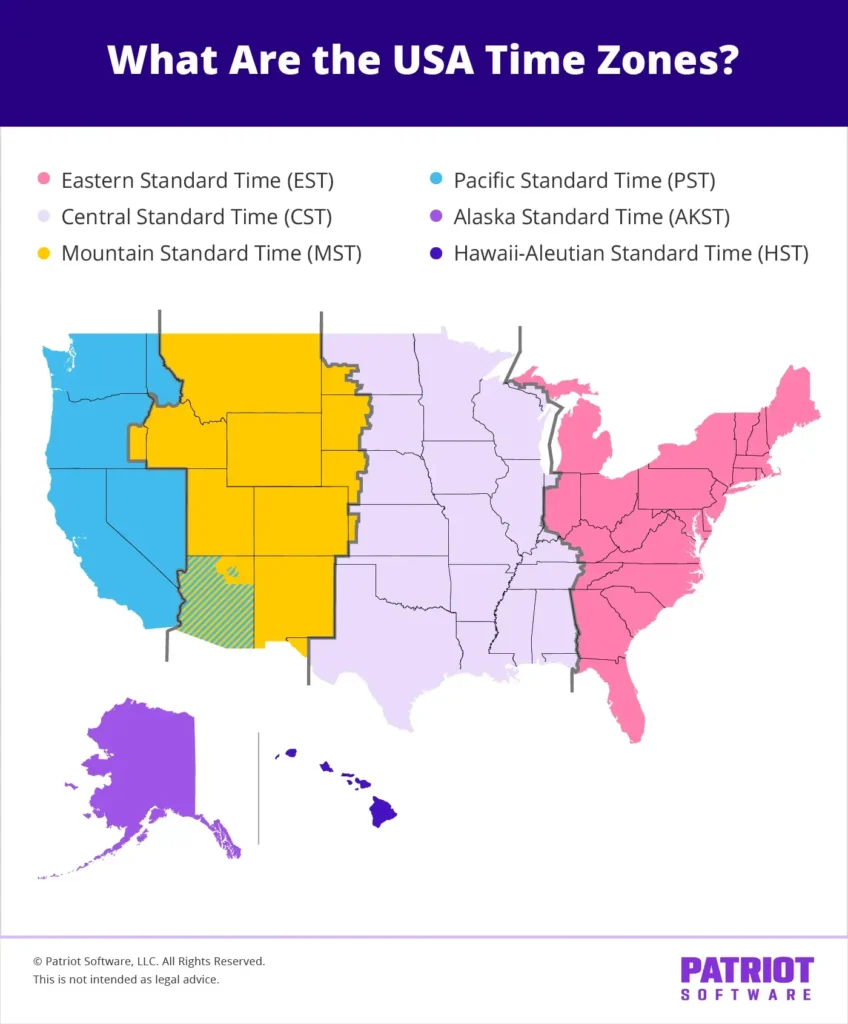
The United States, spanning a vast continental expanse, is divided into six primary time zones, each with its distinct offset from Coordinated Universal Time (UTC). These zones are designed to align civil time with the sun’s position, ensuring that noon generally occurs when the sun is at its highest point in the sky.
-
Eastern Standard Time (EST): UTC-5. This zone encompasses the most populous region of the United States, including the East Coast from Maine down to Florida, and extending westward to include states like Ohio and parts of Indiana and Kentucky. Major metropolitan areas such as New York City, Washington D.C., Philadelphia, and Boston fall within EST.
-
Central Standard Time (CST): UTC-6. Situated west of the Eastern Time Zone, CST covers states from the Great Lakes region down to the Gulf Coast. This includes much of the Midwest, South, and parts of Texas. Cities like Chicago, Houston, Dallas, and Minneapolis operate under CST.
-
Mountain Standard Time (MST): UTC-7. This zone stretches across the Rocky Mountain region, encompassing states like Montana, Idaho, Colorado, Utah, Arizona (excluding the Navajo Nation, which observes DST), New Mexico, and parts of North Dakota, South Dakota, and Nebraska. Denver and Phoenix are prominent cities in this time zone.
-
Pacific Standard Time (PST): UTC-8. Covering the West Coast, PST includes California, Oregon, Washington, and parts of Idaho and Nevada. Major economic hubs like Los Angeles, San Francisco, Seattle, and Portland operate on PST.
-
Alaska Standard Time (AKST): UTC-9. This zone encompasses the vast majority of Alaska, a state known for its significant geographical size and unique daylight patterns. Anchorage and Juneau are major cities within AKST.
-
Hawaii-Aleutian Standard Time (HST): UTC-10. This is the westernmost time zone in the United States, primarily covering the Hawaiian Islands and the western Aleutian Islands of Alaska. Honolulu is the most populous city within HST.
It is important to note that several states, particularly in the Midwest and Mountain regions, straddle two time zones. For example, Florida, Indiana, Michigan, and others have counties that observe EST and others that observe CST. Similarly, Idaho, Kansas, Nebraska, North Dakota, South Dakota, Oregon, and Texas have areas that fall under different time zones, often reflecting historical settlement patterns and geographical proximity to major economic centers.
The Complicating Factor: Daylight Saving Time (DST)
Adding another layer of complexity to the U.S. time zone system is Daylight Saving Time (DST). This practice involves advancing clocks by one hour during the warmer months to maximize daylight in the evenings. In the United States, DST officially begins on the second Sunday in March and concludes on the first Sunday in November, lasting for approximately 34 weeks.
The mechanism of DST can create temporary shifts in time zone differentials. For instance, when DST is in effect, the Eastern Time Zone observes Eastern Daylight Time (EDT), which is UTC-4. Similarly, the Central Time Zone observes Central Daylight Time (CDT), UTC-5, and the Pacific Time Zone observes Pacific Daylight Time (PDT), UTC-7. This means that during DST, the time difference between EST and PST remains three hours (e.g., 1:00 PM EDT is 10:00 AM PDT), but the specific UTC offsets change.
A significant point of contention and confusion arises from the fact that not all U.S. states observe DST. Hawaii and most of Arizona (with the exception of the Navajo Nation) remain on their standard time year-round. This creates unique temporal relationships between these states and those that observe DST. For example, during DST, Arizona (which stays on MST, UTC-7) is three hours behind EDT (UTC-4). However, when the rest of the country "falls back" in November, Arizona remains on MST. This results in a four-hour difference between Arizona and the Eastern Time Zone during standard time (e.g., 1:00 PM EST is 9:00 AM MST). This inconsistency can be a frequent source of error for businesses with operations or clients in these non-DST states.
The debate surrounding the utility and impact of DST is ongoing. Proponents argue that it conserves energy, reduces traffic accidents, and provides more opportunities for outdoor activities. However, critics point to disruptions in sleep patterns, potential negative impacts on public health, and limited energy savings. Several legislative efforts have been made at the federal level to make DST permanent, with bills introduced in Congress aiming to establish a national standard. However, as of early 2026, these proposals have not yet been enacted, leaving the nation in a state of temporal flux.
Navigating the Temporal Divide: Strategies for Success
Effectively managing operations across multiple time zones requires a proactive and strategic approach. Businesses must implement clear policies and leverage tools that mitigate confusion and foster seamless communication.
1. Establishing Clear Communication Protocols:
- Specify Time Zones Explicitly: When scheduling meetings, setting deadlines, or communicating any time-sensitive information, always specify the time zone. For example, instead of "Meeting at 2 PM," use "Meeting at 2:00 PM EST / 11:00 AM PST." This eliminates ambiguity and ensures everyone is on the same page.
- Utilize World Clock Features: Most operating systems and many calendar applications (like Google Calendar and Outlook) offer built-in world clock features. Encourage employees to set up clocks for the relevant time zones their colleagues or clients operate in.
- Create a Time Zone Cheat Sheet: For teams with members spread across several time zones, a readily accessible cheat sheet detailing each person’s time zone and the corresponding UTC offset can be invaluable. This should be updated to reflect any DST changes.
2. Leveraging Technology for Synchronization:
- Collaboration Platforms: Modern collaboration tools such as Slack, Microsoft Teams, and Asana often integrate features that display team members’ current time zones. This allows for quick visual checks before initiating communication or scheduling.
- Time and Attendance Software: For businesses managing hourly employees across different zones, specialized time and attendance software can automatically adjust for time zone differences, ensuring accurate tracking of work hours and payroll processing. Many of these systems also offer scheduling features that account for temporal variations.
- Project Management Tools: Platforms like Trello, Jira, or Monday.com allow for the assignment of tasks with specific deadlines and can often be configured to display these deadlines in the user’s local time or a designated primary time zone.
3. Cultivating a Time Zone-Aware Culture:
- Managerial Training: Managers should be trained on the implications of time zone differences and equipped with strategies for leading distributed teams effectively. This includes fostering empathy and understanding for colleagues working in different temporal realities.
- Flexible Scheduling: Where possible, implement flexible scheduling policies that allow employees to adjust their working hours to better align with team collaboration needs, within reasonable limits. This can significantly reduce "time zone fatigue."
- Respecting Working Hours: Encourage team members to be mindful of their colleagues’ working hours. Avoid sending non-urgent communications late at night or early in the morning in another time zone. Utilize features like "send later" options in email clients.
4. Addressing DST Specifics:
- Proactive Updates: Businesses operating with clients or employees in Arizona and Hawaii must proactively adjust their scheduling and communication strategies during the periods when DST is active in other parts of the country.
- Clear Internal Policies: Ensure internal policies clearly outline how DST changes will be communicated and implemented within the organization, especially for payroll and reporting purposes.
- Monitoring Legislative Changes: Stay informed about any potential federal or state legislation that could alter the observance of DST, as this could lead to further shifts in temporal relationships.
The Broader Impact and Future Outlook
The management of U.S. time zones is more than an operational detail; it is a reflection of our increasingly interconnected yet geographically diverse society. As remote and hybrid work models become more entrenched, the ability to navigate these temporal distinctions will remain a key differentiator for successful businesses. The ongoing discussions about making DST permanent highlight the public and governmental interest in simplifying timekeeping, but the current reality necessitates careful planning and adaptation.
A study by the National Bureau of Economic Research found that the biannual clock changes associated with DST can lead to a temporary increase in workplace injuries and a decrease in productivity in the days following the shifts. This underscores the tangible impact that temporal inconsistencies can have on employee well-being and business performance.
In conclusion, while the six U.S. time zones and the complexities of Daylight Saving Time can present significant challenges, they are not insurmountable. By embracing clear communication protocols, leveraging appropriate technology, and fostering a culture of temporal awareness, businesses can transform potential hindrances into opportunities for efficient, inclusive, and productive operations across the nation. The key lies in recognizing that in the modern business world, time is not just a measure of hours and minutes, but a critical element of strategic management.
This article is intended for informational purposes only and does not constitute legal advice. For specific legal guidance, consult with a qualified professional.
About the Author