
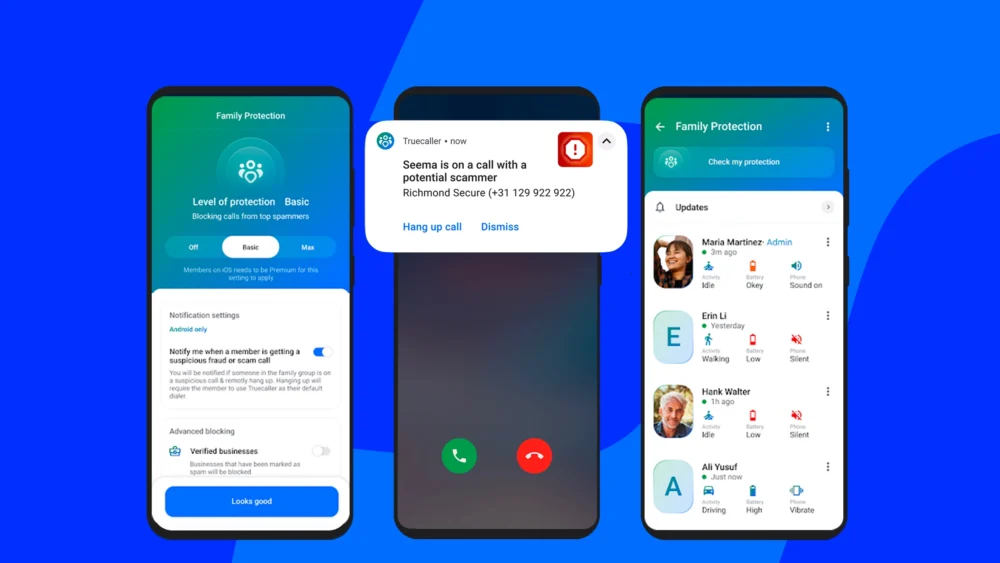
Caller identity platform Truecaller has rolled out a significant new feature designed to bolster the safety of its users’ families against the pervasive threat of fraudulent calls. This innovative "Family Protection" functionality allows a designated member of a family group to act as an administrator, providing real-time alerts about suspicious calls received by other members. In critical situations, the admin can even intervene by remotely ending a call, a crucial safeguard against potential scams targeting vulnerable family members.
The rollout of this feature marks a strategic expansion for Truecaller, a company boasting a massive user base exceeding 450 million monthly active users. Initially launched in December of the previous year, the Family Protection feature was piloted in select markets including Sweden, Chile, Malaysia, and Kenya. The positive reception and promising results observed during this initial phase prompted Truecaller to extend its availability globally. This includes a comprehensive launch in India, a market of paramount importance for the company, given its status as its largest user base. The feature is being offered free of charge, and users are able to create and participate in these family groups irrespective of whether they subscribe to a paid Truecaller plan, underscoring the company’s commitment to widespread accessibility for this vital security tool.
Enhanced Family Security Through Centralized Oversight
The core of the Family Protection feature lies in its ability to designate an administrator within a group of up to five members. This administrator, typically a more tech-savvy individual within the family or friend circle, gains the ability to monitor the incoming call activity of other group members. Upon receiving an alert about a potentially fraudulent call directed at a family member, the administrator is empowered to take immediate action. If the nature of the call suggests a high risk of scamming, the administrator has the capability to remotely terminate the call. This proactive intervention mechanism is particularly valuable for protecting individuals who may be less familiar with the tactics employed by scammers.
While Truecaller’s platform provides fraud call alerts for members using both iOS and Android devices, the ability to remotely end a call is currently restricted to Android users. This distinction is likely due to underlying operating system permissions and functionalities that allow for deeper system-level control on Android devices.

Advanced Monitoring Capabilities for Android Users
For users operating on the Android ecosystem, the Family Protection feature offers an even more comprehensive suite of monitoring tools. Administrators can, with the explicit permission of group members, gain insights into real-time user activity. This includes information such as whether a member is currently walking or driving, their current battery level, and the sound settings of their phone (e.g., whether it is on silent mode). Truecaller highlights that this enhanced visibility is particularly beneficial for keeping tabs on elderly family members. For instance, an administrator could be alerted if a senior family member is driving, and the system could suggest delaying a non-urgent call until they have safely reached their destination. This level of contextual awareness allows for more considerate and safer communication within the family unit.
Furthermore, the administrator possesses the capability to block specific phone numbers and international calling codes that are frequently associated with fraudulent activities. This proactive blocking mechanism helps to create a more secure calling environment for all group members. The administrator can also opt to share this curated blocklist with other members of the family group, thereby amplifying the collective defense against scam calls.
It is important to note that Truecaller has emphasized a crucial privacy boundary: the administrator cannot access the non-spam call history or SMS history of group members. This ensures that while protection is enhanced, the personal communication of individuals remains private and secure, focusing solely on potential threats.
Addressing the Growing Threat of Scams
Kunal Dua, Chief Product Officer at Truecaller, articulated the company’s motivation behind developing this feature, stating, "I think, unfortunately, all of us know somebody or another in our families or friends who have been impacted by fraud." He further elaborated on the significance of this initiative for the company, remarking, "In that sense, it’s a fundamental shift for Truecaller in terms of what we’ve been focusing on as a problem." This statement underscores a growing concern within society regarding the pervasive nature of financial scams and the increasing sophistication of fraudsters.
The introduction of Family Protection aligns with Truecaller’s broader mission to combat misinformation and malicious communication. The company has consistently worked to identify and flag spam and scam calls, leveraging its extensive user data and community-driven reporting system. The extension of this protective umbrella to encompass family units represents a natural evolution, recognizing that individuals often need support from their close network to navigate these threats.

Leveraging AI for Proactive Scam Prevention
Truecaller’s commitment to innovation in combating scams is further evidenced by its exploration of Artificial Intelligence (AI) integration. Last year, the company introduced a voicemail feature for Indian users, powered by an AI assistant that could intercept calls when a user was unavailable, transcribe the conversation, and provide a summary. This existing AI capability provides a foundation for future enhancements to the Family Protection feature.
The company is actively investigating the application of AI to provide more nuanced alerts to administrators. This could involve AI analyzing the content of scam calls and providing administrators with a clearer understanding of the nature of the threat, such as identifying specific keywords or tactics used by scammers. Moreover, Truecaller is exploring the use of AI to screen calls automatically and disconnect them if certain phrases associated with known scam tactics are detected. For example, the phrase "digital arrest," a common tactic where perpetrators impersonate law enforcement to extort money or information, could trigger an automatic disconnection. This proactive AI-driven screening aims to prevent potentially harmful calls from even reaching the user.
The Indian Context: A Hotbed for Scam Activity
The rollout of Family Protection in India is particularly timely, given the country’s ongoing battle with a high volume of scam calls. Truecaller reported identifying over 7.7 billion fraud calls in India last year alone, highlighting the scale of the problem. This surge in fraudulent activity has led to significant financial losses for individuals across the nation.
In response, Indian authorities have implemented various measures to curb scam calls. These include initiatives like the SIM binding policy, a controversial regulation aimed at linking SIM cards to verified identities. While intended to enhance accountability, such policies have also raised concerns about their potential impact on the functionality of legitimate communication applications.
Regulatory Challenges and Truecaller’s Position
Despite its efforts, Truecaller faces its own set of challenges in the Indian market. The company’s stock has experienced a significant decline, dropping by over 80% in the past 12 months. This financial downturn was reflected in its Q4 2025 report, which indicated a substantial year-on-year dip in Earnings Before Depreciation, Interest, Taxes, and Amortization (EBDITA), a key measure of operating profitability. Ad revenue also saw a notable decline of 31%.

Adding to these challenges is the evolving regulatory landscape, particularly India’s Caller Name Presentation (CNAP) system. This system mandates the display of the caller’s name as registered with their mobile carrier on incoming calls. Truecaller has consistently argued that while CNAP is a step towards transparency, it is insufficient on its own to effectively reduce spam calls. The company maintains that its community-based reporting and advanced spam detection algorithms offer a more comprehensive solution.
Rishit Jhunjhunwala, CEO of Truecaller, addressed the impact of CNAP during the Q4 2025 earnings call. He acknowledged the ongoing rollout of the system and stated that, thus far, the impact on user growth has been limited. However, he cautioned that the full effect remains to be seen as CNAP becomes more widely implemented. Jhunjhunwala emphasized Truecaller’s continued focus on product superiority, noting that consumers can utilize both CNAP and Truecaller in parallel. He highlighted that Truecaller provides a wealth of additional information and context, offering a more robust suite of solutions beyond simple caller identification.
The development and global expansion of Truecaller’s Family Protection feature underscore the company’s strategic pivot towards offering more comprehensive safety and security solutions. As scam tactics continue to evolve, tools that empower individuals to protect themselves and their loved ones are becoming increasingly indispensable. The feature’s free availability and cross-platform support aim to democratize access to this vital layer of digital defense, particularly in markets where the threat of fraud is most acute. The company’s ongoing exploration of AI integration suggests a future where proactive, intelligent systems play an even more critical role in safeguarding users from malicious communication.
About the Author





