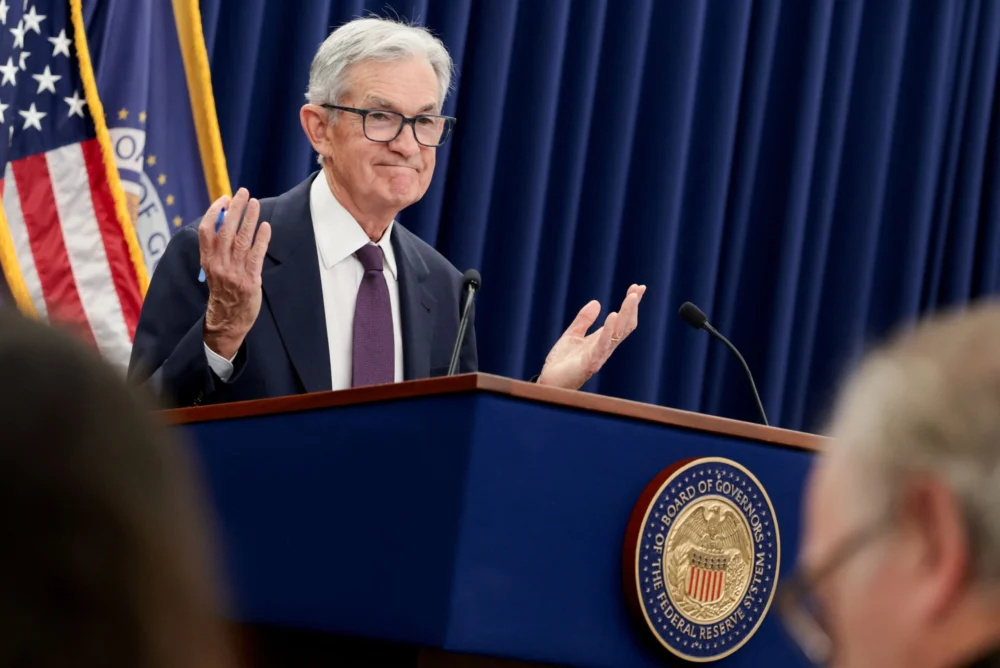
Expectations for Federal Reserve interest rate cuts, once a beacon of optimism for financial markets, are rapidly diminishing amidst a confluence of rising energy prices and persistent inflation fears. This significant recalibration in monetary policy outlook has been sharply accelerated by recent geopolitical developments, specifically the U.S.-Israel attacks on Iran, which sent global oil benchmarks soaring towards the critical $100 per barrel threshold. The shift marks a stark departure from the market’s earlier conviction that the central bank would initiate an easing cycle as early as June, now pushing the timeline for any potential rate reduction much further into the year, if not beyond.
The Swift Erosion of Rate Cut Hopes
Just weeks ago, the financial community was largely anticipating a quarter-percentage-point rate reduction by the Federal Open Market Committee (FOMC) in June, with a strong likelihood of a subsequent cut in September. The more optimistic projections even entertained the possibility of a third cut before the close of 2026, depending on the trajectory of economic data. This outlook was heavily influenced by a prevailing narrative that the U.S. economy was heading for a "soft landing," characterized by a gradual softening of the labor market, a steady moderation in inflation figures, and the impending transition to a potentially more dovish Federal Reserve Chair. However, the dramatic escalation of tensions in the Middle East has profoundly altered this landscape, causing traders to swiftly abandon their early summer easing hopes. The CME Group’s widely referenced FedWatch tool, which calculates the probability of various FOMC actions based on fed funds futures pricing, vividly illustrates this pivot, showing a significant retreat in the likelihood of near-term rate cuts.
Geopolitical Flare-Up and Its Economic Ripples
The catalyst for this sudden shift was the announcement of U.S.-Israel attacks on Iran on March 12, 2026. This geopolitical event immediately ignited fears of broader regional conflict and disruptions to global energy supplies, particularly concerning the Strait of Hormuz, a critical choke point for a substantial portion of the world’s seaborne oil shipments. In the immediate aftermath, oil prices surged, with Brent crude, the international benchmark, quickly approaching $100 a barrel. This sharp increase in energy costs carries significant inflationary implications, as higher fuel prices directly impact transportation, manufacturing, and consumer spending, potentially reigniting inflationary pressures that the Fed has painstakingly worked to bring under control over the past several years. The "Iran drama," as it has been colloquially termed, underscores the fragile interplay between global geopolitics and domestic economic stability, making the fight against inflation once again the paramount concern for policymakers.
The Enduring Battle Against Inflation
The Federal Reserve operates under a dual mandate: to foster maximum employment and maintain price stability. For the past several years, the latter objective has dominated its policy decisions, with the central bank embarking on an aggressive tightening cycle to combat inflation that had surged to multi-decade highs. While progress has been made, bringing the headline Consumer Price Index (CPI) down from its peak, the journey towards the Fed’s target of 2% core Personal Consumption Expenditures (PCE) inflation remains challenging.
The upcoming release of the personal consumption expenditures (PCE) price index data for January, scheduled for Friday morning, is keenly awaited by economists and policymakers alike. Analysts surveyed by Dow Jones project that core PCE, which strips out volatile food and energy prices and is the Fed’s preferred inflation gauge, will show an annual increase to 3.1%. This figure, representing a 0.1 percentage point gain from December’s reading, would signal a further step away from the Fed’s 2% target. Such a reading would suggest that inflationary pressures were percolating even before the recent Iran strike, providing officials with even more reason to exercise caution regarding interest rate reductions. Stephen Juneau, an economist at Bank of America, noted in a recent brief that while some key components of inflation, particularly housing costs, are showing signs of stabilization or deceleration, broader inflation "has been rangebound and remains above levels consistent with 2% core PCE." His analysis concluded, "The upshot is that the Fed should not be in a rush to ease rates further."
Labor Market Dynamics: A Premise Under Scrutiny
A significant component of the "soft landing" narrative that fueled earlier rate cut expectations was the anticipated moderation of the labor market. A softening in job growth, an uptick in the unemployment rate, and a cooling in wage pressures were viewed as necessary conditions for inflation to sustainably return to target without triggering a recession. The February 2026 jobs report, released earlier in the month, provided some indications of this softening, yet the overall strength of the labor market has proven more resilient than many forecasters initially predicted. The unemployment rate has remained historically low, and wage growth, while decelerating from its peak, continues to pose a potential upside risk to services inflation. Should the labor market weaken "sooner and more substantially" than currently anticipated, Goldman Sachs economists noted, concerns about the impact of higher oil prices on inflation and inflation expectations might not necessarily obstruct earlier rate cuts. However, as long as employment figures remain robust, the Fed gains more flexibility to prioritize its inflation-fighting mandate.

A Central Bank in Transition: Powell’s Legacy and Warsh’s Future
The backdrop of this evolving economic landscape is further complicated by a significant leadership transition at the Federal Reserve. Current Chair Jerome Powell, whose term concludes in May, is set to depart, making way for presumptive new Chair Kevin Warsh. President Donald Trump, who nominated Warsh, is widely believed to have selected him for his perceived willingness to pursue a more aggressive easing posture, potentially favoring lower interest rates to stimulate economic growth. Powell’s tenure has been largely defined by his determined efforts to navigate the central bank through the challenges of post-pandemic inflation, employing a strategy of sustained rate hikes. The transition in leadership, therefore, presents an additional layer of uncertainty. While a new chair might theoretically lean dovish, the immediate economic realities, particularly the resurgence of inflation fears driven by geopolitical events, could constrain any inherent inclination towards rapid easing, forcing Warsh to adopt a more hawkish stance than initially expected by his proponents.
Economists and Markets Recalibrate
The shifting sentiment is not merely anecdotal; it is reflected in the revised forecasts of major financial institutions. Goldman Sachs, a bellwether in economic prognostication, officially adjusted its rate forecast, pushing back the expected timing of the Fed’s next cut from June to September. Despite this delay, Goldman’s economists still hold the view that the Fed could implement one more rate cut before the end of 2026, contingent on economic data.
However, other market participants appear even more conservative in their outlook. Traders in the fed funds futures market have largely removed the expectation of a September cut from the table. According to the CME gauge, the prevailing market consensus now points to only a single rate cut occurring in December 2026, with no additional cuts priced in until well into 2027 or even the early part of 2028. This stark revision underscores the profound impact of the recent geopolitical events and the stubborn persistence of inflation on market psychology. The notion that the Fed would be forced to maintain a "higher for longer" stance on interest rates has gained significant traction, contrasting sharply with the optimistic projections from just a few weeks prior.
Political Pressure and the Fed’s Independence
Adding another dimension to the complex decision-making process is the recurring political pressure exerted on the Federal Reserve. Former President Donald Trump, known for his vocal critiques of the central bank’s policies during his previous term, once again publicly called on Chair Powell to cut interest rates immediately. In a post on Truth Social, Trump wrote, "Where is the Federal Reserve Chairman, Jerome "Too Late" Powell, today? He should be dropping Interest Rates, IMMEDIATELY, not waiting for the next meeting!"
Such statements highlight the perennial tension between political imperatives and the central bank’s institutional independence. The Fed’s ability to make monetary policy decisions free from political interference is widely considered crucial for its credibility and effectiveness in maintaining long-term economic stability. While political calls for specific actions are not uncommon, the Fed historically bases its decisions on economic data and its dual mandate, rather than succumbing to external pressure. This dynamic will undoubtedly continue to play out as the new Fed Chair takes the helm and navigates the delicate balance between economic growth and inflation control in a highly politicized environment.
The Road Ahead: March FOMC Meeting and Beyond
The immediate focus for the financial world turns to the Federal Open Market Committee’s next rate decision, scheduled for March 18. Given the recent surge in energy prices, the persistent inflation concerns, and the hawkish pivot in market expectations, traders are assigning a nearly 100% probability to the committee staying on hold, maintaining the federal funds rate at its current level. This decision will serve as a critical indicator of the Fed’s current stance and its interpretation of the latest economic and geopolitical developments.
Looking further ahead, the outlook for monetary policy easing remains highly conditional. Whether the current conservative outlook holds up will largely depend on how the situation in the Middle East evolves. A de-escalation of tensions and a subsequent retreat in oil prices could potentially restore a sense of normalcy to the markets and rekindle hopes for more aggressive easing later in the year. Conversely, any further intensification of the conflict or sustained high energy prices would likely cement the Fed’s resolve to prioritize inflation containment, pushing rate cuts further into the future. The interplay of global events, domestic economic indicators, and the philosophical leanings of the incoming leadership will define the trajectory of U.S. monetary policy in the challenging months to come, impacting everything from borrowing costs for consumers and businesses to the broader stability of the global financial system. The path to achieving both price stability and maximum employment has rarely appeared so fraught with external variables.
About the Author